
The temporomandibular joint (TMJ) is the hinged joint connecting each side of your jaw to the base of your skull. When this joint or the surrounding muscles malfunction, the resulting condition is called a temporomandibular disorder (TMD). The distinction matters: “TMJ” refers to the joint itself, while “TMD” describes the group of conditions affecting it. Most people use “TMJ” colloquially to mean the disorder, and both terms appear throughout clinical guidance.
Conservative, non-invasive care is the first-line approach for the vast majority of patients, and most people improve within roughly three months with combined self-care and clinician-directed treatment. Key principles to understand from the outset:
- TMD covers more than 30 distinct conditions affecting jaw joints and chewing muscles
- Symptoms often resolve on their own without any formal treatment
- Oral appliances (night guards) are typically worn during sleep, not all day
- Invasive procedures lack robust evidence and carry risks of permanent joint changes
- Surgery should only be considered after all conservative options have been exhausted
- Cosmolaser Medical Centre offers specialist dental and aesthetic TMJ management for patients seeking expert, evidence-based care
Table of Contents
- What are the symptoms and causes of TMJ disorders?
- How to relieve TMJ pain: non-invasive treatment options
- When should you seek specialist evaluation for jaw pain?
- How modern clinics support long-term TMJ management
- Cosmolaser Medical Centre: specialist care for jaw and dental health
- Key takeaways
- FAQ
What are the symptoms and causes of TMJ disorders?
Recognising a TMD early gives you the best chance of resolving it without aggressive intervention. Symptoms vary considerably from person to person, which is part of why diagnosis can be challenging.
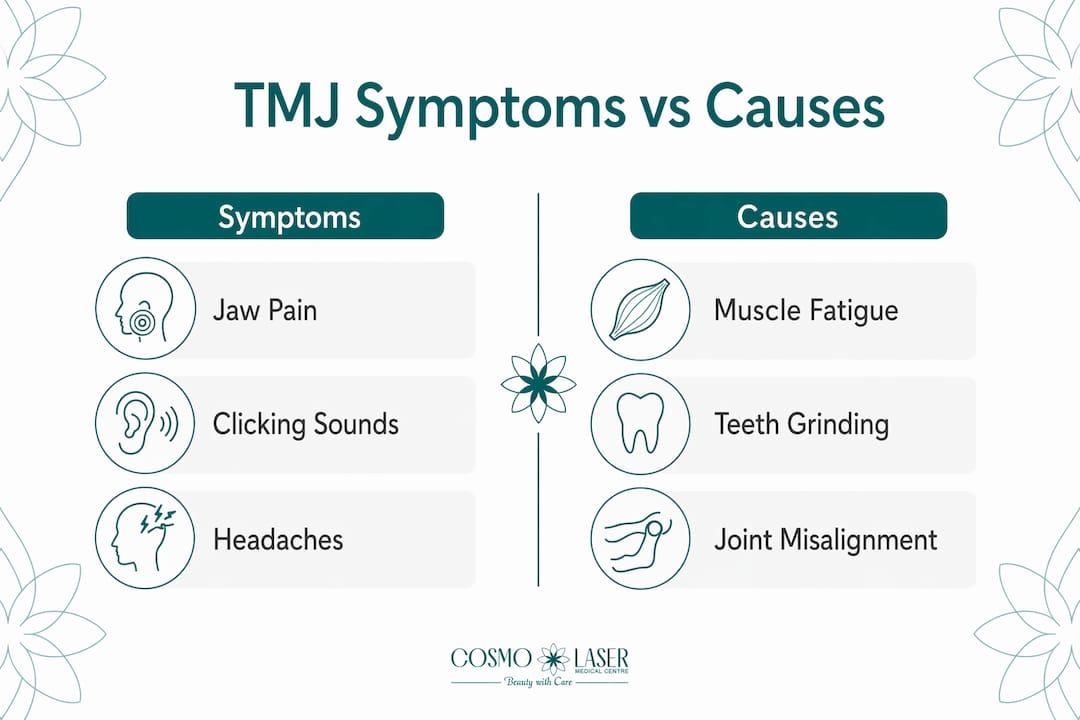
Common symptoms include:
- Jaw pain or facial tenderness, particularly around the joint and chewing muscles
- Headaches or migraines that do not respond to standard treatment
- Clicking, popping, or grating sounds when opening or closing the mouth
- Limited jaw movement or locking of the joint
- Earache, ear stuffiness, or ringing in the ears
- Neck and shoulder pain
- A change in how the upper and lower teeth fit together
One important clarification: clicking or popping without pain is considered normal and does not require treatment. Treatment is reserved for cases involving functional impairment or genuine discomfort.
TMD causation is genuinely multifactorial. Muscle fatigue from bruxism (teeth grinding or clenching) is among the most common drivers, with clenching during sleep generating far greater force than daytime habits. Disc displacement within the joint, arthritis, jaw injury, and misaligned bite all contribute. Psychological factors, including stress, anxiety, and post-traumatic stress disorder, play a documented role, as do poor posture and sleep disturbances. TMD primarily affects adults aged 20–40, and females are more frequently affected than males. The condition can also co-occur with fibromyalgia, irritable bowel syndrome, and chronic back pain, reflecting its systemic connections.
How to relieve TMJ pain: non-invasive treatment options
The clinical consensus, supported by the National Institute of Dental and Craniofacial Research (NIDCR), is clear: start with the least invasive options and give them time to work. The good news is that they usually do.
Self-care strategies to begin with:
- Eat soft foods and cut meals into small pieces; avoid hard, chewy, or sticky foods
- Apply moist heat for dull, persistent aching to increase circulation and relax muscles
- Use cold packs for sharp or acute pain; wrap cold packs in a cloth and limit application to 10–15 minutes to avoid frostbite
- Practise gentle jaw stretching exercises, ideally guided by a physiotherapist
- Reduce stress through breathing techniques, biofeedback, or relaxation exercises
- Avoid habits that strain the joint: gum chewing, nail biting, and resting the chin on your hand
Clinical non-invasive treatments:
- Oral appliances (splints or night guards): A custom-fitted plastic device worn over the upper or lower teeth. Oral appliances are typically worn during sleep and used during waking hours only until symptoms subside, generally less than eight weeks. Prolonged or poorly fitted use can alter the bite and create new problems.
- NSAIDs: Short-term use of ibuprofen or naproxen reduces inflammation and pain effectively for most patients.
- Muscle relaxants: Useful for brief periods only. Muscle relaxants are not a cure and require particular caution in older patients; non-pharmacological approaches are preferred where possible.
- Physical therapy: Ultrasound, transcutaneous electrical nerve stimulation (TENS), and targeted jaw exercises all have a role in structured rehabilitation.
- Counselling: Cognitive behavioural approaches help patients identify and modify habits, such as daytime clenching, that perpetuate symptoms.
For patients with bruxism, understanding the relationship between tooth grinding and dental health is an important part of long-term management.

When should you seek specialist evaluation for jaw pain?
Not every jaw click warrants a clinic visit. But certain signs indicate that self-care alone is insufficient and that professional assessment is needed.
Seek specialist evaluation if you experience:
- Persistent jaw pain lasting more than a few weeks despite home care
- Jaw locking that prevents normal opening or closing
- Pain severe enough to disrupt eating, speaking, or sleeping
- Headaches that recur without a clear cause
- Sudden changes in how your teeth meet when biting
Diagnosis is genuinely complex. There is no single definitive test for TMD, which means clinicians rely on a thorough medical and dental history, physical examination of jaw movement and muscle tenderness, and imaging where indicated. Dental X-rays, CT scans, and MRI each serve different purposes: CT provides detailed bone imaging, while MRI reveals the condition of the articular disc and surrounding soft tissue. CBCT (cone beam computed tomography) offers three-dimensional joint assessment and is available at specialist dental clinics, including through advanced 3D jaw imaging at Cosmolaser Medical Centre.
Care often involves more than one specialist. Dentists, orofacial pain experts, and ENT doctors may all contribute to a complete picture, particularly when symptoms include ear-related complaints or headaches that overlap with other conditions.
Pro Tip: If a clinician recommends surgery or any irreversible procedure as a first step, seek a second opinion from an orofacial pain specialist before proceeding. The NIDCR advises strongly against permanent joint or bite modifications until all conservative options have been exhausted.
How modern clinics support long-term TMJ management
Effective TMJ management rarely ends with a single treatment. Chronic or recurring symptoms benefit from a structured, ongoing care pathway that addresses both the physical and psychological dimensions of the condition.
Clinics with integrated dental and aesthetic expertise are well placed to deliver this. A specialist team can combine custom oral appliance therapy with jaw alignment assessment, using advanced imaging to guide decisions rather than relying on guesswork. Where jaw misalignment contributes to symptoms, options such as dental aligners or orthodontic review may form part of a broader plan.
Patient education is central to good outcomes. Understanding which habits aggravate the joint, how to apply heat and cold correctly, and what realistic recovery looks like all reduce the risk of over-treatment. The NIDCR emphasises that patients who are well-informed about their condition make better decisions and experience fewer complications from unnecessary procedures.
Psychological support also belongs in the picture. Chronic jaw pain carries a real psychosocial burden, and patients managing long-term TMD often benefit from counselling or stress management as part of their care. Post-treatment follow-up, including periodic review of oral appliance fit and symptom progression, helps catch any deterioration early and adjust the plan accordingly.
Cosmolaser Medical Centre: specialist care for jaw and dental health
Patients dealing with jaw pain, bruxism, or TMD-related discomfort need more than generic advice. They need a clinical team that combines dental expertise with a thorough understanding of facial anatomy and patient wellbeing.

Cosmolaser Medical Centre brings together qualified dentists, aesthetic specialists, and diagnostic technology under one roof. The clinic offers custom oral appliance fitting, CBCT imaging for precise joint assessment, and personalised treatment plans that reflect each patient’s symptoms, health profile, and lifestyle. For patients whose TMD intersects with aesthetic concerns, such as facial tension, jaw contouring, or skin health, the clinic’s combination aesthetic treatments provide a joined-up approach that addresses both.
Every treatment recommendation at Cosmolaser Medical Centre is grounded in current clinical evidence, with a firm commitment to conservative, reversible care first. To discuss your symptoms and arrange an assessment, contact Cosmolaser Medical Centre directly through the website.
Key takeaways
Conservative, reversible treatment remains the most effective and safest first approach to managing TMD, with most patients seeing meaningful improvement over time.
| Point | Details |
|---|---|
| TMJ vs TMD | “TMJ” names the joint; “TMD” describes the 30+ conditions that affect it. |
| Recovery timeline | Most patients improve within roughly three months using conservative self-care and clinical treatment. |
| Oral appliance use | Night guards are worn during sleep; daytime use continues only until symptoms resolve, typically less than eight weeks. |
| Avoid irreversible procedures | Surgery and permanent bite modifications carry significant risks and lack robust long-term evidence. |
| Cosmolaser Medical Centre | Offers specialist TMJ assessment, custom oral appliances, and CBCT imaging within an integrated dental and aesthetic clinic. |
FAQ
What is the difference between TMJ and TMD?
TMJ refers to the temporomandibular joint itself, the hinged joint connecting the jaw to the skull. TMD (temporomandibular disorder) is the clinical term for the group of conditions causing pain or dysfunction in that joint and surrounding muscles.
Can TMJ disorders cause headaches?
Yes. Trigger points in the jaw and chewing muscles can refer pain to the head and neck, producing headaches that often do not respond to standard treatment. Recurring headaches without a clear cause are a recognised symptom of TMD.
How long does TMJ pain typically last?
With conservative treatment, most patients experience significant improvement within roughly three months. Many cases resolve on their own without formal intervention, though chronic cases may require ongoing management.
When should I see a specialist for jaw pain?
Seek professional assessment if jaw pain persists beyond a few weeks, if the jaw locks, or if symptoms interfere with eating or sleeping. A dentist or orofacial pain specialist can examine jaw movement and arrange imaging if needed.
Does Cosmolaser Medical Centre treat TMJ disorders?
Yes. Cosmolaser Medical Centre provides specialist TMJ assessment, custom oral appliance therapy, and advanced CBCT imaging, with treatment plans tailored to each patient’s clinical needs and health profile.