Jaw pain, clicking, teeth grinding and morning headaches — these are signs of TMJ disorder. Expert diagnosis and multi-modal treatment at Cosmolaser Medical Centre, Sharjah.
TMJ disorder — problems with the temporomandibular joint and the muscles that control jaw movement — is one of the most underdiagnosed dental conditions in the UAE, and one of the most common causes of chronic facial pain, persistent headaches and disrupted sleep. Yet many patients suffering from it have never connected their symptoms to their jaw.
Several factors make UAE residents particularly susceptible. Chronic stress from demanding work schedules, long commutes, business pressures and the intensity of professional life in a fast-moving economy drives a significant proportion of bruxism (teeth grinding) cases — most of which occur at night during sleep, meaning patients are entirely unaware they are doing it. The first signs are often reported by a partner, or discovered by a dentist who notices characteristic wear facets on the tooth surfaces. UAE summer heat and the physical tension it produces in the neck and jaw musculature is an additional contributing factor.
Dietary habits also play a role. Frequent consumption of tough meats, hard nuts, sticky foods and prolonged chewing sessions places cumulative load on the temporomandibular joint. Add to this a high prevalence of malocclusion (misaligned bite) in patients who have not had orthodontic treatment — bite imbalance is a recognised TMJ risk factor — and it becomes clear why this condition is so widespread. At Cosmolaser, we bring together dental expertise, CBCT joint imaging and injectable muscle relaxation therapy to offer a genuinely comprehensive TMJ programme that most dental clinics in the region cannot match.
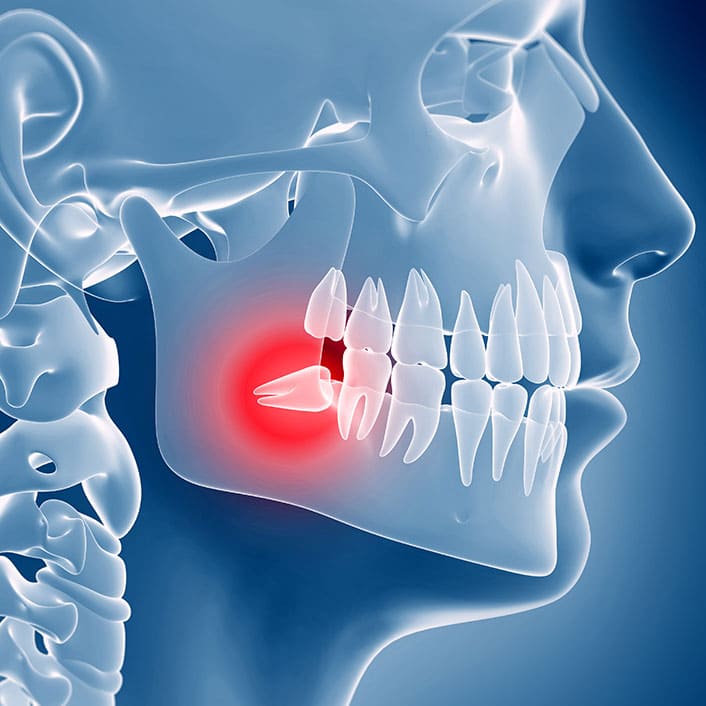
The temporomandibular joint (TMJ) is the hinge joint connecting the lower jaw (mandible) to the skull at the temporal bone, just in front of each ear. It is one of the most complex joints in the body — capable of hinging, sliding and rotating simultaneously — and is involved in every jaw movement: chewing, speaking, swallowing and yawning. The joint is cushioned by an articular disc (a small cartilage pad) and surrounded by muscles, ligaments and tendons.
Temporomandibular disorder (TMD) is an umbrella term for pain and dysfunction involving the TMJ itself, the muscles of mastication (the chewing muscles), or both. The condition ranges from mild, self-limiting episodes of jaw soreness to chronic, debilitating orofacial pain that significantly affects quality of life. TMD is classified into three main categories: joint-based disorders (articular disc displacement, arthritis, joint hypermobility), muscle-based disorders (myofascial pain, bruxism-related overuse), and combined presentations involving both.
Joint Symptoms | Muscle Symptoms | Surgical Complexity |
|---|---|---|
Clicking or popping of the jaw | Jaw pain or soreness, especially morning | Chronic headaches, especially on waking |
Locking of the jaw (open or closed) | Difficulty opening the mouth fully | Earache without ear infection |
Crepitus (grinding sensation in joint) | Cheek or temple muscle tenderness | Neck and shoulder tension |
Jaw deviation on opening | Fatigue when chewing | Facial pain or fullness |
Joint pain in front of ear | Sensitive or worn teeth (bruxism) | Tinnitus (ringing in ears) |
Swelling around the joint | Toothache without dental cause | Dizziness (rare) |
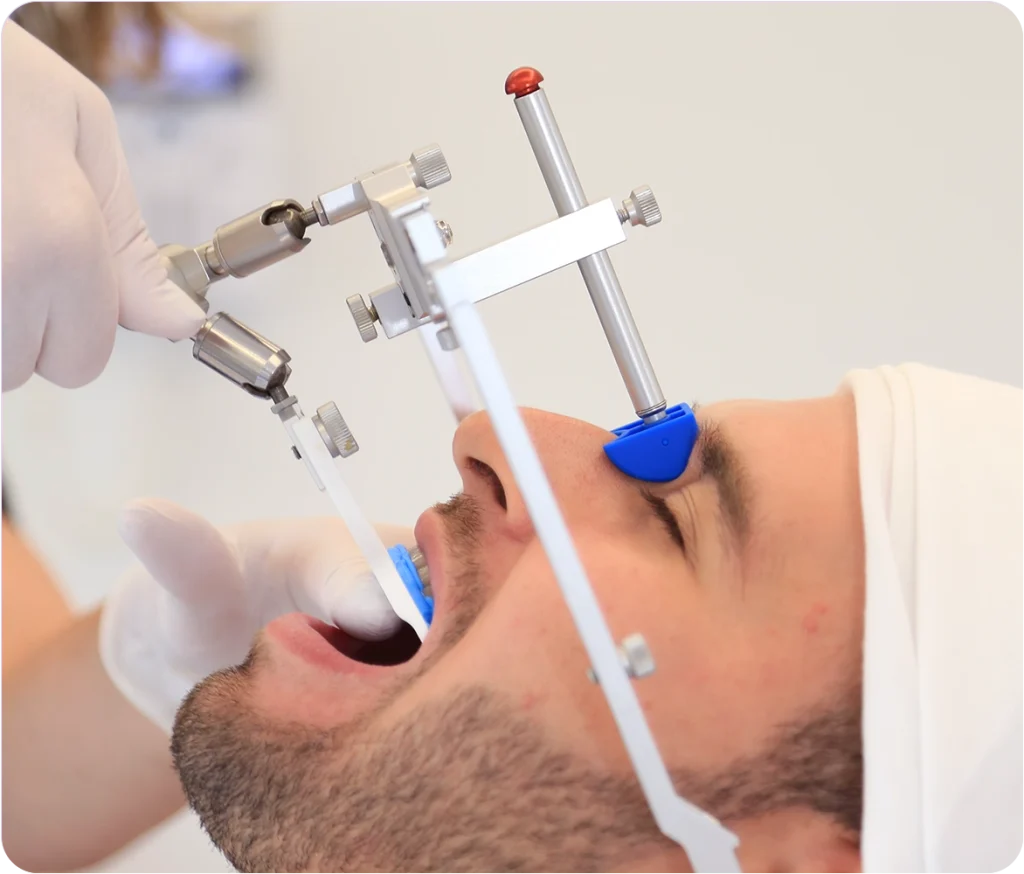
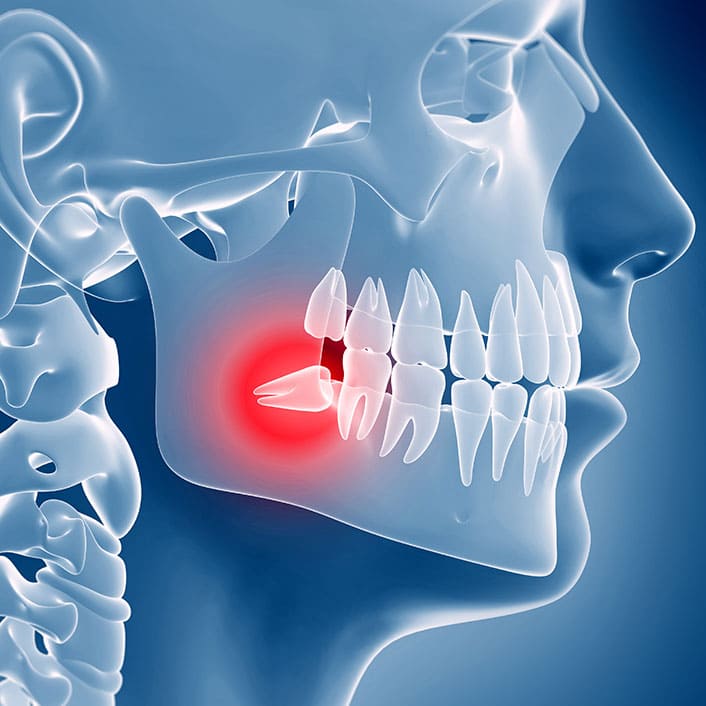
Accurate TMJ diagnosis requires imaging beyond a standard dental X-ray. The temporomandibular joint has a complex 3D anatomy — the condyle (ball), glenoid fossa (socket) and articular disc sit in close proximity to the ear canal, and subtle changes in joint space, condylar position and bone morphology are only reliably assessed in three dimensions.
At Cosmolaser, we use the in-house CBCT scanner to capture high-resolution 3D images of both TMJs simultaneously. This allows assessment of condylar symmetry, joint space width, bone surface changes (indicating arthritis or remodelling), and corticocancellous bone quality. Combined with a clinical examination including joint palpation, range of motion measurement and occlusal analysis, CBCT provides the diagnostic foundation for a precise, personalised treatment plan that is simply not achievable from 2D radiographs alone.
TMJ disorder rarely has a single cause and rarely responds to a single treatment. The most effective management combines approaches targeting different aspects of the condition — joint loading, muscle overactivity, bite balance and behavioural factors. Cosmolaser is one of very few clinics in Sharjah able to offer all of the following under one roof:
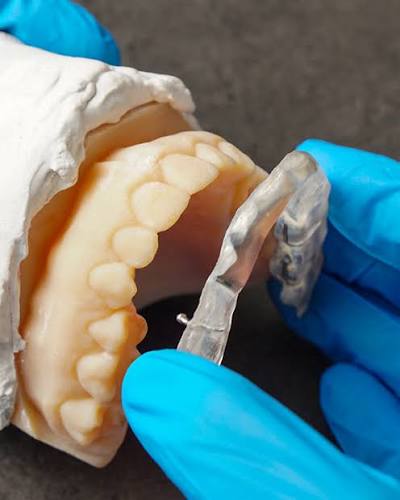
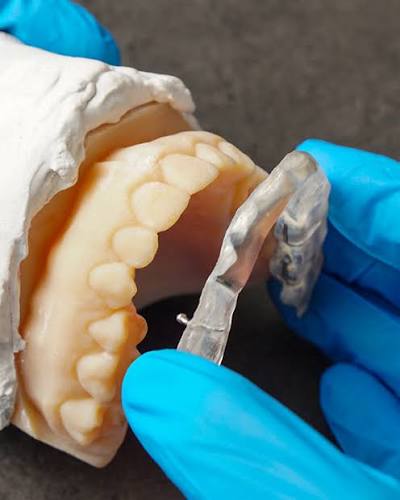
An occlusal splint — also called a nightguard, bite guard or Michigan splint — is a precision-fitted hard acrylic appliance worn over the upper or lower teeth, typically during sleep. It is the most widely prescribed and evidence-supported first-line treatment for TMJ disorder and bruxism. The splint works by creating a stable, balanced bite surface that eliminates occlusal interferences, reduces joint loading, prevents tooth-to-tooth contact during grinding, and allows the jaw muscles to rest in a physiologically neutral position.
At Cosmolaser, splints are fabricated from digital impressions or iTero scan data for a precise, comfortable fit. The occlusal surface is adjusted chairside to achieve balanced contacts across the arch. A proprioceptive learning effect also develops over the first few weeks of wear — many patients find that consistent splint use reduces the grinding habit itself over time, not just its effects.
Appliance Type | Hard acrylic Michigan-style splint — upper or lower arch |
Fabrication | Digital impression / iTero scan — laboratory-fabricated for precise fit |
Wear Protocol | Primarily nocturnal; daytime wear prescribed for severe acute cases |
Review Appointments | 2-week fit check, then 3-monthly adjustments as needed |
Expected Response | Most patients notice significant symptom reduction within 4–6 weeks |
Ideal For | Bruxism, sleep clenching, morning jaw pain, tooth wear, initial TMD management |
Longevity | 2–5 years with proper care; replacement when significant wear occurs |
Botulinum toxin injection into the masseter muscles (the primary chewing muscles at the jaw angle) is a highly effective treatment for bruxism, chronic jaw clenching, masseteric hypertrophy (enlarged jaw muscles causing a wide square jaw appearance) and myofascial TMJ pain. The injections reduce the contractile force of the masseter by partially blocking the neuromuscular signal — the muscle remains functional for normal chewing but loses the excessive force responsible for grinding and clenching damage.
At Cosmolaser, masseter Botox is administered by a physician with both dental and aesthetic medicine expertise — a genuinely rare combination that ensures the injection is planned with full knowledge of the underlying dental anatomy, occlusal relationships and TMJ status. Treatment takes approximately 20 minutes. Results develop over 10–14 days and last 4–6 months initially, extending to 6–9 months with repeat treatment as the muscle gradually reduces in bulk. For patients with masseter hypertrophy, the added benefit of a slimmer, more defined jawline is a significant secondary outcome that many patients specifically request.
Injection Site | Masseter muscle (bilateral — both sides) |
Units per Side | Typically 20–40 units per masseter, dose determined at assessment |
Treatment Time | 20–30 minutes including assessment |
Onset | Symptom relief begins at 7–10 days; full effect at 2–3 weeks |
Duration | 4–6 months initially; extends to 6–9 months with repeat treatment |
Ideal For | Bruxism, jaw clenching, masseteric hypertrophy, TMJ myofascial pain, jaw slimming |
Sessions | 2–3 per year for maintenance; some patients achieve longer intervals over time |
Targeted jaw exercises and physiotherapy techniques address the muscular component of TMJ disorder directly — improving range of motion, reducing muscle spasm, strengthening weak supporting muscles and reprogramming dysfunctional movement patterns. For patients with limited jaw opening, muscle splinting or post-acute TMJ episodes, a structured exercise programme is a crucial component of recovery.
Your TMJ treatment plan at Cosmolaser includes a personalised home exercise protocol covering: gentle stretching to increase opening, resistance exercises to strengthen the pterygoid muscles, postural correction exercises addressing the neck-jaw relationship, and relaxation techniques to reduce background muscle tension. Where specialised input is required, we coordinate with physiotherapy referrals within the UAE network.
Approach | In-clinic guidance + structured home exercise programme |
Focus Areas | Opening range, muscle spasm relief, postural correction, relaxation |
Integration | Combined with splint therapy and Botox for maximum effect |
Duration | 4–8 weeks guided programme; exercises continued long-term |
Ideal For | Restricted opening, acute muscle pain, post-acute recovery, maintenance |
In cases where bite imbalance is a primary contributing factor to TMJ disorder — specific teeth hitting prematurely on closing, or lateral excursive interferences during chewing — selective reshaping of tooth contacts (occlusal equilibration) can reduce the mechanical stress transmitted to the joint. This is performed conservatively under the guidance of CBCT-analysed jaw relationship data.
Where significant bite correction is required beyond minor equilibration — such as a deep bite or crossbite contributing to joint loading — orthodontic treatment or restorative rehabilitation may be recommended as a longer-term solution. The Cosmolaser team includes orthodontic capability in-house, meaning bite correction and TMJ management can be coordinated within a single treatment plan.
Procedure | Chairside selective occlusal adjustment using articulating paper and CBCT data |
Indication | Premature tooth contacts, excursive interferences contributing to TMJ load |
Extent | Conservative — removes minimal tooth structure. Irreversible: performed after diagnosis is confirmed |
Linked Treatment | May precede or follow splint therapy; coordinated with orthodontics for complex cases |
Ideal For | Bite imbalance as a primary TMJ contributing factor; post-orthodontic bite refinement |
For patients presenting with acute TMJ flare-ups, active inflammation, or significant pain, short-course pharmacological support is prescribed alongside the primary treatment approach. This may include non-steroidal anti-inflammatory drugs (NSAIDs) to reduce joint inflammation, muscle relaxants for acute myofascial spasm, and topical analgesic gels for localised masseter trigger point pain. Pharmacological support is always adjunctive — it manages acute symptoms while definitive treatment takes effect, rather than replacing it.
For patients with evidence of intra-articular inflammation on CBCT (joint space narrowing, condylar erosion), corticosteroid joint injection may be considered on a case-by-case basis. This is discussed and planned at specialist level with full imaging review.
Acute Flare | Short-course NSAIDs + soft diet protocol + ice/heat guidance |
Muscle Spasm | Muscle relaxants (short course); Botox for chronic cases |
Intra-articular Inflammation | Corticosteroid injection — specialist assessment, CBCT review required |
Role | Adjunctive to primary treatment — manages symptoms, not the cause |
Most patients require a combination of treatments rather than a single approach. The following guide maps primary symptoms to first-line treatment — your clinical assessment will determine the full programme:
Primary Symptom / Finding | First-Line Treatment | Notes |
|---|---|---|
Morning jaw pain, headaches on waking | Occlusal splint | Confirms nocturnal bruxism component; rapid symptom relief usually within 4–6 weeks |
Teeth grinding (bruxism) confirmed | Splint + Botox masseter | Splint protects teeth; Botox reduces grinding force at the source |
Enlarged jaw muscles (wide square jaw) | Botox masseter injection | Aesthetic and functional benefit — jaw slimming + reduced clenching force |
Jaw clicking / popping only (no pain) | Observation + exercise programme | May not require active treatment; monitor for progression |
Jaw clicking with pain or locking | Splint + physiotherapy + CBCT imaging | Disc displacement likely; full assessment required |
Limited mouth opening | Physiotherapy + CBCT + muscle relaxant | Acute muscle splinting or disc interference — assess urgency |
Chronic headaches attributed to jaw | Splint + Botox combined programme | Address both joint loading and muscle hyperactivity |
Significant bite imbalance on clinical exam | Occlusal adjustment or orthodontic referral | CBCT-guided; conservative first, orthodontics for significant discrepancies |
Acute flare with significant pain | NSAIDs + soft diet + splint initiation | Short-course medication bridges to definitive treatment |
CBCT: joint space narrowing or erosion | Specialist review + corticosteroid injection | Intra-articular pathology requires specialist-level management |
One of the most distinctive aspects of Cosmolaser Medical Centre’s TMJ programme is the integration of aesthetic medicine into functional dental treatment. Masseter Botox sits at the intersection of two specialties — it is simultaneously a functional treatment for bruxism and a highly requested aesthetic procedure for jawline slimming and facial contouring.
Patients with bruxism often develop masseteric hypertrophy: the masseter muscles enlarge from chronic overuse, creating a wide, angular lower face. This is a particularly common presentation in UAE patients given the stress-related bruxism prevalence described above. Botulinum toxin injected into the masseter reduces the contractile bulk of the muscle over the following 6–8 weeks, achieving two outcomes simultaneously: relief from grinding-related jaw pain and a visibly slimmer, softer jawline. For many patients — particularly women who feel self-conscious about a wide jaw — this dual benefit makes masseter Botox one of the most satisfying treatments we offer.
At Cosmolaser, this treatment is administered by a physician who understands the dental anatomy, the occlusal context, and the aesthetic objectives simultaneously. The dosing and injection points are planned with your TMJ assessment data in hand — not applied as a generic aesthetic protocol. This is a genuine clinical advantage over standalone aesthetic clinics that offer masseter Botox without any dental assessment or CBCT imaging.
Functional Benefit (TMJ) | Functional Benefit (TMJ) |
|---|---|
Reduced grinding force protecting teeth | Slimmer, more oval lower face |
Decreased morning jaw pain and stiffness | Softer jaw angle — more feminine or refined profile |
Less tension in masseter and temples | Reduced facial width below cheekbones |
Fewer bruxism-related headaches | Results visible from 6–8 weeks post-treatment |
Protects existing dental restorations | Maintenance every 4–6 months |
Female patient, 38 years. Morning jaw soreness and tension headaches 4–5 days per week. Partner confirmed grinding sounds during sleep. No joint clicking.
| Findings | ||
|---|---|---|
|
CBCT: condylar morphology normal bilaterally. No disc displacement signs. Significant occlusal wear on upper incisors and canines. Bilateral masseter hypertrophy on palpation. |
Treatment: Custom upper Michigan splint. Botox 30 units per masseter (bilateral). Home exercise programme. Review at 6 weeks. |
Outcome: Headaches reduced from 4–5 per week to 0–1 by week 6. Morning jaw pain resolved. Partner confirmed grinding sounds stopped within 2 weeks of Botox onset. Jaw visibly slimmer — patient noted aesthetic benefit unprompted. |
Male patient, 31 years. Loud jaw clicking left side for 2 years. Recent onset of pain on opening. Maximum opening reduced to 28mm (normal >40mm).
| Findings | ||
|---|---|---|
|
CBCT: left condyle slightly inferiorly displaced. Joint space asymmetry left vs right. Early condylar surface remodelling left side. Right side normal. |
Treatment: Upper occlusal splint with deprogrammer. Physiotherapy — jaw opening exercises, manual massage guidance. NSAIDs 7-day course for acute phase. Review at 4 weeks and 3 months. |
Outcome: Opening improved to 38mm at 3 months. Clicking reduced significantly. Pain resolved. CBCT at 6 months: joint space improvement, no progression of condylar remodelling. |
Female patient, 29 years. Wide square jaw causing self-consciousness. Jaw soreness, especially after long meetings. No structural joint pathology.
| Findings | ||
|---|---|---|
|
CBCT: joint anatomy normal. No bone pathology. Bilateral masseter bulk significantly enlarged on palpation and clinical assessment. Mild occlusal wear. |
Treatment: Bilateral masseter Botox 35 units each side. Lower occlusal splint for nocturnal protection. No structural joint treatment required. |
Outcome: Visible jaw slimming by week 6. Jaw soreness resolved by week 3. Patient reported significant confidence improvement regarding facial profile. Maintenance Botox scheduled at 5 months. |
Female patient, 44 years. Chronic bilateral temporal headaches for 3 years. Previously investigated by GP and neurologist — no pathology found. Self-medicating with ibuprofen daily.
| Findings | ||
|---|---|---|
|
CBCT: bilateral condylar flattening consistent with chronic bruxism remodelling. Significant occlusal wear throughout. Masseter trigger points on palpation. No central pathology. |
Treatment: Upper Michigan splint. Bilateral masseter Botox 25 units. Cessation of daily NSAIDs after splint initiation. Physiotherapy neck-jaw protocol. |
Outcome: Headaches reduced from daily to 1–2 per month by week 8. Daily ibuprofen use ended at week 4. Patient referred back to GP with TMJ diagnosis documentation. Quality of life significantly improved. |
Male patient, 36 years. New-onset jaw pain 6 months after orthodontic treatment completed elsewhere. No pain pre-orthodontics. Retainer worn nightly.
| Findings | ||
|---|---|---|
|
CBCT: bilateral condylar position normal. Occlusal analysis: premature contact upper left second premolar on closure — likely introduced at debond. No significant disc pathology. |
Treatment: Selective occlusal adjustment to remove premature contact. Soft nightguard as interim protection. Review at 3 weeks. |
Outcome: Jaw pain resolved within 2 weeks of occlusal adjustment. No further intervention required. Retainer adjusted to accommodate corrected occlusion. |
Male patient, 22 years. Woke with jaw locked open — could not close mouth fully. Presented same day. Significant anxiety.
| Findings | ||
|---|---|---|
|
Clinical: left condyle palpated anteriorly displaced. CBCT: condyle outside glenoid fossa bilaterally consistent with open lock. No fracture. |
Treatment: Manual reduction of jaw dislocation under local anaesthesia. Soft diet and jaw rest protocol for 2 weeks. Upper splint fabricated. Physiotherapy to prevent recurrence. Hypermobility assessment. |
Outcome: Jaw reduced successfully. No recurrence at 6-month follow-up with splint wear and physiotherapy compliance. Joint hypermobility programme ongoing. |
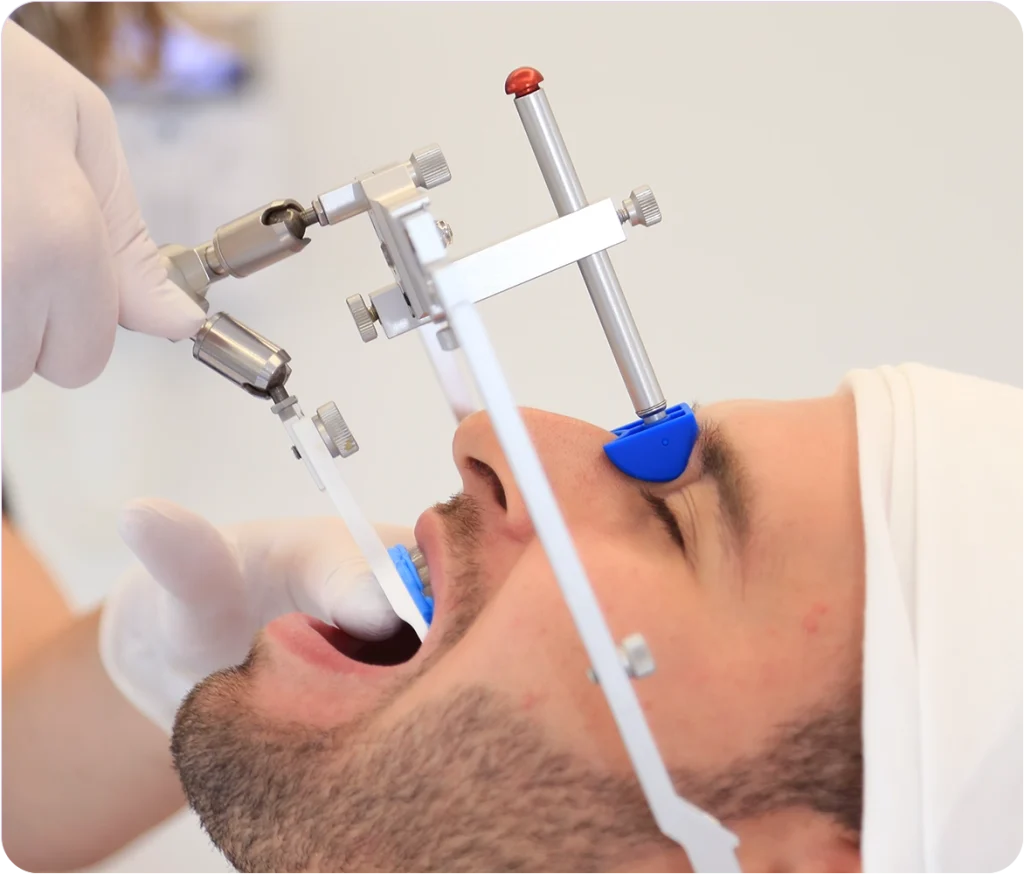
Detailed symptom history — onset, character, timing and triggers of pain. Sleep quality, stress levels, dietary habits and prior treatments reviewed. Visual and manual examination: joint palpation, masseter bulk assessment, range of motion measurement (maximum opening, lateral excursion), occlusal analysis with articulating paper. Joint sounds documented — clicking, crepitus, locking history.
In-house CBCT scan capturing both TMJs simultaneously in high resolution. OPG panoramic X-ray for overall dental assessment. Images reviewed chairside with the patient — joint space, condylar morphology and bone quality discussed immediately.
Full written plan presented at the same or follow-up appointment. Diagnosis explained clearly — joint-based, muscle-based or mixed. Recommended treatment combination outlined with realistic timelines. Costs provided in writing before any treatment begins.
Digital impressions or iTero scan of both arches. Laboratory-fabricated splint (7–10 days turnaround). Fit appointment: splint adjusted chairside for balanced contacts. Home exercise programme issued. Wear instructions explained.
Cleansing of skin. Topical anaesthetic applied. Bilateral masseter injection at precise anatomical points. Ice pack applied post-procedure. Post-treatment guidance: no massage, no extreme jaw movements for 24 hours. Full effect at 2–3 weeks.
Splint comfort and fit assessed. Occlusal contacts refined if needed. Botox onset confirmed. Exercise programme compliance reviewed. Symptom progress documented.
Review appointments at 3 and 6 months. CBCT re-imaging at 6 or 12 months for cases with structural joint changes. Botox maintenance schedule established based on symptom return timeline. Splint replacement when worn through.
Treatment | Why It Connects | Link |
|---|---|---|
CBCT & OPG Imaging | Mandatory diagnostic foundation for all TMJ cases at Cosmolaser — both joints imaged simultaneously in 3D. | /services/dental/cbct-opg-dental-xray-sharjah/ |
Botox & Injectables | Masseter Botox sits within our full injectable portfolio — administered by the same physician team with full aesthetic and dental context. | /services/injectables/botox-fillers-sharjah/ |
Dental Braces / Orthodontics | Significant bite imbalance contributing to TMJ disorder is addressed through orthodontic correction — coordinated with TMJ treatment plan. | /services/dental/braces-sharjah/ |
Clear Aligners | Alternative to braces for bite correction in TMJ patients — occlusal monitoring integrated throughout aligner treatment. | /services/dental/clear-aligners-sharjah/ |
Dental Implants | Missing teeth alter bite balance and loading patterns — implant restoration is often part of long-term TMJ rehabilitation. | /services/dental/dental-implants-sharjah/ |
Root Canal Treatment | Dental pain can mimic or coexist with TMJ pain — comprehensive | /services/dental/root-canal-sharjah/ |
We’ve gathered the most common questions to help you feel informed, confident, and ready for your journey with us.
TMJ disorder has multiple contributing factors that vary by patient. The most common include: bruxism (teeth grinding or clenching, usually during sleep), bite misalignment (malocclusion) that creates uneven joint loading, trauma to the jaw or face, stress-related muscle tension in the jaw and neck, and articular disc displacement within the joint. In many cases, several factors are present simultaneously. The UAE-specific factors of high occupational stress, dietary habits and post-orthodontic bite changes are particularly relevant to Sharjah patients.
It may be. TMJ-related headaches are typically felt in the temples, behind the eyes or at the base of the skull — they are often worse in the morning (from nocturnal grinding) and can be reproduced by pressing on the masseter muscles at the jaw angle or jaw joint area in front of the ear. If you have been investigated for headaches without a neurological cause being found, a dental TMJ assessment is strongly recommended. Many patients with years of chronic headaches find significant relief after TMJ treatment.
Yes — for the majority of patients with bruxism-related TMJ disorder, a well-fitted occlusal splint is the most effective conservative treatment available. It eliminates the destructive tooth-to-tooth contact during grinding, reduces joint loading, and allows the jaw muscles to rest in a physiologically neutral position. Most patients notice meaningful symptom improvement within 4–6 weeks of consistent nightly wear. A properly made splint is hard acrylic, custom-fitted to your dental impressions — not the generic boil-and-bite guards sold in pharmacies, which can worsen symptoms.
Masseter Botox works by partially blocking the nerve signal to the masseter muscle, reducing its contractile force. The muscle remains fully functional for normal eating and speaking but loses the excessive clenching power responsible for grinding damage and jaw pain. Results begin at 10–14 days and are fully established at 3–4 weeks. Most patients notice jaw soreness resolving, morning headaches reducing, and — where masseteric hypertrophy is present — a visible slimming of the lower jaw. The treatment lasts 4–6 months initially, extending with repeat treatment.
For many patients, a combination of splint therapy, Botox and physiotherapy achieves long-term symptom control that amounts to functional resolution of the condition. However, because the underlying risk factors (stress, bite relationships, sleep habits) often persist, ongoing management — typically a maintained splint and periodic Botox — is the realistic expectation for most patients rather than a single cure. Patients who achieve bite correction through orthodontics as part of their TMJ programme tend to have the most durable outcomes.
Jaw clicking alone, without pain or functional restriction, is common and not necessarily dangerous. It typically indicates some degree of articular disc movement within the joint but does not always progress or cause symptoms. We recommend assessment to document the baseline and provide lifestyle guidance. Clicking that develops pain, worsening locking, limited opening or crepitus (grinding sensation) warrants prompt evaluation and treatment, as these features suggest disc displacement or joint degeneration that is better treated early.
Jaw clicking alone, without pain or functional restriction, is common and not necessarily dangerous. It typically indicates some degree of articular disc movement within the joint but does not always progress or cause symptoms. We recommend assessment to document the baseline and provide lifestyle guidance. Clicking that develops pain, worsening locking, limited opening or crepitus (grinding sensation) warrants prompt evaluation and treatment, as these features suggest disc displacement or joint degeneration that is better treated early.
A nightguard (occlusal splint) is a hard acrylic appliance specifically designed to protect teeth from grinding forces, reduce joint loading and provide muscular rest — it has precisely adjusted occlusal contacts and is fitted at a therapeutic vertical dimension. A dental retainer is designed to hold teeth in their post-orthodontic position with minimal bite contact modification. They serve entirely different functions: a retainer does not protect against bruxism damage and cannot treat TMJ disorder. If you grind your teeth, you need a proper nightguard, not just your orthodontic retainer.
Yes — masseter Botox for aesthetic jaw slimming is available at Cosmolaser as a standalone aesthetic treatment for patients who want a slimmer, more oval lower face without any functional TMJ complaint. At Cosmolaser, all masseter Botox patients receive a brief dental and jaw assessment before treatment regardless of indication — this ensures appropriate dosing, rules out contraindications, and means the treatment is delivered with full anatomical context. Patients seeking primarily aesthetic jaw slimming are welcome to book through our injectables service as well.
Expert TMJ diagnosis and treatment at Cosmolaser Medical Centre, Sharjah. CBCT imaging, occlusal splints and Botox for bruxism — all under one roof, planned as a single programme.