
Stretch marks (striae distensae) are common dermal scars that form when skin stretches or shrinks rapidly, rupturing collagen and elastin fibres in the deeper layers. According to the NHS, the Mayo Clinic, and the American Academy of Dermatology, they are harmless and affect people of all ages, sexes, and skin tones. The honest clinical verdict: treatments can meaningfully reduce their visibility, but complete removal is rarely achievable.
Three things to know immediately:
- See a GP if marks appear suddenly across large areas alongside unexplained weight gain, a rounded face, or fatigue — these can occasionally signal an endocrine condition such as Cushing syndrome.
- Self-care basics (skin hydration, gradual weight management, balanced nutrition) will not erase existing marks but can support skin resilience.
- Timing matters. Red or purple marks respond better to many treatments than pale, mature ones.
Pro Tip: Start treatment while marks are still red or purple. The inflammatory phase is when the skin is most receptive to topical retinoids, laser energy, and collagen-stimulating procedures.
Table of Contents
- What stretch marks actually are — and how they change over time
- Why stretch marks form and who is at higher risk
- Can you prevent stretch marks? Separating evidence from myth
- What treatments are available and what they realistically achieve
- Which treatment suits your stage and skin type?
- Managing expectations: what clinicians actually tell patients
- When should you see a GP or dermatologist?
- Key takeaways
- The clinical reality patients rarely hear upfront
- Useful sources and further reading
- Cosmolaser Medical Centre: in-clinic stretch mark treatment in the UAE
- FAQ
What stretch marks actually are — and how they change over time
Clinically termed striae distensae, stretch marks begin with a mechanical event: rapid stretching or shrinking of skin places tension on the dermis that collagen and elastin fibres cannot withstand. As NCBI Bookshelf explains, this triggers local inflammation and hormonal modulation of fibroblasts — the cells responsible for producing new collagen — which impairs the skin’s repair response and results in dermal atrophy.
The marks progress through two recognisable clinical stages. Striae rubrae are the early, active phase: the skin appears red, violet, or pink, feels slightly raised or itchy, and the inflammatory process is still active. Over months to roughly a year, most marks transition to striae albae — pale, silver, or white streaks that sit slightly depressed below the surrounding skin surface. At this mature stage, the vascular component has resolved, and the tissue is structurally more like a scar than inflamed skin.
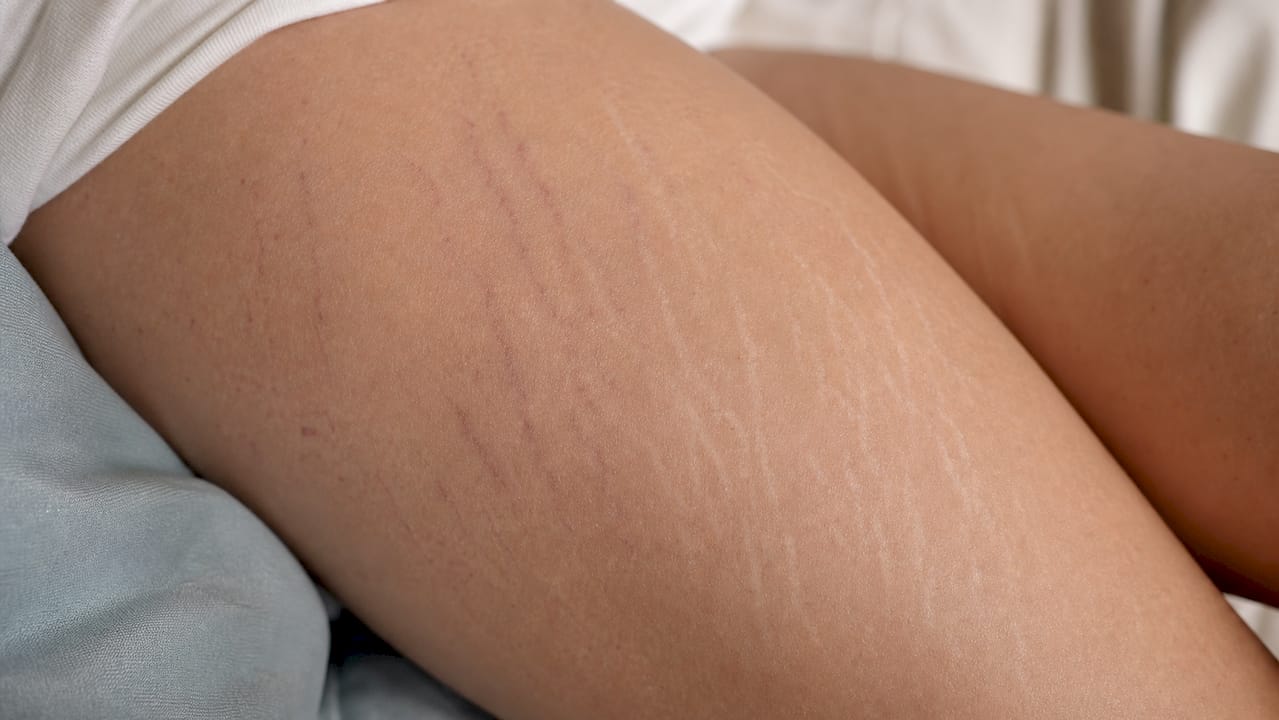
This distinction is clinically significant because the biology of each phase dictates which treatments are likely to help.
Why stretch marks form and who is at higher risk
The underlying cause is always some form of rapid change in skin volume or tension, but several factors determine who is most susceptible.
Mechanical causes include pregnancy (the single most common trigger), rapid weight gain or loss, adolescent growth spurts, and significant muscle hypertrophy from intensive training. Skin that stretches faster than its collagen network can adapt will scar.
Hormonal and medical contributors are equally important. Elevated cortisol — whether from prolonged psychological stress, long-term corticosteroid use (topical, inhaled, or oral), or conditions such as Cushing syndrome — suppresses fibroblast activity and weakens the dermis. Connective-tissue disorders such as Marfan syndrome also predispose individuals to striae by affecting the structural integrity of collagen.
Individual risk factors include female sex, a family history of stretch marks, younger age at pregnancy, and skin that is naturally less elastic. As Mayo Clinic notes, genetic predisposition plays a meaningful role — if a parent developed prominent striae, the likelihood increases for their children.
Stretch marks are common and carry no medical risk in themselves. Adolescents, in particular, should be reassured that growth-related striae are normal and typically fade considerably without intervention.
When to seek GP review: Widespread new marks appearing rapidly, combined with central weight gain, a rounded or puffy face, easy bruising, or muscle weakness, may indicate Cushing syndrome or another endocrine condition. This pattern warrants prompt medical assessment rather than cosmetic treatment.
Can you prevent stretch marks? Separating evidence from myth
Prevention is genuinely difficult because genetic predisposition and the speed of physical change are the dominant factors. That said, some measures are sensible and low-risk.
Evidence-backed steps:
- Avoid very rapid weight gain or loss where clinically safe to do so — gradual change gives the dermis more time to adapt.
- Maintain good skin hydration; well-moisturised skin is more supple, though this does not guarantee prevention.
- Support collagen synthesis through adequate protein, vitamin C, and zinc in the diet.
- Discuss long-term topical corticosteroid use with your prescribing clinician — prolonged use thins the dermis and increases susceptibility.
What the evidence does not support: Cocoa butter, almond oil, olive oil, and vitamin E are widely promoted for preventing stretch marks during pregnancy, but clinical trials show limited or no preventive effect for these products. Centella asiatica extract and hyaluronic acid show more promising early data, though prevention is still not guaranteed with any topical product.
Hormonal skin changes during the menstrual cycle can also affect skin elasticity and hydration — understanding why skin changes cyclically may help you time skincare routines more effectively.
What treatments are available and what they realistically achieve
Cleveland Clinic describes stretch marks as a form of scarring, and that framing is clinically useful: the goal of treatment is to make them less noticeable, not to erase them. No single procedure achieves complete removal.
| Treatment | How it works | Best stage | Sessions (typical) | Key caution |
|---|---|---|---|---|
| Topical tretinoin (retinoid) | Stimulates collagen synthesis in the dermis | Striae rubrae (early) | Daily application for months | Contraindicated in pregnancy/breastfeeding |
| Hyaluronic acid (topical) | Hydrates and may improve early lesion texture | Striae rubrae (early) | Ongoing | Generally well tolerated |
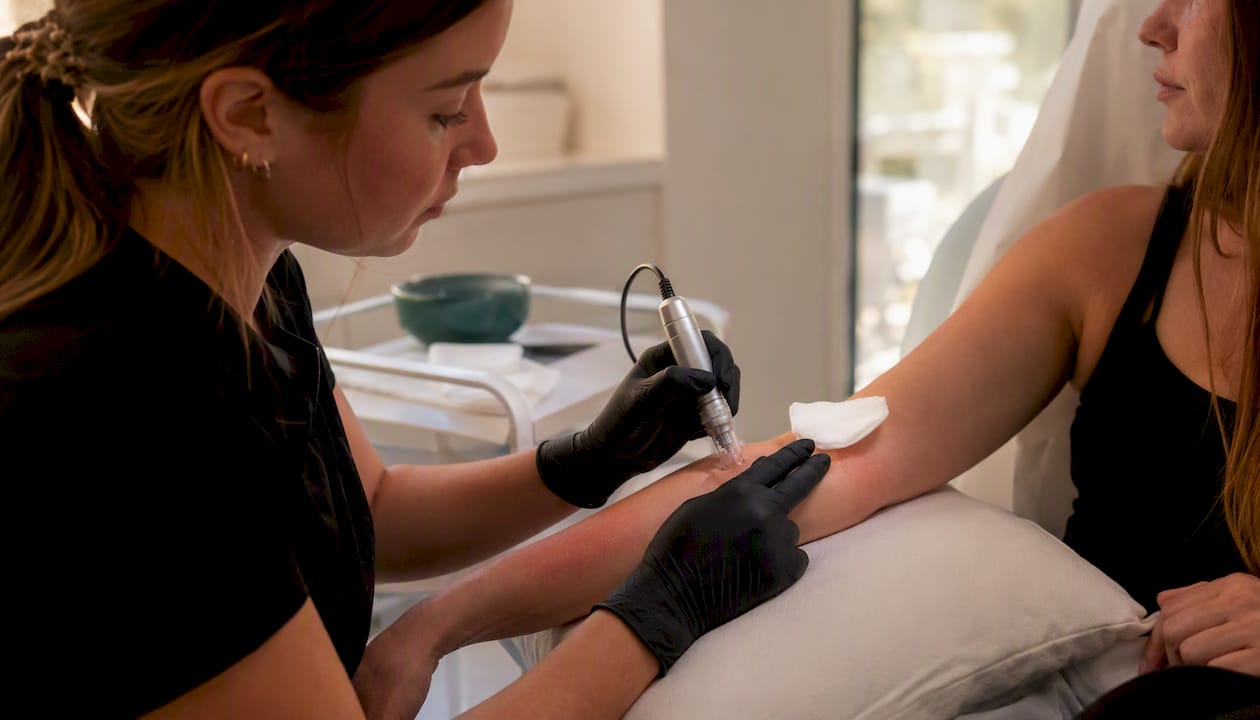
| Microneedling | Creates micro-injuries to stimulate collagen remodelling | Both stages; preferred for darker skin | 3–6 sessions | Mild downtime; lower pigmentation risk |
| Radiofrequency microneedling | Combines needle injury with thermal energy for deeper remodelling | Striae albae (mature) | 3–4 sessions | Avoid over active skin conditions |
| Fractional CO2 laser | Ablates micro-columns of tissue, triggering collagen induction | Striae albae (mature) | 2–4 sessions | Higher pigmentation risk in darker skin |
| Pulsed-dye laser (PDL) | Targets vascular component to reduce redness | Striae rubrae (early) | 2–4 sessions | Less effective on pale/mature marks |
| Chemical peel | Resurfaces superficial layers to improve texture | Mild/early marks | 4–6 sessions | Depth must be matched to skin type |
| Microdermabrasion | Mechanical exfoliation to improve surface texture | Mild marks | 6–10 sessions | Modest effect on deeper marks |
| PRP (platelet-rich plasma) | Growth factors stimulate tissue repair | Both stages | 3–4 sessions | Often combined with microneedling |
| Collagen biostimulators | Injectable agents stimulate new collagen over months | Mature marks | 1–3 sessions | Requires clinician assessment |
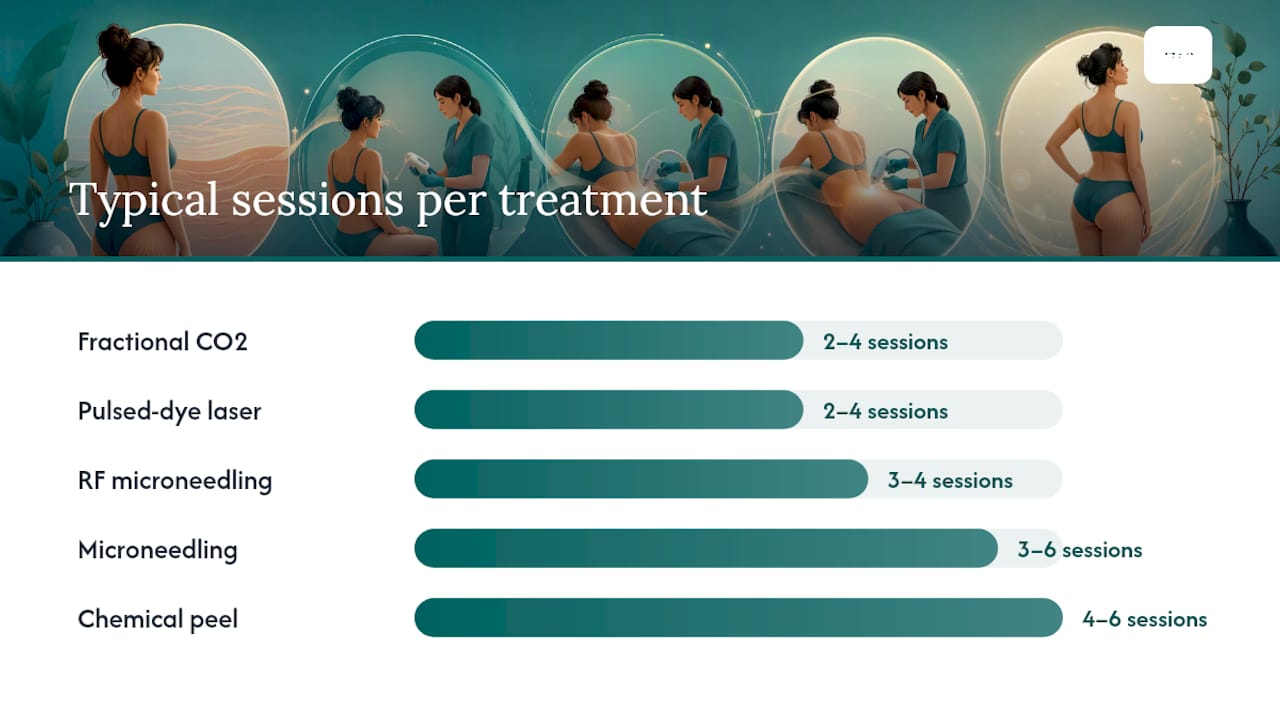
As Mayo Clinic confirms, topical tretinoin and hyaluronic acid show the strongest evidence for early marks, while microneedling is often preferred for patients with darker skin tones due to its lower risk of post-inflammatory hyperpigmentation compared with some laser modalities. Understanding why aesthetic clinics use lasers helps clarify which energy-based devices are appropriate for each stage and skin type.
Which treatment suits your stage and skin type?
Matching the treatment to the mark’s current phase and the patient’s Fitzpatrick skin type is the most important clinical decision.
- Striae albae (pale/silver, mature): Structural stimulation is required. Microneedling, radiofrequency microneedling, fractional CO2 laser, collagen biostimulators, and PRP all aim to induce new collagen within the atrophic dermis.
Combining modalities — for example, microneedling followed by a topical growth-factor serum, or PRP alongside fractional laser — often produces better outcomes than a single approach alone.
Managing expectations: what clinicians actually tell patients
This framing, consistent with guidance from the AAD, reflects the biological reality: once collagen and elastin fibres have ruptured and the inflammatory phase has resolved, the tissue cannot be fully restored to its original architecture. What treatment can achieve is meaningful improvement in colour, texture, and depth — particularly when started early.
Early intervention matters because the inflammatory phase, when fibroblasts are still active, is when the skin is most receptive to collagen-stimulating signals. Mature marks require more sessions and more structural stimulation to achieve comparable improvement. Patients should expect gradual change over months, not weeks, and should plan for multiple sessions with any procedural treatment.
Pro Tip: Track your marks with photographs taken in the same lighting and position before each session. Improvement in stretch marks is often gradual enough that it is easy to underestimate progress without a visual reference.
When should you see a GP or dermatologist?
Most stretch marks need no medical attention. Seek a GP assessment when:
- Marks appear suddenly across large areas with no obvious cause (rapid growth, weight change, or pregnancy)
- You notice accompanying symptoms: central weight gain, a rounded face, easy bruising, muscle weakness, or fatigue — possible indicators of Cushing syndrome or another endocrine condition
- Marks are widespread in a child or adolescent without a clear growth-related explanation
For cosmetic improvement, a dermatologist or accredited aesthetic clinician is the appropriate route. Before your appointment, prepare by:
- Photographing the marks in consistent lighting
- Noting when they first appeared and any associated life events (pregnancy, weight change, new medication)
- Listing any corticosteroid use (topical, inhaled, or oral) and its duration
- Writing down your expectations and any treatments already tried
A thorough cosmetic dermatology consultation will assess mark stage, skin type, and medical history before recommending a treatment plan.
Key takeaways
Stretch marks are a form of dermal scarring that can be significantly improved with the right treatment at the right stage, but no procedure removes them entirely.
| Point | Details |
|---|---|
| Early treatment gives better results | Red or purple marks respond more readily to retinoids, lasers, and microneedling than pale, mature ones. |
| No cream guarantees prevention | Cocoa butter and vitamin E lack clinical evidence; hyaluronic acid and centella show more promise but cannot guarantee prevention. |
| Skin type guides procedure choice | Microneedling is often preferred for darker skin tones due to lower risk of post-inflammatory hyperpigmentation. |
| Widespread marks may need GP review | Rapid, widespread striae with systemic symptoms can indicate Cushing syndrome or another endocrine condition. |
| Cosmolaser Medical Centre offers in-clinic assessment | Patients in the UAE can access personalised stretch mark treatment, including microneedling, RF microneedling, and fractional laser, at Cosmolaser Medical Centre in Sharjah. |
The clinical reality patients rarely hear upfront
Most people arrive at a clinic hoping for complete removal. Dermatology experts consistently report that this expectation, left unaddressed, is the single biggest driver of dissatisfaction — not the treatment itself.
The honest position is this: stretch marks are scars, and scars do not fully reverse. What changes with treatment is how noticeable they are — their colour, depth, and texture — and that change can be genuinely significant. A pale, depressed mark that becomes smoother and closer in tone to surrounding skin is a real clinical success, even if it remains faintly visible.
There is also a tendency to over-invest in prevention products and under-invest in timing. Spending months applying cocoa butter to established marks, then seeking clinic treatment only when marks are fully mature, is a common and avoidable pattern. The evidence points clearly toward earlier intervention for better outcomes.
For patients in the UAE, Cosmolaser Medical Centre’s team in Sharjah assesses each case individually, matching treatment to mark stage and skin phototype rather than applying a standard protocol. That personalised approach is what the evidence supports.
Useful sources and further reading
The following resources were used in preparing this article and are recommended for further reading:
- Stretch marks – NHS
- Stretch Marks: What are they, Causes & Treatments
- Stretch marks – Diagnosis & treatment – Mayo Clinic
- Stretch marks – Symptoms & causes – Mayo Clinic
- Stretch marks: Why they appear and how to get rid of them
- Striae distensae – NCBI Bookshelf
This article provides general information, not medical advice. Confirm your individual circumstances with a qualified clinician or your GP before beginning any treatment.
Cosmolaser Medical Centre: in-clinic stretch mark treatment in the UAE

For readers in the UAE, Cosmolaser Medical Centre in Sharjah offers medically supervised stretch mark treatment that goes well beyond what any topical product can achieve. Rather than a single-modality protocol, the clinic’s approach matches treatment to the specific stage of your marks and your skin’s Fitzpatrick phototype — microneedling and radiofrequency microneedling for collagen induction, fractional CO2 laser for structural resurfacing, and combination approaches where the evidence supports them.
The clinical team includes qualified doctors and aesthetic specialists experienced in treating the full range of skin tones common across the UAE and wider region — a meaningful consideration given the pigmentation risks associated with certain laser modalities in darker skin. Every treatment plan begins with a thorough consultation assessing mark stage, skin type, medical history, and realistic goals.
Explore the full range of body aesthetic treatments available at the clinic, or book a consultation to receive a personalised assessment and treatment recommendation from the Cosmolaser Medical Centre team.
FAQ
What causes stretch marks?
Stretch marks form when skin stretches or shrinks rapidly, rupturing collagen and elastin fibres in the dermis. Common triggers include pregnancy, puberty, rapid weight change, muscle hypertrophy, and prolonged corticosteroid use.
Can stretch marks go away on their own?
They rarely disappear completely, but most fade significantly over months to a year, transitioning from red or purple to pale silver. Clinical treatments can accelerate and improve this process but cannot guarantee full removal.
How do you stop stretch marks from forming?
No method guarantees prevention. Avoiding very rapid weight change, keeping skin well hydrated, and supporting collagen through good nutrition are sensible steps. Topical products such as cocoa butter and vitamin E lack strong clinical evidence for prevention.
Is it normal for a 13-year-old to have stretch marks?
Yes. Growth-related striae are common during puberty and are entirely normal. They typically fade over time without treatment. If marks are unusually widespread or accompanied by other physical changes, a GP review is advisable to rule out underlying causes.
When should you see a doctor about stretch marks?
Seek GP advice if marks appear suddenly across large areas alongside unexplained weight gain, a rounded face, easy bruising, or fatigue — these may indicate Cushing syndrome or another endocrine condition rather than ordinary growth or weight change.