
TL;DR:
- Polynucleotide treatments stimulate skin’s natural repair processes, improving texture, elasticity, and overall quality. They are suitable for early laxity, fine lines, and crepey skin but do not address volume loss or deep folds. Results develop gradually over weeks, requiring multiple sessions for meaningful improvement.
Polynucleotides are purified DNA polymer chains injected intradermally to stimulate your skin’s own repair mechanisms, improving texture, elasticity, and overall skin quality rather than adding volume. They suit people dealing with crepey skin, fine lines, poor texture, early laxity, thin or translucent skin, and tired-looking areas around the eyes, neck, or hands. The recommended first step is a consultation with an accredited clinician who can confirm product traceability and build a personalised treatment plan.
Quick snapshot:
- Sessions: A standard course of multiple sessions spaced several weeks apart
- Onset: Gradual improvement over several weeks; not an immediate result
- Downtime: Typically minimal — localised redness and mild swelling for 24–48 hours
- Best for: Skin quality concerns, not volume loss or deep static folds
Pro Tip: Expect multiple sessions before you see meaningful change. Polynucleotide treatments work by stimulating biological repair processes that accumulate over time, so patience and a documented follow-up plan are as important as the treatment itself.
Table of Contents
- What are polynucleotides and how do they work in skin?
- Which skin concerns and body areas do polynucleotides treat?
- What happens at your consultation, during the procedure, and in aftercare?
- Is the treatment safe, and what is the ‘salmon sperm’ story?
- How do polynucleotides compare with Botox, fillers, and Profhilo?
- How many sessions do you need, when will you see results, and what does it cost in the UK?
- How do you choose the right clinic for polynucleotide treatment?
- What does the clinical evidence say about polynucleotides?
- Key takeaways
- Polynucleotide consultations at Cosmolaser Medical Centre
- FAQ
What are polynucleotides and how do they work in skin?
Polynucleotides are long linear chains of nucleotides joined by phosphodiester bonds. DNA and RNA are the most familiar natural examples. In an aesthetic context, the term refers specifically to purified, high-molecular-weight chains derived from fish DNA, processed to a standard that makes them suitable for intradermal injection.

The raw source material is fish DNA, but the finished product bears little resemblance to it. Extensive purification removes proteins, allergens, and any immunogenic components, leaving behind linear nucleotide chains that act as biological signals rather than functioning genetic material. The distinction matters: these chains do not alter your DNA. They interact with receptors on fibroblasts, the cells responsible for producing collagen and elastin, triggering a repair and regeneration cascade.
The mechanism unfolds over weeks. After intradermal injection, the purified chains signal fibroblasts to increase collagen and elastin synthesis, reduce localised inflammation, and support cellular turnover. The result is a gradual improvement in skin density, hydration, and surface quality rather than the immediate plumping effect associated with hyaluronic acid fillers.
Chain length is not a minor technical detail. Research into sequence-defined DNA polymers shows that length and structure directly influence biological behaviour. Longer, well-defined chains tend to produce stronger fibroblast signalling, whereas short oligonucleotides behave quite differently. This is why product specifications and manufacturing standards matter clinically, not just commercially.
Pro Tip: When evaluating a product, ask specifically about chain length and purification grade. A clinician who can answer these questions with reference to batch documentation is one who understands the treatment at a mechanistic level, which is a meaningful quality signal.
Which skin concerns and body areas do polynucleotides treat?
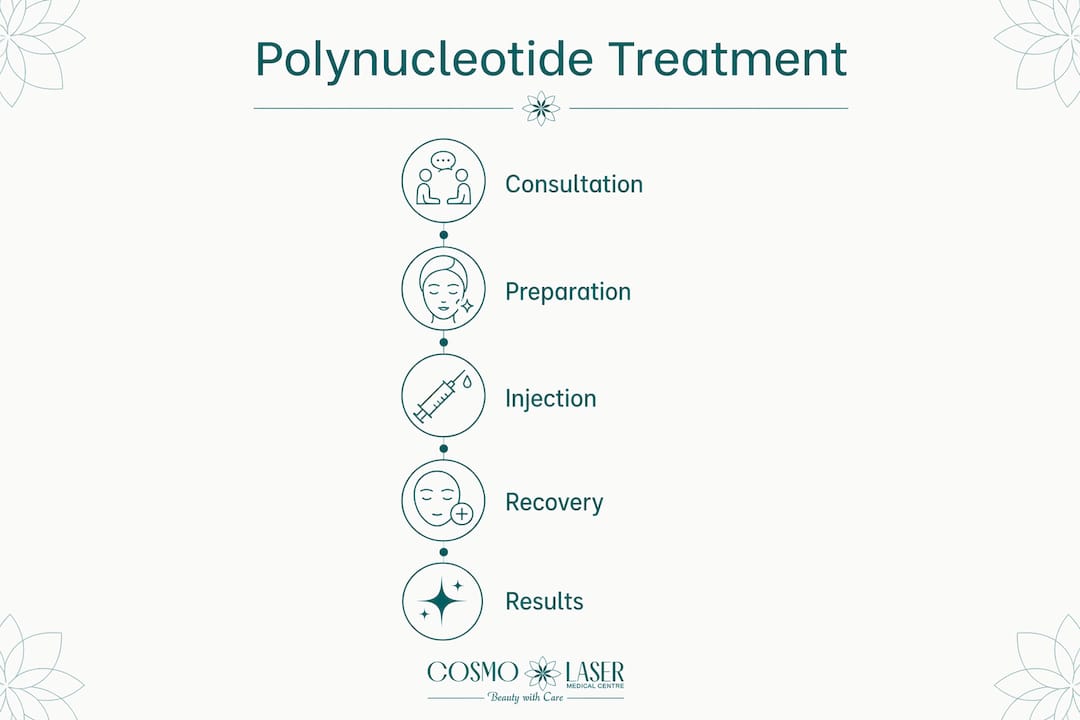
Polynucleotide treatments address a specific category of skin concern: quality, structure, and regeneration. They are not the right choice for deep volume loss or static folds, which require a volumising filler. Understanding this distinction helps you arrive at a consultation with realistic expectations.
Common treatment areas:
- Face: cheeks, periorbital zone, tear trough skin quality, forehead skin texture
- Under-eye area: thin, crepey skin and dark-circle improvement linked to poor skin quality
- Neck and décolletage: early laxity, crepiness, and texture irregularity
- Hands: thin, translucent skin and visible surface texture
- Body areas with crepey skin: inner arms, abdomen post-weight change
Target concerns:
- Fine lines and surface texture irregularity
- Crepey or thin skin lacking density
- Early skin laxity without significant volume deficit
- Post-acne skin quality improvement (texture, not active scarring)
- Dull, fatigued-looking skin with reduced elasticity
For body aesthetic concerns such as crepey skin on the décolletage or hands, polynucleotides are increasingly used as a standalone course or alongside energy-based treatments.
Where polynucleotides are not the right choice: deep nasolabial folds, significant mid-face volume loss, and lip augmentation are filler indications. A clinician who recommends polynucleotides for these concerns without acknowledging their limitations is not giving you an accurate picture.
What happens at your consultation, during the procedure, and in aftercare?
A well-structured treatment journey follows a clear sequence. Knowing what to expect at each stage helps you ask the right questions and recognise when a clinic is cutting corners.
-
Initial consultation: Your clinician takes a full medical history, including allergies, current medications, and previous aesthetic treatments. They document baseline photographs, discuss realistic goals, and confirm the specific product being used, including its manufacturer, batch number, and regulatory status (CE marking or UKCA marking where applicable). Informed consent is signed before any treatment proceeds.
-
Pre-treatment checks: Contraindications are reviewed (see the safety section below). The treatment area is assessed for active infection, inflammation, or skin conditions that would delay the procedure. You should expect a written consent form that details the product name, potential side effects, and aftercare instructions.
-
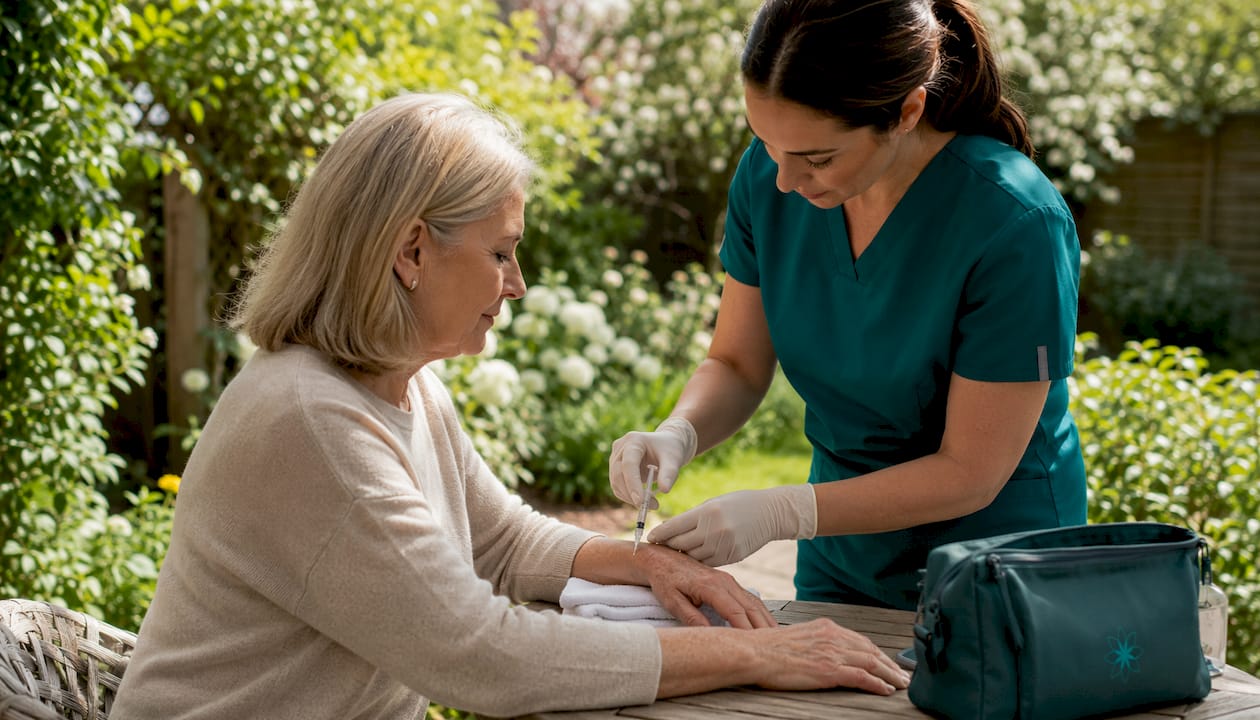
The procedure: A topical anaesthetic cream is applied to the treatment area and left for 20–30 minutes. The clinician then delivers a series of intradermal microinjections using a fine needle or cannula, placing the product just beneath the skin surface. A typical facial session takes 30–45 minutes. Some clinicians use a serial puncture technique; others use a linear threading approach, depending on the area.
-
Immediate post-treatment: Expect localised redness, mild swelling, and occasionally small injection-site papules that resolve within 24–48 hours. Bruising is possible, particularly in thin-skinned areas such as the periorbital zone. Avoid strenuous exercise, alcohol, and direct sun exposure for 24–48 hours. Do not apply make-up for at least 12 hours.
-
Follow-up and scheduling: A standard course consists of three sessions spaced 2–4 weeks apart. Your clinician should schedule a review appointment after the course to assess progress against baseline photographs and decide whether maintenance sessions are appropriate.
| Stage | Key action | Timing |
|---|---|---|
| Consultation | Medical history, consent, baseline photos | Before first session |
| Pre-treatment | Contraindication check, product traceability confirmed | Day of treatment |
| Procedure | Topical anaesthetic, intradermal microinjections | 30–45 minutes |
| Immediate aftercare | Avoid exercise, sun, alcohol, make-up | 24–48 hours post-session |
| Course completion | Review against baseline photos | After session three |
Is the treatment safe, and what is the ‘salmon sperm’ story?
The safety profile of properly manufactured polynucleotide products is well established in clinical use. Side effects are typically localised and transient. Understanding both the risks and the sourcing question helps you make an informed decision.
Typical side effects (usually mild and short-lived):
- Localised swelling and erythema at injection sites, resolving within 24–48 hours
- Bruising, particularly in thin-skinned periorbital areas
- Transient papules or small lumps at injection points, usually resolving within days
- Rarely, prolonged swelling or localised tenderness
Contraindications — decline treatment if any of the following apply:
- Active skin infection or inflammation in the treatment area
- Pregnancy or breastfeeding
- Known allergy to fish or fish-derived products (given the sourcing)
- Autoimmune conditions or immunosuppressive therapy (discuss with your GP)
- Blood-thinning medications (discuss timing with your clinician)
- Active cancer or a history of cancer in the treatment area
The ‘salmon sperm’ question: The marketing label is misleading and clinically unhelpful. The raw material is fish DNA, but the manufacturing process removes all proteins and allergens through multiple purification steps. What remains are purified linear DNA chains that are biocompatible and carry no genetic information relevant to the recipient. Describing the product as ‘salmon sperm’ focuses on the origin rather than the mechanism, which causes unnecessary apprehension. The more accurate description is ‘purified DNA molecules’ or ‘polynucleotide chains.’
What to ask about product traceability:
- What is the product name and manufacturer?
- Can you show me the batch number and CE/UKCA documentation?
- What purification standard does the product meet?
- Has the product been used in peer-reviewed clinical studies?
A clinic that cannot answer these questions clearly is a clinic to approach with caution.
How do polynucleotides compare with Botox, fillers, and Profhilo?
These treatments are not interchangeable. Each addresses a different problem through a different mechanism, and the most effective treatment plans often combine more than one approach.
| Treatment | Primary effect | Mechanism | Onset and duration | Sessions | Downtime | Typical UK cost shape |
|---|---|---|---|---|---|---|
| Polynucleotides | Skin quality, texture, elasticity | Fibroblast stimulation, collagen/elastin synthesis | Gradual over weeks; lasts several months | Course of 3, then maintenance | Minimal (24–48 hrs redness) | Per session or course pricing |
| Botox (neuromodulator) | Muscle relaxation, dynamic wrinkle reduction | Blocks neuromuscular transmission | Visible within 2 weeks; lasts 3–4 months | Single session, repeated | Minimal | Per area or per session |
| Dermal fillers | Volume restoration, static line correction | Physical volumisation with hyaluronic acid or similar | Immediate | Usually one session | Minimal to moderate | Per ml or per area |
| Profhilo | Skin hydration, laxity improvement | Slow-release hyaluronic acid remodelling | Gradual over 4 weeks; lasts 6 months | Two sessions, 4 weeks apart | Minimal | Per course of two |
Polynucleotides and Botox serve genuinely different purposes. Botox relaxes the muscles that cause dynamic wrinkles; polynucleotides improve the quality of the skin itself. Profhilo, like polynucleotides, is a skin-quality treatment rather than a volumiser, but it works through hyaluronic acid remodelling rather than fibroblast stimulation. The two are sometimes used together in clinic.
When to combine treatments: Clinicians who work with multiple modalities often sequence treatments deliberately. A common approach is to address dynamic lines with a neuromodulator first, then introduce polynucleotides for skin quality over the following weeks. Combining cosmetic treatments safely requires staging sessions so that individual effects can be monitored and attributed correctly. Rushing multiple treatments into a single appointment makes it difficult to assess what is working and what is causing any adverse reaction.
Fillers remain the appropriate choice when the primary concern is volume deficit, deep static folds, or structural support. Polynucleotides do not replace fillers for these indications; they complement them by improving the skin quality around and above the treated area.
How many sessions do you need, when will you see results, and what does it cost in the UK?
Setting accurate expectations before you begin is the single most important factor in patient satisfaction with polynucleotide treatment.
Typical course and maintenance:
- Standard course: three sessions spaced 2–4 weeks apart
- Maintenance: one or two sessions every 6–12 months, depending on individual response and skin condition
- Some clinicians recommend a review at four weeks after the final session before scheduling maintenance
Results timeline:
- Weeks 2–4: subtle improvements in skin hydration and surface texture may begin to appear
- Weeks 6–8: more visible changes in skin quality, elasticity, and fine-line reduction
- Months 3–6: peak benefit from the initial course; skin density and tone typically at their best
- Beyond 6 months: gradual return toward baseline without maintenance sessions
Unlike dermal fillers, there is no immediate visible change after a polynucleotide session. Baseline photographs are the most reliable way to track progress, because gradual improvement is easy to underestimate without a documented reference point.
UK pricing guidance: Pricing varies considerably by clinic, product, practitioner experience, and geographic location. As a broad guide, individual sessions in the UK are typically priced in the range of £150–£350 per session, with course packages often available at a reduced per-session rate. London clinics tend to sit at the higher end of this range. These figures are indicative only; always confirm pricing directly with the clinic before booking.
How do you choose the right clinic for polynucleotide treatment?
The quality of your outcome depends as much on the clinician and the product as on the treatment itself. A structured approach to clinic selection reduces risk considerably.
Questions to ask at consultation:
- What is your qualification and specific training in injectable treatments?
- Which polynucleotide product do you use, and can you show me the manufacturer’s documentation?
- What is the batch number for the product you plan to use on me?
- How many polynucleotide courses have you performed, and can you show documented before-and-after records?
- What is your protocol if I experience an adverse reaction?
- Is a follow-up appointment included in the course price?
Red flags to watch for:
- Vague product names with no manufacturer information provided
- Prices significantly below the market range (under £100 per session) with no explanation
- No written consent form or pre-treatment medical questionnaire
- No baseline photography offered
- Aftercare instructions given verbally only, with no written documentation
- Pressure to book on the day without adequate consultation time
Trust signals to prefer:
- Medical setting with a registered clinician (doctor, nurse prescriber, or dentist with aesthetic training)
- Written treatment protocol and documented follow-up
- Product traceability confirmed before treatment begins
- Clinician who discusses contraindications and realistic outcomes without overselling
Pro Tip: Ask to see the product packaging and batch number before your session begins. A clinician who is comfortable showing you this information and explaining what it means is one who takes product traceability seriously. If this request is met with reluctance, that tells you something important.
Consulting a dermatologist or qualified aesthetician for your initial assessment adds a layer of clinical oversight that is particularly valuable if you have a complex skin history or are considering combining treatments.
What does the clinical evidence say about polynucleotides?
The evidence base for polynucleotide use in aesthetic medicine draws on both preclinical research and clinical observational studies. It is not as extensive as the evidence for hyaluronic acid fillers or neuromodulators, but it is substantive and growing.
Key findings from clinical and research literature:
- Preclinical and clinical studies demonstrate anti-inflammatory effects and improved cellular turnover in wound healing and skin regeneration models, supporting the rationale for aesthetic use.
- Fibroblast stimulation and increased collagen and elastin synthesis are consistently reported in practitioner summaries and clinic-level reviews, with improvements in skin quality appearing over weeks rather than immediately.
- Research into sequence-defined DNA polymer behaviour confirms that chain length and structure influence biological activity, providing a scientific basis for the clinical observation that product specifications matter.
- Efficacy and safety depend heavily on manufacturing controls: high-purity linear chains with thorough protein removal reduce immunogenicity and improve predictability of response.
Myth versus fact:
| Myth | Fact |
|---|---|
| “Polynucleotides are made from salmon sperm” | The raw material is fish DNA, but purification removes all proteins and allergens; the finished product is biocompatible purified DNA chains |
| “Results are immediate, like fillers” | Improvement is gradual, building over weeks as fibroblast activity increases |
| “One session is enough” | A course of at least three sessions is standard to achieve meaningful skin-quality changes |
| “Any polynucleotide product is the same” | Chain length, purity, and manufacturing standards vary significantly between products and affect clinical outcomes |
Practitioner experience adds important nuance here. Clinicians who have performed multiple courses report that dosing, injection depth, and session spacing all influence outcomes. The peptide efficacy testing methods used in cosmetic research provide a useful framework for understanding how biological actives like polynucleotides are assessed for measurable effect, and advanced readers may find this context helpful when evaluating product claims.
Pro Tip: When a clinic cites clinical studies to support their product, ask for the study reference and check whether it used the same product, concentration, and chain length as the one being offered to you. Study results from one polynucleotide product do not automatically transfer to another.
Key takeaways
Polynucleotides work by stimulating fibroblasts to produce collagen and elastin over a course of three sessions, improving skin quality rather than adding volume, and results build gradually over weeks to months.
| Point | Details |
|---|---|
| Mechanism, not volume | Polynucleotides stimulate collagen and elastin synthesis; they repair skin quality rather than fill or plump. |
| Standard course | Three sessions spaced 2–4 weeks apart is the clinical norm; one session alone is unlikely to produce meaningful change. |
| Safety depends on sourcing | Properly purified products are biocompatible; always confirm batch documentation and CE/UKCA status before treatment. |
| Not a filler alternative | Deep volume loss and static folds require dermal fillers; polynucleotides complement but do not replace them. |
| Cosmolaser Medical Centre | Cosmolaser Medical Centre offers clinician-led skin rejuvenation with documented protocols and product traceability checks as part of every consultation. |
A clinician’s perspective on realistic outcomes
There is a tendency in aesthetic medicine to present polynucleotide treatment as a straightforward upgrade: book three sessions, wait a few weeks, and expect noticeably younger-looking skin. The reality is more nuanced, and patients who understand that nuance tend to have better experiences.
What polynucleotides genuinely do well is improve the quality of skin that has lost density, elasticity, or surface regularity. In patients with early laxity, crepiness around the eyes or neck, or skin that looks fatigued rather than volumetrically depleted, a well-executed course can produce meaningful and lasting improvement. The key word is ‘well-executed’: the product must be traceable, the chain length appropriate, and the injection technique precise.
Where the treatment falls short of expectations is almost always a case of mismatched indication. Polynucleotides cannot restore significant volume loss, and they cannot replicate the structural support of a well-placed filler. Presenting them as a universal anti-ageing solution does patients a disservice. The most satisfying outcomes come from an honest assessment of what the skin actually needs, followed by a treatment plan that may include polynucleotides alongside other modalities rather than instead of them.
Safety, in this context, is not just about avoiding adverse reactions. It is about choosing a clinician who will tell you when polynucleotides are not the right tool for your concern, and who will document your progress so that the decision to continue, adjust, or stop is based on evidence rather than assumption.
Polynucleotide consultations at Cosmolaser Medical Centre
Cosmolaser Medical Centre offers clinician-led aesthetic consultations for patients considering polynucleotide treatment, with a specific focus on product traceability, individualised treatment planning, and documented follow-up. The initial consultation covers a full skin assessment, a review of your medical history and contraindications, and a clear explanation of the product being recommended, including its manufacturer and batch documentation.
Every treatment plan at Cosmolaser Medical Centre is built around your specific skin concerns, whether that means a standalone polynucleotide course, a combination approach with collagen biostimulators, or a broader anti-ageing treatment plan. The clinic operates as a private medical setting, distinct from beauty salons and non-medical aesthetic providers, with qualified practitioners who can assess your suitability and manage any complications should they arise. To book your initial consultation and receive a personalised assessment, visit the Cosmolaser Medical Centre skin rejuvenation page.
Useful sources and further reading
The following sources informed this article and are recommended for readers who want to verify the evidence or read further.
-
Polynucleotide — ScienceDirect Topics: Academic overview of polynucleotide structure, anti-inflammatory properties, and tissue-repair mechanisms. Useful for readers seeking the scientific basis for aesthetic applications.
-
The ultimate guide to polynucleotides — Melior Clinics: Detailed clinic-level explanation of manufacturing, purification, mechanism, and treatment protocols. Practical and well-referenced.
-
Polynucleotides guide — Glowday: Patient-facing guide covering treatment comparisons, session counts, and safety considerations. Good for readers comparing treatment options.
-
Polynucleotides treatment — The Skin to Love Clinic: Practitioner commentary on product language, chain-length relevance, and patient communication. Useful for understanding why terminology matters.
-
Heat-activated growth of length-defined DNA fibres — Nature Communications: Research on length-defined DNA polymer behaviour, providing scientific context for why chain length influences biological activity in polynucleotide products.
-
Peptide degradation measurement methods — Peptilab: Technical resource on stability and degradation testing for biological actives; relevant for clinicians and advanced readers evaluating product shelf stability and persistence of effect.
-
Cosmolaser Medical Centre — skin rejuvenation: Clinic-specific information on skin rejuvenation services, consultation process, and treatment options available at Cosmolaser Medical Centre.
This article provides general educational information about polynucleotide treatments and is not a substitute for professional medical advice. Consult a qualified clinician to assess your individual suitability and confirm current treatment guidelines for your situation.
FAQ
What do polynucleotides do to your skin?
Polynucleotides stimulate fibroblasts to increase collagen and elastin production, gradually improving skin texture, density, and elasticity over several weeks. They address skin quality rather than adding volume or relaxing muscles.
Are polynucleotides better than Botox?
They treat different concerns entirely. Botox relaxes muscles to reduce dynamic wrinkles; polynucleotides improve the structural quality of the skin itself. For many patients, the two treatments complement each other rather than compete.
Will one session of polynucleotides do anything?
A single session is unlikely to produce meaningful visible change. A course of at least three sessions spaced 2–4 weeks apart is the standard clinical recommendation, because the treatment works by accumulating biological repair activity over time.
Is polynucleotide treatment better than dermal fillers?
For skin quality concerns such as crepiness, poor texture, and early laxity, polynucleotides are the more appropriate choice. For volume loss, deep static folds, or structural support, dermal fillers remain the correct indication. The two treatments address different problems and are often used together.