Laser hair removal is generally safe when performed by trained medical professionals, but it is not risk-free. Most patients experience only mild, short-lived reactions: redness, swelling around hair follicles known as perifollicular edema, and temporary tenderness at the treatment site. These typically fade within a day or two.
Uncommon but serious side effects do occur. Burns, blistering, scarring, permanent changes in skin color, and eye injury during facial treatments are documented risks, particularly when the wrong device or settings are used on a given skin type. Research on light-based hair removal finds that most adverse effects are minimal and reversible, while the rarer severe events correlate closely with device choice, skin type, and operator experience.
If you notice spreading redness, large or expanding blisters, pus, or a fever after a session, contact your provider immediately. Those signs suggest infection or a deeper burn that needs medical evaluation, not home care.
- Common and expected: redness, swelling, mild tenderness, warmth at the treated area
- Uncommon but possible: burns, blistering, hyperpigmentation or hypopigmentation, scarring
- Rare and serious: eye injury during facial or eyebrow treatment, deep tissue burns
Key Takeaways
Laser hair removal is safe for most patients when a trained provider matches the device and settings to your skin type, but burns, pigment changes, and rare eye injuries remain real risks that proper preparation and aftercare significantly reduce.
| Point | Details |
|---|---|
| Most side effects are mild | Redness, swelling, and tenderness typically resolve within 72 hours. |
| Serious risks are uncommon but real | Burns, blistering, scarring, and pigment changes usually trace back to device or settings mismatched to skin type. |
| Skin type drives risk level | Fitzpatrick types IV through VI need wavelength choices like Nd:YAG to lower burn and pigmentation risk. |
| Preparation matters as much as aftercare | Sun avoidance, proper shaving, and a test spot prevent most avoidable complications. |
| Red flags need prompt action | Spreading redness, expanding blisters, fever, or pus require same-day contact with your provider. |
Table of Contents
- What Are the Common Short-Term Side Effects of Laser Hair Removal?
- Which Side Effects Are Serious, and How Do You Recognize a Burn?
- Why Do These Side Effects Happen in the First Place?
- Who Faces the Highest Risk of Complications?
- How Should You Prepare for a Safer Laser Session?
- What Aftercare Steps Reduce Your Risk of Complications?
- Practitioner Perspective: How Clinics Reduce Risk in Practice
- An Editorial Take on Balancing Global Evidence With Regional Skin Diversity
- Sources
- FAQ
What Are the Common Short-Term Side Effects of Laser Hair Removal?
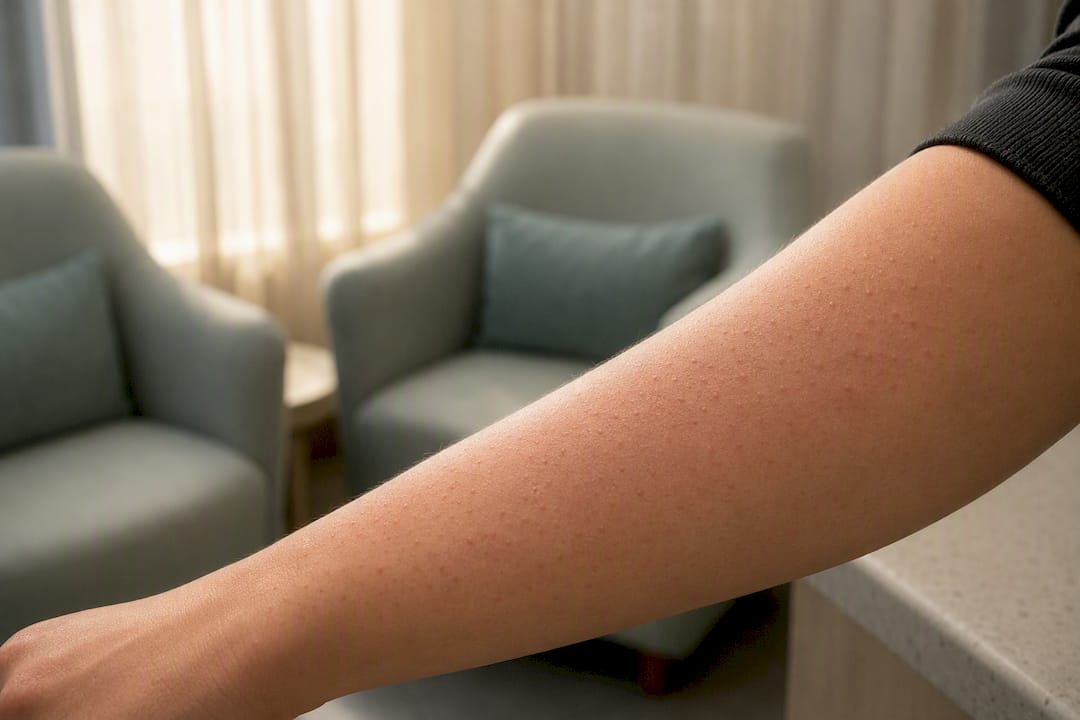
The reaction you’re most likely to see is perifollicular edema, small raised bumps around each hair follicle paired with surrounding redness. It looks a bit like a heat rash and shows up almost immediately after treatment. Most people notice it resolves within a few hours, though it can linger up to 72 hours on more sensitive areas like the underarms or bikini line.
Pain during treatment is usually described as a mild snapping or stinging sensation, similar to a rubber band flicking the skin. It’s brief and stops the moment the laser pulse ends. Afterward, the treated skin may feel warm or tender for the rest of the day.
Here’s what typically happens in the days following a session:
- Hours 0 to 24: Redness and swelling peak, skin feels warm to the touch.
- Days 1 to 3: Redness fades, mild tenderness resolves.
- Days 3 to 14: Treated hairs shed, sometimes looking like regrowth (it isn’t).
- Occasionally: Mild folliculitis or light crusting appears and clears on its own within a week.
Cool compresses and over-the-counter analgesics handle most of this discomfort. Avoid layering scented lotions, retinoids, or exfoliating acids onto freshly treated skin. They can worsen irritation right when your skin barrier needs to recover.
Pro Tip: Keep a small aloe vera gel or fragrance-free moisturizer in the fridge before your appointment. Applying it cold right after treatment calms redness faster than a product at room temperature.
Which Side Effects Are Serious, and How Do You Recognize a Burn?
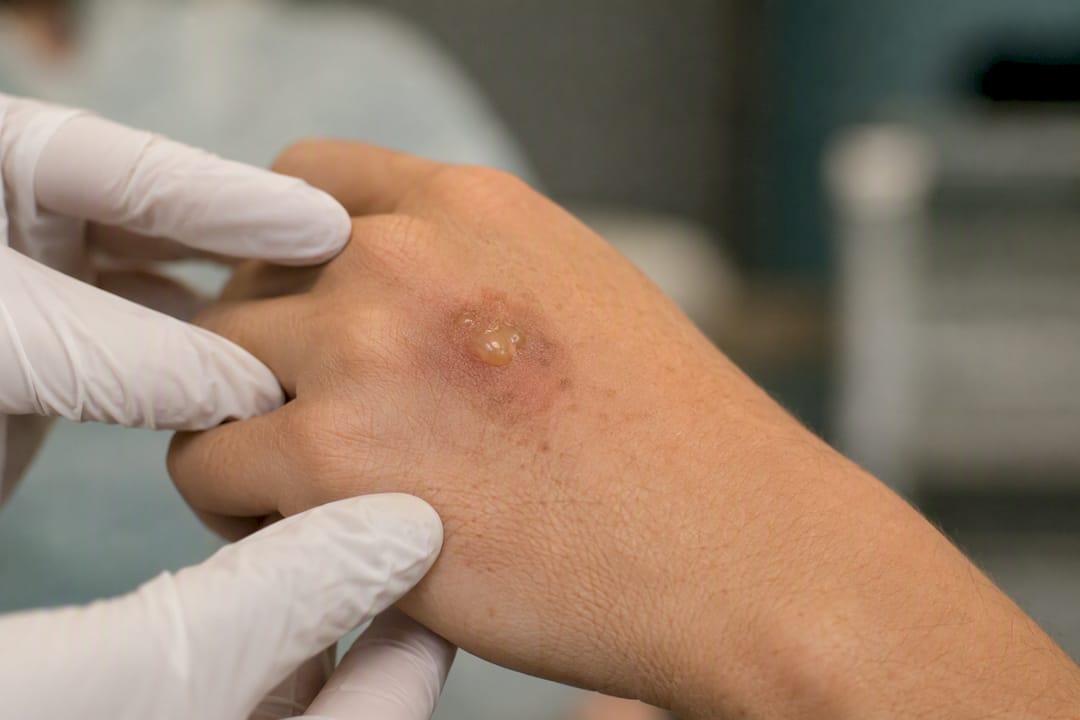
A true burn looks different from ordinary post-treatment redness. Burns present as deeper discoloration, tight or leathery skin texture, and sometimes blistering that develops within hours rather than fading. If a blister forms and grows larger than a fingertip, or if the skin around it becomes increasingly painful rather than less, that’s a burn requiring clinical attention.
Post-inflammatory hyperpigmentation (PIH) is the most frequently reported long-term concern, especially for patients with melanin-rich skin. Dark or reddish patches can persist for months without proper treatment, and hypopigmentation, where treated skin turns lighter than surrounding areas, can occur too and is often slower to resolve.
Scarring is rare but tends to follow the same pattern: deep burns, secondary infection, or delayed treatment of a complication. Catching and treating a burn early dramatically lowers scarring risk.
- Mild thermal reaction: brief redness, no blistering, resolves in 48 hours
- True burn: blistering, leathery texture, pain that worsens rather than fades
- PIH/hypopigmentation: color change lasting weeks to months
- Scarring: raised or indented texture change, usually tied to delayed or infected burns
Facial and eyebrow treatments carry an additional risk: ocular injury. Documented cases include anterior uveitis, iritis, and cataracts when proper eye protection wasn’t used during treatment near the orbital area. Wavelength-appropriate protective eyewear for both patient and operator isn’t optional near the eyes; it’s a baseline safety requirement.
Why Do These Side Effects Happen in the First Place?
Laser hair removal works through a principle called selective photothermolysis: the laser targets melanin in the hair follicle, heating it enough to damage the follicle while (ideally) sparing surrounding skin. The key variable is thermal relaxation time, the interval it takes heated tissue to cool back down. Pulses longer than that relaxation window drive excess heat into the surrounding epidermis, which is exactly how burns and pigment changes start.
Wavelength matters just as much as pulse timing. Diode and alexandrite lasers work well on lighter skin but carry higher epidermal absorption risk on melanin-rich skin, since the surrounding skin competes with the follicle for the laser’s energy. Nd:YAG lasers use a longer wavelength that passes more selectively past epidermal melanin, which is why they’re generally better tolerated for Fitzpatrick skin types IV through VI. IPL devices, which use broad-spectrum light rather than a single wavelength, tend to carry a wider risk profile across skin tones.
None of this is decorative technical detail. A review of documented adverse events found operator error and mismatched laser settings for a patient’s skin type as recurring contributors to complications, not equipment failure. Correct parameter selection and a proper test spot prevent the majority of avoidable harm.
Reported laser hair removal accidents overwhelmingly trace back to clinical judgment, not the technology itself. Choosing the right wavelength for the right skin type, at the right settings, prevents most of what goes wrong.
| Device | Wavelength Category | Relative Risk on Darker Skin |
|---|---|---|
| Nd:YAG | Long wavelength | Lower epidermal absorption, generally better tolerated |
| Alexandrite | Mid wavelength | Higher risk of pigment change on deeper skin tones |
| Diode | Mid to long wavelength | Moderate risk, depends on settings |
| IPL | Broad spectrum | Wider risk profile across skin tones |
Who Faces the Highest Risk of Complications?
Skin type is the single biggest predictor of how your skin will respond. Patients with Fitzpatrick skin types IV through VI carry more melanin in the epidermis itself, which raises the odds of hyperpigmentation or burns if the device and settings aren’t matched correctly to that skin tone.
A handful of other factors raise your personal risk profile:
- Recent tanning or sun exposure increases melanin at the skin’s surface, making burns and pigment changes more likely; most clinics recommend a waiting period before treating recently tanned skin.
- Photosensitizing medications and topicals, including retinoids and a recent history of isotretinoin use, can thin the skin barrier and raise healing complications.
- Active skin infections at the treatment site should always be cleared before laser exposure.
- Pregnancy is generally treated as a precaution against laser hair removal, given the lack of safety data.
- A personal or family history of keloid scarring raises the stakes if a burn does occur.
- Tattoos and pigmented moles in the treatment field need specific handling, since dark ink or moles absorb laser energy differently than surrounding skin.
How Should You Prepare for a Safer Laser Session?
Preparation does more to prevent side effects than almost anything that happens during the appointment itself.
- Stay out of the sun for at least two weeks before treatment, and skip self-tanners entirely. Many clinics will reschedule a visibly tanned patient rather than risk a burn.
- Shave, don’t wax or pluck, in the 24 hours before your session. Shaving 2 hours before an appointment is generally acceptable and often preferred, since it leaves the follicle intact under the skin for the laser to target while removing surface hair that could scorch.
- Request a test spot 2 to 3 weeks ahead of a full session, particularly if you have darker skin or you’re trying a new device for the first time. It lets the practitioner titrate settings safely before committing to a larger area.
- Ask about the device and operator credentials. A clinic that can explain its cooling system, its complication protocol, and its choice of Nd:YAG for darker skin is one that takes safety seriously.
Pro Tip: Bring a list of every medication and topical product you’re using, even ones that seem unrelated to skin care. Certain acne treatments and supplements affect photosensitivity in ways patients rarely expect.
What Aftercare Steps Reduce Your Risk of Complications?
The first 24 to 48 hours after treatment set the tone for how your skin recovers. Avoiding heat sources and friction during that window, including saunas, hot showers, and strenuous exercise, keeps irritation from turning into something worse. Daily sunscreen on treated areas isn’t optional; unprotected sun exposure is one of the clearest triggers for lasting pigment change.
Stick to a simple routine: a gentle, fragrance-free cleanser and a plain emollient moisturizer. If your skin reacts more than expected, a clinician may prescribe a short course of steroid cream to calm inflammation, or a topical lightening agent if early pigment changes appear.
Watch for these red flags and act on them promptly:
- Blistering that expands rather than shrinks over 24 hours
- Pain that increases instead of easing after the first day
- Pus, warmth, or a foul odor at the treatment site
- Fever following a session
- New pigment changes that haven’t started fading after several weeks
Spreading redness or any of the signs above warrant a call to your provider the same day; fever or visible infection warrants urgent medical care, not a wait-and-see approach. Most clinics also want to know about any lingering issue before your next scheduled session, since it may change your settings going forward.
Practitioner Perspective: How Clinics Reduce Risk in Practice
At Cosmolaser Medical Centre, Dr Anoop Suresh Babu oversees laser treatment protocols with a background in aesthetic medicine and dermatological care, and that clinical oversight shapes how every session is structured.
- A medical consultation and Fitzpatrick skin typing before any device touches the skin
- A mandatory test spot for new patients, particularly those with deeper skin tones
- Device selection that includes Nd:YAG for patients with darker skin, chosen specifically for its lower epidermal absorption profile
- Integrated cooling systems during treatment to limit epidermal heating
- Documented consent and a clear follow-up pathway if a complication arises
Most complications we see elsewhere trace back to a mismatch between device, settings, and skin type. That’s precisely why a test spot and a proper consultation aren’t formalities. They’re the difference between a routine session and a preventable burn.
Reputable clinics across the UAE build these steps into standard practice, not as an add-on. If a complication does appear, a clinic with medical oversight can prescribe treatment or refer a patient onward rather than leaving them to guess. Readers curious about session planning can review how many sessions are typically needed for their treatment area.
If you’re weighing laser hair removal against other aesthetic options, Cosmolaser Medical Centre’s team can walk you through which body treatment approach fits your skin type and goals, with the same medical oversight applied to every procedure.
An Editorial Take on Balancing Global Evidence With Regional Skin Diversity
The biggest gap in most laser hair removal advice online is that it’s written for one skin type and applied to everyone. That’s backwards for a region like the UAE, where patient populations span the full Fitzpatrick range. Generic “expect some redness” guidance underserves anyone with melanin-rich skin, who faces a meaningfully different risk calculus around pigment change than a fair-skinned patient does.
What the evidence actually supports is narrower and more useful than most articles admit: side effects are overwhelmingly driven by the match between device, settings, and skin type, not by laser hair removal as a category. That reframes the real question a patient should ask before booking. It’s not “is this safe,” but “has this provider correctly matched their equipment to my skin.”
Conventional advice leans too hard on generic aftercare tips and too little on device selection and operator judgment, which the data points to as the actual lever. Prioritize a clinic that asks about your skin type before your treatment goals.
This article is general information, not a substitute for advice from a qualified doctor. Consult a qualified healthcare professional about your own circumstances before acting on anything here.
Sources
- Adverse Events of Light-Assisted Hair Removal: An Updated Review
- Mayo Clinic — Laser hair removal
- American Academy of Dermatology — Laser hair removal FAQs
FAQ
Is Laser Hair Removal 100% Safe?
No treatment is 100% risk-free, but laser hair removal performed by a trained medical professional with correct device settings carries a low overall risk of serious complications. Most patients experience only mild, temporary redness and swelling.
What Are the Negatives to Laser Hair Removal?
The main downsides are the need for multiple sessions to see full results, temporary discomfort during and after treatment, and a small risk of burns, blistering, or pigment changes if the device or settings don’t match your skin type.
What Are the Long-Term Side Effects of Laser Hair Removal?
The most commonly reported long-term issue is post-inflammatory hyperpigmentation, dark or light patches that can persist for months, particularly in melanin-rich skin. Scarring is possible but rare and is usually linked to an untreated burn or infection.
Can I Shave Two Hours Before Laser Treatment?
Yes, shaving shortly before your appointment, including within two hours, is generally acceptable and often recommended, since it removes surface hair without disturbing the follicle the laser needs to target.