
Laser hair removal for men works, and for the areas that bother most men most, it works well. A 2023 PubMed study tracking men-only patients found 80.6% (±2.8) hair reduction on the chest and back after four diode 810 nm sessions spaced 40 days apart. Mayo Clinic’s own guidance backs this up, noting most patients need four to eight sessions scheduled weeks apart for durable results. For men dealing with dense back, chest, shoulder, or neck hair, this is one of the most reliable options available, and Cosmo Laser Medical Centre offers it locally in Sharjah with a patch test before any full treatment begins.
Here’s what to expect before you book:
- Sessions: Most men need multiple treatments to see lasting reduction.
- Spacing: Appointments are typically scheduled 4 to 8 weeks apart.
- Suitability: Results depend heavily on your skin tone and hair color. Darker, coarser hair on lighter skin responds best.
If you’re ready to find out whether you’re a good candidate, book a consultation and patch test before committing to a full course.
Key Takeaways
Laser hair removal for men delivers substantial, lasting hair reduction when the device matches the patient’s skin tone and a trained clinician runs the course through 6 to 10 properly spaced sessions.
| Point | Details |
|---|---|
| Expect 6 to 10 sessions | Spaced 4 to 8 weeks apart, with denser areas like the back needing the higher end. |
| Results are strong but not universal | Clinical data shows 80.6% trunk hair reduction after 4 sessions, with long-term benchmarks up to 95%. |
| Patch tests are non-negotiable | Confirms the right device and settings for your skin tone before full treatment begins. |
| Aftercare shapes your results | Sunscreen for six weeks and avoiding heat for 24 to 48 hours protect your progress. |
| Cosmolaser Medical Centre offers matched device options | Nd:YAG, diode 810 nm, and alexandrite lasers with medical oversight and a patch-test-first process in Sharjah. |
This article is general information, not a substitute for advice from a qualified doctor. Consult a qualified healthcare professional about your own circumstances before acting on anything here.
Table of Contents
- How Does Laser Hair Removal Work for Men?
- How Many Sessions Do Men Typically Need?
- What Are the Benefits of Laser Hair Removal for Men?
- Is Laser Hair Removal Safe, and Does It Hurt for Men?
- What Happens Before, During, and After a Laser Session?
- How Do You Choose a Reputable Clinic in the UAE?
- What Does Laser Hair Removal Cost for Men?
- What Does the Clinical Evidence Say About Results?
- A Clinician’s View on Treating Men
- Ready to Start Your Laser Hair Removal Plan?
- Sources
- FAQ
How Does Laser Hair Removal Work for Men?
The laser targets melanin, the pigment in your hair follicle, and converts light into heat that damages the root enough to slow or stop regrowth. It’s not a single zap and done. The follicle needs to be caught at the right point in its growth cycle, which is why one session never finishes the job.
Clinics use different laser wavelengths depending on your skin tone and hair type:
- Nd:YAG: A longer wavelength that penetrates deeper into the skin, making it the safer choice for darker skin tones because it bypasses surface melanin that could otherwise absorb too much heat.
- Diode (810 nm): A middle ground that balances depth and speed, and the wavelength used in the men-only trunk hair study that produced the 80.6% reduction figure.
- Alexandrite: Works efficiently on lighter skin with darker hair but carries more risk of pigment changes on deeper skin tones.
Your hair grows in three phases: anagen (active growth), catagen (transition), and telogen (resting). Laser only damages follicles in the anagen phase, and at any given time, only a fraction of your body hair sits in that window. That’s the entire reason you need multiple sessions timed weeks apart. Each visit catches a new batch of follicles as they cycle into growth.
Pro Tip: Ask whether your clinic offers more than one laser type. A clinic that only owns an alexandrite laser can’t safely treat darker skin tones, no matter how skilled the operator is. A patch test on your actual skin, using the actual device, tells you far more than a generic consultation ever will.
How Many Sessions Do Men Typically Need?
Most men complete a full course in 6 to 10 sessions spaced 4 to 8 weeks apart, though some areas need more and almost everyone benefits from occasional maintenance later on. Mayo Clinic notes that session counts commonly run 4 to 8 for the general population, and men with denser trunk hair often land at the higher end of that range or beyond it.
Here’s how that breaks down by area:
- Back and shoulders: 8 to 10 sessions, roughly 45 to 60 minutes each. Large, dense areas take the longest to clear and the longest per visit.
- Chest: 6 to 8 sessions, around 20 to 30 minutes per visit.
- Beard/neckline shaping: 6 to 8 sessions, generally quick, under 15 minutes.
- Groin/private areas: 6 to 8 sessions with conservative settings and extra care around sensitive tissue.
The clearest data point available comes from the diode 810 nm study cited above showing a substantial hair reduction on the chest and back after four sessions. Broader clinical reviews place long-term reduction for appropriate candidates in the 80% to 95% range once a full course under proper protocol is finished.
Hair color, density, and skin tone all shift where you land in that range. Thick, dark hair on lighter skin tends to respond fastest and most completely. Finer or lighter hair takes longer and may plateau at a lower reduction percentage. Almost every man ends up needing occasional touch-up sessions once or twice a year, since a handful of follicles usually regenerate even after a full course.
What Are the Benefits of Laser Hair Removal for Men?
The core benefits are time saved, fewer ingrown hairs, and a smoother, more consistent appearance in areas that are tedious or painful to manage with a razor. Unlike shaving, which you repeat every few days, laser addresses the follicle itself.
For men specifically, that translates into:
- Less razor burn and folliculitis: Chronic irritation from daily shaving on the neck and jawline often clears up once hair growth slows.
- Fewer ingrown hairs: Coarse, curly hair on the chest and back is especially prone to ingrown growth, and laser reduces the volume of hair that can curl back into the skin.
- Sports and hygiene benefits: Athletes and men who train regularly often prefer smoother skin for comfort under gear and easier post-workout cleanup.
- Cosmetic contouring: Some men use laser to shape a beard line or clean up shoulder and neckline hair without daily upkeep.
Male treatment isn’t identical to female treatment, and clinics that don’t account for this get worse results. Men typically have coarser, denser hair across larger surface areas, particularly the back, chest, and shoulders. That means longer session times, different energy settings, and sometimes more total sessions than a comparable area on a female patient. A clinic used to treating smaller, finer-haired zones on women may need to recalibrate their approach entirely for a man’s back.
Good candidates for this kind of treatment include athletes managing sweat and irritation, men with a long history of ingrown hairs, anyone with dense trunk hair they’ve struggled to manage with razors or wax, and men interested in beard-area shaping. One caution on that last group: laser causes lasting follicle damage, so if you might want a full beard again someday, be conservative about how much you treat.
Is Laser Hair Removal Safe, and Does It Hurt for Men?
Laser hair removal is generally safe when performed by a trained clinician using the correct device for your skin tone, though it isn’t risk-free. Most side effects are mild and temporary, but the risk of something more serious rises sharply when the wrong laser or wrong settings are used on the wrong skin.
Possible side effects include:
- Temporary redness and swelling: Common and usually resolves within hours to a couple of days.
- Pigment changes: Darkening or lightening of treated skin, more likely on darker skin tones treated with the wrong wavelength or overly aggressive settings.
- Blistering or burns: Rare with a competent operator, but possible with poor technique or incorrect energy levels.
- Tattoo risk: Never laser directly over tattooed skin. The ink absorbs the laser energy and can burn.
- Limited effect on white, gray, or very light blonde or red hair: These hair colors lack enough melanin for the laser to target effectively, according to Mayo Clinic.
As for pain, most men describe it as a quick snapping or stinging sensation, something like a rubber band flicked against the skin, rather than a constant burn. It’s more noticeable on thinner skin over bone (the beard line, the top of the shoulder) than on the back or chest. Topical numbing cream and integrated cooling systems on modern devices bring the discomfort down considerably, and most men tolerate a full session without needing a break.
For groin, perineal, or other private-area treatment, look specifically for a clinic with experienced staff, conservative starting settings, and a clear informed-consent process before anything begins. Standard-of-care recommendations call for a patch test before full treatment on any new patient, and that matters even more in sensitive zones where the margin for error is smaller.
Pro Tip: If a clinic skips the patch test and goes straight to a full session on your first visit, that’s a red flag, not a shortcut. A 10-minute test today can save you weeks of recovering from an avoidable burn.
What Happens Before, During, and After a Laser Session?
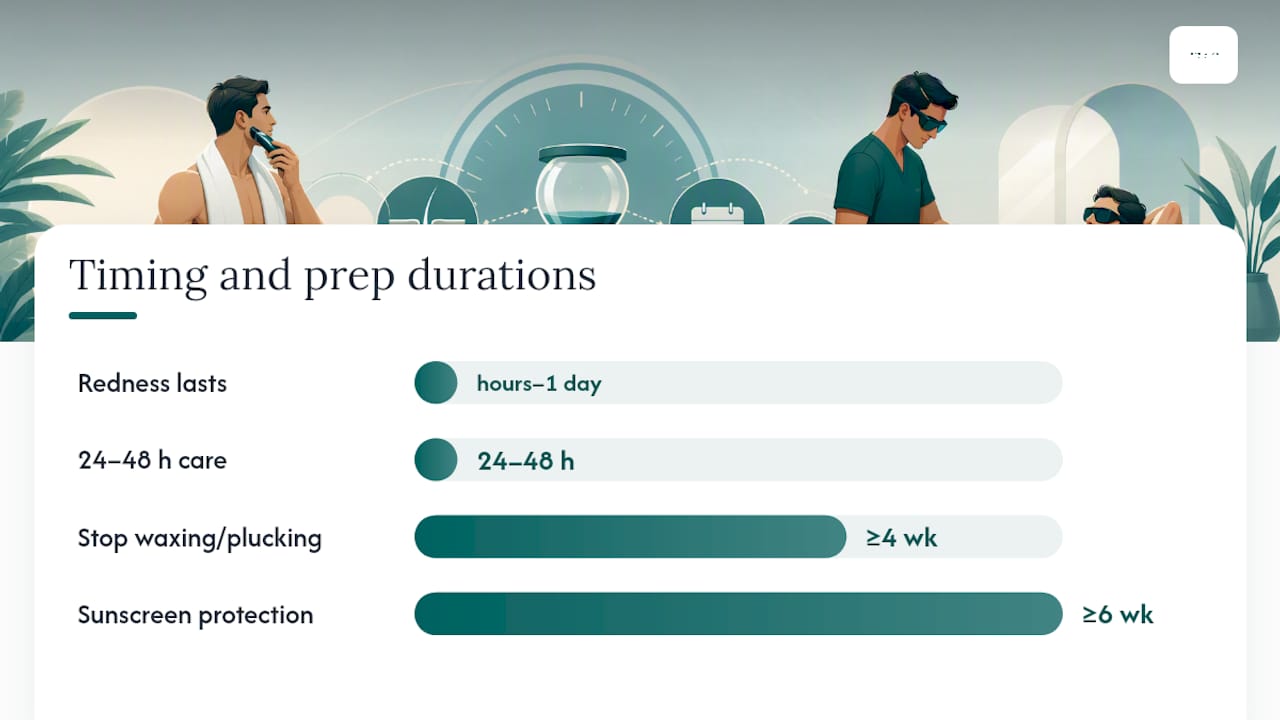
The short version: you get a consultation and patch test first, shave the area the day before your appointment, sit through the treatment itself, then follow a short recovery window with sun protection. Nothing about it should feel rushed or improvised.
Before your first appointment:
- Stop waxing or plucking at least four weeks out. Laser needs the follicle intact, and waxing removes it entirely.
- Avoid tanning or sun exposure on the treatment area for several weeks beforehand. Tanned skin raises the risk of pigment changes.
- Shave the area 24 to 48 hours before your appointment. Leftover surface hair just burns and adds discomfort without helping results.
- Tell your provider about any medications, especially those that increase photosensitivity, and mention any skin conditions or recent sun exposure.
At the appointment itself:
- You’ll go through a consultation and consent process, including a review of your medical history and treatment goals.
- A patch test confirms the device settings are right for your skin tone and hair color.
- The technician marks the treatment area and works through it in passes, pausing between sections to manage heat and comfort.
- Cooling gel or an integrated cooling tip reduces discomfort during the pulses.
- You’ll get immediate aftercare instructions, including any redness or swelling to expect over the next day or two.
Afterward, expect mild redness that typically settles within a few hours to a day. Sunscreen matters for at least six weeks on any exposed treated area, since post-laser skin is more sensitive to UV damage. Skip intense heat, saunas, and hard exercise for 24 to 48 hours. You can resume shaving once irritation clears, usually within a couple of days, and the aftercare routine you follow in those first weeks has a real effect on how clean your results look. Book your next session on the 4 to 8 week schedule your provider recommends, since going longer between sessions can slow your overall progress.
How Do You Choose a Reputable Clinic in the UAE?
Prioritize a clinic with qualified medical oversight, clear disclosure of the laser device they use, and a patch test built into the process before anything else. Anyone offering to skip straight to full treatment without assessing your skin first isn’t following standard practice.
| What to Verify | Why It Matters |
|---|---|
| Medical director or dermatologist oversight | Ensures a qualified professional is accountable for treatment protocols and complications. |
| Staff training and experience | Operator skill directly affects both results and burn/pigment-change risk. |
| Device types available | Access to Nd:YAG, diode 810 nm, and alexandrite lasers means settings can be matched to your specific skin and hair type. |
| Before-and-after documentation | Photos of comparable male cases give you a realistic sense of achievable results. |
| Hygiene and safety standards | Proper sterilization and patch-test protocols reduce infection and adverse-reaction risk. |
Bring these questions to your consultation:
- Which laser model do you use, and why is it right for my skin tone?
- Roughly how many sessions will my specific area need?
- Will I get a patch test before the first full treatment?
- What side effects are typical for someone with my hair and skin type?
- Can I see before-and-after results from other male patients with a similar profile?
Cosmolaser Medical Centre in Sharjah is worth including on your shortlist for exactly these reasons: qualified practitioners oversee treatment, the clinical case for medical-grade lasers is explained clearly to patients, and consultations start with an honest assessment of your skin and hair rather than a hard sell. A clinic that explains its laser technology in detail before you commit is one that has nothing to hide about how it treats you.
What Does Laser Hair Removal Cost for Men?
Price depends mainly on the size of the area being treated, how many sessions you need, which device the clinic uses, and what’s bundled into the package, such as your initial consultation, patch test, and follow-up visits. There’s no single flat rate that applies across the board.
A few variables that move the price:
- Device power and cooling technology: Clinics running newer systems with integrated cooling often charge more per session but may need fewer total visits.
- Operator experience: More experienced technicians sometimes carry a premium, and for larger or more sensitive areas, that expertise is worth paying for.
- Session duration and area size: A back treatment that takes an hour costs more per visit than a 15-minute neckline touch-up, simply due to time and laser passes required.
- Bundled large-area pricing: Many clinics discount multi-session packages for larger zones like the full back or chest and back combined.
Clinics commonly package treatment as a set number of sessions purchased upfront, sometimes with maintenance visits included at a reduced rate afterward. When comparing quotes, ask exactly what’s included: Is the consultation free? Is the patch test extra? Is there any touch-up or refund policy if results fall short of what was discussed?
Cosmetic procedures like this are generally paid out-of-pocket in the UAE, so it’s worth requesting an itemized quote before booking anything, rather than relying on a vague per-session estimate.
What Does the Clinical Evidence Say About Results?
Clinical evidence supports substantial, lasting hair reduction for men who complete a full course of treatment with the right device and a trained operator, though outcomes vary by individual factors. The strongest available data point is specific: the men-only diode 810 nm study found 80.6% reduction in trunk hair after just four sessions spaced 40 days apart. Broader benchmarks across clinical reviews put long-term reduction between 80% and 95% for well-matched candidates.
A few things clinicians consistently emphasize:
- Matching device to skin tone matters more than almost any other single factor in determining both safety and outcome.
- An experienced operator adjusting settings in real time produces measurably better and safer results than a fixed, one-size protocol.
- Honest counseling about maintenance sessions sets realistic expectations. Even successful courses usually need periodic touch-ups.
It’s also worth understanding how in-clinic lasers compare to the at-home IPL devices marketed heavily to men online. At-home devices are generally less powerful than clinic-grade lasers, often requiring far more sessions and delivering results that can run up to 25% less effective for some skin types. They’re reasonable as a maintenance tool between professional visits, but they’re a poor substitute for an initial full course. A separate industry resource on aesthetic technology makes a similar point: clinical devices carry higher power output, integrated safety sensors, and cooling systems that consumer products generally don’t match.
A Clinician’s View on Treating Men
Men come to us with a specific frustration: they’ve shaved for years, dealt with ingrown hairs and razor burn on the back and chest, and they want a permanent-feeling solution without guesswork. What I emphasize with every male patient is that candidacy isn’t generic. Skin tone, hair density, and even how someone’s hair responds across different body zones all shape the plan we build. That’s why we never skip the patch test, no matter how routine the treatment area seems.
The men who get the best results are the ones who come in for an honest assessment first rather than assuming one laser setting fits every body. If you’re in Sharjah or the wider UAE and you’re weighing this decision, book a consultation with us and let’s look at your skin and hair directly before committing to anything.
Ready to Start Your Laser Hair Removal Plan?
Cosmolaser Medical Centre treats men’s chest, back, shoulder, and neckline hair with a choice of Nd:YAG, diode 810 nm, and alexandrite lasers, so your settings get matched to your actual skin tone and hair type rather than a one-size approach.

Every course starts with a consultation and patch test, not a hard sell into a package you haven’t had assessed yet. Our team is led by qualified medical practitioners, and we can walk you through before-and-after results from comparable male cases so you know what to expect before you commit. Your consultation is confidential, and settings are documented and tailored to your skin every visit.
If you’re ready to see whether you’re a good candidate, book your consultation and patch test with Cosmolaser Medical Centre and get a realistic session estimate for your specific areas.
Sources
- Trunk hair removal treatment with diode laser 810 nm in men population
- Laser hair removal – Mayo Clinic
- Laser hair removal clinical review (PMC)
- The Best Home Laser Hair Removal Devices for Men, Tested by Doctors
FAQ
How Much Does Laser Hair Removal Cost in the UAE?
Cost varies by treatment area, session count, and device type, since larger zones like the back take longer and cost more per session than smaller areas like the neckline. Request an itemized quote that specifies what’s included, such as the consultation and patch test, before comparing prices between clinics.
Is Laser Hair Removal Safe for Men’s Private Areas?
Yes, when performed by an experienced clinician using conservative settings and a patch test beforehand, treatment of groin and perineal areas is generally safe. Look for a clinic with clear consent procedures and staff specifically experienced in treating sensitive zones.
Is Laser Hair Removal 100% Safe?
No procedure is completely risk-free, though laser hair removal is generally safe when performed correctly. Possible side effects include temporary redness, pigment changes, and in rare cases involving poor technique, blistering or burns, which is why choosing a clinic with trained staff and proper device disclosure matters.
Can I Shave One Day After a Laser Session?
Most providers recommend waiting until any redness or irritation from the session fully clears before shaving again, typically a day or two. Check with your specific clinic, since their aftercare timeline may vary slightly based on your treatment area and skin’s reaction.
How Many Sessions Will I Need for My Chest and Back?
Most men need 6 to 8 sessions for the chest and 8 to 10 for the back, spaced 4 to 8 weeks apart. A men-only clinical study found 80.6% hair reduction on these areas after just four sessions of diode 810 nm treatment.