
TL;DR:
- GLP-1 receptor agonists mimic natural hormones to suppress appetite and improve metabolic health when used responsibly. They are effective adjuncts for weight management and have systemic benefits like reducing cardiac events and slowing kidney disease progression. Proper screening, lifestyle support, and procedural timing are essential for safe, lasting aesthetic and health outcomes.
GLP-1 receptor agonists are prescription medicines that mimic the body’s naturally occurring glucagon-like peptide-1 hormone to suppress appetite, improve glucose control, and deliver meaningful cardiometabolic benefits. When safely integrated into a multidisciplinary plan, they can support body composition and skin-health goals. They are not, however, a standalone aesthetic procedure. Any patient considering GLP-1 therapy needs specialist medical screening, a GMC-registered prescriber, documented informed consent, and a structured lifestyle programme running alongside treatment.
Key considerations at a glance:
- GLP-1 agonists are effective adjuncts for weight management and metabolic health, not cosmetic treatments in isolation.
- Absolute contraindications include a personal or family history of medullary thyroid carcinoma or MEN2, and pregnancy.
- Baseline bloods, renal function, and thyroid history must be documented before prescribing.
- Expect gastrointestinal side effects, particularly in the first weeks of treatment.
- A substantial proportion of adults who start GLP-1 therapy stop within a year, most commonly due to GI side effects.
Table of Contents
- How do GLP-1 agonists work, and what are they prescribed for?
- What benefits do GLP-1 therapies offer beyond weight loss?
- How does GLP-1 therapy affect skin health and aesthetic outcomes?
- Who should not take GLP-1s, and what monitoring is required?
- Why GLP-1 is not a standalone solution: the role of lifestyle and multidisciplinary care
- How can adults in the UK access GLP-1 therapy?
- Questions to ask your prescriber before starting GLP-1 therapy
- How a responsible aesthetic clinic integrates metabolic therapies with skin care
- Key takeaways
- A clinician’s perspective on GLP-1 in aesthetic practice
- Useful sources and further reading
- FAQ
How do GLP-1 agonists work, and what are they prescribed for?
GLP-1 receptor agonists mimic the incretin hormone GLP-1, which the small intestine releases in response to meals. They slow gastric emptying, stimulate glucose-dependent insulin secretion, suppress glucagon from pancreatic alpha-cells, and signal satiety directly via hypothalamic nuclei. Because they act on the brain’s hunger circuitry, many patients report a marked reduction in persistent food preoccupation, which makes adherence to dietary changes far more achievable than willpower alone.

Primary licensed indications are type 2 diabetes and, at higher doses, obesity or overweight with at least one weight-related comorbidity. Semaglutide and liraglutide are the two agents most commonly prescribed in the UK.
| Agent | Approved indications | Typical weight loss (trials) | Route and dosing | UK availability |
|---|---|---|---|---|
| Semaglutide (Ozempic / Wegovy) | T2 diabetes (Ozempic); obesity/overweight with comorbidity (Wegovy) | clinical trials report significant body weight loss | Once-weekly subcutaneous injection; oral tablet also available | NHS (diabetes criteria); private clinics (obesity criteria) |
| Liraglutide (Victoza / Saxenda) | T2 diabetes (Victoza); obesity (Saxenda) | Moderate; less than semaglutide | Once-daily subcutaneous injection | NHS (limited); private clinics |
| Tirzepatide (Mounjaro / Zepbound) | T2 diabetes (Mounjaro); obesity (Zepbound) | notable body weight loss at higher doses | Once-weekly subcutaneous injection | Primarily private in UK |
Oral semaglutide (3 mg, 7 mg, 14 mg tablets) became available in 2019, giving patients who prefer not to self-inject a viable alternative, though injectable formulations remain the standard for obesity indications.
What benefits do GLP-1 therapies offer beyond weight loss?
The cardiometabolic evidence is compelling. Large trials including SELECT and SOUL demonstrate reductions in major adverse cardiac events (MACE) and slower progression of chronic kidney disease in high-risk patients. These benefits appear to operate partly through mechanisms independent of weight loss itself.
Systemic benefits supported by trial evidence:
- Reduced MACE outcomes in patients with established cardiovascular disease.
- Slowed CKD progression and reduced urine albumin-creatinine ratio.
- Improvements in heart failure with preserved ejection fraction.
- Reductions in inflammatory biomarkers, with potential benefit in metabolic-associated steatotic liver disease (MASLD) and osteoarthritis.
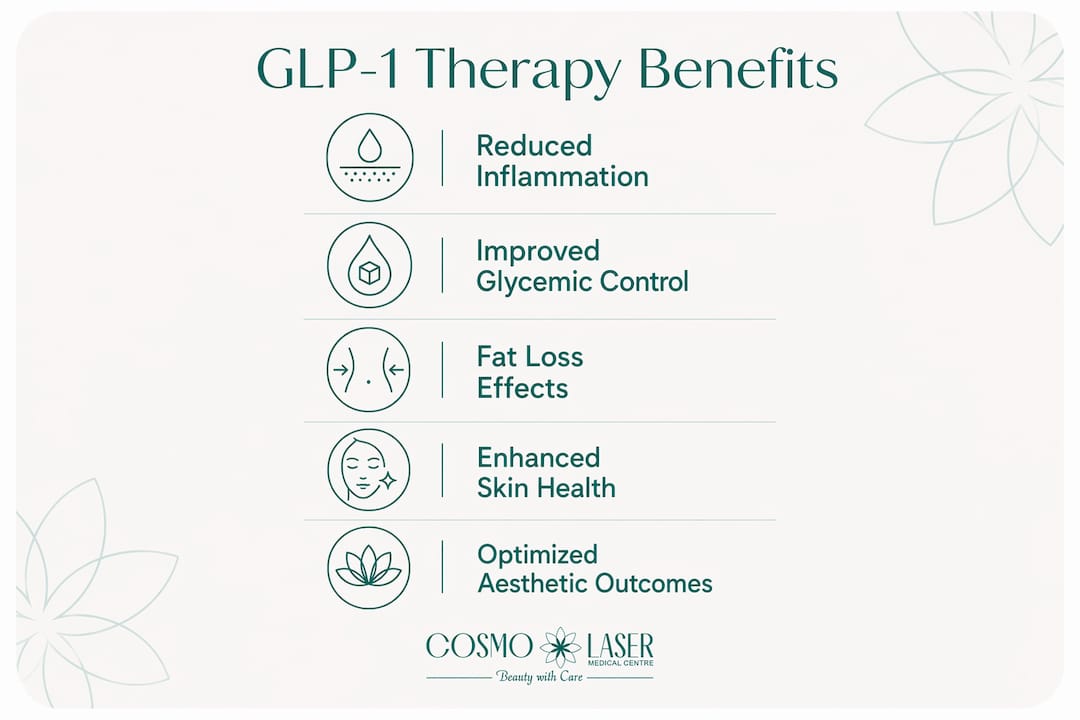
The anti-inflammatory pathway matters for aesthetic practice. Chronic low-grade inflammation accelerates skin ageing, worsens acne, and impairs wound healing. Patients whose systemic inflammation reduces on GLP-1 therapy may present with better baseline skin quality ahead of procedural interventions such as CO2 fractional laser or radiofrequency microneedling.
How does GLP-1 therapy affect skin health and aesthetic outcomes?
GLP-1 can indirectly improve skin through reduced systemic inflammation, better glycaemic control, and resolution of oedema. Improved insulin sensitivity tends to reduce post-inflammatory hyperpigmentation in patients with metabolic syndrome, and lower circulating androgens associated with weight loss may benefit acne-prone skin. These are meaningful gains for patients planning skin rejuvenation procedures.
The risks for aesthetics are equally real. Rapid fat loss can alter facial volume, affecting the predictability of dermal fillers or collagen biostimulators. Approximately 30% of weight lost on GLP-1 medicines can be lean muscle mass, which affects skin contour and laxity. Dehydration from GI side effects can transiently impair skin hydration and barrier function.
Pro Tip: Sequence GLP-1 therapy before committing to volume-replacement procedures. Allow weight to stabilise for at least three months before planning filler or biostimulator treatments, so the final facial contour is the one being treated.
Who should not take GLP-1s, and what monitoring is required?
Absolute contraindications are non-negotiable. Personal or family history of medullary thyroid carcinoma or MEN2, and pregnancy, exclude a patient from GLP-1 therapy entirely. Patients with severe gastroparesis or active inflammatory bowel disease should also avoid this drug class.
Mandatory pre-treatment screening:
- Detailed family history: thyroid cancer, MEN2, endocrine tumours.
- Baseline bloods: HbA1c, renal function, liver enzymes, full blood count.
- Current medication list (particularly warfarin, sulfonylureas, insulin).
- Height, weight, BMI, and blood pressure.
Common side effects are predominantly gastrointestinal: nausea, vomiting, constipation, and diarrhoea, most pronounced in the dose-escalation phase. Rare but serious adverse events include pancreatitis and, theoretically, thyroid C-cell effects. Red flags requiring urgent review include severe or persistent abdominal pain, jaundice, or any symptoms suggesting pancreatitis.
Monitoring should include HbA1c at regular intervals, periodic renal function checks, and INR monitoring for patients on warfarin, as delayed gastric emptying can alter its absorption.
Why GLP-1 is not a standalone solution: the role of lifestyle and multidisciplinary care
GLP-1 agonists are an adjunct, not a cure. Structured lifestyle support — nutritional counselling, resistance exercise, and behavioural support — materially affects outcomes. Without it, results are less durable and the risk of disproportionate muscle loss increases.
Weight loss typically follows a curve: most patients lose steadily over several months before reaching a plateau. Planning definitive aesthetic procedures during active weight loss is inadvisable; body contour continues to change, and skin laxity may evolve. STEP trial extension data show that significant weight regain occurs within twelve months of stopping therapy, which has direct implications for the longevity of body-contouring results.
Pro Tip: Aim for a daily protein intake of at least 1.2 g per kilogram of body weight and include two to three resistance training sessions per week throughout GLP-1 therapy. This substantially reduces lean mass loss and helps maintain the skin contour that aesthetic procedures are designed to refine.
How can adults in the UK access GLP-1 therapy?
GLP-1 medicines are prescription-only. NHS prescribing for obesity indications is restricted: Wegovy (semaglutide) is available via specialist weight management services for adults with a BMI of 35 or above and at least one weight-related comorbidity, subject to local commissioning. Many patients access therapy through private clinics, where prescribing criteria and costs differ. A UK pharmacist-led service can provide structured information on private access pathways and dispensing.
| Agent | NHS criteria (obesity) | Private route | Approximate private cost |
|---|---|---|---|
| Semaglutide (Wegovy) | BMI ≥35 + comorbidity via specialist service | Private GP or weight clinic | Not publicly listed; varies by provider |
| Liraglutide (Saxenda) | Limited; largely superseded | Private GP or weight clinic | Not publicly listed; varies by provider |
Documents to bring to a UK consultation:
- Recent blood test results (within three months if available).
- HbA1c result if you have diabetes or pre-diabetes.
- Full current medication list.
- Family history of thyroid cancer or MEN2.
- Height, weight, and any previous weight-management records.
A GMC-registered prescriber must conduct the assessment, document informed consent, and establish a follow-up schedule before any prescription is issued.
Questions to ask your prescriber before starting GLP-1 therapy
A prepared patient gets a safer, better-managed outcome. Before starting, confirm the following with your prescriber:
- Am I a suitable candidate given my family history and current medications?
- What is the monitoring plan, and how often will bloods be checked?
- Which side effects should prompt me to contact the clinic urgently?
- How does this therapy interact with my current weight-loss medication interactions or other prescriptions?
- Will my aesthetic procedures need to be paused or rescheduled during treatment?
- Is nutritional and exercise support included, or do I need to arrange it separately?
- What happens if I need to stop treatment — is there a tapering plan?
Bring your medication list and family history in writing. Request a copy of your informed consent document and a scheduled review date before leaving the appointment.
How a responsible aesthetic clinic integrates metabolic therapies with skin care
A well-structured clinic workflow removes the guesswork from combining GLP-1 therapy with procedural dermatology. At Cosmolaser Medical Centre, the approach to combination aesthetic treatment follows a defined sequence designed to protect both safety and outcomes.
Example clinical workflow:
- Initial medical assessment: full history, contraindication screening, BMI, blood pressure, and medication review.
- Baseline investigations: HbA1c, renal function, liver enzymes, thyroid history documented.
- Coordinated lifestyle plan: referral to nutritional support and resistance exercise prescription before dose escalation.
- Procedural sequencing: laser and injectable treatments scheduled after weight stabilisation, typically after three months at maintenance dose.
- Documented informed consent: written consent covering expected outcomes, side effects, and the plan for managing complications.
- Scheduled reviews: clinical review at four to six weeks, then three-monthly, with earlier review if red-flag symptoms arise.
Suitable candidates for combined care are adults with stable metabolic conditions, realistic expectations, and no absolute contraindications. Patients with poorly controlled diabetes, active GI disease, or unresolved thyroid concerns are referred to endocrinology or their GP before any aesthetic programme begins.
Key takeaways
GLP-1 receptor agonists offer genuine metabolic and aesthetic benefits when prescribed responsibly, but they require rigorous screening, structured lifestyle support, and careful procedural sequencing to deliver safe, lasting results.
| Point | Details |
|---|---|
| Screen before prescribing | Family history of medullary thyroid carcinoma or MEN2 is an absolute contraindication; baseline bloods are mandatory. |
| Expect GI side effects | Nausea and GI upset are the most common reason patients stop treatment; about half discontinue within a year. |
| Weight loss averages moderate amounts with semaglutide | Around 10–15% of patients have minimal response even at maximum doses; expectation management is essential. |
| Preserve muscle throughout | Approximately 30% of weight lost can be lean mass; resistance training and adequate protein are non-negotiable. |
| Stabilise before procedures | Allow at least three months at maintenance dose before planning fillers, biostimulators, or body-contouring treatments. |
If you are considering GLP-1 therapy as part of a broader aesthetic plan, a medically supervised consultation is the right starting point. Explore body aesthetic treatments at Cosmolaser Medical Centre to understand how metabolic and procedural therapies can work together.
A clinician’s perspective on GLP-1 in aesthetic practice
The most common mistake in aesthetic medicine is treating GLP-1 therapy as a background variable rather than an active clinical factor. When a patient is losing weight rapidly, their facial anatomy is changing week by week. Placing volume-replacement products into a face that will look different in three months is not good clinical practice. The same logic applies to skin-tightening procedures: laxity patterns shift as subcutaneous fat redistributes, and a treatment plan built on a moving target will underperform.
What GLP-1 therapy does well, when properly supervised, is create a metabolic environment that makes procedural outcomes more durable. Reduced inflammation, improved glycaemic control, and lower circulating androgens all translate into skin that responds better to laser resurfacing, heals more predictably, and maintains collagen stimulation longer. The clinical priority is sequencing: get the patient to a stable weight, confirm their nutritional status supports tissue repair, and then plan procedures with confidence. Informed consent must explicitly cover the interaction between metabolic therapy and aesthetic outcomes. Patients who understand this relationship make better decisions and report higher satisfaction.
Useful sources and further reading
Clinicians and patients seeking primary evidence should consult peer-reviewed sources rather than relying on secondary summaries. The following are the most authoritative references underpinning this article:
- NEJM: GLP-1 Receptor Agonists — comprehensive review of mechanism, efficacy, and clinical application; the standard academic reference for prescribers.
- PMC: The expanding benefits of GLP-1 medicines — covers cardioprotective and renoprotective trial evidence including SELECT and SOUL; essential for understanding systemic benefits.
- Stanford Medicine: GLP-1s 101 — accessible summary of weight-loss efficacy, side effects, discontinuation rates, and expectation management.
- Cleveland Clinic: GLP-1 Agonists — patient-facing guide to dosing, administration, and side effect management.
- National Kidney Foundation: GLP-1 RAs — focused guidance on renal implications, monitoring, and CKD-specific considerations.
- NCBI Bookshelf: Compare and Contrast the GLP-1RAs — detailed head-to-head comparison of agents on efficacy, safety, and cardiovascular outcomes.
Discuss these sources with your prescriber before making any treatment decision. GLP-1 medicines are prescription-only; self-prescribing based on published research is not appropriate and carries real clinical risk.
This article is general information, not medical advice. Confirm current prescribing criteria and suitability for your individual circumstances with a qualified clinician or your GP.
FAQ
What does GLP-1 stand for, and what does it do?
GLP-1 stands for glucagon-like peptide-1, a hormone the small intestine releases after meals. GLP-1 receptor agonists mimic this hormone to slow gastric emptying, stimulate insulin secretion, suppress glucagon, and signal satiety to the brain.
Is semaglutide available on the NHS in the UK?
Wegovy (semaglutide for obesity) is available via NHS specialist weight management services for adults with a BMI of 35 or above and at least one weight-related comorbidity, subject to local commissioning decisions; many patients access it privately.
How long does it take to see results on GLP-1 therapy?
Most patients see meaningful weight loss over six to twelve months, averaging around 15% with semaglutide and 20% with tirzepatide in trials, with a plateau typically following. Around 10–15% of patients have minimal response even at maximum doses.
Can I have aesthetic procedures while on GLP-1 therapy?
Procedures such as dermal fillers and biostimulators are best planned after weight has stabilised for at least three months, as ongoing fat redistribution affects facial contour and the predictability of injectable outcomes.
What happens if I stop GLP-1 treatment?
STEP trial extension data show significant weight regain within twelve months of stopping therapy, which can affect the durability of body-contouring and skin-tightening results achieved during treatment.