TL;DR:
- Cosmetic treatment safety depends on practitioner registration, thorough consultations, and compliant clinical environments.
- Patients must verify credentials, understand procedure risks, and ensure products meet safety standards before proceeding.
Cosmetic treatment safety standards are defined as the regulatory frameworks, practitioner qualifications, and clinical protocols that govern every aesthetic procedure from initial consultation through to aftercare. These standards exist because the gap between a safe outcome and a serious complication often comes down to a single decision: who performs the treatment and how. Bodies including the General Medical Council (GMC), the Nursing and Midwifery Council (NMC), the General Dental Council (GDC), and voluntary accreditors such as the Joint Council for Cosmetic Practitioners (JCCP) and Save Face collectively shape what responsible cosmetic practice looks like. Understanding these frameworks is the first step any patient should take before booking a procedure.
How are cosmetic treatments categorised by risk and regulation?
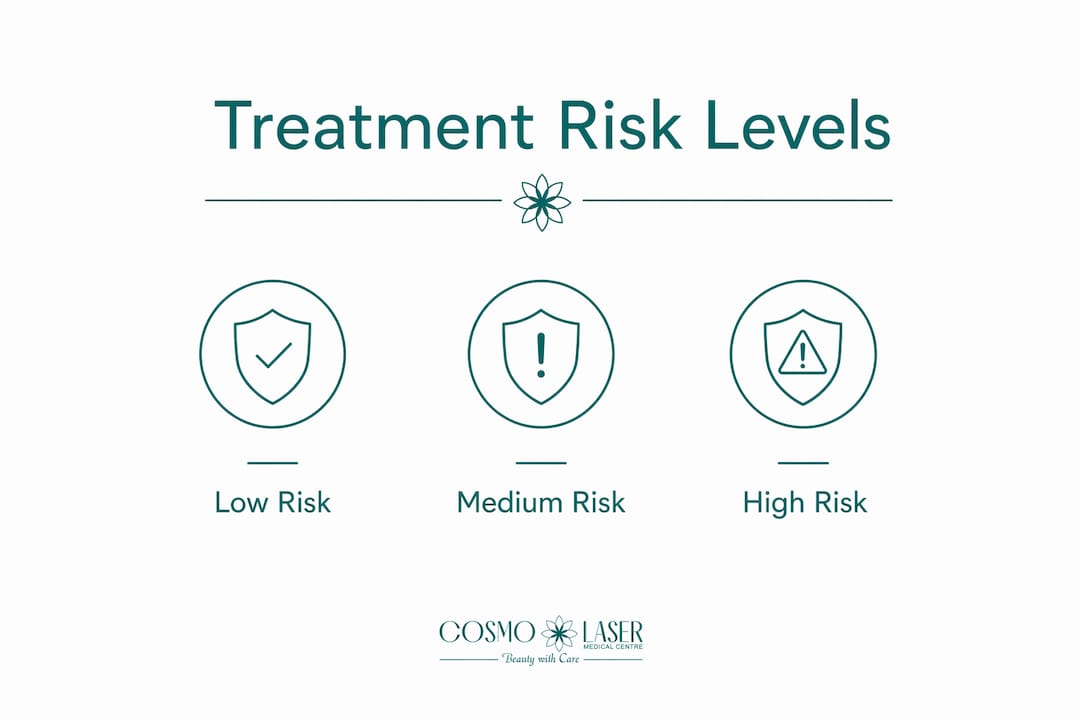
Cosmetic procedures fall into three broad risk categories, each carrying different regulatory requirements. Understanding which category your treatment sits in tells you exactly what level of oversight to expect.
Green category (low risk) covers non-invasive treatments such as facials, microdermabrasion, and LED light therapy. These carry minimal physiological risk and typically require only local authority licensing in the UK, with no statutory medical registration needed for the practitioner.
Amber category (medium risk) includes non-surgical injectables such as botulinum toxin and dermal fillers, chemical peels, and laser treatments. These procedures carry meaningful clinical risk, including infection, vascular occlusion, and scarring. Non-surgical injectables currently rely on practitioner registration and voluntary accreditation in many jurisdictions, though mandatory licensing frameworks are being phased in.
Red category (high risk) covers invasive surgical procedures such as rhinoplasty, liposuction, and blepharoplasty. These require Care Quality Commission (CQC) registration for the facility in England, a fully qualified surgical team, and compliance with national clinical governance standards.
| Risk level | Example procedures | Regulatory requirement |
|---|---|---|
| Low (green) | Facials, LED therapy | Local authority licence |
| Medium (amber) | Botulinum toxin, fillers, laser | Practitioner registration, voluntary accreditation |
| High (red) | Surgical rhinoplasty, liposuction | CQC registration, full clinical governance |
The critical point here is that medium-risk procedures are the most common and the least consistently regulated. A patient booking dermal fillers or a chemical peel must actively verify practitioner credentials rather than assuming the clinic is regulated by default.
What qualifications must practitioners have to meet safety standards?
Practitioner registration with a statutory body is the single most important safety marker a patient can check. Statutory registrations with the GMC, NMC, or GDC confirm that a practitioner has met minimum clinical training requirements and is subject to professional discipline if standards are breached.

Beyond statutory registration, voluntary accreditation schemes signal a higher level of commitment to patient safety. The JCCP maintains a public register of accredited aesthetic practitioners. Save Face is a government-approved register specifically for non-surgical cosmetic treatments. Membership of either body requires practitioners to demonstrate recognised training, hold appropriate insurance, and submit to audit.
Recognised training matters as much as registration. A practitioner should hold a formal qualification in aesthetic medicine, such as a postgraduate diploma or certificate from an accredited institution, not simply a weekend course. The depth of anatomical knowledge required to safely administer botulinum toxin or perform radiofrequency microneedling is substantial.
Red flags to watch for when assessing a practitioner:
- No verifiable registration on the GMC, NMC, GDC, or JCCP public register
- Advertising botulinum toxin by brand name to consumers, which is illegal under UK law and signals prioritising sales over safety
- Pressure to book immediately without a prior consultation
- Inability to explain contraindications or aftercare in clinical terms
- No written consent process or medical history review
Pro Tip: Before booking any injectable treatment, search the practitioner’s name on the GMC, NMC, or GDC public register. The search takes under two minutes and confirms their registration status, any conditions on their practice, and whether they are currently in good standing.
The misconception that all aesthetic practitioners face equal scrutiny remains widespread. The move toward national licensing in the UK and Australia aims to standardise minimum competency for all practitioners, but until that framework is fully operational, the responsibility to verify credentials sits with the patient.
What does a safe cosmetic treatment consultation involve?
A safe consultation is not a formality. It is the clinical process through which a practitioner determines whether a treatment is appropriate for you, at this time, given your health history and expectations.
For botulinum toxin procedures, a thorough consultation lasts 30–60 minutes and covers medical history, current medications, and any contraindications. This duration reflects the clinical complexity involved, not a sales process. Patients taking blood-thinning medications, for example, may need to suspend them for up to two weeks before treatment.
A compliant consultation covers these core steps:
- Medical history review. The practitioner asks about existing conditions, allergies, previous aesthetic treatments, and current medications. This is not optional paperwork; it directly informs whether the procedure is safe for you.
- Contraindication assessment. Certain conditions, including pregnancy, active skin infections, and autoimmune disorders, are absolute contraindications for many procedures. A safe practitioner declines treatment when contraindications are present.
- Realistic expectations discussion. The practitioner explains what the treatment can and cannot achieve, using clinical language and, where appropriate, photographic references. Overpromising outcomes is a governance failure.
- Risk and side-effect disclosure. For botulinum toxin, headache incidence reaches up to 15% and infection risk is below 0.01%. Both figures must be communicated before consent is signed.
- Informed consent. The patient signs a consent form confirming they have understood the risks, alternatives, and aftercare requirements. Consent obtained under time pressure or without full information is not valid consent.
- Right to decline or pause. A safe practitioner explicitly confirms that the patient can withdraw consent at any point, including on the day of treatment, without penalty.
Pro Tip: If a clinic skips the consultation and moves straight to treatment, leave. A practitioner who bypasses pressure-free consultations is not following the minimum standard of care, regardless of their qualifications.
How is safety ensured in cosmetic products and procedure environments?
Product safety and clinical environment standards are the two pillars that support every procedure, regardless of how qualified the practitioner is.
Any cosmetic product placed on the market must be proven safe for human health before it reaches a clinic. Regulation (EC) No 1223/2009 requires manufacturers to maintain a product information file for 10 years, including weight-of-evidence safety assessments. Products found to be non-compliant can be withdrawn from the market at any point during that period. This means the injectable or topical product used in your treatment has a documented safety history that the practitioner should be able to reference.
The clinical environment carries its own compliance requirements:
- Single-use needles and cannulas for every patient, with no exceptions
- Sterilisation of reusable equipment following manufacturer protocols
- Secure clinical waste disposal in line with COSHH regulations
- GDPR-compliant record keeping, including batch numbers for all injectables used
- Documented cleaning protocols for treatment rooms and surfaces
The distinction between non-surgical and surgical environments is legally significant. Surgical facilities require CQC registration in England, while many non-surgical injectable clinics operate under local authority licensing alone. This does not mean non-surgical environments are unsafe, but it does mean the patient must ask more questions. Asking to see infection control protocols and checking whether the clinic holds relevant local authority licences are reasonable and appropriate requests.
In Australia, invasive cosmetic procedures must comply with 101 specific actions across seven clinical governance areas, covering infection control, medication safety, and clinical governance. That level of specificity reflects how seriously regulators now treat cosmetic surgery as a health system concern rather than a consumer transaction.
Key takeaways
Safe cosmetic treatments require verified practitioner registration, a thorough pre-treatment consultation, and a compliant clinical environment as non-negotiable foundations.
| Point | Details |
|---|---|
| Verify practitioner registration | Check the GMC, NMC, GDC, or JCCP public register before booking any procedure. |
| Know your procedure’s risk category | Medium-risk injectables carry real clinical risk and require registered practitioners, not just local licences. |
| Demand a full consultation | A safe consultation lasts 30–60 minutes and includes medical history, risk disclosure, and written consent. |
| Check product compliance | All cosmetic products must have a 10-year safety file; ask about batch numbers and product provenance. |
| Treat brand-name advertising as a red flag | Advertising prescription injectables by brand name to consumers is illegal and signals poor governance. |
What I have learned about cosmetic safety after years in aesthetic medicine
The phrase “safety standards” sounds bureaucratic. In practice, it describes something far more human: the moment a practitioner decides whether to proceed with a treatment or recommend against it, knowing the patient may be disappointed.
I have seen patients arrive at consultations having already paid deposits elsewhere, having been shown before-and-after photographs on social media, and having been told the procedure takes fifteen minutes with no downtime. The consultation that follows is the most important fifteen minutes of the entire process, not the treatment itself. When I review a patient’s medical history and find a contraindication that the previous clinic never asked about, the safety standard has already failed before a needle was uncapped.
The regulatory landscape is improving. The shift toward mandatory licensing for non-surgical injectables in the UK, and the move toward clearer scopes of practice for higher-risk procedures globally, reflects a long-overdue recognition that cosmetic interventions are health interventions. They carry real physiological consequences and deserve the same clinical rigour as any other medical procedure.
What patients often do not realise is that safety functions as a chain of accountability, not a single checkpoint. The product manufacturer, the clinic, the practitioner, and the aftercare protocol all form links in that chain. One weak link can compromise an otherwise well-managed procedure. My advice is always the same: if the consultation feels rushed, if the practitioner cannot explain the risks clearly, or if you feel any pressure to decide immediately, those are not minor inconveniences. They are clinical warning signs.
— Dr Anoop Suresh Babu
Cosmolaser’s approach to safe aesthetic treatments
Cosmolaser operates as a registered medical clinic in Sharjah, with a team of qualified doctors and specialists who follow clinical governance protocols across every treatment offered.
Every patient at Cosmolaser undergoes a pre-treatment consultation that covers medical history, contraindication screening, and written informed consent before any procedure begins. Treatments including Botox, dermal fillers, and CO2 fractional laser are performed by registered practitioners using compliant products with documented safety profiles. Cosmolaser’s infection control protocols, single-use consumables, and GDPR-compliant record keeping reflect the same standards outlined in this article. Patients who want to understand what a safe, medically governed consultation looks like in practice are welcome to book an assessment with the Cosmolaser team.
FAQ
What is the most important safety check before a cosmetic treatment?
Verifying the practitioner’s registration on a statutory body register such as the GMC, NMC, or GDC is the single most critical step. Voluntary accreditation with the JCCP or Save Face provides additional assurance beyond the minimum requirement.
Are non-surgical cosmetic treatments regulated in the UK?
Non-surgical injectables such as botulinum toxin and dermal fillers are regulated through practitioner registration and, in some cases, local authority licensing, but mandatory facility-level regulation is still being phased in across the UK.
How long should a botulinum toxin consultation last?
A compliant botulinum toxin consultation lasts 30–60 minutes and must include a full medical history review, risk disclosure, and signed informed consent before any treatment proceeds.
Is it illegal to advertise Botox by brand name?
Marketing prescription-only cosmetic medicines by brand name directly to consumers is illegal under UK regulations and is a recognised indicator that a clinic prioritises sales over patient safety governance.
What should a safe cosmetic product have in place before use?
Every cosmetic product used in a clinical setting must have a documented safety assessment and a product information file retained for 10 years, as required under Regulation (EC) No 1223/2009.