TL;DR:
- Combining facial and laser treatments provides a layered approach that targets multiple skin depths in a single protocol. Patients benefit by addressing aging, scarring, and pigmentation more effectively through treatment synergy. Proper sequencing, preparation, and recovery management are essential for safe, lasting skin rejuvenation results.
Combining facial and laser treatments is defined as a layered skin rejuvenation approach that targets multiple skin depths in a single planned protocol. Patients who combine these therapies address ageing, acne scarring, pigmentation, and uneven texture more effectively than with either treatment alone. The synergy works because facials reduce transepidermal water loss and support the epidermal barrier, while laser energy stimulates deeper collagen remodelling. Together, they create a biological environment where each treatment amplifies the other. Cosmolaser designs these combined protocols around individual skin assessments, Fitzpatrick skin type classification, and evidence-based sequencing to deliver measurable results safely.
How do facial and laser treatments complement each other?
Facial treatments and laser skin treatment target entirely different biological layers, which is precisely why combining them works so well. A professional facial addresses the epidermis through exfoliation, hydration, barrier repair, and active ingredient delivery. Laser treatment penetrates deeper, stimulating collagen remodelling, correcting pigment, and targeting blood vessels at a structural level.
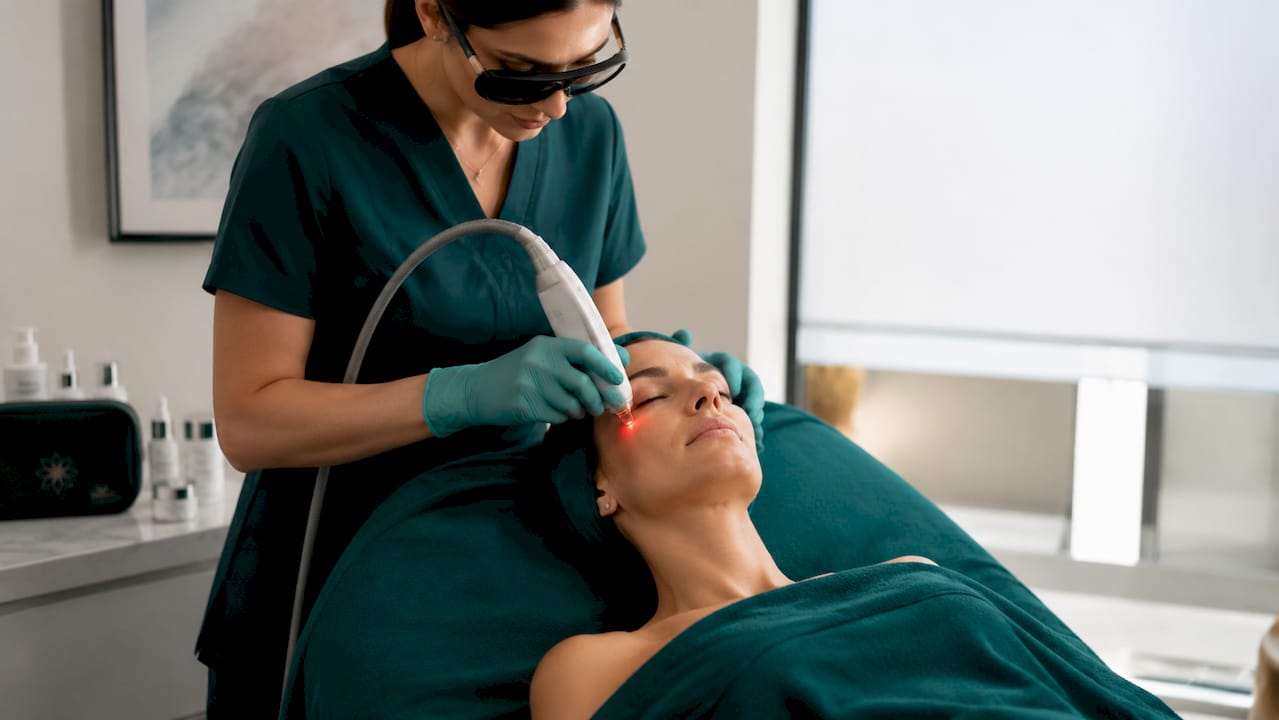
The synergy is not accidental. Facials are biologically active interventions that calm stress-related skin factors and reduce surface congestion, creating a cleaner, more receptive surface for laser energy. Pre-laser exfoliation improves laser penetration, and post-laser calming facials accelerate barrier recovery. This is the core principle behind facial and laser synergy: each modality fills the gap the other leaves.
Laser treatments fall into two broad categories:
- Ablative lasers (such as CO2 fractional laser) remove the outer skin layer and trigger significant collagen remodelling. They require longer recovery but deliver pronounced results for deep wrinkles and acne scars.
- Non-ablative lasers heat the dermis without removing the surface, making them suitable for pigmentation, mild laxity, and patients with limited downtime.
- Combination laser protocols use different wavelengths and depths to target skin in three dimensions, addressing complex concerns more efficiently than a single device.
Pro Tip: Ask your practitioner whether your skin concern is primarily epidermal (pigmentation, texture) or dermal (laxity, deep scarring). The answer determines whether a non-ablative or ablative laser is the correct foundation for your combined protocol.
How to prepare your skin before combining skincare therapies
Preparation is the most overlooked step when patients plan to combine facial and laser treatments. A qualified professional must assess your skin before any combined protocol begins. This assessment covers active skin conditions, Fitzpatrick skin type, recent sun exposure, and any medications that increase photosensitivity.
The preparation sequence matters clinically. Follow these steps before your combined session:
- Book a skin assessment. A dermatologist or trained aesthetician must evaluate your skin at least two weeks before your first combined session. This rules out contraindications such as active rosacea, open acne lesions, or recent isotretinoin use.
- Begin barrier support. Use a ceramide-based moisturiser and a broad-spectrum SPF 50 daily for two weeks before treatment. A well-hydrated barrier responds better to both facial and laser energy.
- Schedule a light exfoliation. A superficial chemical peel or microdermabrasion session, performed five to seven days before your laser appointment, removes dead cell accumulation and improves laser penetration. Do not exfoliate within 48 hours of a laser session.
- Avoid aggressive actives. Stop retinoids, AHAs, and BHAs at least five days before your laser treatment. These thin the skin and increase the risk of post-inflammatory hyperpigmentation.
- Confirm your practitioner’s protocol. Review the 2026 cosmetic dermatology checklist to verify that your clinic follows current safety standards for combined treatments.
Pro Tip: Patients with darker Fitzpatrick skin types (IV–VI) should request a patch test before any laser session. Certain laser wavelengths carry a higher risk of post-inflammatory hyperpigmentation on deeper skin tones, and preparation protocols differ accordingly.
What is the best sequence for a combined laser facial treatment?
Sequencing is where most combination protocols either succeed or fail. Strategic layering is essential. Random combinations of treatments without a defined order risk thermal damage, barrier disruption, and poor results.
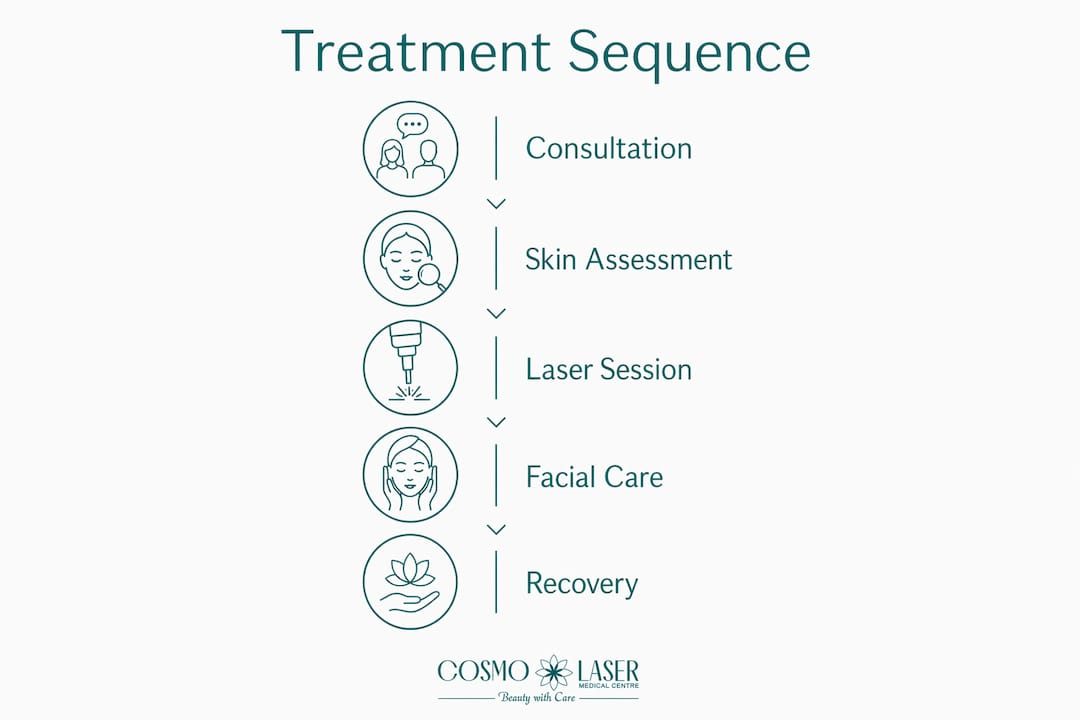
The standard sequence for an overall skin rejuvenation session follows this structure:
- Cleanse and light exfoliation. Begin with a professional cleanse and, where appropriate, a mild enzyme or superficial peel to remove surface debris. This step maximises laser energy delivery to the target tissue.
- Laser treatment. Apply the laser protocol while the skin is clean and prepped. Non-ablative fractional lasers are the most common choice in combined sessions because they allow same-day pairing with other modalities.
- Calming agents or LED light therapy. Immediately after laser, apply a barrier-supportive serum and, where available, use LED light therapy. Post-laser LED therapy reduces inflammation within 24–48 hours and accelerates recovery.
- Hydrating facial finish. A gentle hydrating facial mask or sheet mask applied after LED therapy seals in moisture, calms residual redness, and supports the skin’s recovery phase.
The table below outlines how sequencing changes based on the primary skin concern:
| Concern | Laser type | Facial component | Session spacing |
|---|---|---|---|
| Ageing and fine lines | Non-ablative fractional | Hydrating mask, LED therapy | Every 4–6 weeks |
| Acne scarring | CO2 fractional laser | Calming serum, barrier repair | Every 6–8 weeks |
| Pigmentation | Picosecond or Q-switched | Brightening facial, SPF finish | Every 4–6 weeks |
| Uneven texture | Mild ablative or non-ablative | Enzyme exfoliation, LED | Every 4–6 weeks |
Fractional non-ablative laser resurfacing typically requires 3–5 sessions for maximal improvement, spaced weeks apart to allow collagen remodelling between appointments. This spacing is not optional. Collagen synthesis takes time, and compressing sessions does not accelerate results. It increases risk.
Deep ablative CO2 fractional laser should never be combined with aggressive peels or microdermabrasion in the same session. The thermal load on the skin becomes excessive, and recovery time extends significantly. Patients considering CO2 fractional laser should plan a standalone laser session followed by gentle recovery facials in the weeks after.
How to support recovery after combining facial and laser treatments
Recovery management determines how much of your treatment result you actually keep. Post-laser, non-aggressive facials support faster barrier repair and leave skin feeling calm and plump within days. The key is timing and product selection.
Follow these recovery principles after any combined session:
- Apply SPF 50 every morning without exception. Laser-treated skin is highly vulnerable to UV-induced pigmentation for at least four weeks post-treatment. Sun protection is not optional during this period.
- Use LED light therapy at home if available. Clinical and home-use LED devices reduce redness and support collagen synthesis. Red light (630–660nm) is the most studied wavelength for post-laser recovery.
- Avoid active ingredients for at least one week. Retinoids, vitamin C in high concentrations, and exfoliating acids all stress a recovering skin barrier. Reintroduce them gradually under professional guidance.
- Expect redness and mild swelling. Superficial treatments heal within 3–5 days, while deep ablative resurfacing may require up to two weeks for full recovery. This is normal and expected.
- Book a recovery facial at the right time. A gentle hydrating or barrier-repair facial, scheduled seven to ten days after a non-ablative laser session, accelerates healing without stressing the skin. For ablative sessions, wait at least two weeks before any facial contact.
Your home skincare routine is integral to maintaining results between professional sessions. Ceramide moisturisers, niacinamide serums, and daily SPF form the foundation. Professional sessions build on this base. They do not replace it. Read the post-treatment skincare guide for a structured recovery plan.
Common mistakes when combining facial and laser treatments
The most damaging mistake patients make is combining treatments without professional guidance. Over-treating is a real clinical risk. Applying too many aggressive modalities in one session creates excessive thermal load, which can cause scarring, post-inflammatory hyperpigmentation, and prolonged barrier disruption.
Layering protocols require precise calibration of each treatment’s wavelength, energy, and sequence. Without this calibration, the risk of thermal damage and pigmentation complications rises significantly. The goal is synergy, not accumulation. More treatments in one session does not mean better results.
The second most common error is incorrect sequencing. Performing an aggressive peel after a laser session, for example, strips the skin at its most vulnerable point. Equally, combining deep ablative laser with radiofrequency microneedling in one session is contraindicated without specific clinical justification and extended recovery planning.
Frequency is another area where patients misjudge. Combination treatments work best as part of a long-term maintenance plan, not as repeated aggressive interventions. Spacing sessions correctly allows collagen remodelling to complete and the barrier to recover fully. Compressing sessions to accelerate results consistently produces the opposite outcome.
Pro Tip: Before booking any combined protocol, ask your clinic two direct questions: what safety standards govern their laser settings, and what training does the practitioner hold in multi-modal treatments. A clinic that cannot answer both questions clearly is not the right choice for combined therapy.
Always confirm that the technology in use carries appropriate regulatory certification. Learn more about cosmetic treatment safety standards before committing to a combined protocol.
Key takeaways
Combining facial and laser treatments delivers superior skin rejuvenation when sequencing, spacing, and recovery are managed by a qualified professional using calibrated protocols.
| Point | Details |
|---|---|
| Synergy is structural | Facials repair the epidermal barrier; lasers remodel deeper collagen. Both layers must be addressed for lasting results. |
| Sequence determines outcome | Exfoliation first, laser second, LED and calming agents third. Deviating from this order increases risk. |
| Session spacing is non-negotiable | Non-ablative fractional laser requires 3–5 sessions spaced weeks apart to allow collagen remodelling between appointments. |
| Recovery care preserves results | SPF 50, LED therapy, and ceramide moisturisers in the weeks after treatment protect and extend clinical outcomes. |
| Professional assessment is the starting point | Fitzpatrick skin type, active conditions, and medication history must be reviewed before any combined protocol begins. |
A practitioner’s view on combining facial and laser treatments
Patients often arrive at Cosmolaser expecting a simple menu selection. They want to pick a facial and a laser and book both on the same day. What I have observed over years of clinical practice is that the patients who achieve the most visible, lasting results are those who commit to a structured, tiered programme rather than a one-off combined session.
The misconception I encounter most frequently is that facials are purely relaxing. They are not. A well-executed professional facial delivers measurable biological benefits: barrier repair, hydration restoration, and a reduction in the stress-related skin factors that accelerate ageing. When you pair that with a precisely calibrated laser protocol, you are addressing skin health at every structural level simultaneously.
What surprises many patients is how much skin type variability affects the protocol. Two patients presenting with similar acne scarring may require entirely different sequencing, different laser wavelengths, and different recovery timelines. Personalisation is not a marketing phrase here. It is a clinical necessity.
My advice to anyone considering combined therapy is this: choose a clinic where the practitioner can explain the biological rationale for every step in your protocol. If the answer is vague, the protocol probably is too. The skin rejuvenation expert guide at Cosmolaser outlines the tiered approach we use, and it is a useful reference before your first consultation.
— Dr Anoop Suresh Babu
Cosmolaser’s combined facial and laser treatment programmes
Cosmolaser offers personalised combined treatment protocols designed around your skin type, concerns, and long-term goals.
The clinical team at Cosmolaser conducts a thorough skin assessment before recommending any combined protocol. This covers Fitzpatrick skin type, active skin conditions, and your lifestyle factors. From there, a bespoke plan is built using the clinic’s range of facial therapies and medical-grade laser technologies, including CO2 fractional laser and radiofrequency microneedling. Whether your concern is ageing, pigmentation, or acne, Cosmolaser structures your sessions to maximise results and minimise recovery time. Contact the clinic directly to schedule your consultation and receive a treatment plan built around your skin.
FAQ
What does it mean to combine facial and laser treatments?
Combining facial and laser treatments means pairing surface-level skin therapies (exfoliation, hydration, barrier repair) with laser energy that targets deeper collagen and pigment. The result addresses multiple skin layers in one planned protocol.
Is laser treatment safe for skin when combined with facials?
Laser treatment is safe for skin when combined with facials, provided a qualified professional sequences the treatments correctly and calibrates laser settings to your skin type. Incorrect sequencing or excessive treatment intensity increases the risk of thermal damage and pigmentation complications.
How many sessions are needed for a combined laser facial treatment?
Non-ablative fractional laser resurfacing typically requires 3–5 sessions for maximal improvement, each spaced weeks apart to allow collagen remodelling. The exact number depends on your skin concern and the laser modality used.
Can you have a facial and laser treatment on the same day?
Yes, in most cases a non-ablative laser session can be paired with a calming or hydrating facial in the same appointment, provided the facial follows the laser and uses non-aggressive products. Deep ablative lasers require a standalone session and a recovery period before any facial contact.
How soon after laser treatment can you have a facial?
After a non-ablative laser session, a gentle recovery facial can be scheduled seven to ten days later. After deep ablative resurfacing, wait at least two weeks before any facial treatment to allow full barrier recovery.