A carbon laser facial, clinically known as the Hollywood Peel or carbon peel, is a non-ablative laser resurfacing treatment that combines a topical carbon suspension with a Q-switched Nd:YAG laser to deep-cleanse pores, reduce oiliness, and brighten skin in a single 20–40 minute session. WebMD describes it as a procedure requiring minimal recovery time, making it one of the more practical options for adults who cannot afford significant downtime.
In the UK, single sessions typically range from £80 to £250 depending on clinic, device, and location. For patients in the UAE, Cosmolaser Medical Centre in Sharjah offers the treatment as part of its medical-grade aesthetic programme.
The treatment is best suited to oily, acne-prone, or enlarged-pore skin, though it also addresses superficial pigmentation and uneven texture. Three primary benefits stand out:
- Instant brightening: many patients notice a visible glow immediately after the session.
- Pore refinement: the thermal effect tightens the appearance of enlarged pores.
- Minimal downtime: the non-ablative approach means most people return to normal activity the same day.
Key takeaways
The carbon laser facial is a well-tolerated, non-ablative treatment with a consistent evidence signal for oily skin, enlarged pores, and mild acne, best delivered as a course of three to six sessions by a qualified practitioner.
| Point | Details |
|---|---|
| Best skin concerns | Oily skin, enlarged pores, mild acne, and superficial pigmentation respond most reliably. |
| Typical course | Three to six sessions spaced 2–4 weeks apart; a single session gives temporary brightening only. |
| Downtime | Minimal: most patients resume normal activity the same day, with redness resolving within hours. |
| Evidence quality | Small but consistent studies support efficacy; large randomised trials are not yet available. |
| Cosmolaser Medical Centre | Offers medically supervised carbon peel protocols in Sharjah, with skin-type-specific settings and outcome tracking. |
This article is general information, not a substitute for advice from a qualified doctor. Consult a qualified healthcare professional about your own circumstances before acting on anything here.
Table of Contents
- What exactly is a carbon laser facial?
- How does the carbon laser treatment actually work?
- What happens during a session, step by step
- What the carbon peel facial treats and its key benefits
- Who is a good candidate, and who should wait?
- How many sessions do you need, and when will you see results?
- Side effects, risks, and aftercare
- What does a carbon laser facial cost in the UK, and how do you book?
- What do realistic before and after results look like?
- Carbon laser facial vs Hydrafacial and other treatments
- What does the clinical evidence show?
- A clinical perspective on when to recommend the carbon peel
- Carbon laser facial at Cosmolaser Medical Centre in Sharjah
- Sources
- FAQ
What exactly is a carbon laser facial?
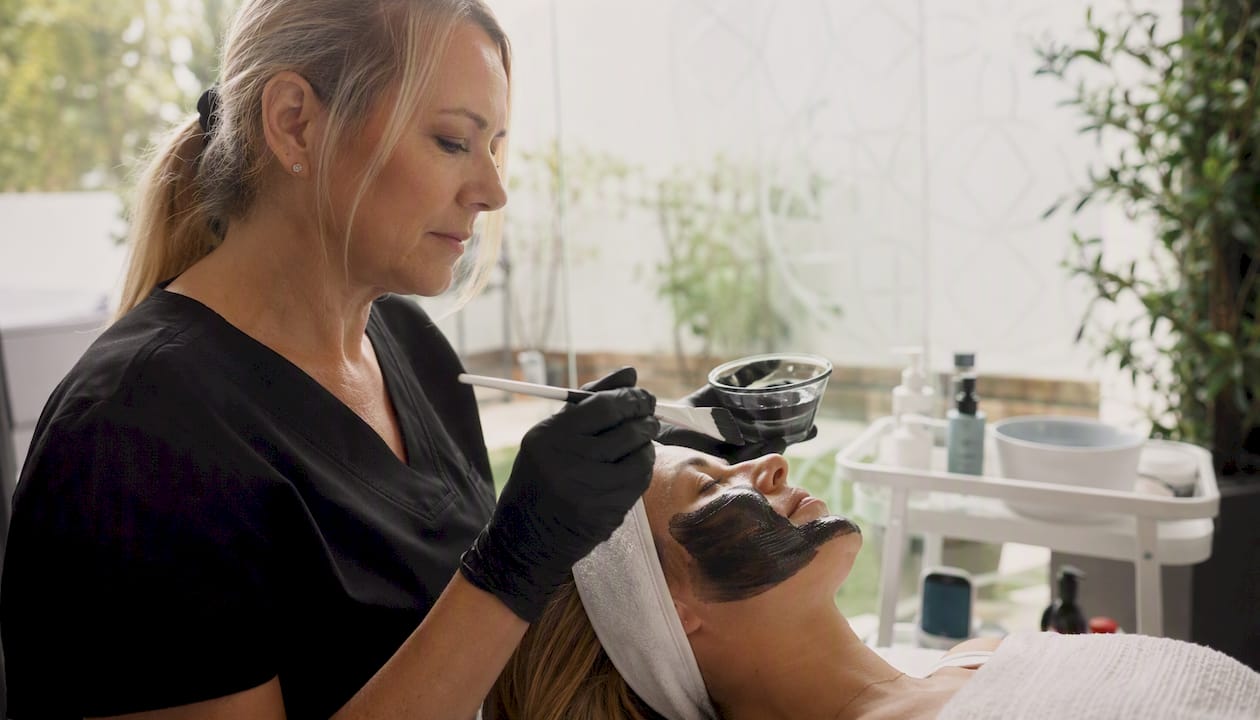
The carbon laser facial is a two-stage, in-clinic procedure. A thin layer of medical-grade liquid carbon, sometimes called a carbon suspension or carbon mask, is applied to the face and allowed to penetrate the pores. A Q-switched or short-pulse laser is then passed over the skin, targeting the carbon particles and producing a controlled exfoliating and thermal effect on the skin surface and upper dermis.
It is not a chemical peel. No acid is applied, and the skin is not deliberately wounded. The treatment is non-ablative, meaning the outer layer of skin remains intact throughout.
Clinics market it under several names:
- Hollywood Peel (the most widely used consumer label, referencing its popularity among celebrities)
- Carbon Peel (a common clinical shorthand)
- Carbon Spectra Peel (when performed with the Spectra laser system)
- Charcoal laser facial (a descriptive consumer term)
Regardless of the name, the underlying mechanism and equipment are the same: topical carbon plus a Q-switched laser, most commonly operating at 1064 nm.
How does the carbon laser treatment actually work?
The mechanism is more specific than most clinic descriptions suggest. Carbon particles are small enough to settle into the follicular openings and bind to sebum, debris, and dead keratinocytes lining the pore walls. When the Q-switched Nd:YAG laser passes over the skin, it selectively heats the carbon because carbon is a strong chromophore at 1064 nm, absorbing laser energy far more efficiently than surrounding tissue.
The rapid heating causes the carbon to fragment and vapourise in a process called photoacoustic disruption. This does three things simultaneously:
- Exfoliates the surface: the vapourisation physically removes the carbon along with the bound debris, dead cells, and excess sebum.
- Reduces sebaceous activity: the heat conducted into the sebaceous glands temporarily suppresses sebum production and inhibits Cutibacterium acnes (the bacterium implicated in acne).
- Stimulates collagen remodelling: the mild thermal injury to the upper dermis triggers a wound-healing response, with modest new collagen deposition over the following weeks.
A case report and literature review confirmed that topical carbon combined with Q-switched Nd:YAG laser reduces pore size and comedones with minimal side effects when settings are applied correctly. The 1064 nm wavelength is preferred because it penetrates deeply enough to reach the sebaceous glands while carrying a lower risk of post-inflammatory hyperpigmentation compared with shorter wavelengths, a particularly relevant consideration for the diverse Fitzpatrick skin types seen in UAE clinics.
What happens during a session, step by step
Understanding the sequence removes most of the pre-appointment anxiety. Healthline notes that the audible popping sound is often more alarming to patients than the actual sensation; most report warmth or a light pinch rather than significant discomfort.
- Cleansing: the practitioner removes all make-up, sunscreen, and surface oils with a gentle cleanser. No anaesthetic cream is applied in most cases.
- Carbon mask application: a thin, even layer of liquid carbon suspension is painted across the face, including the nose and chin. The carbon is left to dry for approximately 10 minutes, during which it penetrates the follicular openings.
- Optional warming pass: some protocols include a low-fluence defocused laser pass to warm the carbon further into the pores before the treatment pass. This is device- and practitioner-dependent.
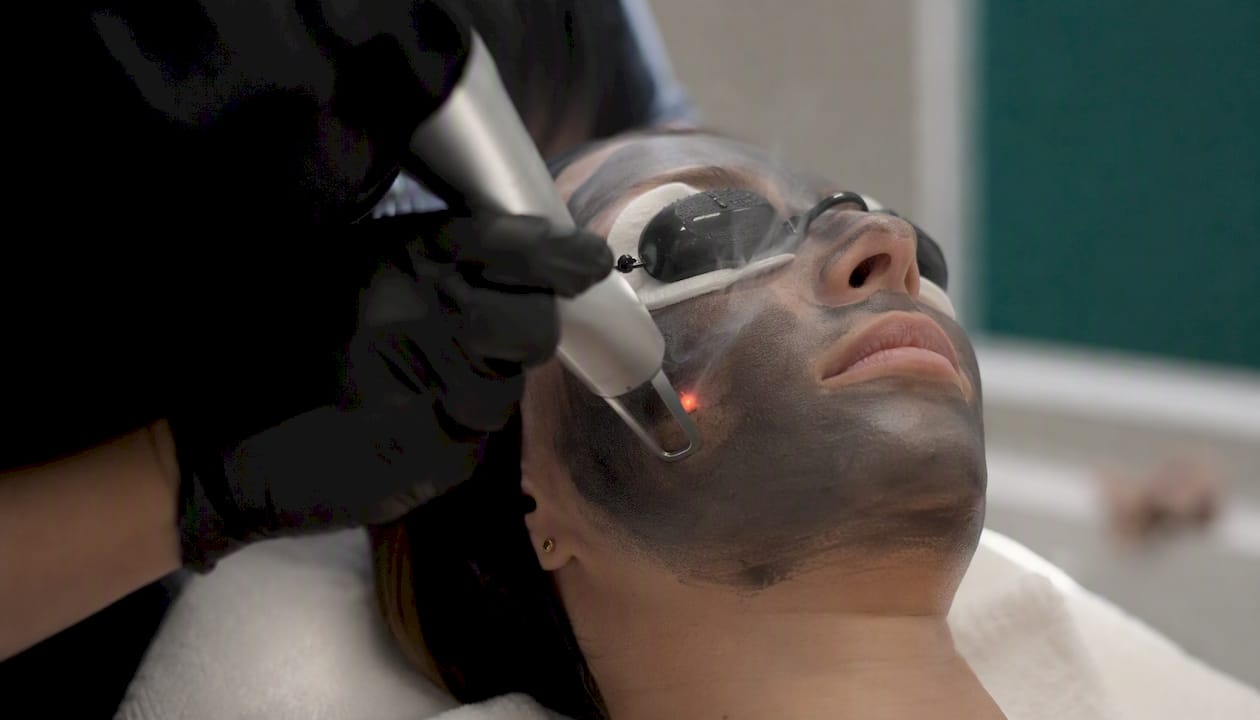
- Treatment laser pass: the Q-switched Nd:YAG laser is passed methodically across the treatment area. Each pulse produces a small popping sensation and an audible crack. A smoke extractor runs continuously to remove vapourised carbon particles and the characteristic charcoal odour.
- Cooling and assessment: the practitioner applies a soothing serum or cooling mask. The skin is assessed for any areas needing a second pass.
- SPF application: broad-spectrum SPF 30 or higher is applied before the patient leaves.
Total session time is approximately 20–30 minutes. Eye shields are worn throughout. Wear dark or loose clothing you do not mind getting faint carbon marks on, and arrive with a clean, product-free face if possible.
Pro Tip: Avoid retinoids, AHAs, and BHAs for at least 48 hours before your appointment. Active exfoliants increase skin sensitivity and can amplify the thermal effect beyond the intended level.
What the carbon peel facial treats and its key benefits
The carbon laser facial is well matched to a specific cluster of skin concerns. Understanding where it performs well, and where it does not, prevents misplaced expectations.
Primary indications:
- Oily and combination skin with excess sebum production
- Enlarged or congested pores
- Mild to moderate acne vulgaris and comedonal acne
- Superficial post-inflammatory hyperpigmentation and uneven skin tone
- General dullness and lack of radiance
Secondary benefits may emerge with a course of treatments rather than a single session, including modest reduction in fine lines and superficial skin texture irregularities via collagen stimulation, progressive improvement in skin clarity and tone consistency, and reduced frequency and severity of breakouts.
What it does not reliably treat:
- Deep atrophic acne scars (ice-pick, boxcar, or rolling scars require CO2 fractional laser or radiofrequency microneedling)
- Deep dermal wrinkles or significant skin laxity
- Extensive or dermal melasma, which requires targeted pigment protocols
- Active cystic or nodular acne, which needs medical management first
For patients with acne scarring, the carbon peel can be a useful preparatory or maintenance treatment, but it is not a standalone solution for structural scar correction.
Who is a good candidate, and who should wait?
Fitzpatrick skin types I through V are generally considered suitable for the carbon laser facial when a trained practitioner adjusts fluence and spot size appropriately. The prospective study in skin of colour reported meaningful acne improvements with minimal complications across darker skin tones, which is directly relevant to patients across the UAE and the wider region. Fitzpatrick type VI requires a cautious, individually assessed approach with conservative settings.
Age is rarely a barrier. The treatment is used in adults from their late teens through to their sixties, with younger patients typically seeking sebum control and older patients prioritising texture and tone.
Contraindications and precautions to discuss with your practitioner:
- Active severe or cystic acne (risk of spreading inflammation)
- Oral isotretinoin (Roaccutane) use within the preceding 6–12 months
- Active skin infection, open wounds, or cold sores in the treatment area
- Recent significant sunburn or suntan
- Pregnancy or breastfeeding
- History of keloid scarring
- Photosensitising medications
Healthline advises that patients with active severe acne should seek specialist assessment before proceeding, as improper energy settings on deep inflammatory lesions risk worsening inflammation.
Pro Tip: If you have a history of post-inflammatory hyperpigmentation or are Fitzpatrick type IV–VI, request a patch test on a small area of skin at least one week before a full-face session. A reputable clinic will offer this without hesitation.
How many sessions do you need, and when will you see results?
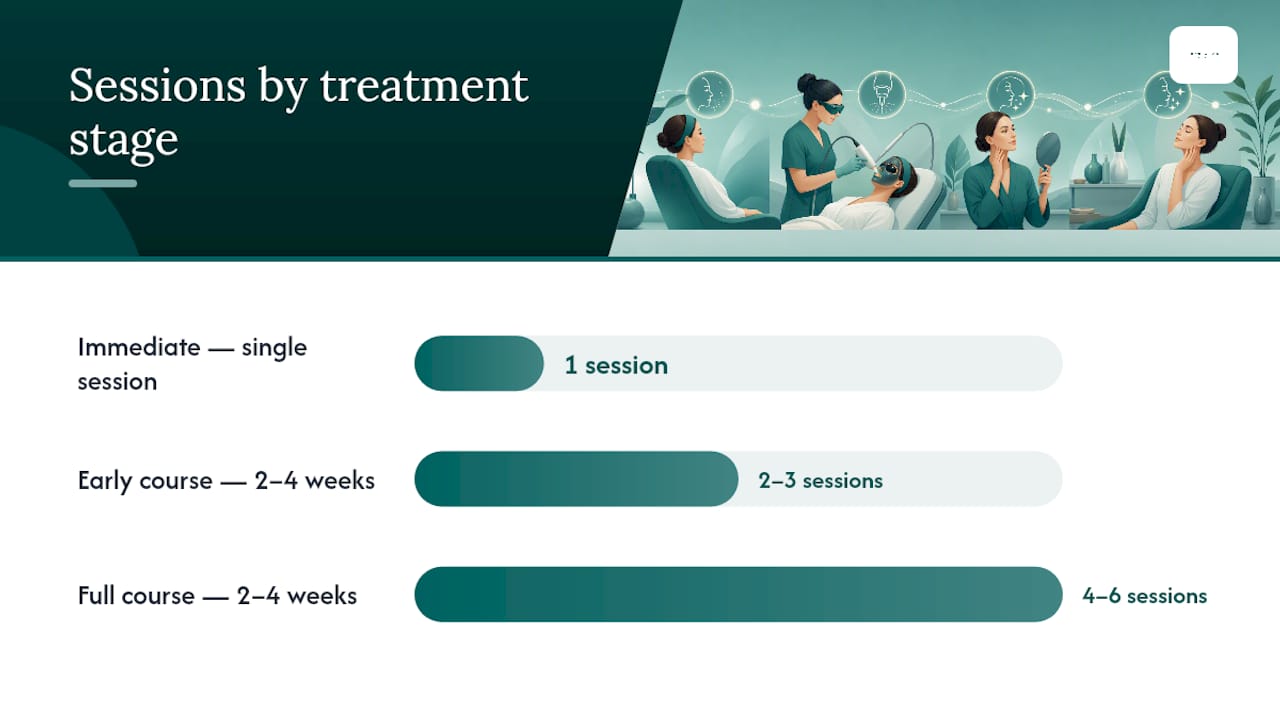
A single session produces a visible but temporary improvement: brighter skin, temporarily tightened pores, and reduced surface oiliness for days to a couple of weeks. For lasting changes to sebum regulation, acne frequency, and skin texture, a course of treatments is necessary. Most clinicians recommend 3–6 sessions spaced 2–4 weeks apart as an initial course, followed by monthly or quarterly maintenance.
| Stage | Sessions | Spacing | Expected outcome |
|---|---|---|---|
| Immediate | 1 | Single session | Instant glow, temporary pore tightening, surface cleanse |
| Early course | 2–3 | 2–4 weeks apart | Reduced oiliness, fewer breakouts, improved tone |
| Full course | 4–6 | 2–4 weeks apart | Progressive collagen remodelling, sustained pore refinement |
| Maintenance | Ongoing | Monthly or quarterly | Preserved results, continued sebum regulation |
The retrospective study of 32 patients using a standardised three-session protocol reported significant reductions on pore scores, acne severity (IGA), and the Global Aesthetic Improvement Scale (GAIS), with 100% of participants showing improvement. These are small-cohort findings, but they align with consistent clinical observation across multiple published series.
Side effects, risks, and aftercare
The carbon laser facial has a well-established safety profile in published small series. Common, short-lived side effects include:
- Transient erythema (redness) lasting a few hours to 24 hours
- Mild swelling or a sensation of warmth in the treated area
- Temporary dryness or slight flaking over the following 2–3 days
- A residual charcoal smell on the skin immediately post-treatment
Rare risks include pinpoint bleeding from superficial vessels, and, when performed with incorrect settings or without a patch test on darker skin, post-inflammatory hyperpigmentation. The retrospective study reported only minor erythema in six of 32 subjects, with no major adverse events.
Aftercare checklist: Apply broad-spectrum SPF 30 or higher every morning for at least two weeks post-treatment. Use a gentle, fragrance-free cleanser and a simple moisturiser for the first 48–72 hours. Avoid retinoids, AHAs, BHAs, and physical scrubs for five to seven days. Do not use a steam room, sauna, or engage in intense exercise for 24–48 hours. Contact your clinic if you notice blistering, prolonged redness beyond 48 hours, or any signs of infection.
The non-ablative nature of the treatment means sun sensitivity is considerably lower than after a chemical peel or ablative resurfacing, but diligent SPF use remains non-negotiable for protecting results and preventing pigmentation.
What does a carbon laser facial cost in the UK, and how do you book?
In the UK, single sessions are typically priced between £80 and £250, with packages of three to six sessions often available at a reduced per-session rate. Prices vary by clinic location (London commands a premium), device type, and practitioner credentials. In Sharjah and the wider UAE, Cosmolaser Medical Centre offers the treatment as part of a medically supervised aesthetic programme, with pricing available on direct enquiry.
Factors that affect the final cost:
- Device type and manufacturer (medical-grade systems carry higher running costs)
- Practitioner qualification (doctor-led vs. aesthetician-led)
- Clinic location and overheads
- Whether the session is standalone or part of a package
Clinic selection checklist:
When shortlisting a provider, confirm that the practitioner is registered with the relevant regulatory body (in the UK, check the Joint Council for Cosmetic Practitioners or equivalent; in the UAE, the Dubai Health Authority or Sharjah Health Authority). Ask to see before-and-after photographs from the clinic’s own patients, not stock images. Request information on the specific device used and the manufacturer’s clinical data. A clear written consent process and a pre-treatment consultation are minimum standards, not optional extras. Understanding the role of a licensed aesthetician is a useful starting point for evaluating practitioner credentials before you book.
What do realistic before and after results look like?
Immediately after a session, the skin typically appears cleaner, slightly flushed, and noticeably brighter. Pores look smaller because the follicular debris has been removed and the mild thermal effect has temporarily tightened the surrounding tissue. Over the following days, any surface oiliness is reduced and skin tone appears more even.
After a full course of three to six sessions, patients with oily or acne-prone skin generally report sustained reductions in breakout frequency, visibly refined pores, and a more consistent skin tone. Deeper structural changes, such as modest improvement in fine lines, develop gradually over one to three months as collagen remodelling progresses.
Realistic expectations for before and after photographs:
- Look for consistent lighting between the before and after images; dramatic lighting changes can exaggerate results.
- Date stamps and clinician commentary add credibility.
- Unedited, undoctored images taken in the same clinical setting are the most reliable.
- Ask the clinic whether outcomes were assessed using a validated scale such as the IGA (Investigator’s Global Assessment), GAIS (Global Aesthetic Improvement Scale), or a standardised pore measurement tool.
Deeper atrophic scars, significant skin laxity, and structural wrinkles will not be resolved by a carbon peel alone. If a clinic’s before-and-after images suggest otherwise, treat that as a red flag.
Carbon laser facial vs Hydrafacial and other treatments
Choosing between a carbon laser facial and another treatment depends on your primary skin concern. The table below uses generic treatment categories to illustrate the key differences.
| Treatment category | Downtime | Best suited to | Typical initial course |
|---|---|---|---|
| Carbon laser peel (non-ablative) | Minimal (hours) | Oily, acne-prone, enlarged pores, dullness | 3–6 sessions, 2–4 weeks apart |
| Hydrating facial (e.g. Hydrafacial) | None | Dry, dehydrated, sensitive skin | Monthly maintenance |
| Superficial chemical peel | 3 days | Superficial pigmentation, mild texture | 3–6 sessions, 4 weeks apart |
| Ablative laser resurfacing | 7 days | Deep texture, scarring, significant wrinkles | 1–3 sessions, 6–12 weeks apart |
For oily or acne-prone skin, the carbon laser facial is generally the stronger choice over a hydrating facial. The Hydrafacial excels for dehydrated or sensitive skin where the priority is moisture replenishment rather than sebum control. When the concern is deeper texture irregularity or structural scarring, ablative options such as CO2 fractional resurfacing deliver more significant remodelling, at the cost of longer downtime. A broader comparison of laser skin treatments can help you map your concern to the appropriate modality.
What does the clinical evidence show?
The evidence base for the carbon laser facial is promising but limited by study size and design. Three published studies are particularly relevant.
- A retrospective study of 32 patients using a standardised three-session protocol reported significant improvements on FWAS (follicular wall assessment score), IGA, and pore scores, with 100% of participants rated as improved on GAIS. Only minor transient erythema was recorded.
- A case report and literature review documented visible pore reduction and comedone improvement after three monthly sessions of carbon suspension plus Q-switched Nd:YAG laser, with only mild erythema as a side effect.
- A single-centre prospective study of 35 patients with skin of colour reported that 80% achieved greater than 80% improvement in acne lesions after three sessions spaced two weeks apart, with few and mostly minor complications.
Limitations are worth stating plainly. All three studies involve small cohorts, short follow-up periods, and single-centre designs. Device parameters (fluence, spot size, pulse width) vary between studies, which limits direct comparison. PubMed records of earlier carbon-assisted laser techniques confirm the technique has been in clinical use for decades, but large randomised controlled trials remain absent from the literature. The practical implication: the treatment has a consistent signal of benefit for acne and pore concerns, but patients should understand they are working with early-stage rather than definitive evidence.
A clinical perspective on when to recommend the carbon peel
The carbon laser facial occupies a specific and useful position in a well-structured treatment pathway. It is not the answer to every skin concern, but for the right patient, it delivers results that are difficult to replicate with topical products alone.
At Cosmolaser Medical Centre in Sharjah, the approach begins with a thorough skin assessment to determine Fitzpatrick type, active lesion status, and treatment history before any laser protocol is recommended. For patients presenting with oily skin, congested pores, or mild acne, the carbon peel is often the first-line laser option precisely because its risk profile is low and the results are visible quickly. Where deeper scarring or significant pigmentation is present, the team considers combination protocols, pairing the carbon peel with treatments such as picosecond laser or fractional resurfacing at appropriate intervals.
Patient selection and safety monitoring are central to how results are tracked in the UAE context. The diverse skin tones seen across the region mean that conservative initial settings and patch testing are standard practice, not optional. Outcomes are assessed using validated scales at each follow-up, and the treatment plan is adjusted accordingly. The evidence from the prospective study in skin of colour reinforces what the clinical team observes in practice: careful technique and appropriate patient selection produce meaningful improvements with a low complication rate.
Carbon laser facial at Cosmolaser Medical Centre in Sharjah
Patients across the UAE who want the carbon laser facial performed under medical supervision, with device-specific protocols and validated outcome tracking, will find Cosmolaser Medical Centre in Sharjah a credible option. The clinic’s team of qualified doctors and dermatological specialists conducts a full skin assessment before recommending any laser protocol, with particular attention to Fitzpatrick skin type, active lesion status, and prior treatment history.
The carbon peel is available as a standalone session or as part of a structured course, with combination protocols available for patients whose concerns extend beyond what a single modality can address. For patients researching skin rejuvenation best practices or wanting to understand how the carbon peel fits into a broader treatment plan, the clinic’s educational resources and consultation process are designed to give you a clear, honest picture before you commit. To book a consultation or enquire about current session availability, contact Cosmolaser Medical Centre directly.
Sources
- Carbon peel laser technique to improve skin quality: back to science! – PMC
- Carbon Laser Peel: A 30‑Minute Fix for Your Skin – WebMD
- Everything You Need To Know About Laser Carbon Peels – Healthline
- Pubmed
FAQ
What does a carbon laser facial do?
It deep-cleanses pores, reduces excess sebum, and brightens skin by combining a topical carbon suspension with a Q-switched Nd:YAG laser that vapourises the carbon and the debris bound to it, producing a mild exfoliating and collagen-stimulating effect.
How many sessions are needed for visible results?
A single session produces immediate brightening, but a course of three to six sessions spaced 2–4 weeks apart is needed for lasting improvements in acne, pore size, and skin texture, as confirmed by published small-cohort studies.
Which is better for oily skin: a carbon laser facial or a Hydrafacial?
For oily, acne-prone skin with enlarged pores, the carbon laser facial is generally the stronger choice because it targets sebaceous activity directly. A Hydrafacial is better suited to dry or dehydrated skin where the priority is moisture replenishment rather than sebum control.
What are the side effects of a carbon laser facial?
The most common side effect is transient redness lasting a few hours. Mild swelling and temporary dryness are also possible. Serious adverse events are uncommon when the treatment is performed by a trained practitioner using appropriate settings and, for darker skin tones, a prior patch test.