
TL;DR:
- Adults in the UK can only access NHS orthodontic treatment if they meet specific clinical criteria, while cosmetic cases are usually private. Various discreet braces options exist, and choosing a qualified clinician with a Specialist GDC listing is essential for effective, lasting results. Proper planning, realistic expectations, and lifelong retention are critical to achieving successful aesthetic outcomes.
Adults in the UK can absolutely get braces for cosmetic reasons, but almost all cosmetic treatment is private. NHS orthodontic funding is reserved for under-18s who meet a clinical threshold assessed using the Index of Orthodontic Treatment Need (IOTN); cosmetic improvement alone does not qualify. For adults, the private market is the standard route. Before booking anywhere, verify your clinician on the GDC specialist register and check guidance from the British Orthodontic Society, the two most reliable trust signals in UK orthodontics.
Table of Contents
- What types of braces are available for adult cosmetic treatment?
- What can braces realistically achieve for cosmetic patients?
- How much do private braces cost in the UK, and how does payment work?
- How do you choose a qualified UK provider?
- What happens from your first assessment to the end of treatment?
- Risks, side effects, and when braces may not be appropriate
- Key takeaways
- What a clinician wants adult cosmetic patients to know
- Cosmolaser Medical Centre offers personalised adult braces assessments
- FAQ
What types of braces are available for adult cosmetic treatment?
Four broad categories cover most adult cosmetic cases. Each involves a different balance of visibility, cost, comfort, and clinical suitability.

| Type | Visibility | Typical private cost (UK) | Comfort | Treatment time | Complex cases | Hygiene demand |
|---|---|---|---|---|---|---|
| Metal fixed | High | £1,500–£4,200 | Moderate | 12–24 months | Yes | High |
| Ceramic fixed | Moderate | £2,000–£6,500 | Moderate | 12–24 months | Yes | High |
| Lingual (hidden) | Very low | £2,000–£10,000+ | Lower initially | 12–18 months+ | Yes | Very high |
| Clear aligners | Very low | £1,500–£5,500 | Good | 6–18 months | Mild–moderate only | Moderate |
Cost data sourced from UK 2026 private market estimates.
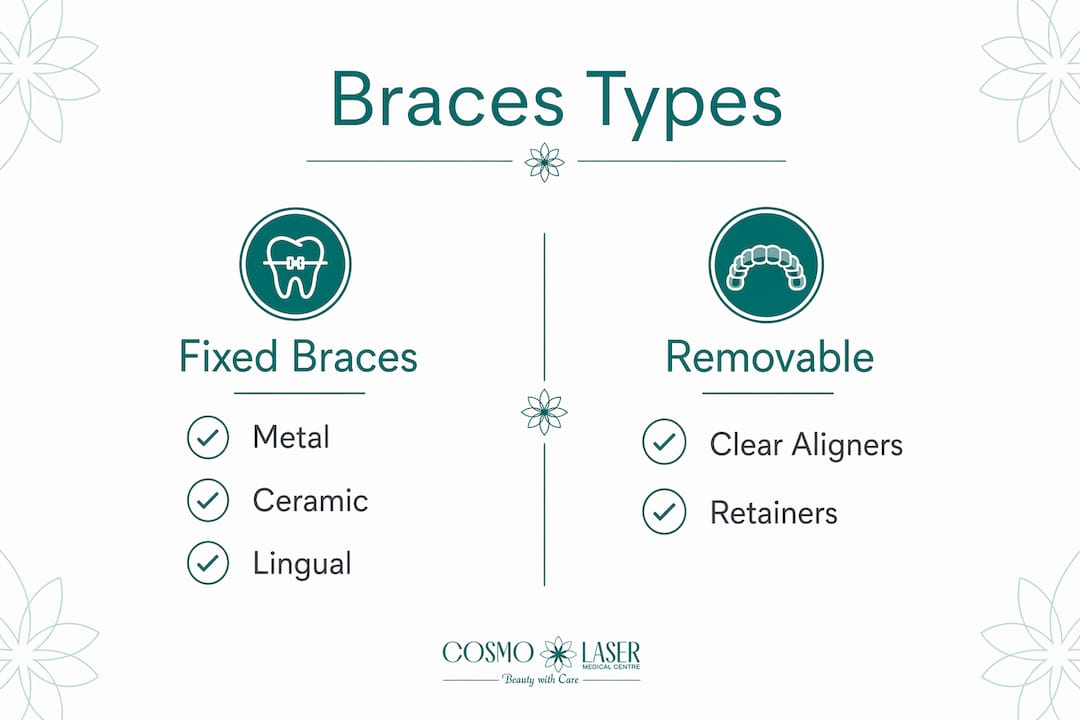
Metal fixed braces remain the most clinically versatile option. They handle complex tooth movements reliably and tend to be the most affordable entry point.
Ceramic fixed braces use tooth-coloured brackets and wires that blend with the enamel. They are more fragile than metal and can stain slightly, but many adults prefer them for front-tooth work.
Lingual braces sit on the inner (tongue-facing) surface of the teeth, making them virtually invisible from the outside. They command a significant price premium and require a short adjustment period for speech, but they are the most discreet fixed option available.
Clear aligners are removable trays worn for roughly 22 hours a day. They suit mild to moderate alignment cases well and allow normal eating and brushing. Their effectiveness depends heavily on consistent wear.
What can braces realistically achieve for cosmetic patients?
Orthodontic treatment can produce meaningful aesthetic improvements, but it has defined limits. Understanding both sides protects patients from disappointment.
Cosmetic goals braces can reliably address:
- Straightening visibly crowded or overlapping front teeth
- Closing or reducing gaps between teeth
- Correcting mild to moderate rotations
- Improving the overall symmetry of the smile line
- Making teeth easier to clean, which supports long-term gum health
What braces cannot fully resolve alone:
- Severe skeletal jaw discrepancies, which often require orthognathic surgery alongside orthodontics
- Teeth that are the wrong shape or size (veneers or composite bonding are better suited here)
- Significant gum recession or bone loss from periodontal disease
- Missing teeth, where dental implants or bridges may be the more appropriate solution
For patients whose cosmetic goals involve both alignment and tooth shape, a combined approach is common. Orthodontics first straightens the teeth, then cosmetic bonding or veneers refine the final appearance. An aesthetic orthodontic assessment can help clarify which combination suits your specific case.
How much do private braces cost in the UK, and how does payment work?
Private costs vary considerably depending on the appliance type, case complexity, clinician experience, and location. London practices typically charge a notable premium over regional clinics.
Private UK price ranges (2026): metal braces £1,500–£4,200; ceramic £2,000–£6,500; clear aligners £1,500–£5,500; lingual braces £2,000–£10,000+. Source: DentistCost UK.
Key factors that shift the final price:
- Case complexity: more tooth movement means more appointments and longer treatment
- Clinician grade: an orthodontic specialist (GDC-listed) typically charges more than a general dentist offering the same system
- System type: fully customised lingual systems cost significantly more than standardised ones
- What is included: some quotes bundle consultations, scans, adjustments, and retainers; others do not
Payment options commonly available in the UK include an upfront deposit followed by interest-free monthly instalments, longer finance agreements with APR, and health cash plans that reimburse a portion of dental costs. Dental insurance rarely covers adult cosmetic orthodontics in full. Always ask in writing whether your retainers are included in the quoted price; they often are not, and replacement retainers carry their own cost.
How do you choose a qualified UK provider?
The clinician matters more than the brand of appliance. A short checklist before committing can prevent costly mistakes.
Checklist:
- Confirm the clinician holds a GDC specialist listing in orthodontics (a specialist has completed at least three years of additional post-qualification training)
- Check the British Orthodontic Society’s patient resources for guidance on what to expect from a reputable practice
- Ask to see documented before-and-after cases relevant to your own presenting concern
- Confirm the practice has a clear complication and complaints policy
Questions to ask at your consultation:
- Are diagnostic records (photographs, X-rays, digital scans) included in the consultation fee?
- What are the realistic treatment alternatives for my specific case?
- What does the quoted price include, and what would cost extra?
- What is the retention plan, and are retainers included?
- How many cases like mine have you treated?
Red flags to watch for:
- A very low fixed price with vague inclusions
- No mention of a retention plan
- Pressure to commit on the day
- No clinical records or diagnostic imaging taken before treatment planning
Pro Tip: Always request a written treatment plan and itemised quote before signing anything. A reputable clinician will provide this without hesitation.
What happens from your first assessment to the end of treatment?
Understanding the full patient journey removes uncertainty and helps you plan around appointments.
The initial assessment typically includes:
- A clinical examination of teeth, gums, and bite
- An IOTN or equivalent assessment to document clinical need
- Photographs and digital scans or X-rays (CBCT imaging may be used for complex cases; see 3D diagnostic scanning)
- A written treatment plan with options and a full cost breakdown
Typical treatment timeline:
- Clear aligners for mild cases: 6–12 months
- Fixed braces for moderate cases: 12–18 months is a commonly quoted range for many full-mouth treatments
- Complex adult cases: 18–30 months or longer
- Adjustment appointments: typically every 4–8 weeks for fixed braces; aligner check-ins vary by practice
Aftercare and retention:
Retention is not optional. Without consistent retainer wear, teeth will tend to drift back towards their original positions over time. The British Orthodontic Society emphasises lifetime retention as the standard of care. Retainer options include removable Hawley or Essix-style retainers and fixed bonded wires cemented behind the teeth. Fixed retainers remove the nightly compliance burden but require careful cleaning and occasional maintenance. Replacement retainers are usually charged separately unless explicitly included in your original quote.
Risks, side effects, and when braces may not be appropriate
Adult cosmetic patients should weigh realistic downsides alongside the benefits.
Common side effects:
- Temporary discomfort after fitting or adjustment appointments, manageable with paracetamol and soft foods
- Irritation to the tongue, lips, or inner cheeks from brackets or wires
- Lingual braces commonly cause a short adjustment period for speech, including a temporary lisp; most patients adapt within a few weeks
- Enamel decalcification (white spot lesions) if oral hygiene is poor during treatment — a preventable but permanent risk
- Root resorption (minor shortening of tooth roots) is a rare but recognised complication of prolonged orthodontic force
When braces may not be appropriate:
- Active periodontal disease or significant bone loss must be stabilised before any tooth movement begins
- Poor oral hygiene that cannot be reliably maintained throughout treatment
- Unrealistic expectations about what alignment alone can achieve aesthetically
- Extreme jaw discrepancies that require surgical correction rather than orthodontics alone; TMJ-related issues should also be assessed before starting treatment
Pro Tip: Insist on a clear retention plan before you start treatment. Relapse is the most common long-term disappointment in orthodontics, and it is almost entirely preventable with the right retainer protocol.
Key takeaways
Private adult braces in the UK are accessible, effective, and available in a range of discreet formats, but realistic outcomes, qualified providers, and a lifetime retention plan are non-negotiable.
| Point | Details |
|---|---|
| NHS eligibility for adults | NHS orthodontic treatment is not routinely available to adults; cosmetic cases are always private. |
| Private cost ranges | Metal £1,500–£4,200; ceramic £2,000–£6,500; aligners £1,500–£5,500; lingual £2,000–£10,000+. |
| Verify your clinician | Check the GDC specialist register before committing; a listed specialist has at least three years of additional training. |
| Retention is lifelong | Without consistent retainer wear, teeth will tend to drift back; confirm retainers are included in your quote. |
| Cosmolaser Medical Centre | Offers private adult braces and aligner assessments with full diagnostic imaging and a personalised treatment plan. |
What a clinician wants adult cosmetic patients to know
The most common mistake adult cosmetic patients make is choosing an appliance before they have had a proper diagnosis. The appliance type matters far less than the quality of the treatment plan behind it. A thorough clinical assessment, including photographs, scans, and a frank conversation about realistic outcomes, is what separates a result that lasts from one that disappoints within two years.
Retention deserves more attention than it typically gets at the point of sale. Teeth have a biological memory; they will move back if not held in place. A fixed bonded retainer behind the lower front teeth, combined with a removable upper retainer worn nightly, is the protocol most specialists recommend for adult cosmetic cases. Patients who understand this from day one tend to be far more satisfied with their long-term results.
For patients with both cosmetic and functional concerns, the two are worth addressing together. Correcting the bite alongside the aesthetic alignment often protects enamel from abnormal wear and makes the final result more stable. A combined smile design approach that integrates orthodontic planning with broader aesthetic goals consistently produces more harmonious outcomes than treating each concern in isolation.
Cosmolaser Medical Centre offers personalised adult braces assessments
Patients who want a straighter, more confident smile without navigating the NHS waiting list will find a clear, structured pathway at Cosmolaser Medical Centre. The clinic provides private adult braces and clear aligner treatment with full diagnostic imaging, written treatment plans, and transparent pricing that specifies exactly what is included — consultations, adjustments, and retention.
What sets the assessment apart is the diagnostic rigour applied before any appliance is recommended. CBCT imaging, clinical photography, and a detailed smile analysis inform every treatment plan, so patients understand their options and realistic outcomes before committing. For adults whose cosmetic goals extend beyond alignment, the team can coordinate broader aesthetic planning across dental and skin treatments in a single clinic environment. Book your assessment at Cosmolaser Medical Centre and receive a written quote with full retention details on the day.
FAQ
Can adults get NHS braces for cosmetic reasons?
No. NHS orthodontic treatment is only routinely available to under-18s who meet the IOTN clinical threshold; cosmetic improvement alone does not qualify adults.
How long do adult braces typically take?
For many full-mouth fixed treatments, 12–18 months is a commonly cited range; complex cases or those requiring significant jaw correction can take considerably longer.
What is the cheapest type of braces for adults in the UK?
Metal fixed braces are generally the most affordable, with private costs typically starting around £1,500, though the final price depends on case complexity and location.
Do I need to wear a retainer after braces?
Yes, and for life. Without consistent retainer wear, teeth will tend to drift back towards their original positions; both removable and fixed bonded retainer options are available.
How do I know if a UK orthodontist is qualified?
Check the GDC specialist register to confirm the clinician holds a specialist listing in orthodontics, which requires at least three years of post-qualification training beyond a general dental degree.
This article is for general information only and does not constitute professional dental or medical advice. Consult a GDC-registered clinician for an assessment specific to your own clinical situation.