
For acne and surface bacterial control, blue light is usually the better tool. For deeper repair, anti-aging, and wound healing, red and near-infrared light take over, and for many acne cases, combining the two beats either one alone. The catch is that dosing and device quality decide whether you see real results, and if you have active pigment concerns or a persistent skin issue, a licensed dermatologist should assess you before you commit to either color.
TL;DR:
- Combining red and blue light provides superior acne reduction, with about a 76% decline in lesions at 12 weeks compared to 63% with blue alone.
- Device efficacy depends heavily on irradiance and fluence, not just wavelength, making calibrated energy delivery essential for real results.
- Blue light mainly targets surface bacteria and suppresses melatonin at night, so avoiding blue exposure before sleep can improve sleep quality.
- Red and near-infrared light support collagen production, skin texture, and deeper tissue repair, but consumer devices often lack sufficient power for this.
- Professional, tailored assessments ensure the correct wavelength, dosage, and combination for individual skin concerns, unlike generic home devices.
Table of Contents
- Red vs Blue Light: Wavelengths, Uses, and Safety at a Glance
- How Do Red and Blue Light Actually Work on Skin?
- Does Red or Blue Light Work Better for Acne, Aging, and Healing?
- Why Avoid Blue Light Before Bed? The Sleep Connection
- What Are the Safety Risks of Red and Blue Light Therapy?
- What Device Specs Actually Predict Real Results?
- How Do Clinics Combine Red and Blue Light for Real Results?
- Cosmolaser’s Clinical Approach to Light-Based Treatment
- What the Research Actually Tells Us About Color and Results
- Ready for a Supervised Light Therapy Plan?
- Sources
- FAQ
Red vs Blue Light: Wavelengths, Uses, and Safety at a Glance
Blue light sits in the shorter, higher-energy band of the visible spectrum, roughly 450 to 495 nanometers, while red light runs longer at 620 to 750 nanometers. Near-infrared extends past that, into tissue depths visible red light can’t reach.
- Blue light (roughly 405 to 470 nm): stays superficial, targets acne-causing bacteria, works through a bactericidal mechanism.
- Red light (roughly 620 to 660 nm): penetrates into the dermis, drives collagen production and calms inflammation.
- Near-infrared (700 nm and beyond): reaches deeper still, used for tissue repair and joint or muscle applications.
- Safety flags: blue light suppresses melatonin more aggressively than red, and can trigger pigment changes in darker skin tones if used carelessly.
Quick fact: Cleveland Clinic notes that blue light mainly affects the uppermost skin layers, while red and near-infrared penetrate deeper, which is why clinicians frequently combine the two depending on the treatment goal.
How Do Red and Blue Light Actually Work on Skin?
Photon energy runs opposite to wavelength: blue light packs more energy per photon but scatters at the surface, while red light’s longer wavelength lets it travel deeper before it gets absorbed. That physics explains almost everything about how these two colors behave clinically.
Blue light gets absorbed by porphyrins, natural compounds produced by Cutibacterium acnes, the bacteria linked to inflammatory breakouts. When those porphyrins absorb blue photons, they generate reactive oxygen species that damage the bacteria from the inside, according to research summarized by Cosmopolitan’s dermatology coverage. Red and near-infrared light instead target cytochrome c oxidase inside mitochondria, boosting ATP production in fibroblasts and keratinocytes. This process, known as photobiomodulation, also modulates nitric oxide signaling and nudges reactive oxygen species toward a healing rather than damaging effect.
- Blue light: absorbed by porphyrins, kills surface bacteria.
- Red/NIR light: absorbed by cytochrome c oxidase, boosts cellular energy output.
- Both depend on irradiance (power delivered per area) and fluence (total energy dose) to work.
Pro Tip: Two devices can share the same wavelength number and still perform completely differently. Always check irradiance and fluence, not just color, before judging whether a device can realistically match clinical trial results.
Does Red or Blue Light Work Better for Acne, Aging, and Healing?
Evidence strength varies a lot depending on what you’re treating, and the acne data is the most convincing of the bunch.
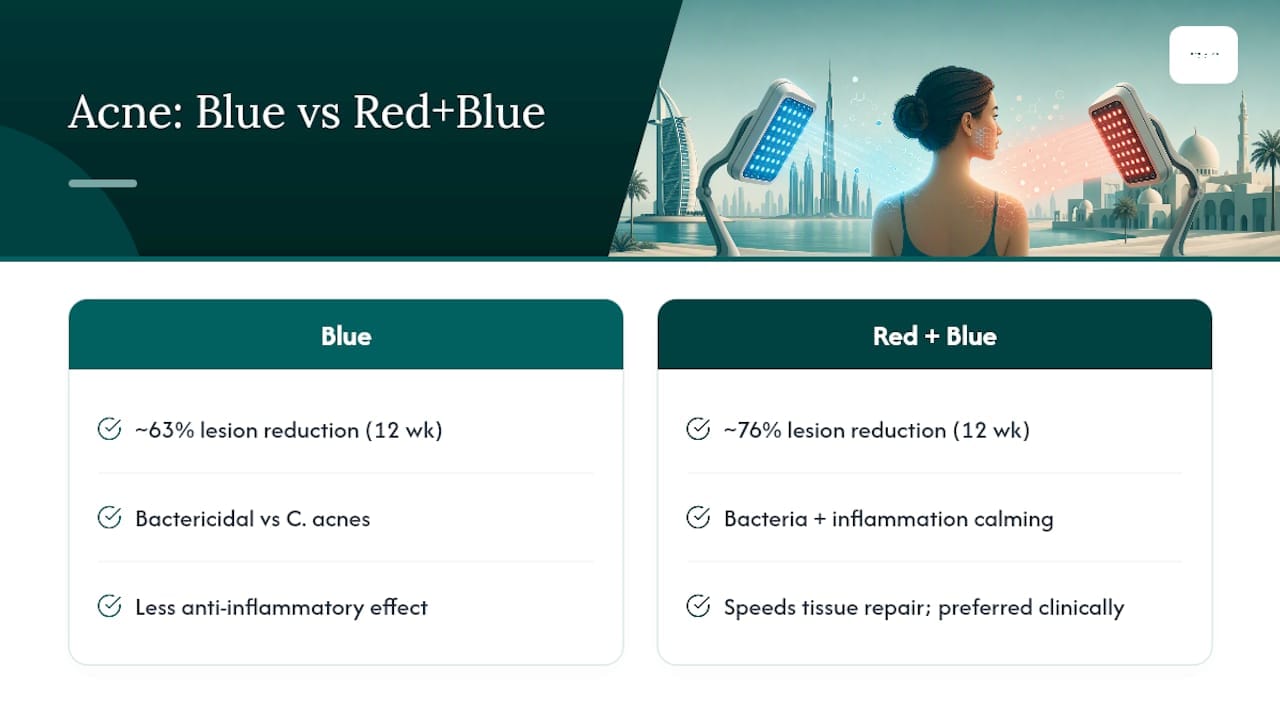
Acne. Blue light alone reduces inflammatory lesions through its bactericidal effect on C. acnes, but combining it with red light performs meaningfully better. One clinical trial found combined red and blue therapy produced roughly a 76% reduction in inflammatory lesions at 12 weeks, compared with about 63% reduction using blue light alone. The mechanism makes sense once you separate the two jobs: blue knocks down the bacterial load, red calms the inflammation that bacteria trigger and speeds tissue repair, which is why many clinics default to combination protocols for inflammatory breakouts rather than relying on blue alone.
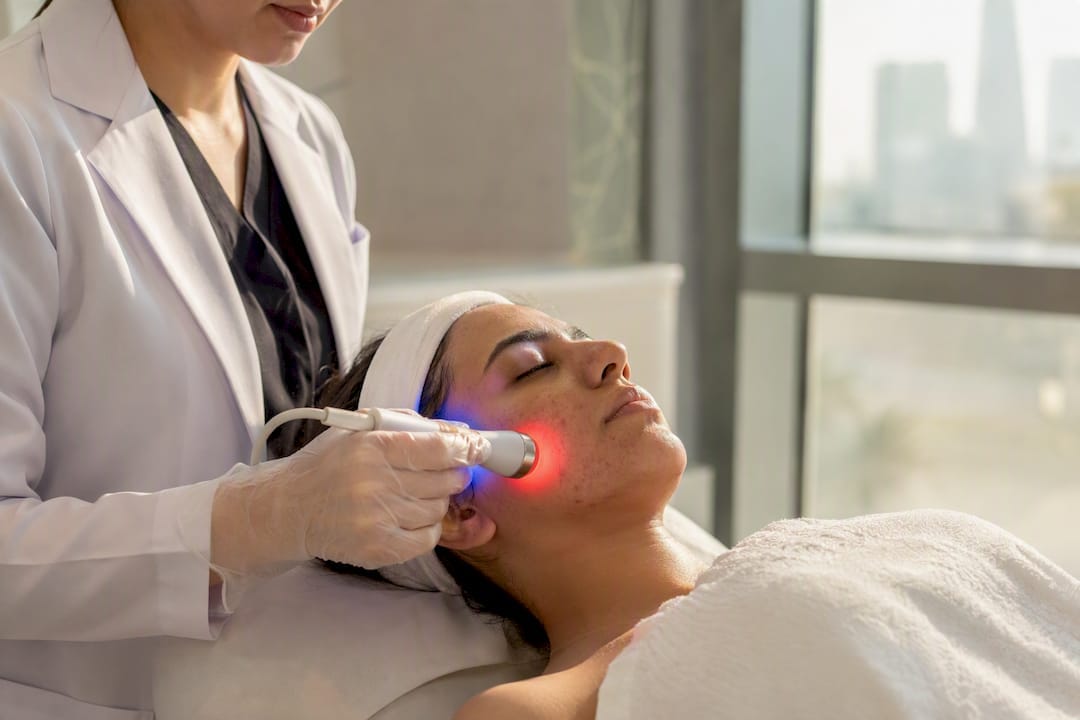
Photoaging. Red and near-infrared trials consistently show improvements in skin texture and fine lines, generally appearing over several weeks of regular sessions rather than overnight. A broad review of LED photobiomodulation research confirms moderate but consistent efficacy for red and near-infrared in anti-aging applications, while flagging real heterogeneity across study designs and, notably, weaker output from consumer devices compared to clinical systems.
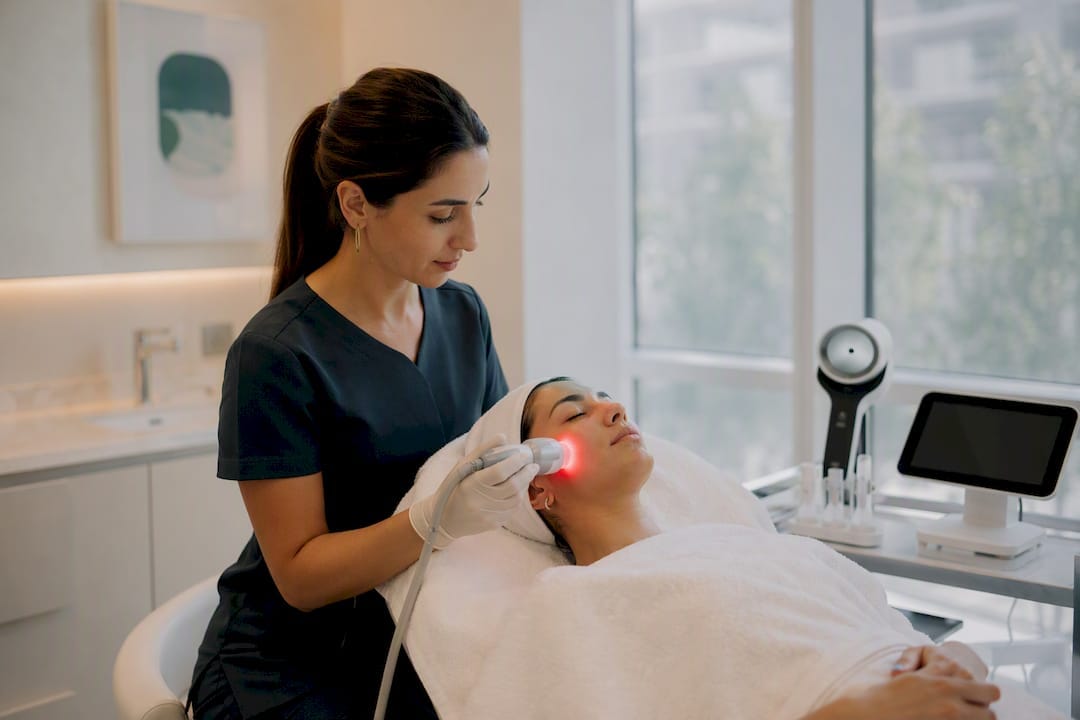
Wound healing and inflammation. Early signals point to red and near-infrared light supporting tissue repair and reducing localized inflammation, though the evidence base here remains thinner and less standardized than the acne data.
Hair growth. Low-level laser therapy in the red and near-infrared range shows modest but repeatable benefits for certain types of hair thinning across multiple trials, generally requiring sustained, consistent use rather than a handful of sessions.
Why Avoid Blue Light Before Bed? The Sleep Connection
Blue light’s effect on your body goes well beyond skin. A 2026 human study exposed participants to blue light (464 nm) and red light (631 nm) at night and tracked melatonin over three hours. Melatonin stayed suppressed at 7.5 pg/mL under blue light after two hours, while it recovered to 26.0 pg/mL under red light over the same window. Red light let the body’s natural sleep signal bounce back; blue light kept it flat.
- Cut blue-rich screen and lighting exposure two to three hours before bed.
- Favor red or warm-toned lighting for evening use if you’re sensitive to sleep disruption.
- Shift workers, people with insomnia, and anyone using light therapy for seasonal affective disorder should loop in a clinician before adjusting their light exposure routines, since the right timing and intensity can differ from general guidance.
What Are the Safety Risks of Red and Blue Light Therapy?
Most people tolerate both colors well, but a few risks deserve real attention rather than a passing mention.
- Mild, common effects: transient redness, dryness, or irritation after a session, usually resolving within hours.
- Rare misuse harms: burns from overheated devices or retinal damage from unprotected eye exposure during high-intensity sessions.
- Pigmentation risk: blue light can trigger or worsen hyperpigmentation in darker Fitzpatrick skin types, and anyone with melasma should approach it cautiously.
- Medication and condition checks: photosensitizing medications, active skin infections, or certain autoimmune conditions warrant a conversation with a clinician first, a point echoed in contraindication guidance for red light therapy.
- When to stop: persistent redness beyond 24 hours, blistering, or new pigment changes mean pause treatment and call a clinician.
What Device Specs Actually Predict Real Results?
Wavelength gets all the marketing attention, but irradiance (measured in mW/cm², how much power hits the skin) and fluence (J/cm², the total dose delivered) are what separate a device that works from one that merely glows. Clinical trials typically use carefully calibrated energy outputs; many consumer LED masks fall well below those ranges, which is exactly why research on professional versus consumer PBM systems found reduced output correlates with a lower likelihood of matching clinical-level effects.
- Trustworthy claims: specific wavelength figures, published irradiance and fluence data, safety certification, and reference to independent trials.
- Red flags: vague ranges like “red light spectrum,” no stated energy output, or purely cosmetic before-and-after claims with no numbers behind them.
Pro Tip: When booking a clinic session, ask directly what wavelength, irradiance, and fluence the device delivers. A clinic that can answer precisely is telling you something about how seriously it treats dosing.
How Do Clinics Combine Red and Blue Light for Real Results?
Clinical protocols aren’t guesswork. They’re built around dosing patterns that show up repeatedly across trials.
- Assessment first. A clinician evaluates skin type, lesion severity, and any pigment sensitivity before choosing wavelengths.
- Acne protocols often alternate or combine blue and red sessions two to three times weekly, with visible lesion reduction typically building over 8 to 12 weeks.
- Anti-aging protocols using red and near-infrared usually run weekly or biweekly over a longer course, followed by maintenance sessions every few weeks once texture and tone improve.
- Individualized dosing matters because skin thickness, pigment, and the specific concern all shift how much fluence a person needs, which is exactly why combination approaches suit complex cases better than a single fixed setting.
Cosmolaser’s Clinical Approach to Light-Based Treatment
Dr Anoop Suresh Babu and the clinical team at Cosmolaser Medical Centre apply red and blue light within a broader diagnostic framework rather than as a standalone gadget swap. Every patient starts with an in-clinic skin assessment that considers Fitzpatrick type, acne severity, and pigment history before any wavelength gets chosen.
That assessment shapes whether a patient needs blue-dominant sessions for active breakouts, red and near-infrared for collagen support, or a combined protocol, echoing Stanford Medicine’s caution that light therapy works best as an adjunctive, professionally supervised treatment rather than a universal fix. Cosmolaser Medical Centre also pairs light-based treatment with technologies like radiofrequency microneedling when deeper skin remodeling is the goal. Patients across the UAE dealing with pigment-prone skin or overlapping sleep and skin concerns benefit most from an in-person consultation rather than trial-and-error with consumer devices.
What the Research Actually Tells Us About Color and Results
The biggest misconception in this space is treating color as the whole answer. Wavelength tells you what a device targets, not whether it delivers enough energy to do anything meaningful. A red light mask with weak irradiance can underperform a well-calibrated blue light device, and vice versa. That’s the detail most consumer guides skip entirely.
Conventional advice tends to frame red versus blue as a personality quiz: pick your skin concern, pick your color, done. Real dosing data complicates that story. The strongest acne results in the research come from combining both colors, not choosing one, and the strongest anti-aging results depend on sustained, correctly dosed red and near-infrared sessions rather than occasional use.
If you take one thing from the evidence, prioritize this: ask about irradiance and fluence before you ask about color. A device with the “right” wavelength but a weak power output won’t reproduce trial results, no matter how good the marketing photos look. For anyone dealing with active pigment concerns, melasma, or a sleep disorder alongside a skin issue, professional assessment beats guesswork every time. The science is genuinely encouraging here. It just rewards people who read past the color and into the specs.
— Dr Anoop Suresh Babu
Ready for a Supervised Light Therapy Plan?
Cosmolaser Medical Centre gives you what a home device can’t: a clinical assessment that matches wavelength, irradiance, and fluence to your actual skin, not a one-size-fits-all setting. For patients across the UAE managing acne, early signs of aging, or pigment-prone skin, that difference shows up in results a consumer mask simply isn’t calibrated to deliver.
A typical first visit starts with a skin assessment, moves into a tailored plan combining light therapy with complementary treatments like skin rejuvenation protocols when needed, and gives you a realistic timeline for results based on your own skin, not a generic trial average. If breakouts are your main concern, Cosmolaser Medical Centre’s dedicated acne program folds red and blue light into a broader treatment plan built around your lesion pattern and skin type. Book a consultation to get your skin properly assessed before choosing a light therapy path.
This article is general information, not a substitute for advice from a qualified doctor. Consult a qualified healthcare professional about your own circumstances before acting on anything here.
Sources
- PMC article on melatonin suppression by light wavelengths
- Study comparing combination light therapy for acne
- Red Light vs. Blue Light Therapy, According to Expert
FAQ
Is Red or Blue Light Better for You?
It depends on your goal: blue light suits surface bacterial control for acne, while red and near-infrared light suit deeper repair, collagen support, and anti-aging, and many patients benefit most from using both together.
Is Red Light Stronger Than Blue Light?
Blue light carries more energy per photon, but red light penetrates deeper into skin tissue, so “stronger” depends on whether you mean photon energy or physical reach.
Which Is Better for My Face, Blue Light or Red Light?
For active acne, blue light or a blue and red combination tends to outperform red alone, while red and near-infrared light generally work better for fine lines, texture, and overall skin rejuvenation.
Why Avoid Blue Light at Night?
Blue light suppresses melatonin more strongly and for longer than red light, with one study showing melatonin levels stayed at 7.5 pg/mL under blue light after two hours versus recovering to 26.0 pg/mL under red light, which can delay sleep onset.