
The baseline for melasma protection is a tinted, iron-oxide-containing, broad-spectrum SPF 50+ sunscreen, ideally mineral or hybrid, formulated with photostable UVA filters. Untinted sunscreen, even at SPF 50, leaves a gap: it blocks UV rays but does almost nothing against visible light, which drives a significant share of melasma relapse in medium and deep skin tones.
For readers in the UAE, where sun exposure is intense and year-round, that gap matters more than it does almost anywhere else. A randomized, investigator-blinded study found that tinted sunscreen containing iron oxides significantly improved skin tone uniformity and reduced pigment contrast compared with an untinted formula over five months. That is not a marginal cosmetic difference. It is the difference between a treatment plan that holds and one that quietly unravels.
A short, practical shortlist to start with:
- Bioderma Photoderm tinted options — pigmentary titanium dioxide plus iron oxides, the formula used in the clinical study above.
- La Roche-Posay Anthelios tinted mineral fluid — SPF 50+, lightweight, widely stocked at UAE pharmacies.
- SkinCeuticals Physical Fusion UV Defense SPF 50 — 100% mineral filters with a universal tint that blends across several skin tones.
- EltaMD UV Clear tinted SPF 46 — a favorite among dermatologists for reactive, post-procedure skin.
Buy tinted, SPF 50+, apply a quarter teaspoon to the face each morning, and reapply every two to three hours outdoors. Cosmolaser Medical Centre stocks several of these lines and offers shade matching in Sharjah for patients who need a closer color fit.
Key Takeaways
Tinted, broad-spectrum SPF 50+ sunscreen with iron oxides is the clinical baseline for preventing melasma relapse, and no topical or procedural treatment holds without it.
| Point | Details |
|---|---|
| Iron oxides are non-negotiable | Check the ingredient list for CI 77491, 77492, or 77499 to confirm real visible-light protection. |
| SPF number is not the whole story | Filter type and broad-spectrum UVA coverage matter more than a high SPF alone. |
| Apply a quarter teaspoon daily | Reapply every two to three hours outdoors to maintain real-world protection. |
| Shade match before committing | Test on the jawline in daylight and let mineral tints oxidize before judging the color. |
| Sunscreen supports, not replaces, medical care | Cosmolaser Medical Centre integrates tinted sunscreen guidance into every melasma treatment plan, offering in-clinic shade matching and combination protocols in Sharjah. |
Table of Contents
- Best Sunscreen for Melasma: Comparing Tinted, Visible-Light Protective Options
- Why Sunscreen Is the Foundation of Any Melasma Treatment Plan
- What to Look for on a Sunscreen Label for Melasma
- What the Clinical Evidence Actually Shows About Tinted Sunscreen
- How to Apply Sunscreen for Melasma the Right Way
- Choosing a Shade That Won’t Leave Whitecast on Darker Skin
- How Sunscreen Fits Into Medical Melasma Treatment
- How These Recommendations Were Selected
- Where to Buy Sunscreen for Melasma in the UAE
- A Clinic Note on Sunscreen and Melasma
- Get Personalized Melasma Care in the UAE
- Sources
- FAQ
Best Sunscreen for Melasma: Comparing Tinted, Visible-Light Protective Options
Choosing between tinted sunscreens comes down to four variables: how much UVA and visible light they actually block, what filters they use, how they finish on skin, and whether you can buy them locally without guesswork. Here is how the leading options compare.
| Product Line | SPF / UVA | Iron Oxides (VL Protection) | Filter Type | Tint / Shade Range | Finish | Water Resistance | UAE Availability |
|---|---|---|---|---|---|---|---|
| Bioderma Photoderm (tinted) | SPF 50+, high UVA-PF | Yes, clinically tested | Hybrid (pigmentary TiO2 + chemical UVA filters) | Light to medium, single universal tint | Fluid, semi-matte | Water resistant | Pharmacies, online retailers |
| La Roche-Posay Anthelios tinted mineral | SPF 50+ | Yes | Mineral (zinc oxide/titanium dioxide) | Universal tint, moderate range | Lightweight fluid | Water resistant | Widely stocked in pharmacies |
| EltaMD UV Clear / UV Physical tinted | SPF 46 to 50 | Yes | Mineral or hybrid depending on line | Two to three shades | Matte, non-comedogenic | Limited water resistance | Dermatology clinics, select online stores |
| ISDIN Fotoprotector Fusion Water tinted | SPF 50 | Yes, iron oxide enriched | Hybrid | Universal tint | Fluid, dry-touch | Water resistant | Pharmacies, online |
| Heliocare 360 tinted/mineral lines | SPF 50+ | Yes | Mineral and hybrid options | Two to three shades | Gel-cream or fluid | Water resistant | Dermatology clinics |
| SkinCeuticals Physical Fusion UV Defense | SPF 50 | Yes | 100% mineral | Universal, blends across tones | Tinted, semi-matte | Moderate | Dermatology clinics, authorized retailers |
| Colorescience Sunforgettable | SPF 50 (powder/brush formats vary) | Yes, multiple iron oxide shades | Mineral | Multiple shades for touch-up | Powder or brush-on | Not designed for full water resistance | Limited, mostly clinic or specialty retailers |
Who fits what:
- Oily or acne-prone skin: EltaMD UV Clear tinted and ISDIN Fusion Water tend to feel driest on application.
- Dry or sensitive skin, including patients on tranexamic acid or hydroquinone: La Roche-Posay Anthelios or SkinCeuticals Physical Fusion offer richer, calmer bases.
- Pregnancy-related melasma (melasma gravidarum): mineral-only formulas like SkinCeuticals or La Roche-Posay avoid chemical filters some patients prefer to skip.
- Midday touch-ups over makeup: Colorescience Sunforgettable is built for reapplication without disturbing foundation.
Buying in the UAE: Bioderma, La Roche-Posay, and ISDIN lines are broadly available through pharmacy chains and authorized skincare retailers across the Emirates. EltaMD, Heliocare, and SkinCeuticals tend to move through dermatology and aesthetic clinics, including Cosmolaser Medical Centre, which carries physician-recommended tinted lines and offers in-person shade testing. Price ranges vary by retailer, so confirm current pricing directly with the seller rather than relying on older listings. Avoid unauthorized third-party sellers offering steep discounts. Grey-market sunscreen is a common source of counterfeit stock with degraded UV filters.
Pro Tip: Flip the tube and check the ingredient list for CI 77491, CI 77492, or CI 77499. Those are the INCI codes for iron oxides. If they are not listed, the “tinted” claim on the front of the box is cosmetic pigment, not visible-light protection, and it will not do the job melasma skin needs.
Why Sunscreen Is the Foundation of Any Melasma Treatment Plan
Sunscreen is not a supporting player in melasma management. It is the floor everything else stands on. Without consistent, correct photoprotection, topical agents like hydroquinone and tranexamic acid, along with in-clinic procedures, lose ground almost as fast as they gain it. A peer-reviewed review on sunscreen and postinflammatory hyperpigmentation makes this point directly: photoprotection needs to run year-round, not seasonally, because both UV and visible light drive pigment production in melasma-prone skin.
The mechanism is broader than most patients expect. UVB and UVA are the obvious triggers, but visible light, especially the high-energy blue wavelengths, and even infrared heat contribute meaningfully to melanogenesis in darker phototypes. Standard sunscreens filter UV well. Most do almost nothing against visible light. That is the exact gap iron oxides are designed to close.
The relapse chain looks like this:
- Light and heat exposure hit melanocyte-rich skin.
- Melanocytes respond by overproducing pigment, concentrated in the exact zones previous melasma occupied.
- Without a visible-light barrier, that pigment resurfaces as relapse, often within weeks of stopping consistent protection.
- A tinted, iron-oxide sunscreen interrupts the chain at step one, before the pigment response starts.
The randomized study comparing tinted and untinted sunscreen put numbers behind this. Over five months of daily use during summer, the tinted, iron-oxide formula produced significantly greater improvement in color homogeneity and measurably lower pigment contrast than the untinted control, even though both products carried the same SPF. Both sunscreens helped compared with no protection at all. The tinted formula pulled ahead specifically on the outcomes that predict long-term relapse.
Filter choice, according to dermatologist commentary on melasma sunscreens, matters more than the SPF number printed on the box. A patient using SPF 30 tinted sunscreen with iron oxides every day will often outperform someone using SPF 70 untinted sunscreen applied inconsistently. Consistency and the right filter combination beat a higher number on paper.
What to Look for on a Sunscreen Label for Melasma
Standing in a pharmacy aisle in the UAE, sunscreen labels can look nearly identical. The differences that matter for melasma are specific, and most of them are printed in small type. Here is the checklist.
SPF and broad-spectrum status. Look for SPF 50 or higher, explicitly labeled broad-spectrum. SPF only measures UVB protection, so a high number alone tells you nothing about UVA or visible-light coverage. Dermatology guidance on filter selection for melasma stresses that photostable UVA filters are what keep protection consistent through hours of sun exposure, rather than degrading after 20 to 30 minutes the way some older chemical filters do.
Iron oxides, listed by name. Check the ingredient deck for CI 77491, CI 77492, or CI 77499. These are the compounds that absorb visible and high-energy visible light, the wavelengths standard sunscreens miss entirely. A tube marketed as “tinted” without these listed is cosmetically tinted only.
Filter type: mineral versus chemical. Zinc oxide and titanium dioxide sit on the skin’s surface and physically reflect light rather than absorbing and converting it to heat. Since heat is itself a melasma trigger, clinical commentary on filter behavior points to mineral and hybrid formulas as a practical way to reduce that secondary trigger, particularly for patients in consistently hot climates.
“Tinted” actually printed on the label, with a visible pigment. If a product claims to be invisible or clear with no listed iron oxides, treat that marketing claim with skepticism. It likely offers only UV protection.
Red flags to walk away from:
- “Clear,” “invisible,” or “no white cast” claims with zero iron oxides in the ingredient list.
- Heavy fragrance loads or long irritant lists, particularly risky for skin already sensitized by hydroquinone, retinoids, or recent peels.
- “Blue light protection” marketing with no pigment listed and no visible-light testing data disclosed anywhere on the packaging or brand site.
- Sunscreens with no water-resistance claim being marketed for daily outdoor use in hot, humid conditions.
Pro Tip: If a brand publishes a pVL (protection factor against visible light) or documents visible-light testing on its website, that is a genuine differentiator worth paying for. Testing standards here are not yet uniform across the industry, so a brand disclosing this data is telling you something a competitor without it is not.
What the Clinical Evidence Actually Shows About Tinted Sunscreen
The strongest evidence for tinted sunscreen in melasma comes from a single-center, randomized, investigator-blinded trial of 42 women conducted over the summer. Researchers compared a visible-light-protective tinted sunscreen containing iron oxides and pigmentary titanium dioxide against an untinted sunscreen with matched SPF, then tracked objective colorimetric outcomes: ΔL* (lightness change), ΔITA° (individual typology angle, a measure of skin tone), and overall color difference (ΔE).
The tinted formula produced significantly better results across all three measures. Patients using it showed greater improvement in color homogeneity and a measurably smaller contrast between melasma patches and surrounding skin after five months, compared with the untinted group.
The gap between tinted and untinted results was not about whether sunscreen worked. Both groups improved relative to baseline. The gap was about how much relapse protection held up once summer sun exposure was constant, and that is exactly where the iron-oxide formula pulled ahead.
This matters practically, but it comes with real limits. The study involved 42 participants at a single center, run during one summer season, using one specific tinted formulation. It does not tell you how every tinted sunscreen on the market performs, and it does not cover the full range of Fitzpatrick skin types seen across UAE clinics.
Real-world use adds its own complications:
- Shade matching remains imperfect. Most tinted sunscreens ship in one or two universal shades, which can leave a gray or ashy cast on deeper skin tones.
- Cosmetic acceptability drives whether people actually keep using a product. A sunscreen that looks wrong under office lighting gets skipped, and a skipped sunscreen protects nobody.
- For very fair or very deep skin tones underserved by a single universal tint, layering a pigment-rich BB cream or foundation over a mineral base sunscreen is a reasonable, dermatologist-supported workaround.
The practical takeaway: treat the tinted formula as the evidence-backed default, not an optional upgrade, but choose the specific product based on how well it matches your own skin tone and daily routine. A slightly less-studied tinted sunscreen that you actually wear every day outperforms a perfectly studied one sitting unused in a drawer.
How to Apply Sunscreen for Melasma the Right Way
Apply tinted SPF 50+ sunscreen every morning to the entire face, including the hairline, ears, and neck, and reapply every two to three hours when you are outdoors. Indoors, near windows or under fluorescent and LED lighting, reapplication can stretch to once at midday, since UVA and some visible light still penetrate glass.
Step-by-step routine:
- Cleanse and apply any prescribed treatments first, such as tranexamic acid or azelaic acid serums, letting them absorb for a few minutes.
- If using a retinoid, apply it at night rather than layering it under morning sunscreen. Retinoids increase photosensitivity, which raises the stakes on getting sun protection right the next day.
- Apply sunscreen as the last skincare step before makeup, using roughly a quarter teaspoon for the full face. This lines up with the standard clinical dosing guidance of 2 mg per square centimeter of skin.
- Let it set for one to two minutes before applying makeup or a tinted moisturizer on top.
- Carry a midday backup: a pressed mineral powder with iron oxides, a tinted compact, or a setting spray followed by a light powder dab over makeup.
- Reapply at the two to three hour mark if you are outside, and once again in the late afternoon if sun exposure continues.
Under-application is the most common failure point in real-world melasma care, and it is largely invisible to the patient. A common clinical benchmark suggests a full face-sized tube lasts roughly six to eight weeks with correct daily dosing. If your sunscreen tube is lasting three or four months, you are very likely applying far too little to get the SPF printed on the label.
Heat control matters as much as light control in hot climates; for specialized body care and solutions related to pigment and irritation, see the Self Tanning Collection – Blaze Brands. Seek shade between late morning and mid-afternoon, wear a wide-brimmed hat outdoors, and consider a cooling facial mist for midday relief, particularly during UAE summers when ambient heat itself can act as a melasma trigger alongside sun exposure.
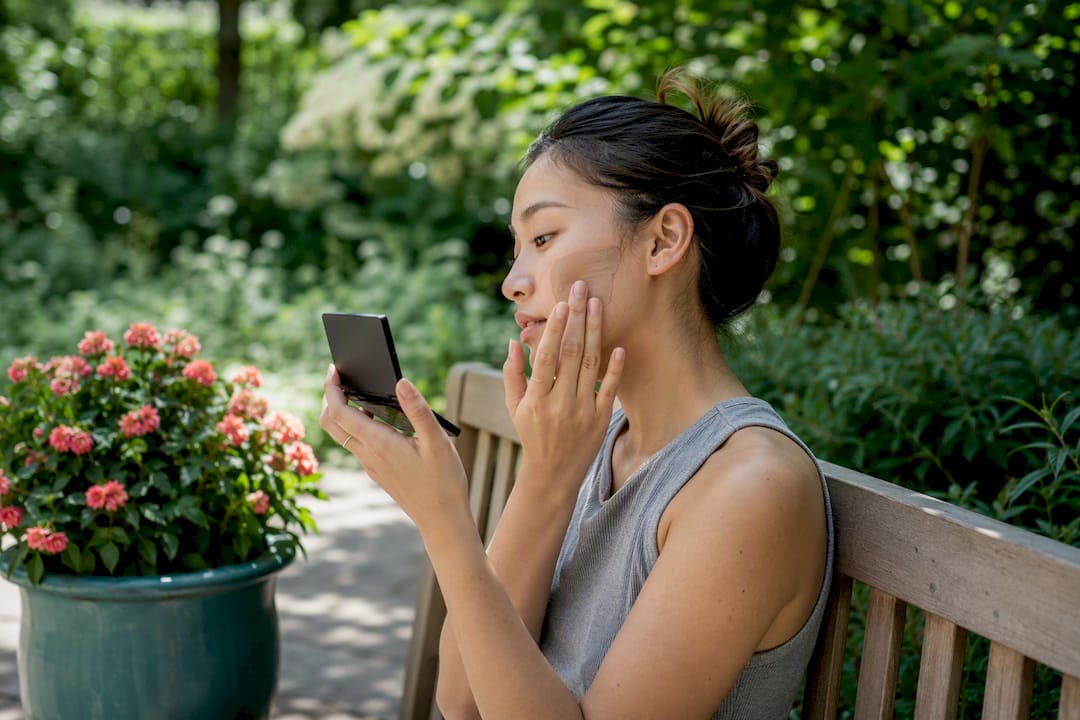
Pro Tip: Keep a travel-size tinted sunscreen in your bag or car specifically for reapplication. The sunscreen sitting at home on your bathroom counter is not protecting your skin at 2 PM in traffic.
Choosing a Shade That Won’t Leave Whitecast on Darker Skin
Cosmetic acceptability is not a vanity concern in melasma care. It is the single factor that most reliably predicts whether someone keeps using sunscreen consistently, and consistency is what prevents relapse. A tinted sunscreen that leaves an ashy or gray cast gets used once and abandoned, no matter how good its iron oxide content is on paper.
How to test a shade properly: apply a small amount along the jawline in natural daylight, not under bathroom lighting, and let it sit for one to two minutes before judging the color. Many mineral tints oxidize slightly after application, shifting a shade or two darker or warmer once they settle. Test with your usual makeup layered on top, since a shade that looks fine alone can clash once foundation goes over it.
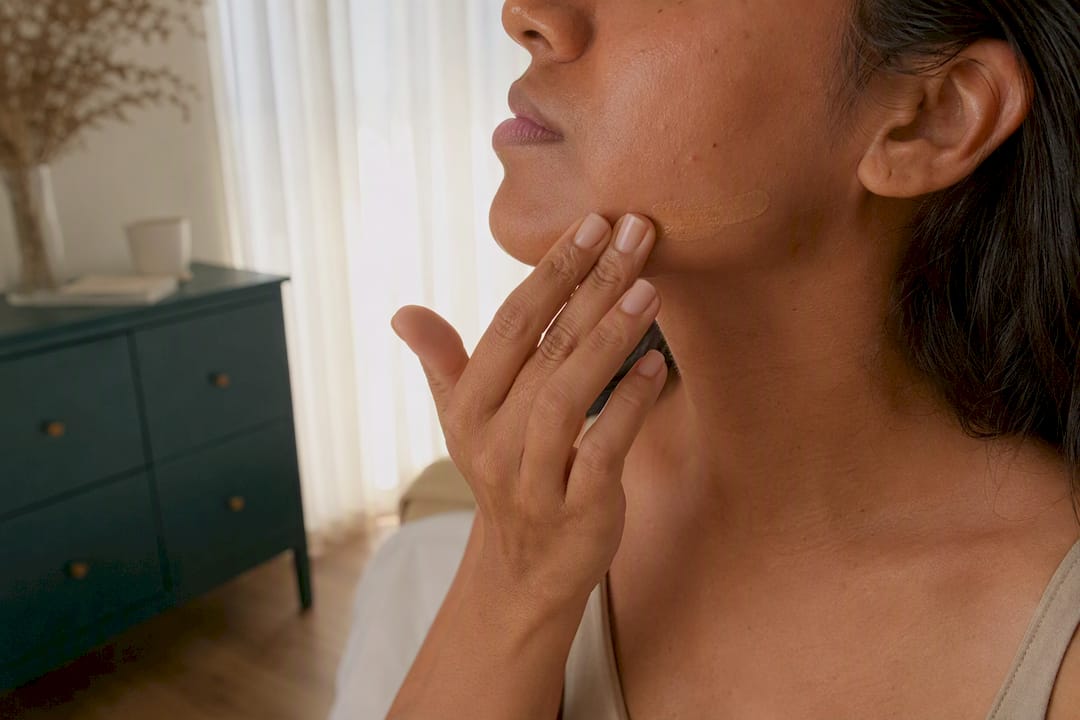
Mineral formulas built specifically for medium and deep skin tones use micronized zinc oxide and a broader pigment blend to avoid the flat gray or purple undertone that older, single-shade universal tints are known for. Hybrid formulas, which combine a smaller amount of mineral filter with chemical UVA filters, sometimes blend more seamlessly and feel lighter, at the cost of slightly less heat-reflective benefit than a fully mineral base.
Lines like Colorescience and Heliocare 360 offer multiple shade options specifically because a single universal tint rarely serves the full range of skin tones well. Where possible, request a sample or a small travel tube before committing to a full-size purchase, and avoid heavy, opaque single-shade tints marketed as “universal” without visible evidence they work across a range of tones.
For pregnancy-related melasma or highly reactive, sensitive skin, mineral-only tinted formulas tend to be the safer starting point, since they carry a lower irritation profile than sunscreens built on multiple chemical filters.
Pro Tip: Ask for a shade-matching consultation before buying a full-size tube. Cosmolaser Medical Centre offers this in Sharjah specifically because the wrong shade is one of the top reasons patients quietly stop using tinted sunscreen within a few weeks.
How Sunscreen Fits Into Medical Melasma Treatment
Sunscreen is the non-negotiable baseline that determines whether prescription treatments and in-clinic procedures actually hold. Hydroquinone, tranexamic acid, and azelaic acid all work by slowing pigment production, and every gain they produce gets undone by unprotected sun exposure. The same is true after peels or laser sessions, when skin is even more reactive to light than usual.
Timing matters at every stage:
- Before treatment: consistent tinted SPF 50+ for at least two to four weeks helps stabilize pigment and reduces the risk of the treatment itself triggering a flare.
- After a chemical peel: switch to a gentle, tinted mineral sunscreen, since freshly treated skin is more sensitive to both UV and visible light during healing. Cosmolaser Medical Centre’s chemical peel protocols include specific photoprotection guidance for this window.
- After laser treatment: the same logic applies, often with an even stricter reapplication schedule while the skin barrier recovers.
- Around active retinoid use: apply retinoids at night only, and treat morning sunscreen as mandatory rather than optional, since photosensitivity rises significantly during retinoid treatment.
Consult a dermatology clinic when melasma keeps relapsing despite consistent tinted SPF 50+ use, when pigment darkens suddenly without an obvious trigger, during pregnancy-related melasma that is not responding to sunscreen alone, or when you need a combination protocol tailored to your specific skin tone and history.
Cosmolaser Medical Centre builds sunscreen guidance directly into every melasma treatment plan, whether that plan involves skin tone correction procedures, targeted peels, or combination approaches using radiofrequency microneedling alongside topical care. Photoprotection is not an afterthought bolted onto a procedure. It is discussed as part of the same conversation as the treatment itself.
How These Recommendations Were Selected
These recommendations combine peer-reviewed clinical evidence, dermatologist guidance published by practicing clinicians, and Cosmolaser Medical Centre’s own experience treating melasma patients across the UAE.
The evidence base draws on a few distinct sources: a randomized controlled trial comparing tinted and untinted sunscreen outcomes, a peer-reviewed review on photoprotection for pigmentary disorders, and commentary from practicing dermatologists on filter selection and visible-light protection.
Products made this shortlist because they meet four criteria together, not any one alone: documented iron oxide content, SPF 50+ with genuine broad-spectrum UVA coverage, photostability under real-world sun exposure, and cosmetic acceptability across a workable range of skin tones.
That last criterion is not a footnote. A product that scores perfectly on filter chemistry but gets abandoned after two weeks because of its cast protects no one.
Real gaps remain. Visible-light protection testing is not standardized industry-wide, so claims vary in rigor between brands. Shade ranges still underserve the deepest and lightest ends of the skin tone spectrum. Individual tolerance to specific filters, fragrances, or textures varies enough that no single product works universally. Patients with persistent or treatment-resistant melasma should treat this guide as a starting point for conversation with a clinic, not a substitute for one.
Where to Buy Sunscreen for Melasma in the UAE
Reliable sources for tinted, iron-oxide sunscreens in the UAE fall into three categories: established pharmacy chains, authorized online retailers, and dermatology or aesthetic clinics that stock physician-recommended lines directly.
Pharmacy chains across the Emirates typically carry La Roche-Posay, Bioderma, and ISDIN tinted formulas as standard stock, making them the easiest starting point for most readers. Authorized skincare retailers and brand-verified online stores fill in gaps for lines like Heliocare and EltaMD, though availability shifts by season and by retailer. Cosmolaser Medical Centre carries a curated selection of clinic-grade tinted sunscreens directly, with the added benefit of in-person shade matching before purchase.
Watch for these red flags when buying online:
- Sellers with no verifiable brand authorization, especially on third-party marketplaces.
- Prices well below the standard retail range for that brand, a common signal of counterfeit or expired stock.
- Product listings missing a full ingredient list, since legitimate sellers always disclose this.
- Items shipped from outside authorized regional distribution, which can mean altered formulations or degraded UV filters from improper storage.
Practical purchase habits: always buy sealed, full-size boxes rather than decanted or repackaged samples, check the expiry date and batch code printed on the box, and favor distributors who offer clear return policies. A local authorized distributor also means you have somewhere to go if a product causes irritation or does not match as expected.
For patients with medium-to-deep skin tones who have struggled to find a tint that blends well, Cosmolaser Medical Centre’s in-clinic shade-matching service removes the guesswork that leads so many people to buy the wrong shade online and quietly stop using it within weeks.
A Clinic Note on Sunscreen and Melasma
At Cosmolaser Medical Centre, tinted, iron-oxide sunscreen sits at the center of every melasma conversation, not as an afterthought after prescribing a serum. The reasoning is straightforward: UAE sun exposure is intense and constant, and visible light exposure indoors, through windows, and under office lighting continues year-round. A white, untinted sunscreen leaves that entire visible-light gap unaddressed.
Sunscreen guidance gets built into every melasma treatment plan from the first consultation, whether that plan includes topical therapy, a chemical peel, or laser-based procedures. Patients who need help finding the right shade can access in-clinic testing in Sharjah, along with direct access to the physician-recommended tinted lines discussed throughout this guide, so the gap between “knowing what to buy” and “actually using it correctly” closes as much as possible.
Get Personalized Melasma Care in the UAE
Picking the right tinted sunscreen solves part of the equation. Persistent or stubborn melasma often needs more: a combination plan that pairs daily photoprotection with the right topical agents and, where appropriate, in-clinic procedures matched to your specific skin tone and pigment pattern.
Cosmolaser Medical Centre in Sharjah builds melasma plans around exactly this combination. The clinic’s team assesses your pigment pattern, skin tone, and history before recommending a course, then supports it with physician-grade tinted sunscreens available directly in-clinic and shade-matched to your skin rather than a single universal tint. Services relevant to melasma care include skin tone correction, chemical peels, and laser-based pigment treatments, each timed around a photoprotection schedule the clinic sets with you. No plan here promises guaranteed results. What it offers is a tailored assessment instead of guesswork off a pharmacy shelf. If your melasma keeps relapsing despite consistent sunscreen use, book a consultation with a dermatologist aesthetician to build a plan suited to your skin.
Sources
- Comparison of Visible Light‐Protective Tinted Sunscreen to Untinted Sunscreen to Protect Melasma Patients During Summer
- The Role of Sunscreen in Melasma and Postinflammatory Hyperpigmentation
- Sunscreen for Melasma: Why Filter Choice Matters More Than SPF Number – Jane Yoo MD
- Sunscreens for melasma — Allure
FAQ
What sunscreen is best for melasma?
A tinted, broad-spectrum SPF 50+ sunscreen containing iron oxides is the best option, since it blocks UV rays while also shielding against the visible light that standard sunscreens miss.
How do I remove melasma quickly?
There is no fast fix for melasma. Consistent tinted sunscreen use, combined with prescribed topicals or in-clinic procedures like chemical peels or laser treatment, gradually reduces pigment over months rather than days.
Can sunscreen alone remove melasma?
Sunscreen prevents new pigment formation and relapse, but it rarely reverses existing melasma on its own. It works best paired with topical agents or procedural treatment supervised by a clinic.
What product is best for melasma?
Products with documented iron oxide content and SPF 50+, such as tinted mineral or hybrid sunscreens, perform best in clinical comparisons. Cosmolaser Medical Centre stocks several physician-recommended tinted lines with in-clinic shade matching for patients in the UAE.
Does mineral sunscreen work better than chemical sunscreen for melasma?
Mineral filters reflect light rather than converting it to heat, which may help reduce heat-related melasma triggers, though hybrid formulas combining both filter types also perform well in practice.