
The single most important thing you can do after a chemical peel is protect the new skin forming beneath the surface. In the first 48–72 hours, that means following a short, non-negotiable checklist before anything else.
Immediate 48–72 hour checklist:
- Cleanse with cool water and a soap-free, fragrance-free wash only — no rubbing, no flannel
- Apply a bland, occlusive ointment or barrier moisturiser as directed by your clinician
- Avoid all sun exposure; stay indoors or cover fully when stepping outside in the UAE heat
- No makeup, no active skincare ingredients, no exfoliants of any kind
- Skip exercise, saunas, steam rooms, and alcohol for at least 48 hours
- Drink plenty of water and rest; tissue repair accelerates during sleep
- Do not pick, peel, or rub flaking skin under any circumstances
Peeling typically begins around days 2–4 and resolves within 5–10 days for most superficial and medium peels. Contact your clinic immediately if you develop increasing pain, spreading redness, or any discharge.
Key takeaways
Consistent chemical peel aftercare, from the first 48 hours through to a structured long-term topical regimen, determines both the safety and the longevity of your results.
| Point | Details |
|---|---|
| First 48–72 hours are critical | Cleanse gently, apply barrier ointment, avoid sun, heat, exercise, and all active ingredients. |
| Peeling begins days 2–4 | Do not pick; flaking resolves within 5–10 days for most superficial and medium peels. |
| Sun protection is non-negotiable | Use broad-spectrum mineral SPF daily; new skin remains photosensitive for months, especially in the UAE. |
| Reintroduce actives gradually | Retinol and chemical exfoliants typically return from weeks 4–6 onwards, confirmed by your clinician. |
| Know the red flags | Increasing pain, spreading redness, discharge, or fever require same-day contact with your clinic. |
Table of Contents
- What should you expect after a chemical peel?
- Day-by-day chemical peel aftercare for the first week
- Reintroducing actives, sunscreen, and makeup from week two onwards
- Warning signs and when to contact your clinic
- How do you maintain and build on your peel results long-term?
- Why careful aftercare is the most underestimated part of a chemical peel
- Sources
- FAQ
What should you expect after a chemical peel?
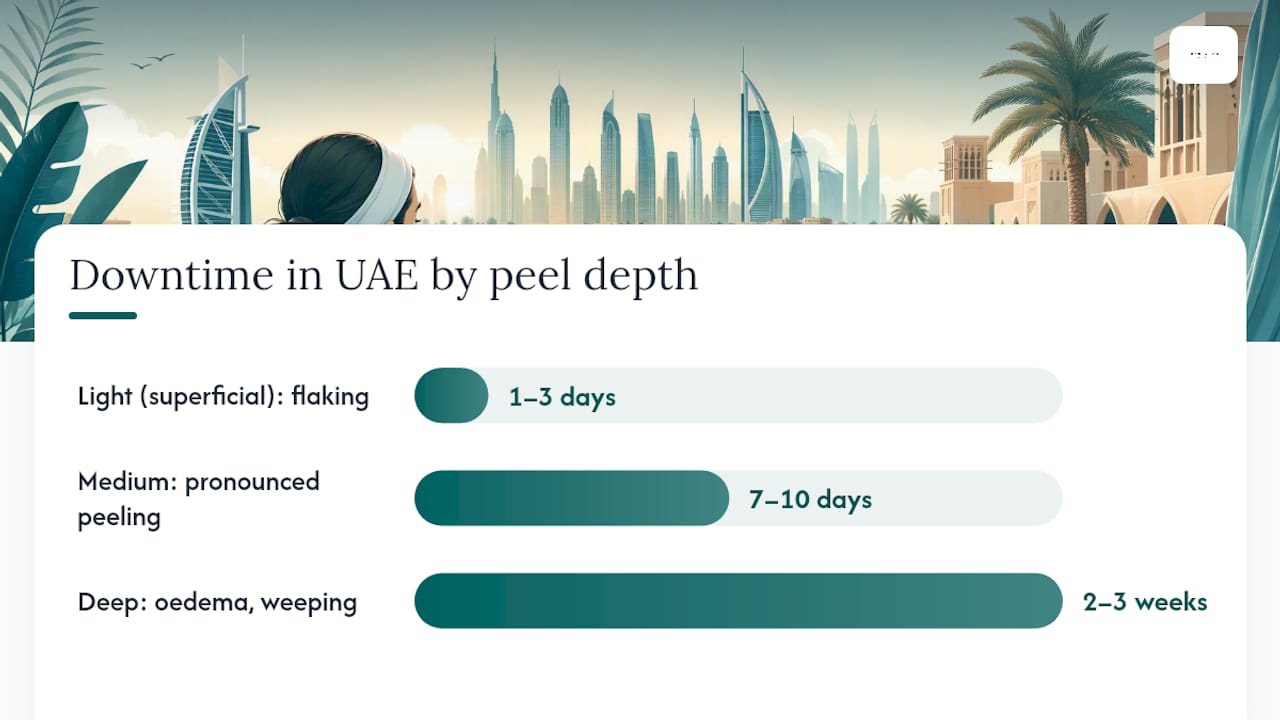
Recovery looks very different depending on how deeply the solution penetrated your skin. According to the Mayo Clinic, light peels heal in about a few days to a week, medium peels take about one to two weeks, and deep peels take around two to three weeks, with redness sometimes persisting for several months after the deepest treatments.
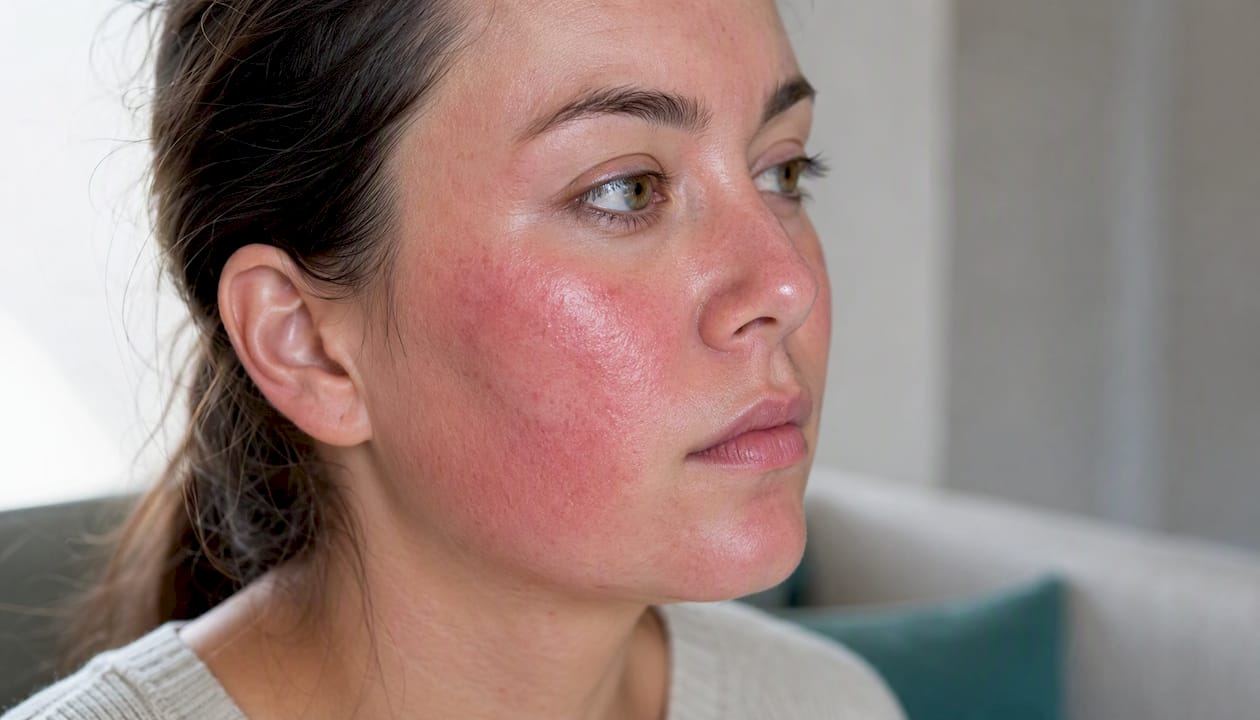
Immediately after the procedure, most patients notice redness, tightness, and mild swelling — sensations similar to moderate sunburn. Crusting and visible flaking follow as the outer layers shed. Deeper peels produce more pronounced oedema and may involve weeping skin in the first few days, which is normal but requires careful wound management.
| Peel depth | Typical healing window | Common symptoms | Downtime in UAE context |
|---|---|---|---|
| Light (superficial) | 1–7 days | Mild redness, fine flaking, slight tightness | Minimal; most patients return to work within 1–3 days |
| Medium | 7 days | Moderate swelling, pronounced peeling, crusting | Plan 7–10 days away from public-facing work |
| Deep | 14 days (redness may persist) | Significant oedema, weeping, crusting, prolonged pink tone | Allow 2–3 weeks minimum; avoid UAE sun entirely during this period |
The UAE climate adds a specific consideration: high ambient temperatures and intense UV index accelerate moisture loss from healing skin and dramatically raise the risk of post-inflammatory hyperpigmentation (PIH), particularly in Fitzpatrick skin types III–VI, which are common across the region. Planning your peel during cooler months — or committing to strict indoor recovery — makes a measurable difference to your outcome.
Day-by-day chemical peel aftercare for the first week
The first seven days determine a significant portion of your final result. A structured daily routine removes guesswork and reduces the risk of infection, scarring, and uneven pigmentation.
Days 0–1: the first hours matter most
- Do not wash your face for the first 12–24 hours unless your clinician specifically instructs otherwise.
- If cleansing is advised, use cool (never warm) water and a gentle, soap-free wash — pat dry with a clean, soft cloth.
- Apply the ointment or barrier cream your clinician prescribed; for medium and deeper peels, this may need changing every few hours.
- Use cool compresses to manage discomfort; avoid any oral anti-inflammatory unless your clinician approves it.
- Stay indoors, keep the room cool, and sleep with your head slightly elevated to reduce swelling.
Avoid makeup, perfumed products, retinoids, vitamin C serums, AHAs, BHAs, and anything labelled “active” or “exfoliating.” Alcohol consumption dilates blood vessels and impairs healing — skip it entirely for at least 48 hours.
Days 2–4: peeling begins
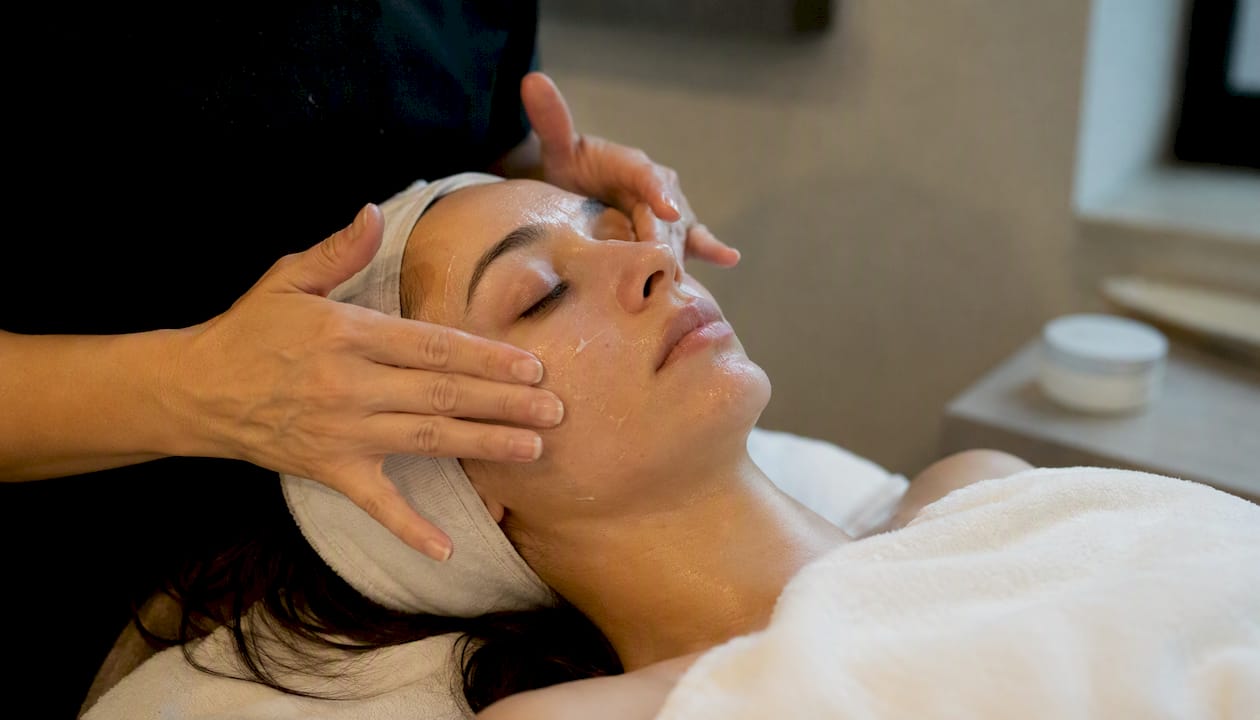
Visible flaking usually starts around days 2–4. The UPMC Health Library advises frequent gentle cleansing, consistent moisturising, and changing ointments or dressings as instructed to speed healing and reduce infection risk. Use a soap-free cleanser twice daily, apply a bland emollient (such as a ceramide-based or petrolatum-based moisturiser) generously, and reapply throughout the day whenever skin feels tight.
Pro Tip: If itching becomes intense, apply a cool compress for 5–10 minutes rather than touching the skin. Antihistamines may help with itch, but check with your clinician before taking any medication post-procedure.
Picking at peeling skin is one of the most clinically significant mistakes a patient can make. The outer flaking layer still protects the regenerating tissue beneath it; removing it prematurely raises the risk of permanent scarring and uneven pigmentation that may require corrective treatment.
Days 5–7: barrier rebuilding
By day 5, most superficial peel patients notice the worst flaking has passed. A mineral SPF 30+ (applied gently, without rubbing) can usually be introduced at this stage for light peels, though your clinician will confirm the right timing for your skin. Camouflage makeup is often safe from around day 5–7 for superficial peels, provided the skin surface is intact and not weeping.
Avoid list for the full first week:
- Picking, rubbing, or forcibly removing peeling skin
- Heat sources: exercise, saunas, steam rooms, hot showers
- Swimming pools and the sea (chlorine and salt both irritate healing skin)
- Retinoids, AHAs, BHAs, benzoyl peroxide, and vitamin C actives
- Tanning beds and direct UAE sun exposure without full cover
Book your follow-up appointment before you leave the clinic on treatment day. For medium and deep peels, a check-in within the first week is standard practice.
Reintroducing actives, sunscreen, and makeup from week two onwards
Once the skin surface has fully re-epithelialised — typically by the end of week one for light peels and week two for medium peels — the focus shifts from protection to preservation.
Sunscreen is the single most consequential product in your post-peel kit. New skin remains highly photosensitive for months after re-epithelialisation, and The Aesthetic Society emphasises that strict sun avoidance during healing and consistent daily SPF use thereafter are the most effective steps to prevent PIH. In the UAE, where UV index regularly exceeds 10, a broad-spectrum mineral SPF 50 is a more practical choice than SPF 30 for the first three months. Pair it with a wide-brimmed hat and UV-protective clothing whenever you are outdoors.
- Weeks 2–3: Gentle, fragrance-free moisturiser and mineral SPF daily; no actives yet
- Week 3–4: Introduce a low-concentration vitamin C serum (5–10%) if skin feels comfortable; patch-test first
- Week 4–6: Reintroduce retinol at the lowest available concentration (0.025–0.05%), beginning every third night
- Week 6 onwards: Chemical exfoliants (AHAs, BHAs) can typically be reintroduced cautiously; confirm with your clinician
Pro Tip: Before reintroducing any active ingredient, apply a small amount to the inner forearm for 24 hours. If there is no reaction, apply to a small area of the face for another 24 hours before using it across the full face. Rushing this process is the most common reason patients develop PIH after an otherwise successful peel.
Makeup can usually resume fully once the skin is intact and no longer weeping or crusting. Mineral-based formulations are gentler on newly healed skin than liquid foundations containing alcohol or fragrance. Avoid anything requiring significant rubbing to blend.
To maintain results and prevent future sun damage, the skin rejuvenation best practices guide from Cosmolaser Medical Centre outlines a structured topical programme that complements in-clinic treatments.
Warning signs and when to contact your clinic
Most post-peel symptoms are predictable and self-limiting. Some, however, signal a complication that needs prompt clinical attention.
Contact your clinic the same day if you notice:
- Pain that is increasing rather than improving after the first 24–48 hours
- Spreading redness that extends beyond the treated area
- Yellow or green discharge, or an unpleasant odour from the skin
- Fever or flu-like symptoms
- Blistering that worsens rather than stabilises
- Sudden onset of cold sore lesions (herpes simplex reactivation)
Infection is the most common serious complication after ablative procedures. Prolonged hyperpigmentation and, rarely, scarring can also occur, particularly when aftercare instructions are not followed or when the skin is exposed to UV light during recovery. If you have a history of herpes simplex, your clinician should have discussed antiviral prophylaxis before your procedure; if this was not addressed, raise it at your follow-up.
When calling your clinic, have ready: the date of your procedure, the peel type if known, a description of your current symptoms, and photographs taken in natural light. This allows the clinician to triage your concern accurately without an unnecessary in-person visit.
For medium and deep peels, The Aesthetic Society notes that follow-up visits in the first week are standard, not optional. Do not skip these appointments even if your skin appears to be healing well.
How do you maintain and build on your peel results long-term?
The peel itself is only the beginning. DermNet NZ is clear that post-peel maintenance and a tailored topical regimen are necessary to sustain results and reduce the likelihood of complications recurring. Without a structured follow-up plan, the improvements from even a well-executed medium peel can fade within months.
For patients seeking meaningful improvement in pigmentation, texture, or fine lines, the American Academy of Dermatology notes that a series of 3–5 superficial peels, spaced every 2–5 weeks, typically delivers cumulative improvements that a single session cannot. This is particularly relevant for patients with acne-related pigmentation or early photoageing, both of which are common presentations in UAE patients due to prolonged sun exposure.
Once fully healed, a clinician-supervised topical programme typically includes a vitamin A derivative (retinoid), a daily antioxidant, and a broad-spectrum SPF. Cosmolaser Medical Centre clinicians tailor this regimen to the patient’s Fitzpatrick skin type and specific concern, adjusting concentrations and introducing ingredients progressively to avoid irritation. Nutrition and hydration also play a supporting role: adequate protein intake and consistent hydration assist tissue repair after ablative procedures, so a balanced diet during recovery is a practical, low-cost adjunct to your topical routine.
Pro Tip: Once fully healed, long-term use of a low-to-moderate concentration vitamin A derivative (retinoid) is one of the most evidence-supported steps for maintaining peel results and preventing photoageing. Introduce it slowly, use it at night, and always pair it with morning SPF. Your clinician at Cosmolaser Medical Centre can advise on the appropriate concentration for your skin type.
For patients considering complementary in-clinic options after full recovery, a HydraFacial or a CO2 fractional laser treatment may be appropriate depending on your skin goals — both are available at Cosmolaser Medical Centre in Sharjah.
Why careful aftercare is the most underestimated part of a chemical peel
There is a tendency among patients to treat the procedure itself as the hard part and the recovery as passive waiting. That framing leads to the most avoidable complications we see in clinic.
The skin’s response to a chemical peel is an active biological process. Every decision you make in the days following treatment — whether to pick at a flake, skip sunscreen for one morning, or restart retinol a week too early — directly influences the quality of the skin that forms. In the UAE, where UV exposure is year-round and intense, the margin for error on sun protection is narrower than in most other climates. Patients who follow a structured aftercare plan consistently achieve better outcomes than those who do not, regardless of peel depth.
At Cosmolaser Medical Centre in Sharjah, our approach to post-treatment skincare is built around personalised follow-up rather than generic printed instructions. Every patient receives a tailored aftercare plan matched to their peel depth, skin type, and lifestyle — including specific guidance for the UAE environment. If you have questions at any point during your recovery, our clinical team is available to advise.
Ready to plan your treatment or follow-up? Explore Cosmolaser Medical Centre’s chemical peel services or speak to our team about a personalised skin rejuvenation programme designed for your skin’s specific needs.
Sources
- Chemical peel – Mayo Clinic
- Chemical peels – DermNet NZ
- Chemical peels: FAQs
- Chemical Peel – Aftercare & Recovery
- Chemical Peel – UPMC Health Library
- Chemical Peels Before and After Results: Photos and Healing Time
This article is general information, not a substitute for advice from a qualified doctor. Consult a qualified healthcare professional about your own circumstances before acting on anything here.
FAQ
What should you avoid after a chemical peel?
Avoid picking at peeling skin, direct sun exposure, heat sources (exercise, saunas, steam), swimming pools, and all active ingredients including retinoids, AHAs, BHAs, and vitamin C until your skin has fully healed. Makeup and alcohol should also be avoided for at least the first 48–72 hours.
Which days are the hardest after a chemical peel?
Days 2–4 are typically the most uncomfortable, as peeling and tightness peak during this window. For medium and deep peels, swelling and crusting can be most pronounced around days 3–5 before gradually improving.
What helps a chemical peel heal faster?
Consistent moisturising with a bland, fragrance-free emollient, gentle cleansing with cool water, strict sun avoidance, adequate hydration, and not picking at the skin all support faster healing. A balanced diet with sufficient protein also assists tissue repair after ablative procedures.
What should your daily routine look like after a chemical peel?
In the first week, cleanse twice daily with a soap-free wash using cool water, apply a barrier moisturiser or prescribed ointment generously, and avoid all actives and sun exposure. From week two, introduce a mineral SPF and gradually reintroduce other products only as your clinician advises.