Yes, laser treatment can safely reduce many visible facial veins, provided the clinician selects the right device for your vein type, depth, and Fitzpatrick skin tone. Most superficial telangiectasia and broken capillaries respond well to pulsed dye laser (PDL) or long-pulsed 1064 nm Nd:YAG, with results developing gradually over several weeks as the body reabsorbs collapsed vessels. The important caveat: not every facial vein is suitable, and deeper venous disease requires a vascular referral rather than a laser clinic. Your clearest next step is a consultant-led assessment where a medically trained clinician examines the lesion, confirms suitability, and selects the appropriate device. Readers in the UAE can access medically led facial vein therapy at Cosmolaser Medical Centre in Sharjah.
Key takeaways
Laser treatment for facial veins is clinically supported, safe in medically led settings, and most effective when device choice is matched to vein type, depth, and skin tone.
| Point | Details |
|---|---|
| Laser works for most facial thread veins | PDL and long-pulsed Nd:YAG produce significant calibre reduction and high patient satisfaction in prospective studies. |
| Device choice depends on skin type | Fitzpatrick IV–VI patients are better suited to 1064 nm Nd:YAG due to lower melanin absorption risk. |
| Multiple sessions are the norm | Most patients require 2–4 sessions spaced approximately four weeks apart for a satisfactory result. |
| Costs vary widely in the UK | Per-session fees range from around £80 for IPL to £450 for combined approaches; total course costs vary accordingly. |
| Cosmolaser Medical Centre | Offers medically led facial vein consultations in Sharjah for UAE patients, with device selection guided by individual skin assessment. |
This article is general information, not a substitute for advice from a qualified doctor. Consult a qualified healthcare professional about your own circumstances before acting on anything here.
Table of Contents
- What are facial thread veins and what causes them?
- How does facial vein removal laser actually work?
- Which laser types do UK clinics commonly use?
- What happens from consultation through to your final result?
- What results can you expect, and what are the risks?
- How much does facial vein laser treatment cost in the UK?
- Are there alternatives to laser for facial veins?
- How to choose a safe UK clinic for facial vein treatment
- What the clinical evidence actually shows
- What patients most want to know about safety and downtime
- Cosmolaser Medical Centre for medically led facial vein treatment
- Sources
- FAQ
What are facial thread veins and what causes them?
Facial thread veins, clinically termed telangiectasia, are permanently dilated superficial capillaries that have lost the ability to contract. They are not dangerous in isolation, but they are visible, often appearing as fine red, pink, or purple lines across the nose, cheeks, and chin. The vessels sit within the dermis, which is why topical creams cannot penetrate or close them.
Common causes include:
- Sun damage (UV exposure degrades vessel walls over time)
- Rosacea (chronic inflammatory skin condition causing persistent flushing and vessel dilation)
- Genetics (a family history of thread veins significantly raises personal risk)
- Hormonal changes (pregnancy, oestrogen-containing contraceptives, menopause)
- Trauma or surgery to the face
- Alcohol consumption (repeated vasodilation weakens capillary walls)
- Ageing and skin thinning (reduced collagen support leaves vessels more visible)
Distinguishing a superficial thread vein from a deeper vascular problem matters clinically. Superficial telangiectasia are fine, non-pulsatile, and lie flat against the skin. Red flags that warrant a vascular specialist rather than a laser clinic include pulsatile vessels, painful or tender cords, large subcutaneous blue-green reticular veins on the face, or any associated limb symptoms. Fitzpatrick skin type also matters: darker skin tones (Fitzpatrick IV–VI) carry a higher risk of post-inflammatory pigment changes, which directly influences device selection.
How does facial vein removal laser actually work?
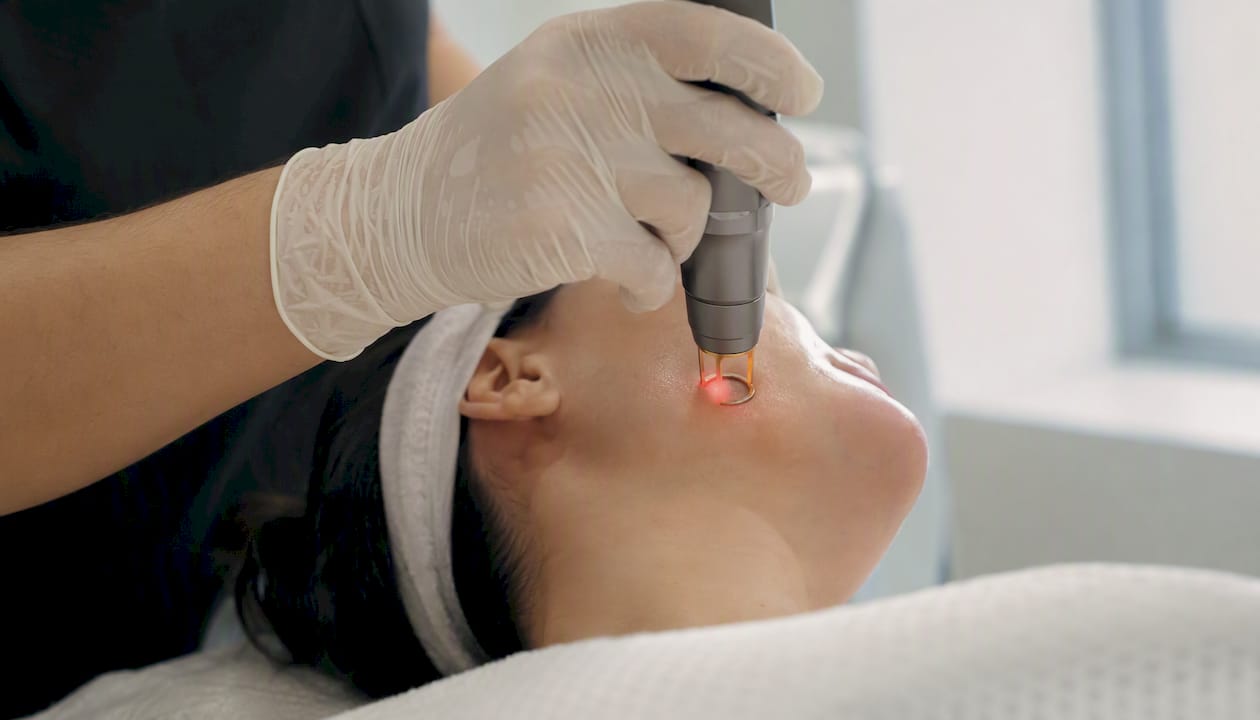
The mechanism is selective photothermolysis. Laser light at a specific wavelength is absorbed preferentially by oxyhaemoglobin in the blood, converting to heat inside the vessel. That heat damages the vessel wall, causing it to collapse and seal. The body then reabsorbs the treated vessel over the following weeks, and the visible redness fades. Surrounding skin is largely spared because the wavelength is chosen to target haemoglobin rather than water or melanin.
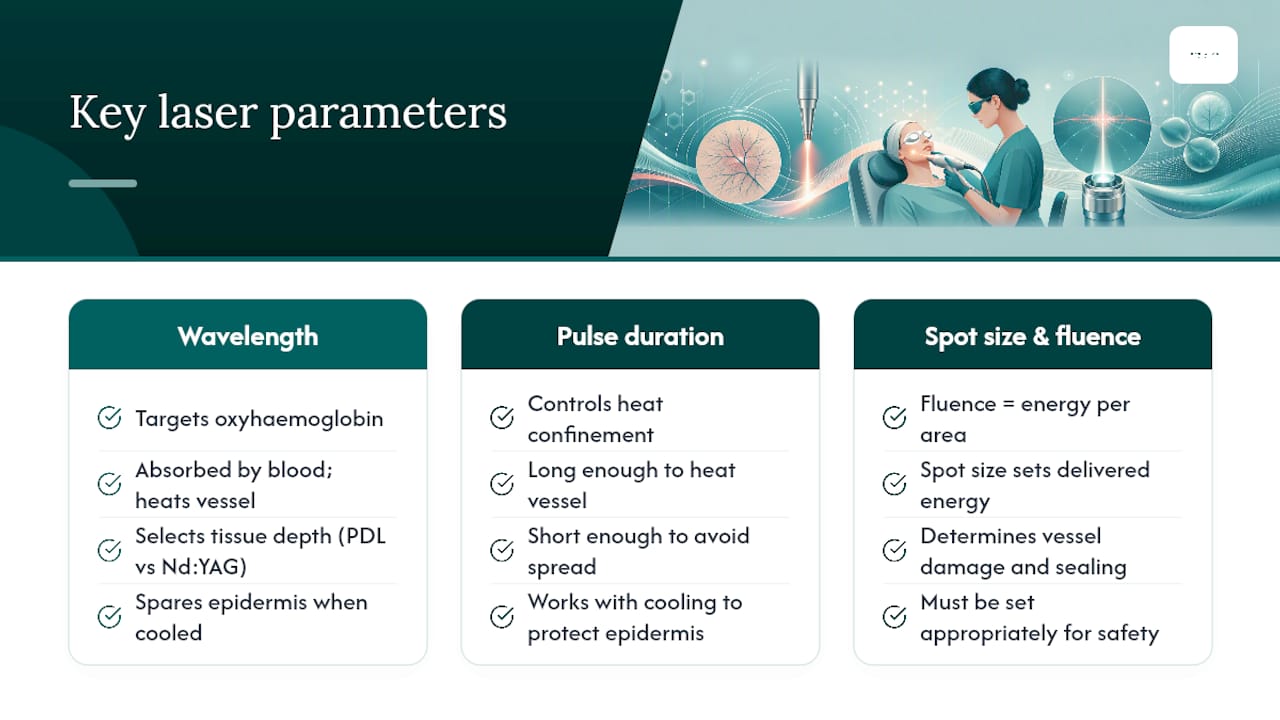
Three variables determine whether the treatment is safe and effective: wavelength (which chromophore is targeted), pulse duration (long enough to heat the vessel but short enough to avoid spreading heat to adjacent tissue), and spot size and fluence (energy delivered per unit area). According to manufacturer educational material for PDL platforms, PDL and long-pulse Nd:YAG target haemoglobin at different tissue depths while limiting epidermal damage when used with appropriate cooling. Dynamic cooling, typically a cryogen spray or contact cooling tip, chills the epidermis immediately before or during the laser pulse, protecting the skin surface while the deeper vessel absorbs the thermal energy.
Clinical guidance on laser treatment for vascular lesions confirms that clinicians choose between PDL, Nd:YAG, and IPL based on lesion depth and skin type, not on device brand alone.
Pro Tip: The single most important factor in a safe outcome is not which brand of laser the clinic owns, but whether the clinician has correctly set the pulse duration and cooling parameters for your specific skin type and vessel depth. Ask your practitioner to explain their parameter rationale at consultation.
Which laser types do UK clinics commonly use?
UK clinics offering laser vein treatment for facial vessels typically work with three main device categories. Each suits a different clinical scenario.
-
Pulsed dye laser (PDL), e.g. VBeam-style platforms: Operates at 585–595 nm, targeting oxyhaemoglobin in superficial vessels. Ideal for fine telangiectasia, rosacea-related redness, and small broken capillaries on fair to medium skin (Fitzpatrick I–III). Typically 1–3 sessions. The VBeam Prima educational material describes its wavelength rationale and cooling system in detail.
-
Long-pulsed 1064 nm Nd:YAG: Penetrates more deeply than PDL, making it suitable for larger reticular facial veins, periocular vessels, and patients with Fitzpatrick III–V skin tones where shorter wavelengths carry a higher melanin absorption risk. A 2025 prospective pilot study found long-pulsed 1064 nm Nd:YAG treatment produced a statistically significant reduction in venous calibre (mean 0.17 cm to 0.12 cm) with 90% of patients rating results very good or excellent, and no cutaneous adverse effects reported in that cohort.
-
IPL (intense pulsed light): Broadband light filtered to target haemoglobin and melanin simultaneously. Useful for diffuse facial redness and rosacea rather than discrete thread veins. Often used as an adjunct to Nd:YAG for patients with both background redness and individual vessels. Less precise than laser for isolated veins. Fitzpatrick I–III suitability is most established; caution is warranted in darker skin tones.
Some UK clinics use multi-platform systems such as the XEO+ (Cutera), which combines multiple wavelengths on a single device, allowing the clinician to switch between modalities within the same session. This is particularly useful when a patient presents with both fine telangiectasia and deeper reticular veins, where a combined IPL-plus-Nd:YAG approach addresses both layers. The types of laser skin treatments guide at Cosmolaser Medical Centre covers the broader range of laser modalities available for skin concerns in the UAE.
What happens from consultation through to your final result?
The treatment pathway follows a clear sequence, and understanding it helps you plan time and budget accurately.
- Initial consultant assessment: A medically trained clinician examines the vessels, confirms they are superficial telangiectasia rather than deeper vascular pathology, assesses your Fitzpatrick skin type, reviews your medical history and current medications, and recommends a device and treatment plan.
- Patch test: Most reputable clinics perform a test patch on a small area 24–48 hours before the first full session to check your skin’s response to the chosen parameters.
- Treatment session: You wear protective eye shields throughout. The clinician applies the laser or IPL handpiece to the treatment area in a series of pulses. Most patients describe the sensation as a brief snap or mild heat. A session for a small facial area typically takes 15–30 minutes.
- Immediate aftercare: Redness and mild swelling are normal for several hours. Most patients return to normal activities the same day, though some bruising (purpura) can occur with PDL and may last 7–10 days.
- Repeat sessions: Sessions are typically spaced approximately four weeks apart to allow safe reabsorption of treated vessels before the next pass. Most patients require 2–4 sessions for a satisfactory result, though this varies by lesion complexity.
- Follow-up review: A clinical review at 6–8 weeks after the final session confirms the outcome and identifies any residual vessels that may benefit from further treatment.
Immediate aftercare checklist:
- Apply SPF 30 or higher every morning without exception for at least four weeks post-treatment
- Avoid saunas, steam rooms, and vigorous exercise for 48 hours
- Do not apply retinoids, AHAs, or BHAs to the treated area for at least one week
- Keep the area cool and avoid direct sun exposure
- Do not pick or scratch any crusting that forms
Pro Tip: Stop any photosensitising medications (such as certain antibiotics or retinoids) at least one week before treatment, but only after discussing this with your prescribing doctor. Arriving with a recent tan also raises the risk of epidermal damage, so avoid UV exposure for four weeks beforehand.
What results can you expect, and what are the risks?
Clinical evidence indexed on PubMed supports significant vessel calibre reduction and high patient satisfaction for facial vascular lesions treated with 1064 nm Nd:YAG when performed by trained clinicians. Results are not instantaneous: treated vessels fade progressively over four to eight weeks as the body clears the coagulated tissue. Multiple sessions are the norm rather than the exception for broader vascular concerns.
Common side effects (expected and transient):
- Redness and warmth lasting several hours
- Mild swelling around the treated vessels
- Bruising or purpura, particularly with PDL (can last up to 10 days)
- Temporary darkening or crusting of the vessel before it fades
Rarer but possible risks:
- Blistering (usually from excessive fluence or inadequate cooling)
- Post-inflammatory hyperpigmentation (more common in Fitzpatrick III–VI)
- Hypopigmentation (lightening of the skin)
- Scarring (rare when treatment is performed correctly)
Contraindications to disclose at consultation:
- Active skin infection or cold sore in the treatment area
- Recent sun exposure or sunbed use
- Pregnancy
- Photosensitising medications
- History of keloid scarring
- Certain autoimmune or vascular conditions
For patients with Fitzpatrick IV–VI skin tones, long-pulsed Nd:YAG is generally the safer choice because its 1064 nm wavelength is absorbed less by melanin than shorter wavelengths. Operator experience is critical in this context. The NHS Bristol Laser Centre confirms that laser and IPL are safe and effective for facial thread veins and redness when delivered in a consultant-led service, with minimal effect on surrounding skin.
New vessels can form over time, particularly if the underlying cause (sun exposure, rosacea, genetics) persists. Maintenance sessions and rigorous sun protection help extend results.
How much does facial vein laser treatment cost in the UK?
Cost varies considerably by device, clinic type, practitioner grade, treatment area, and number of sessions required. The figures below reflect typical UK private clinic ranges and are indicative rather than guaranteed.
Main factors that push the price up or down:
- Device type and running costs: Nd:YAG and PDL platforms carry higher capital costs than IPL, which is reflected in session fees.
- Clinician grade: Consultant dermatologist-led treatment commands a premium over technician-delivered sessions, but the safety and outcome benefit is significant.
- Geographic location: Central London clinics typically charge at the upper end; regional UK clinics are often 20–40% lower.
- Treatment complexity: Multiple vessel types, larger surface areas, or combination approaches increase cost.
- Pre- and post-care inclusions: Some clinics bundle patch tests, follow-up reviews, and aftercare products; others charge separately.
At consultation, ask for a written breakdown of the per-session fee, total course estimate, what is included in the package, and the clinic’s policy on additional sessions if results are incomplete.
Are there alternatives to laser for facial veins?
Laser is the most widely used approach for superficial facial thread veins, but it is not the only option, and a clinician may recommend an alternative depending on vessel type and location.
Electrosurgery/diathermy uses a fine needle to deliver a small electrical current directly into the vessel, causing it to coagulate. It is effective for very fine, isolated capillaries but less practical for larger areas or multiple vessels.
Sclerotherapy involves injecting a sclerosant solution into the vessel to irritate and collapse it. It is the standard treatment for leg veins but is rarely used on the face because of the precision required and the proximity of facial vessels to sensitive structures.
Topical and medical management addresses the underlying cause rather than the vessels themselves. For rosacea-driven redness, topical brimonidine or azelaic acid can reduce flushing, and oral treatments may be appropriate under dermatological supervision. These do not remove existing vessels but can slow the formation of new ones.
Camouflage cosmetics offer a non-medical option for patients who are not candidates for laser or who prefer to avoid treatment. Medical-grade camouflage products can effectively conceal thread veins for daily life.
A vascular referral is necessary when vessels are large, pulsatile, painful, or associated with systemic symptoms. These presentations suggest deeper venous or arterial pathology that falls outside the scope of aesthetic laser clinics.
A note on gum contouring laser: if your concern is a gummy smile rather than facial veins, the relevant procedure is a gum contouring laser, typically using a soft-tissue diode laser (around 810 nm) for gingivectomy and reshaping. Research on diode laser gingivectomy reports minimal post-operative sequelae, and gum contouring recovery time is generally short, with most patients comfortable within a few days. This is a dental procedure performed by a qualified dental surgeon, entirely distinct from vascular laser treatment.
How to choose a safe UK clinic for facial vein treatment
Choose a consultant-led, medically trained team for any facial vascular work. The face is a sensitive area, and the margin for error with laser parameters is narrow.
Questions to ask at your consultation:
- What are your qualifications, and are you a registered medical practitioner or dermatologist?
- Which specific device and wavelength will you use for my vein type?
- Will you perform a patch test before the first full session?
- How many sessions do you estimate, and what is the interval between them?
- Can I see before-and-after photographs of patients with similar presentations?
- What is your protocol if I experience an adverse reaction?
- Is the pricing per session or packaged, and what does it include?
- Will I receive written consent documentation and aftercare instructions?
Red flags to avoid:
- Clinic advertising that no medical qualifications are required for the procedure
- Aggressive multi-session packages sold before any clinical assessment
- No patch test offered prior to treatment
- Vague or absent aftercare guidance
- No before-and-after evidence available
- Inability to explain which device or parameters will be used
Trust signals to look for:
- Visible practitioner credentials and medical registration numbers
- Consultant-led consultations (not just technician-delivered)
- Documented before-and-after results with realistic outcomes
- Transparent, itemised pricing
- Clear medical emergency protocols and follow-up policy
- Positive, verifiable patient reviews
For UAE-based patients, consulting a dermatologist-aesthetician before committing to any laser procedure is the same standard of care as in the UK.
What the clinical evidence actually shows
The evidence base for laser treatment of facial veins is solid for PDL and long-pulsed Nd:YAG, with prospective data supporting both efficacy and safety in appropriately selected patients.
A 2025 prospective pilot study of long-pulsed 1064 nm Nd:YAG for supratrochlear and supraorbital veins measured a statistically significant reduction in venous calibre from a mean of 0.17 cm to 0.12 cm using ultrasonographic assessment, with 90% of patients rating their results as very good or excellent. No cutaneous adverse effects were reported in that 10-patient cohort. A broader 2025 PubMed-indexed prospective study on laser therapy for facial vascular lesions similarly reports significant calibre reduction and high patient satisfaction when treatment is delivered by trained clinicians.
The practical takeaway for patients choosing between devices: PDL is the established choice for fine, superficial telangiectasia on fair skin, while long-pulsed Nd:YAG offers a better safety profile for deeper vessels and darker skin tones. IPL fills a useful role for diffuse background redness but is less precise for discrete vessels. Clinician experience in parameter selection remains the variable that most consistently separates good outcomes from complications, regardless of device.
Cosmolaser Medical Centre’s medically led team in Sharjah applies the same evidence-based approach to facial vascular treatments for patients across the UAE, with device selection guided by individual skin type and lesion assessment.
What patients most want to know about safety and downtime
The most common concern patients raise before a first session is whether the treatment will leave them visibly marked for days. For most people, the honest answer is: briefly, and manageably. PDL can produce purpura (bruising) that lasts up to a week; Nd:YAG and IPL typically cause redness and mild swelling that settles within 24–48 hours. Neither requires time off work for the majority of patients, though social events immediately after a PDL session may need to be planned around.
Medical oversight, a proper patch test, and a structured follow-up are not optional extras. They are what separates a safe, predictable outcome from an avoidable complication. Patients who arrive at consultation with a clear account of their medical history, current medications, and recent sun exposure give their clinician the information needed to set parameters correctly from the outset.
If you are considering treatment in the UAE, Cosmolaser Medical Centre offers medically led consultations for facial vascular concerns in Sharjah. Book an assessment to discuss your specific presentation and receive a personalised treatment plan.
Cosmolaser Medical Centre for medically led facial vein treatment
Patients coming from this article have already done the research. What they need next is a clinic that matches the standard described here: medically trained practitioners, evidence-based device selection, and a structured consultation before any treatment begins.
Cosmolaser Medical Centre in Sharjah offers exactly that for patients across the UAE. The clinic’s dermatology and aesthetic team assesses each patient’s vein type, Fitzpatrick skin tone, and medical history before recommending a device or treatment plan. There are no aggressive multi-session packages sold at the door. The focus is on why aesthetic clinics use lasers as a medically grounded tool, not a cosmetic shortcut. For patients exploring combination aesthetic treatments that address both vascular concerns and broader skin quality, the team can advise on sequencing and suitability. Book your consultation at Cosmolaser to receive a personalised assessment from a qualified clinician.
Sources
- PubMed record: Laser therapy for facial vascular lesions (2025 prospective study)
- Facial threadveins and redness | Bristol Laser Centre
- VBeam Prima eBook (manufacturer educational material)
- Laser Treatment for Broken Capillaries & Vascular Lesions
FAQ
Can laser remove facial veins?
Yes. PDL and long-pulsed 1064 nm Nd:YAG laser can safely reduce or eliminate most superficial facial thread veins (telangiectasia) by collapsing the vessel, which the body then reabsorbs. Deeper or symptomatic vascular lesions require a vascular specialist rather than a laser clinic.
How much does facial vein laser treatment cost in the UK?
Per-session costs typically range from around £80 for IPL to £350 or more for Nd:YAG, with a full course of 2–4 sessions costing between £240 and £1,400 depending on device, clinic, and treatment area.
Is facial thread vein removal safe?
When performed in a consultant-led service using appropriate device parameters and cooling, laser and IPL treatment is safe and effective with minimal effect on surrounding skin. Risk increases significantly when treatment is delivered without proper clinical assessment or by inadequately trained practitioners.
How many sessions does facial vein laser treatment take?
Most patients need 2–4 sessions spaced approximately four weeks apart, though fine, isolated telangiectasia may respond in 1–2 sessions. Results develop gradually over four to eight weeks after each treatment as the body clears the treated vessels.