Most patients need 6–8 laser hair removal sessions to achieve a clinically meaningful reduction in hair density, with research from NCBI Bookshelf confirming a typical range of 4–8 sessions spaced 4–8 weeks apart. After the first session, many patients notice visible shedding within 2–3 weeks, though the degree varies by skin tone, hair colour, and body area. Cleveland Clinic guidance cites an average of around six treatments for most patients.
One expectation to set clearly from the outset: laser hair removal delivers long-term hair reduction, not guaranteed permanent removal. Regrowth, when it occurs, is typically finer and lighter. The right first step is a consultation and patch test with a qualified clinician who can assess your skin and hair type and build a realistic treatment plan.
Key takeaways
Most patients need 6–8 laser hair removal sessions spaced 4–8 weeks apart to achieve significant reduction, with maintenance sessions typically required once every 6–12 months thereafter.
| Point | Details |
|---|---|
| Typical session range | Most patients need 6–8 sessions; hormonal cases such as PCOS may need 10–15. |
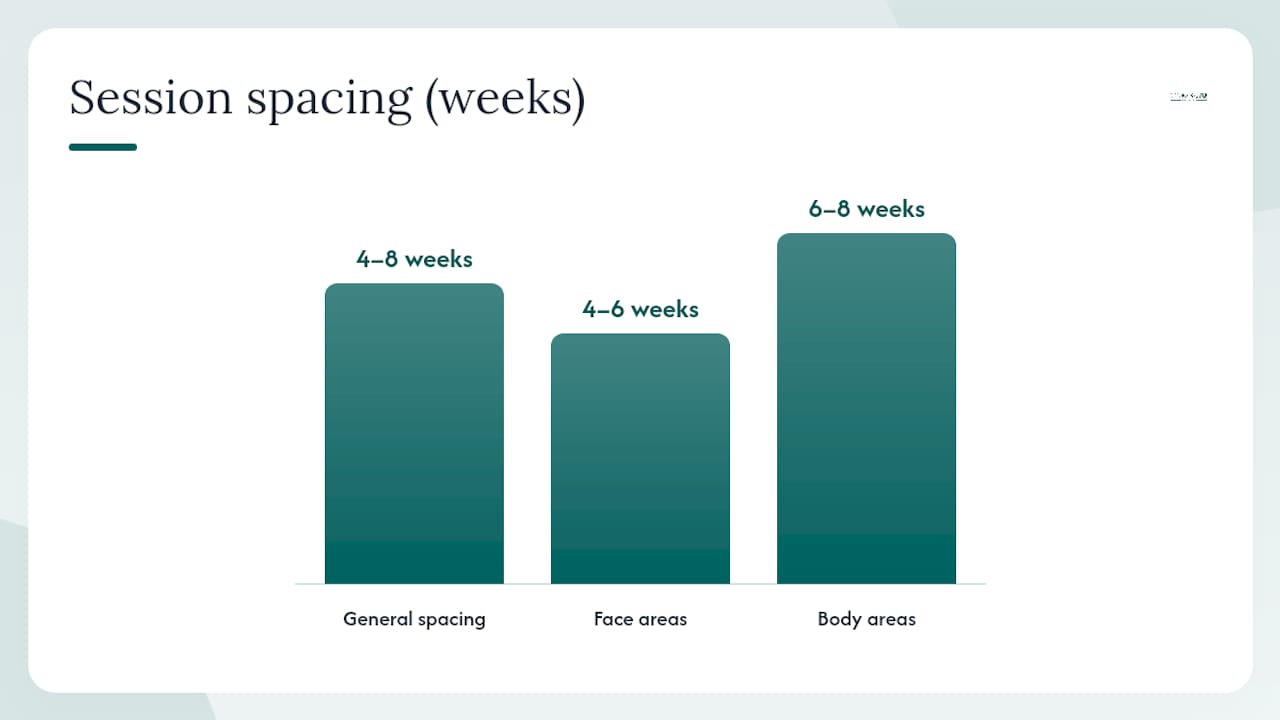
| Session spacing | Space sessions 4–8 weeks apart; facial areas every 4–6 weeks, body areas every 6–8 weeks. |
| Permanence expectation | Laser delivers long-term reduction, not guaranteed permanent removal; regrowth is typically finer. |
| Pre-treatment rules | Stop waxing 6 weeks before; shave 24–72 hours before; avoid sun for 4–6 weeks prior. |
| Cosmolaser Medical Centre | Offers clinician-led, patch-tested laser hair removal in Sharjah for patients across the UAE. |
This article is general information, not a substitute for advice from a qualified doctor. Consult a qualified healthcare professional about your own circumstances before acting on anything here.
Table of Contents
- How laser hair removal works and why multiple sessions are needed
- How many sessions does each body area typically need?
- Factors that increase or reduce the number of sessions you will need
- How sessions are scheduled and what to expect between appointments
- Preparing for sessions and aftercare to maximise results
- Who is suitable, what side effects to expect, and the safety checks that matter
- How clinics package sessions and what to ask before you book
- Research-backed guidance on maintenance and long-term outcomes
- Short action plan: what to do before, during, and after your course
- A note from Cosmolaser Medical Centre
- Cosmolaser Medical Centre: personalised laser hair removal in Sharjah
- Sources
- FAQ
- A clinician’s perspective on what patients consistently underestimate
How laser hair removal works and why multiple sessions are needed
The laser targets melanin, the pigment in the hair shaft, and converts light energy into heat to damage the follicle at its base. This is why the treatment works best on terminal hair (coarse, pigmented strands) and is less effective on fine, vellus, or white hair.
The reason a single session is never enough comes down to the hair growth cycle. At any given moment, follicles are distributed across three phases:
- Anagen (active growth): The follicle is actively producing a hair shaft and is most susceptible to laser energy. A minority of follicles on the body are in this phase at any one time.
- Catagen (transition): A short phase in which the follicle shrinks and detaches from the dermal papilla. Laser has limited effect here.
- Telogen (resting): The follicle is dormant. Laser energy cannot reach the target structures effectively.
Because only anagen-phase follicles respond reliably, each session targets a different cohort of hairs. Spacing sessions 4–8 weeks apart, as ASLMS clinical guidance recommends, is a pragmatic way to capture successive waves of follicles entering the active phase rather than attempting to schedule strictly by individual hair-cycle prediction, which is clinically impractical.
Common device types include the Nd:YAG (1064 nm), diode (810 nm), alexandrite (755 nm), and intense pulsed light (IPL) systems. Nd:YAG is generally preferred for darker Fitzpatrick skin types because its longer wavelength penetrates deeper with less melanin absorption at the epidermal level. Device choice and operator skill in selecting fluence and pulse duration are as important as the number of sessions. A full overview of laser technologies used in clinical practice helps illustrate why device selection is not interchangeable.
How many sessions does each body area typically need?
Response rates differ considerably by anatomic site. Facial areas, particularly the upper lip and chin, tend to be slower to clear than body sites such as the underarms or bikini line. Hormonal influence on facial follicles and the higher density of fine vellus hairs in some facial zones both contribute to this.
Non-facial sites such as the trunk often show faster clearance than facial sites in published studies, though paradoxical hypertrichosis (a temporary increase in hair density) has been reported on trunk areas after certain device types, as noted in ASLMS clinical literature.
Pro Tip: If you are treating multiple areas in one course, sequence appointments so that larger body areas (legs, back) are treated first. Smaller, more sensitive areas such as the upper lip can be added once your skin’s response to the device and settings is established.
Factors that increase or reduce the number of sessions you will need
The 6–8 session average is a population midpoint. Where you land on that range, or whether you fall outside it entirely, depends on several variables that a clinician should assess at your first consultation.
Skin and hair type are the most significant predictors. The Fitzpatrick scale classifies skin from Type I (very fair, always burns) to Type VI (deeply pigmented, never burns). Patients with Fitzpatrick Types I–III and dark, coarse hair tend to respond fastest because the contrast between hair melanin and skin melanin is highest. For Fitzpatrick Types IV–VI, clinicians must use lower fluence and longer pulse durations to protect the epidermis, which can mean more sessions to achieve equivalent reduction. Fine, light, or grey hair responds poorly regardless of skin type.
Hormonal conditions are a significant complicating factor. Patients with polycystic ovary syndrome (PCOS) or other causes of hyperandrogenism often need substantially more sessions. PMC clinical literature documents that PCOS patients may require 10–15 sessions rather than the standard course, and that maintenance top-ups are more frequent.
Other factors your clinician will want to know about:
- Medications: Certain drugs, including some antibiotics, retinoids, and hormonal contraceptives, affect photosensitivity or hair growth cycles. Disclose all current medications at consultation.
- Previous hair removal method: Waxing, threading, or plucking removes the hair shaft from the follicle, which the laser needs to target. Patients who have waxed recently may see reduced efficacy in early sessions.
- Age and hair coarseness: Coarser, more terminal hair responds better. Finer hair on areas such as the forearms may need additional sessions.
- Tanning: Recent sun exposure or use of tanning beds increases epidermal melanin, raising the risk of burns and requiring lower settings that reduce per-session efficacy.
How sessions are scheduled and what to expect between appointments
Spacing sessions correctly is as important as the total number. The 4–8 week interval recommended by NCBI Bookshelf reflects the practical goal of treating successive cohorts of anagen-phase follicles. Facial areas, where the anagen cycle is shorter, are typically spaced 4–6 weeks apart. Body areas with longer cycles, such as the legs and back, are usually scheduled every 6–8 weeks.
A typical appointment for a small area such as the upper lip takes 5–10 minutes. Underarms and bikini take 15–30 minutes. Full legs or a back treatment can run 45–90 minutes. Full-body sessions at a well-equipped clinic typically take 2–3 hours.
Here is a realistic timeline for a standard course:
- Session 1 (Week 0): Patch test confirmed, first treatment delivered. Mild redness and perifollicular oedema (small bumps around follicles) are normal and resolve within hours.
- Weeks 1–3: Treated hairs shed. This is not new growth; it is the treated shaft being pushed out by the skin. Avoid waxing or plucking during this period.
- Session 2 (Week 4–6): Second cohort of anagen hairs treated. Cumulative reduction becomes visible.
- Sessions 3–6 (Months 3–6): Progressive reduction with each session. Most patients see the most dramatic change between sessions 3 and 5.
- Sessions 7–8 (if needed): Stubborn areas or hormonal regrowth addressed with adjusted parameters.
- Maintenance (Month 12 onwards): Single top-up sessions as needed, typically once every 6–12 months.
Preparing for sessions and aftercare to maximise results
Good preparation directly affects both safety and efficacy. Cutting corners here is the most common reason patients see disappointing results or experience avoidable side effects.
Before your session:
- Avoid sun exposure and tanning beds for at least 4–6 weeks before treatment. Mayo Clinic guidance is explicit on this point, and tanned skin significantly increases burn risk.
- Stop waxing, plucking, threading, and electrolysis for at least 6 weeks prior. The laser needs the hair shaft in the follicle to work.
- Shave the treatment area 24–72 hours before your appointment. Surface hair absorbs laser energy before it reaches the follicle, reducing efficacy and increasing discomfort.
- Arrive with clean, product-free skin. Remove deodorant before underarm treatments.
- Disclose all medications, skin conditions, and recent sun exposure at your consultation. A full cosmetic dermatology pre-appointment checklist covers the key preparation steps.
After your session:
- Apply a broad-spectrum SPF 30+ sunscreen daily to treated areas for at least 6 weeks post-treatment, as recommended by Mayo Clinic.
- Avoid heat sources, including hot showers, saunas, steam rooms, and vigorous exercise, for 24–48 hours. Heat prolongs inflammation in already-sensitised skin.
- Use gentle, fragrance-free cleansers and moisturisers for the first few days. Hold off on retinoids, AHAs, and BHAs until redness fully resolves.
- Do not wax or pluck between sessions. Shaving is fine and does not affect follicle integrity.
- Contact your clinic if you notice blistering, crusting, or pigment changes that persist beyond a few days. These warrant clinical review.
For detailed post-session skincare guidance, Cosmolaser Medical Centre’s post-treatment recovery guide covers product choices and timing by skin type.
Pro Tip: For large-area or combined-session bookings (for example, legs and bikini on the same day), shave all areas the evening before rather than the morning of your appointment. This gives any minor shaving irritation time to settle, reducing baseline skin sensitivity before the laser is applied.
Who is suitable, what side effects to expect, and the safety checks that matter
Laser hair removal is not universally appropriate, and a reputable clinic will screen patients carefully before proceeding.
Good candidates typically have darker terminal hair against lighter skin (Fitzpatrick I–III), are not pregnant, are not on photosensitising medications, and have no active skin infections or inflammatory conditions in the treatment area.
Patients who may need modified protocols or may not be suitable include:
- Those with Fitzpatrick V–VI skin types (treatable with appropriate devices such as Nd:YAG, but requiring adjusted parameters)
- Patients with active tans or recent sun exposure
- Individuals on isotretinoin (typically a 6-month washout period is advised before treatment)
- Patients with a history of keloid scarring
- Those with certain autoimmune or photosensitive conditions
Common transient side effects include redness, perifollicular oedema, and mild discomfort during the session. These typically resolve within a few hours. Temporary pigment changes (hyperpigmentation or hypopigmentation) are more common in darker skin types and usually resolve over weeks to months with appropriate aftercare. Rare but serious risks include scarring and paradoxical hypertrichosis, as documented in PMC clinical literature.
Safety checks you should expect at any reputable clinic:
- A full medical history and skin assessment at consultation, as outlined by UCSF Health
- A patch test at least 24–48 hours before the first full session
- Written informed consent documenting the treatment plan, risks, and expected outcomes
- Treatment delivered by a trained clinician, not an unqualified technician
- Use of medical-grade laser devices, not consumer-grade IPL machines
- Documented records of device settings (fluence, pulse duration, spot size) for each session
Bristol Laser Centre (NBT) reinforces these as standard UK clinical practice expectations, including informed consent and the use of medical-grade devices by trained staff. Understanding why aesthetic clinics use medical-grade lasers helps patients distinguish between clinical and non-clinical providers.
How clinics package sessions and what to ask before you book
Laser hair removal pricing in the UK varies considerably by device type, clinic overhead, city, and clinician experience. Understanding the package structure helps you compare like for like rather than simply choosing the lowest headline price.
Common pricing models:
- Per-session pricing: Flexible but often more expensive per session than a course. Useful if you are unsure of commitment.
- Course packages (typically 6 or 8 sessions): Usually offer a per-session discount of 20–40% compared with individual pricing. Most clinics bundle a consultation and patch test into the package cost.
- Maintenance credits: Some clinics include one or two annual top-up sessions within a package or offer them at a reduced rate for existing patients.
- Area-based pricing: Small areas (upper lip, chin) are priced separately from medium (underarms, bikini) and large areas (full legs, back). Full-body packages are available at most clinics and represent the best per-area value.
Typical UK price ranges for a single session run from approximately £30–£60 for small areas to £150–£300 for large areas such as full legs. Full-body courses vary widely. These figures reflect general market patterns; individual clinic pricing depends on location, device, and clinician grade.
Questions to ask before booking:
- Which laser device is used, and is it medical-grade?
- What are the qualifications of the person performing the treatment?
- Is a patch test included, and how long before the first session is it performed?
- What is the clinic’s policy on sessions that do not achieve expected results?
- Can unused sessions be transferred or refunded if treatment is discontinued?
- Can the clinic show before-and-after photographs from patients with a similar skin and hair type?
Research-backed guidance on maintenance and long-term outcomes
Once a full course is complete, most patients are not permanently hair-free. Mayo Clinic is clear that the procedure delivers long-term reduction rather than guaranteed permanent removal, with any regrowth typically being finer and lighter than the original hair.
Maintenance frequency varies by individual. PMC clinical practice guidance notes that some cohorts require 2–4 maintenance sessions per year, while others manage with a single annual top-up. Genetics, hormonal fluctuations, and the body area treated all influence how quickly dormant follicles reactivate.
For patients with darker Fitzpatrick types (IV–VI), clinicians adjust parameters between sessions: lower fluence, longer pulse duration, and active cooling strategies protect the epidermis while still delivering sufficient follicular damage. These adjustments are well-documented in PMC research on facial laser hair reduction, which also notes that parameter changes must be conservative and documented, since small fluence increases can approach the epidermal thermal damage threshold.
Special cases warrant specific counselling. Patients with PCOS or other hormonal drivers of excess hair growth should be advised that their course may extend to 10–15 sessions, with ongoing maintenance more frequent than average. Paradoxical hypertrichosis, while uncommon, is a documented risk on certain body sites and should be discussed at consultation.
Pro Tip: Keep a personal treatment record noting the date of each session, the device used, the settings applied, and your skin’s response. This record is invaluable if you change clinics, need to pause treatment, or want to discuss parameter adjustments with a new clinician.
Short action plan: what to do before, during, and after your course
Planning a laser hair removal course is straightforward when you know the key steps. Here is a concise checklist to carry into your first consultation:
- Book a consultation and patch test first. No reputable clinic should treat you without both. The consultation establishes your Fitzpatrick type, hair characteristics, and medical history; the patch test confirms your skin’s response to the device.
- Expect 6–8 sessions for most body areas, spaced 4–8 weeks apart. Facial areas and hormonally influenced sites may need more.
- Stop waxing and plucking at least 6 weeks before your first session. Switch to shaving only.
- Protect treated skin from sun exposure throughout the course and for at least 6 weeks after each session. SPF 30+ is the minimum.
- Plan for maintenance. A single annual top-up session is realistic for most patients; those with hormonal hair growth may need more.
- For UAE and regional patients: Cosmolaser Medical Centre in Sharjah offers evidence-based laser hair removal with clinician oversight consistent with international best practice. Patients across the UAE can access a full consultation, patch test, and tailored treatment course at the clinic.
A note from Cosmolaser Medical Centre
At Cosmolaser Medical Centre in Sharjah, every laser hair removal patient begins with a thorough consultation and patch test before any treatment is delivered. The clinic’s qualified doctors assess Fitzpatrick skin type, hair characteristics, and medical history to build a personalised session plan, with parameters documented and reviewed at each appointment. This approach reflects the same evidence-based standards outlined throughout this article and is consistent with UK clinical best practice.
Patients across the UAE, including those travelling from Dubai, Abu Dhabi, and the wider Gulf region, are welcome to book a consultation at the Sharjah clinic. For readers considering combining laser hair removal with other aesthetic treatments, Cosmolaser Medical Centre also offers combined facial and laser treatment options tailored to individual skin goals.
To book a consultation or learn more, visit Cosmolaser Medical Centre.
Cosmolaser Medical Centre: personalised laser hair removal in Sharjah
Patients researching laser hair removal in the UAE will find that Cosmolaser Medical Centre offers a clinically grounded alternative to high-volume, non-medical providers. The clinic’s doctors use medical-grade laser devices with documented parameters, deliver a patch test before every first course, and build session plans around each patient’s Fitzpatrick type and hair profile rather than a one-size-fits-all package. For patients with darker skin tones, hormonal hair growth, or previous poor results elsewhere, this level of clinical oversight makes a measurable difference to outcomes.
The clinic serves patients across Sharjah, Dubai, and the wider UAE. A full range of body aesthetic treatments is available alongside laser hair removal, and the team can advise on sequencing treatments to achieve the best overall result. To take the first step, book a consultation at Cosmolaser Medical Centre and receive a personalised session estimate based on your skin and hair type.
Sources
For patients who want to review the primary evidence or access patient-facing clinical guidance:
- Laser hair removal — NCBI Bookshelf
- Laser hair removal – Mayo Clinic
- Methods to overcome poor response and challenges of facial laser hair reduction — PMC
- Laser hair removal | ASLMS
- Laser hair removal | UCSF Health
- Laser hair removal — Bristol Laser Centre (NBT)
FAQ
How many sessions does laser hair removal normally take?
Most patients need 6–8 sessions, with NCBI Bookshelf citing a typical range of 4–8. Patients with hormonal conditions such as PCOS may need 10–15 sessions.
How often should I attend laser hair removal sessions?
Sessions are generally spaced 4–8 weeks apart. Facial areas are typically scheduled every 4–6 weeks; larger body areas such as the legs and back every 6–8 weeks, as recommended by ASLMS.
What happens if I shave 3 days after laser hair removal?
Shaving 3 days after a session is generally safe and does not affect follicle integrity. The shedding you see in the days following treatment is treated hair being expelled, not new growth, and shaving will not interfere with this process.
What happens if I stop laser after 6 sessions?
Six sessions often delivers substantial reduction for many body areas. Stopping at that point means any remaining dormant follicles may eventually reactivate, producing finer, lighter regrowth. Mayo Clinic notes that results can last months or years but that 100% clearance is uncommon without completing a full course and maintenance.
A clinician’s perspective on what patients consistently underestimate
The question patients ask most often is “how many sessions will I need?” The honest answer is that the number is a starting estimate, not a contract. What the research and clinical practice both show is that the variable that matters most is not the session count but the quality of what happens inside each session: the device used, the fluence selected for your specific Fitzpatrick type, and whether those parameters are documented and adjusted intelligently over the course.
Patients who go to a clinic offering a fixed “6-session package” at a low price point often find themselves needing additional sessions because the settings were conservative from the start, either to protect an under-trained operator from liability or because the device simply was not powerful enough. The per-session price looks lower, but the total cost of achieving the same result is frequently higher.
The other thing patients consistently underestimate is the maintenance commitment. Laser hair removal is not a one-time procedure. Hormonal fluctuations, ageing, and the reactivation of dormant follicles mean that most people benefit from at least one annual top-up session. That is not a failure of the treatment; it is simply how follicular biology works. Patients who understand this from the outset tend to be far more satisfied with their long-term outcomes than those who expected permanent removal after a single course.
For patients with darker skin tones, particularly those with Fitzpatrick IV–VI, the clinical picture is more nuanced still. The right device and the right operator matter enormously in this group. An Nd:YAG laser in experienced hands can deliver excellent results safely. The same patient treated with an alexandrite laser at inappropriate settings faces a real risk of post-inflammatory hyperpigmentation. This is precisely why the consultation and patch test are not optional formalities; they are the mechanism by which a clinician establishes whether the proposed protocol is safe and appropriate for your skin.