
TL;DR:
- Veneers are thin shells bonded to teeth to improve appearance, with material choice affecting reversibility, durability, and cost. Porcelain veneers are longer-lasting but involve irreversible enamel removal, while composite veneers are more affordable and reversible but less stain-resistant. Proper pre-treatment assessment and oral health are essential for successful, long-term results.
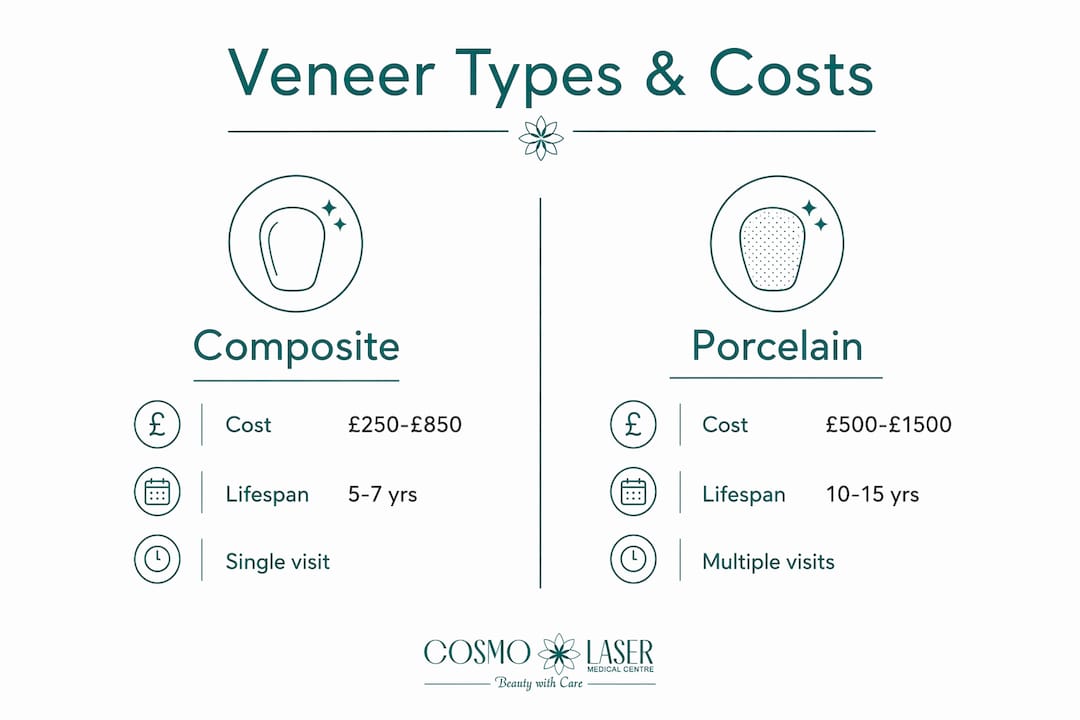
Veneers are thin shells bonded to the front of your teeth to change their shape, colour, or apparent alignment. The single most important decision you will make is material: composite resin is largely reversible, completed in one visit, and costs less upfront, while porcelain requires permanent enamel removal, takes two or more appointments, and delivers a longer-lasting, more lifelike result. In the UK, private costs run from roughly £250–£850 per tooth for composite and £500–£1,500 per tooth for porcelain. The NHS does not routinely fund cosmetic veneers.
At a glance:
- Cost bracket: £250–£850 (composite) or £500–£1,500 (porcelain) per tooth privately; NHS funding is rare
- Visits required: one for composite; two or more for porcelain (lab fabrication adds 2–3 weeks)
- Permanence: composite is largely reversible; porcelain involves permanent enamel reduction of 0.3–0.5 mm
- Top contraindication: active gum disease, untreated decay, or uncontrolled bruxism must be resolved before any veneer treatment begins
Table of Contents
- What are veneers and how do they differ from crowns and bonding?
- What types of veneers are available?
- Who is suitable for veneers, and who should wait?
- How are veneers fitted, step by step?
- How much do veneers cost in the UK, and does the NHS cover them?
- How long do veneers last, and what happens when they fail?
- Aftercare and maintenance: how to protect your veneers
- Risks, downsides and practical alternatives
- How to choose a dentist for veneers in the UK
- Your rights, regulation and consent in the UK
- Key takeaways
- A clinician’s perspective on choosing veneers
- Useful sources and official guidance
- Cosmolaser Medical Centre: expert dental care for your smile
- FAQ
What are veneers and how do they differ from crowns and bonding?
A veneer covers only the visible front surface of a tooth. Its purpose is aesthetic: correcting intrinsic discolouration that whitening cannot shift, closing minor gaps, reshaping worn or chipped edges, and creating a uniform smile zone. Veneers do not repair structural damage, straighten a misaligned bite, or prevent decay.
The distinction from a crown matters clinically. A crown encases the entire tooth and is the appropriate choice when significant structural loss has occurred through decay or trauma. A veneer, by contrast, preserves most of the natural tooth and is indicated when the underlying structure is sound but the appearance needs correction. Choosing a crown when a veneer would suffice means unnecessary tooth reduction; choosing a veneer when a crown is needed risks failure under load.
Composite bonding sits at the least invasive end of the spectrum. A dentist sculpts tooth-coloured resin directly onto the tooth surface with minimal or no enamel removal, then cures and polishes it chairside. Bonding suits minor chips, small gaps, and patients who want a reversible trial before committing to porcelain. The trade-off is durability: bonding typically lasts 3–5 years before it needs refreshing.
| Restoration | Tooth reduction | Visits | Lifespan | Best suited for |
|---|---|---|---|---|
| Composite bonding | Minimal to none | 1 | 3–5 years | Minor chips, small gaps, reversible trial |
| Composite veneer | Minimal | 1 | 5–7 years | Mild discolouration, shape correction |
| Porcelain veneer | 0.3–0.5 mm enamel | 2+ | 10–15+ years | Intrinsic staining, worn teeth, smile makeovers |
| Crown | Significant (all surfaces) | 2+ | 10–15+ years | Structurally compromised teeth |
Veneers are almost always a private, elective treatment. The NHS classifies them as cosmetic in the vast majority of cases, so the cost and clinical decision rest entirely with you and your dentist.
What types of veneers are available?
Composite resin veneers
Composite veneers are built up chairside in a single appointment. Your dentist applies layers of tooth-coloured resin directly to the prepared tooth surface, sculpts them to the desired shape, cures each layer with a blue light, and polishes the result. Because little or no enamel is removed, the process is largely reversible. Composite veneers typically last 5–7 years before they need repair or replacement, and they can often be repaired chairside when they chip rather than replaced entirely. Cost: £250–£850 per tooth.

The main limitations are colour stability and surface hardness. Composite is more porous than porcelain, so it picks up staining from coffee, red wine, and berries more readily over time. It also wears faster under heavy bite forces.
Porcelain veneers (including E-max)
Porcelain veneers are fabricated in a dental laboratory from impressions or digital scans taken at your preparation appointment. Your dentist removes 0.3–0.5 mm of enamel from the front of each tooth, fits provisional veneers while the lab works (typically 2–3 weeks), then bonds the finished shells at a second visit. Because enamel does not regenerate, this process is irreversible.
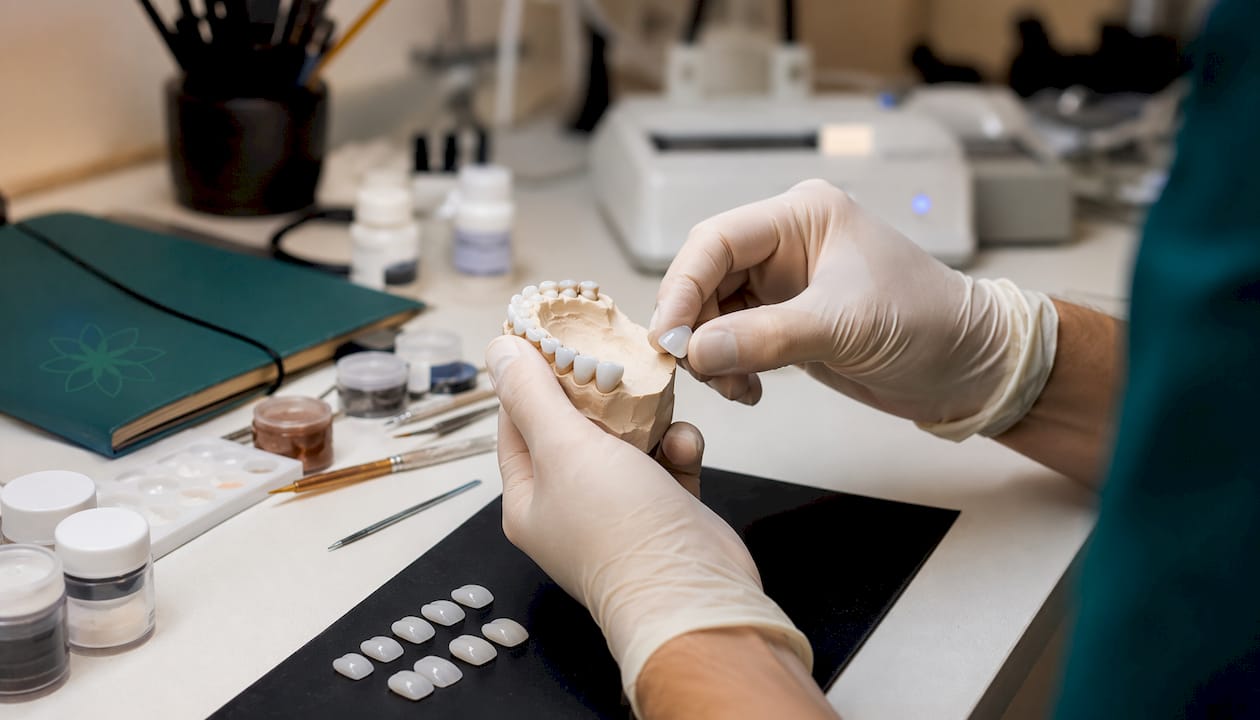
The reward for that commitment is longevity and aesthetics. Standard feldspathic or pressed porcelain lasts 10–15 years with proper care; premium lithium disilicate systems such as E-max are noted for higher strength and a particularly lifelike translucency, with some cases lasting 20 or more years. Porcelain is also far more stain-resistant than composite. Cost: £500–£1,500 per tooth, with E-max and similar pressed ceramics at the upper end.
No-prep and ultra-thin veneers
No-prep or minimal-prep veneers (sometimes marketed under the Lumineers brand) require little or no enamel reduction. They suit patients with naturally small teeth or mild spacing issues where adding a thin layer does not create a bulky result. They are not appropriate for teeth that are already prominent, and even “no-prep” systems often require some surface preparation to achieve a good bond. Their lifespan is broadly comparable to standard porcelain when fitted correctly.
Removable (snap-on) veneers
Snap-on or pop-on veneers are a non-clinical, over-the-counter category. They clip over natural teeth and can be removed at will. They do not involve any dental preparation and carry no clinical risk in themselves, but they can affect speech, make eating difficult, and provide no lasting aesthetic improvement. They are not a substitute for clinical veneers.
Mixing materials across a smile
Clinicians sometimes plan a mixed-material approach for smile makeovers: porcelain on the upper central and lateral incisors (the most visible teeth), composite on the canines and premolars. This strategy preserves the most visible aesthetics while reducing the overall cost of a full smile package, and it is worth discussing with your dentist if budget is a constraint.
| Material | Prep required | Visits | Lifespan | Repairability | Cost per tooth (UK) |
|---|---|---|---|---|---|
| Composite resin | Minimal/none | 1 | 5–7 years | Chairside repair possible | £250–£850 |
| Standard porcelain | 0.3–0.5 mm enamel | 2+ | 10–15 years | Replacement usually needed | £500–£1,500 |
| E-max (lithium disilicate) | 0.3–0.5 mm enamel | 2+ | 15–20+ years | Replacement usually needed | £500–£1,500 |
| No-prep/ultra-thin | Minimal | 2+ | 10–15 years | Replacement usually needed | £500–£1,500 |
Who is suitable for veneers, and who should wait?
Common indications
Veneers work well for teeth that are chipped or worn at the edges, intrinsically discoloured (tetracycline staining, fluorosis, or non-vital discolouration that whitening cannot reach), mildly misshapen, or slightly spaced. They are most effective in the smile zone — typically the upper front six to ten teeth — where aesthetics have the greatest visual impact.
Contraindications and pre-treatment requirements
Patients with active gum disease, untreated decay, or uncontrolled bruxism must address those conditions before veneers are considered. Veneers bonded over inflamed gum tissue or active caries will fail prematurely, and grinding forces can fracture even well-made porcelain. Insufficient enamel is another hard stop: veneers rely on a sound enamel layer for long-term bonding, and when too much tooth structure has already been lost, a crown is the more predictable restoration.
Patients with large existing composite restorations on the teeth to be veneered, or with unrealistic expectations about what veneers can achieve, also need careful counselling before treatment proceeds.
Diagnostic steps your dentist should complete
- Full periodontal assessment (probing depths, bleeding scores, radiographs)
- Caries risk assessment and treatment of any active decay
- Bite analysis to identify parafunctional habits (grinding, clenching)
- Photographic records and shade mapping
- CBCT imaging where bone levels or root anatomy are uncertain
- Discussion of realistic outcomes, including written informed consent
Pro Tip: If you are unsure about committing to porcelain, ask your dentist about a composite trial first. Staged care — bonding as a proof-of-concept, then upgrading to porcelain once you are confident in the shape and length — is a well-established clinical strategy, particularly for younger patients who may want to preserve the option of reversal.
How are veneers fitted, step by step?
Porcelain veneer pathway (two or more visits)
- Consultation and planning. Your dentist examines your teeth and gums, takes photographs, selects a shade, and discusses the treatment plan in writing. You receive an itemised cost breakdown and sign an informed consent form before any preparation begins.
- Preparation appointment. Under local anaesthetic, 0.3–0.5 mm of enamel is removed from each tooth to be veneered. Digital scans or physical impressions are taken and sent to the laboratory. Provisional veneers are fitted to protect the prepared teeth and give you a preview of the final shape.
- Laboratory phase. The lab fabricates your veneers over approximately 2–3 weeks. During this time, avoid very hard or sticky foods that could dislodge the provisionals.
- Fit and cementation. At the second clinical appointment, your dentist removes the provisionals, tries the porcelain shells for shape, colour, and fit, and makes any adjustments in liaison with the lab. Once you are satisfied, each veneer is etched, primed, and bonded with a light-cured resin cement. Excess cement is removed, the bite is checked, and the surfaces are polished.
- Review appointment. Most clinicians schedule a check at two to four weeks to assess gum response, bite comfort, and any sensitivity.
Most patients experience mild sensitivity to temperature for a few days after preparation, particularly if enamel removal was close to the pulp. This usually resolves within a week.
Composite veneer pathway (single visit)
Your dentist etches the tooth surface lightly, applies a bonding agent, and builds up the composite in incremental layers, curing each with a blue light. The whole process for a single tooth takes 45–90 minutes. There is no laboratory wait, no provisional period, and typically no local anaesthetic unless sensitivity is anticipated. You leave with the finished result on the same day.
How much do veneers cost in the UK, and does the NHS cover them?
Private price ranges
UK private costs vary by material and region. The median per-tooth cost across UK clinics is approximately £614. Composite veneers typically run £250–£850 per tooth; porcelain veneers £500–£1,500 per tooth. A six-tooth smile package in composite therefore costs roughly £1,500–£5,100; the equivalent in porcelain, £3,000–£9,000. Full ten-tooth makeovers in porcelain can reach £7,000–£15,000 or more at premium London practices.
London and the South-East carry a 5–15% regional premium over the national median. Many practices offer a per-tooth discount when treating six or more teeth simultaneously, so always ask whether a package price applies.
Dental tourism
Comparable work abroad can cost 50–75% less than UK prices. The risk is that if complications arise — debonding, poor margins, colour mismatch — corrective treatment back in the UK is carried out at full private rates, and the original clinic may be unreachable for warranty claims. Factor those potential corrective costs into any cost comparison before travelling.
NHS availability
Cosmetic veneers are not routinely funded by the NHS. The narrow exception is when a veneer forms part of restorative treatment for a tooth damaged by trauma or a developmental condition where function is genuinely affected. When NHS funding does apply, the work falls under Band 3 (currently £319.10 in England as of 2024–25), which covers complex treatments including crowns and veneers. For the overwhelming majority of patients seeking aesthetic improvement, private treatment is the only route.
What a responsible quote should itemise
- Laboratory fees (separate from the clinical fee)
- Provisional veneer fabrication and fitting
- Local anaesthetic (if applicable)
- Follow-up appointments within the guarantee period
- Guarantee or warranty terms, including the conditions that void them
- Any additional costs for shade adjustments or remakes
Watch for quotes that bundle everything into a single “per veneer” figure with no breakdown. If a clinic cannot tell you what the lab fee is, that is a reason to ask more questions.
How long do veneers last, and what happens when they fail?
Composite veneers typically last 5–7 years; porcelain 10–15 years, with premium E-max systems reaching 20 or more years in well-maintained cases. Several factors shorten that lifespan: uncontrolled bruxism, poor marginal hygiene, acidic diet, and inadequate bonding technique at placement.
Common failure modes:
- Chipping or fracture. More common with composite; porcelain fractures less often but usually requires full replacement rather than repair.
- Debonding. The veneer detaches from the tooth, often at a poorly finished margin or where enamel was insufficient for a reliable bond.
- Secondary decay at margins. A precise margin finish is clinically critical; poorly finished margins trap plaque, accelerating gingival inflammation and caries beneath the veneer edge.
- Aesthetic drift. Composite stains and loses surface lustre over time; the surrounding natural teeth may also discolour, creating a mismatch.
- Gum recession. As the gum line recedes with age, the veneer margin may become visible, creating an aesthetic problem even if the veneer itself is intact.
When composite chips, a dentist can often add and cure fresh material chairside in a single appointment. Porcelain, once fractured, must be remade in the laboratory. Budget for replacement cycles: several composite replacements over 15–20 years can approach or exceed the upfront cost of a single porcelain set, which is worth modelling with your dentist before choosing a material.
Aftercare and maintenance: how to protect your veneers
Good aftercare is straightforward but non-negotiable. Veneers do not protect the underlying tooth from decay; the natural tooth structure beneath remains vulnerable if oral hygiene lapses.
Daily maintenance:
- Brush twice daily with a soft-bristled toothbrush and a non-abrasive fluoride toothpaste. Avoid whitening toothpastes, which contain abrasives that scratch veneer surfaces.
- Clean interdentally once daily with floss or interdental brushes. Slide floss gently rather than snapping it, to avoid dislodging margins.
- Limit staining foods and drinks (coffee, tea, red wine, berries) particularly with composite veneers, which are more porous than porcelain.
- Avoid biting directly into very hard foods (crusty bread, raw carrots, ice). Cut hard foods and chew with your back teeth.
Professional maintenance:
- Attend hygiene appointments every six months. Ask the hygienist to use a non-abrasive polishing paste on veneered surfaces.
- Plan a formal veneer check with your dentist annually, or sooner if you notice any change in fit, colour, or sensitivity.
- Composite veneers may benefit from a light repolish every 12–18 months to restore surface lustre.
Night guards and bruxism:
If you grind or clench your teeth, a custom-fitted night guard is not optional — it is the single most effective way to prevent premature veneer fracture. Raise this at your consultation; a dentist who does not ask about parafunctional habits before fitting porcelain veneers is missing a critical step.
Warning signs that need prompt review:
- Sensitivity to temperature that persists beyond two weeks after fitting
- A visible gap or dark line at the veneer margin
- Any loosening, rocking, or clicking sensation
- A chip or crack, however small
Risks, downsides and practical alternatives
Key risks
Porcelain veneer treatment is irreversible. Once enamel is removed, you are committed to veneers or crowns on those teeth for life. Increased sensitivity to hot and cold is common in the weeks after preparation and usually settles, but in a small number of cases it persists. Decay can develop beneath a veneer if margins are poorly finished or oral hygiene is inadequate. All veneers require lifelong maintenance and eventual replacement.
Alternatives and when they are the better choice
Composite bonding: the right choice when the problem is minor (a small chip, a slight gap) and you want a reversible, lower-cost option. Lifespan is shorter, but the financial and clinical commitment is far smaller.
Crowns: indicated when the tooth has lost significant structure through decay or trauma and needs the protection of full coverage. Dental implants become relevant when a tooth is beyond restoration entirely.
Orthodontic treatment: clear aligners or fixed braces address the underlying alignment rather than masking it. For patients whose primary concern is crowding or spacing rather than colour or shape, orthodontics is the more conservative and often more durable solution.
Professional whitening: teeth whitening is the appropriate first step for extrinsic or mild intrinsic discolouration. It carries no irreversibility and costs a fraction of veneers. Veneers should not be chosen simply because whitening has not yet been tried.
Snap-on veneers: a temporary cosmetic option with no clinical preparation. Suitable for occasional use (a special event) but not a long-term solution.
Decision guide:
- Temporary trial or budget constraint → composite bonding or composite veneers
- Severe intrinsic discolouration, significant shape change, long-term durability → porcelain veneers
- Alignment as the primary concern → orthodontics before any veneer discussion
- Structurally compromised tooth → crown or implant assessment
- Extrinsic staining only → professional whitening first
How to choose a dentist for veneers in the UK
Questions to ask at consultation
- How many veneer cases do you complete each year, and can I see before-and-after photographs of your own patients?
- Which laboratory do you use, and can you tell me about their materials and quality standards?
- What does your guarantee cover, and under what circumstances would it be voided?
- If a veneer chips or debonds within the guarantee period, what is the process and cost?
- Will I receive a written, itemised treatment plan before any preparation begins?
Trust signals to look for
- GDC registration: every dentist treating you must be registered with the General Dental Council. Check the register at gdc-uk.org before your appointment.
- Written, itemised treatment plan: a responsible clinic provides this before any preparation, including costs, risks, benefits, and expected lifespan.
- Photographic records: pre-treatment photographs should be taken and kept on file; you are entitled to copies.
- Documented consent process: you should have time to read, ask questions about, and sign a consent form that explicitly notes the irreversibility of porcelain veneers.
- Clear warranty terms in writing: the guarantee should state its duration, what it covers (remake, repair, refund), and the conditions that void it (e.g., bruxism without a night guard, trauma).
Red flags
- High-pressure package sales with a same-day decision incentive
- Inability or unwillingness to produce clinical photographs of previous cases
- A single bundled price with no itemisation of lab fees or follow-up costs
- No discussion of contraindications, bruxism, or oral health status before recommending treatment
- Guarantees offered verbally only, with no written terms
Your rights, regulation and consent in the UK
The General Dental Council’s standards require every dentist to provide patients with a clear, written, itemised treatment plan — including costs, risks, and benefits — and to obtain informed consent before starting treatment. For porcelain veneers, where the enamel removal is permanent, this obligation is particularly significant. A dentist who proceeds to preparation without a signed consent form is in breach of GDC standards.
What the GDC requires: Before any irreversible treatment begins, your dentist must explain the risks and benefits in terms you understand, present a written plan that includes costs and alternatives, and give you adequate time to consider your decision. You have the right to a copy of your treatment plan, your clinical photographs, and any laboratory documentation relating to your case.
What to keep from your clinic:
- A signed copy of your itemised treatment plan
- Pre-treatment clinical photographs
- The written guarantee or warranty document, including its terms and conditions
- Laboratory documentation (material type, batch, lab name) where available
If you have a concern about your treatment:
The GDC is the professional regulator for dentists in the UK. If you believe your care did not meet the required standards, you should first raise a formal complaint with the practice. If that does not resolve the matter, you can escalate to the Dental Complaints Service (for private treatment) or the NHS complaints process (for NHS treatment). The GDC itself handles fitness-to-practise concerns about individual registrants.
Key takeaways
The material choice — composite or porcelain — drives everything else about veneers: the cost, the number of visits, the lifespan, and whether the decision is reversible.
| Point | Details |
|---|---|
| Material drives the decision | Composite costs £250–£850 per tooth and lasts 5–7 years; porcelain costs £500–£1,500 and lasts 10–15+ years. |
| Porcelain is irreversible | Enamel removal of 0.3–0.5 mm is permanent; composite is largely reversible and suits patients who want a trial first. |
| Oral health comes first | Active gum disease, decay, or bruxism must be treated before any veneer work begins. |
| NHS rarely funds veneers | Cosmetic veneers are private treatment; the NHS covers them only in narrow clinical circumstances. |
| Cosmolaser Medical Centre | Offers veneer consultations with written treatment plans, photographic records, and qualified clinical oversight. |
A clinician’s perspective on choosing veneers
The conversation I have most often with patients considering veneers is about sequencing. Many arrive having already decided on porcelain, drawn by the longevity and the finish. That is often the right choice — but not always the right starting point. For a patient in their mid-twenties with healthy teeth and mild discolouration, removing enamel that will never grow back is a significant commitment. A composite trial first, living with the new shape and length for six to twelve months, is a far more conservative path. If they love the result, they can upgrade to porcelain with confidence. If they want adjustments, those are easy to make before anything irreversible happens.
The other conversation that does not happen often enough is about oral health. Veneers placed over inflamed gum tissue or on teeth with early marginal decay will fail, and the corrective work is more complex and more expensive than treating those problems first. A good cosmetic dentist will insist on a clean bill of periodontal health before picking up a shade guide. If a clinic moves straight to treatment planning without a thorough clinical assessment, that is a signal worth heeding. Insist on a written plan, ask to see clinical photographs of previous cases, and raise the question of a night guard if you have any history of grinding. Those three steps will protect you more than any guarantee clause.
Useful sources and official guidance
For readers who want to verify the clinical and regulatory claims in this article, the following authoritative sources are recommended:
- GDC Standards for the Dental Team — the full standards document, including Principle 2 on patient consent and written treatment plans: gdc-uk.org
- GDC Direct Access Guidance — explains the scope of practice for dental care professionals and consent requirements
- Cleveland Clinic — Dental Veneers — a clear clinical overview of types, procedure, and aftercare
- Dental Health Foundation (dentalhealth.org) — UK-focused patient information on veneers and general dental care
- TreatCompare UK Veneer Cost Guide — a regularly updated survey of UK private veneer prices by material and region
Keep copies of all treatment plans, consent forms, and clinical photographs supplied by your clinic. These documents are your primary evidence if a dispute arises, and a responsible practice will provide them without being asked.
Cosmolaser Medical Centre: expert dental care for your smile
Choosing the right clinical team matters as much as choosing the right material. Cosmolaser Medical Centre brings together qualified dental specialists with a rigorous, patient-first approach: every veneer consultation begins with a full oral health assessment, photographic records, and a written, itemised treatment plan before any preparation is discussed.
For patients who want a combined aesthetic approach — coordinating dental and facial treatments in a single clinical setting — Cosmolaser Medical Centre offers that continuity of care. Whether you are weighing composite against porcelain, considering a staged approach, or simply want a second opinion on a treatment plan you have already received, the team can help you make a well-informed decision. Visit the Cosmolaser Medical Centre veneers page to learn more about the clinic’s approach and to arrange a consultation.
FAQ
How long do teeth veneers last?
Composite veneers typically last 5–7 years; porcelain veneers last 10–15 years, with premium E-max systems lasting 20 or more years in well-maintained cases. Lifespan depends heavily on oral hygiene, diet, and whether bruxism is controlled with a night guard.
How much do veneers cost in the UK?
Private costs run from £250–£850 per tooth for composite and £500–£1,500 per tooth for porcelain, with a national median of approximately £614 per tooth. London and the South‑East typically carry a 5–15% premium over that figure.
What are the negatives of veneers?
Porcelain veneers require permanent enamel removal, making them irreversible. All veneers carry a risk of increased sensitivity, marginal decay if hygiene lapses, and eventual chipping or debonding. They also require lifelong maintenance and periodic replacement.
What happens to the teeth under veneers?
The natural tooth structure beneath a veneer remains alive and vulnerable to decay. If oral hygiene is inadequate or margins are poorly finished, caries can develop at the veneer edge. Regular brushing, interdental cleaning, and professional hygiene appointments are necessary to protect the underlying tooth throughout the veneer’s lifespan.
This article provides general information about dental veneers and is not a substitute for professional dental advice. Consult a GDC-registered dentist to assess your individual oral health and suitability for treatment.