
TL;DR:
- Skin tone correction procedures aim to reduce uneven pigmentation and restore complexions through topical and clinical treatments. A precise diagnosis, proper treatment sequencing, and effective sun protection are essential for lasting results and minimizing risks. Combining protocols thoughtfully ensures safer and more effective skin tone improvement over time.
Skin tone correction procedures are medical and aesthetic interventions designed to reduce uneven pigmentation and restore complexion balance. The term covers a broad spectrum of treatments, from topical agents such as hydroquinone and tranexamic acid to clinical procedures including chemical peels, Q-switched Nd:YAG laser toning, and radiofrequency microneedling. What unites them is a common goal: targeting melanin overproduction at its source, whether that sits in the epidermis, the dermis, or both. Effective treatment depends entirely on accurate diagnosis, the right sequencing of therapies, and a clear understanding of your Fitzpatrick skin type. Cosmolaser builds every plan around those three factors.
What causes uneven skin tone and pigmentation issues?
Uneven skin tone is not a single condition. It is a clinical sign produced by several distinct mechanisms, each requiring a different treatment approach.
The most common causes include:
- UV exposure activates melanocytes and causes solar lentigines, commonly called sun spots, which sit in the upper layers of the skin.
- Melasma is driven by hormonal influences, including oestrogen fluctuations from pregnancy or oral contraceptives, and is worsened by both UV and visible light.
- Post-inflammatory hyperpigmentation (PIH) follows any skin injury, including acne, eczema, or a poorly chosen procedure, and is particularly pronounced in Fitzpatrick types IV–VI.
- Dermal pigmentation sits deeper than epidermal pigment and responds more slowly to treatment, often requiring laser rather than topical therapy alone.
Accurate diagnosis distinguishing sun damage, PIH, and melasma is critical because treatments vary significantly. Incorrect laser use on melasma, for example, can worsen it permanently by heat-activating melanocytes. That single clinical fact explains why self-treating with aggressive devices carries real risk.
Melanin is produced by melanocytes in the basal layer of the epidermis. In normal skin, melanin distributes evenly. In pigmentation disorders, localised triggers, including UV radiation, heat, hormonal signals, and inflammation, cause melanocytes to overproduce and cluster. Visible light, not just UV, also stimulates melanin in darker skin types. This is why standard mineral sunscreens alone are insufficient for melasma control.
What topical treatments correct skin tone?
Medical-grade topical agents are the foundation of any skin colour correction plan. They work by interrupting melanin synthesis at different points in the biochemical pathway.
The most clinically validated actives include:
- Hydroquinone (2–4%) inhibits tyrosinase, the enzyme that drives melanin production. It remains the gold standard for short-term pigment suppression.
- Azelaic acid (15–20%) reduces melanocyte activity and carries anti-inflammatory properties, making it suitable for PIH and rosacea-related discolouration.
- Tranexamic acid blocks the interaction between keratinocytes and melanocytes, reducing melanin transfer. It is effective both topically and orally.
- Vitamin C (L-ascorbic acid) neutralises free radicals that trigger melanin production and brightens existing pigment.
- Retinoids accelerate cell turnover, pushing pigmented cells to the surface and out of the skin faster.
Topical-only approaches show measurable improvement after 3–6 months of consistent use. That timeline is realistic, not a failure. Patients who expect visible results within weeks frequently abandon effective regimens too early.
Pro Tip: Apply vitamin C in the morning and a retinoid at night. The two actives work on different pathways and complement each other without competing when separated by time of day.
Safety monitoring matters with hydroquinone specifically. Prolonged use beyond 4–6 months without breaks can cause ochronosis, a paradoxical darkening of the skin. A qualified clinician should review progress at regular intervals and adjust the regimen accordingly.
What in-office procedures correct skin tone most effectively?
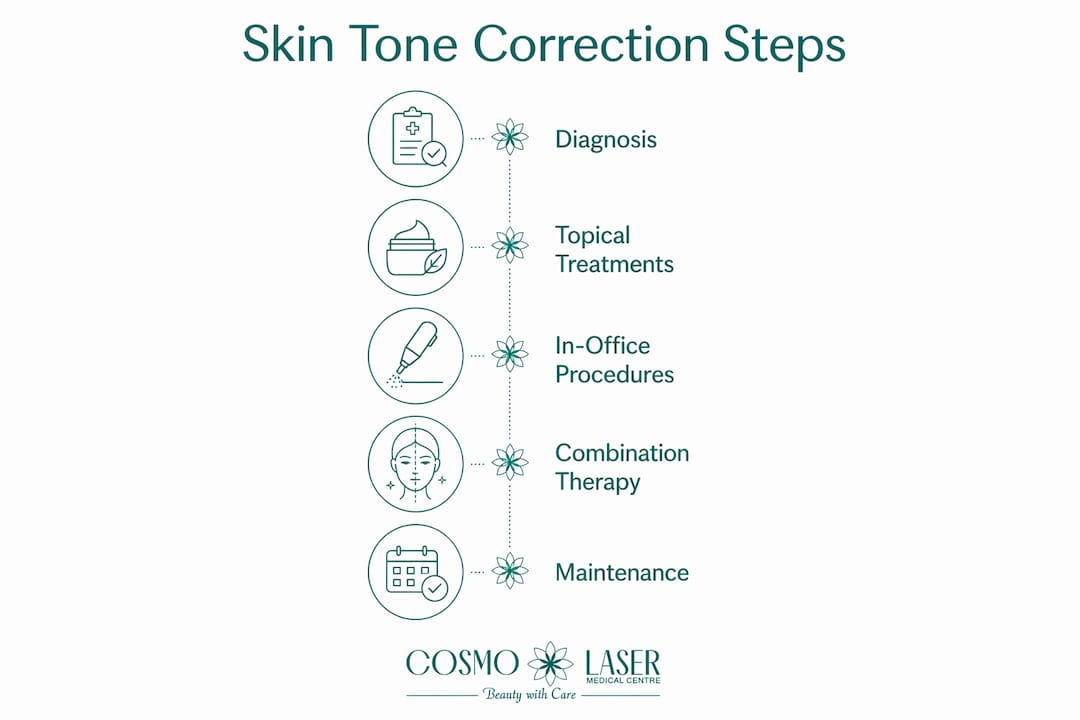
Clinical procedures accelerate what topicals cannot achieve alone. The right choice depends on pigment depth, skin type, and the specific condition being treated.
Chemical peels
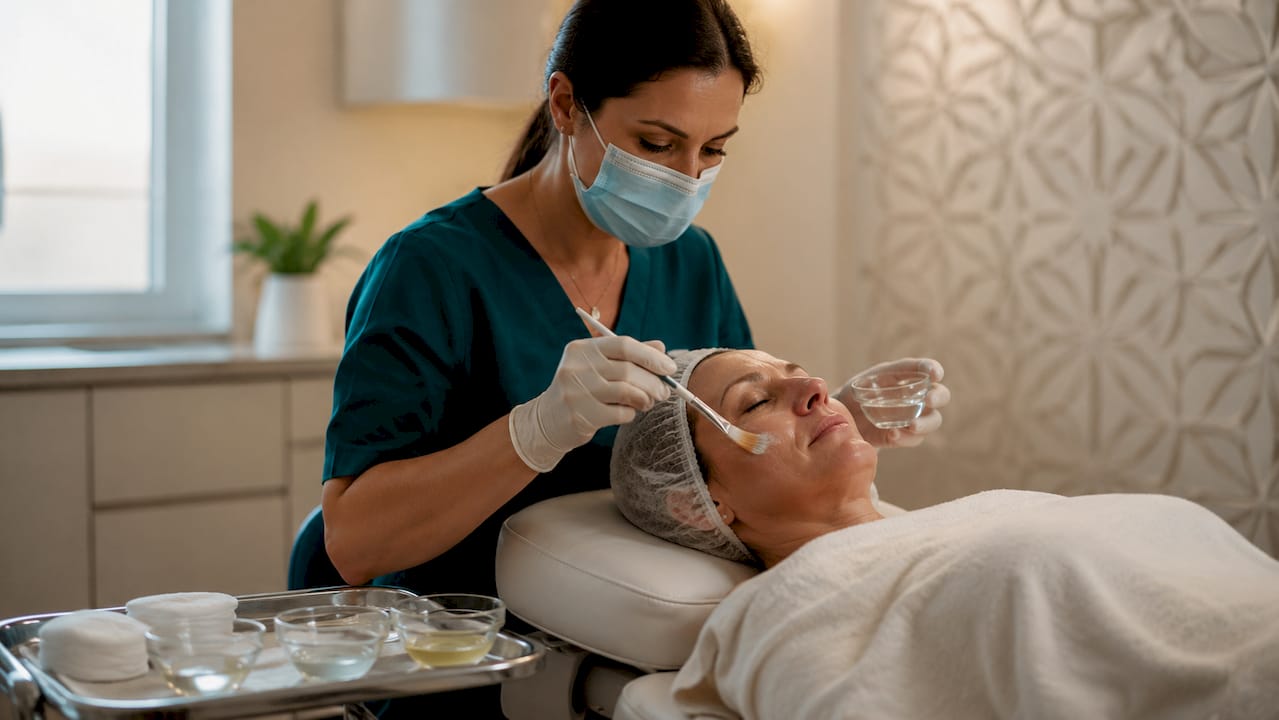
Chemical peels remove the outer layers of skin to reduce surface pigment and stimulate renewal. Mandelic acid and lactic acid peels are the safest options for Fitzpatrick types IV–VI, producing 2–3 days of mild flaking with minimal risk of rebound PIH. Trichloroacetic acid (TCA) peels reach deeper pigment but carry a higher risk profile for darker skin and require careful calibration. Chemical peel procedures at Cosmolaser are selected based on skin type assessment, not a one-size approach.
Laser therapies
Low-fluence Q-switched Nd:YAG laser toning is the preferred laser modality for melasma and diffuse pigmentation in darker skin types. It delivers energy in short pulses that fragment melanin granules without generating the heat that triggers rebound pigmentation. Picosecond laser treatments use even shorter pulse durations, reducing thermal damage further and improving clearance of stubborn pigment deposits. Both modalities require a series of sessions rather than a single aggressive treatment.
| Procedure | Best for | Fitzpatrick suitability | Downtime |
|---|---|---|---|
| Mandelic or lactic acid peel | Epidermal PIH, mild melasma | Types I–VI | 2–3 days mild flaking |
| Low-fluence Q-switched Nd:YAG | Diffuse melasma, toning | Types III–VI | Minimal to none |
| Picosecond laser | Stubborn pigment, lentigines | Types I–VI | 1–3 days |
| Radiofrequency microneedling | Textural pigment, acne PIH | Types I–VI | 24–48 hours redness |
Microneedling
Microneedling creates controlled micro-injuries that stimulate collagen and accelerate cell turnover. It is particularly effective for PIH associated with acne scarring. Combining oral tranexamic acid with microneedling improves melasma clearance significantly compared to topical creams alone, though oral therapy requires clinical monitoring for thrombotic risks.
Pro Tip: Avoid IPL (intense pulsed light) if your skin falls in Fitzpatrick types IV–VI. The broad-spectrum light energy carries a high risk of triggering PIH in darker skin, and safer alternatives exist for every indication IPL is used for.
How do you combine treatments for lasting skin tone improvement?
A single procedure rarely delivers lasting results. The most effective approach to skin tone enhancement follows a staged, multi-modal protocol that builds on each phase.
-
Start with photoprotection. Broad-spectrum SPF 50+ with iron oxides is the non-negotiable first step. Iron-oxide sunscreens outperform standard mineral SPF at blocking visible light, which is a primary driver of melasma and PIH in darker skin. No procedure delivers durable results without this foundation in place.
-
Prime the skin with topicals. Applying melanin-suppressing agents for 2–4 weeks before any procedure stabilises the skin’s response and reduces the risk of post-procedure PIH. Hydroquinone or azelaic acid are the standard priming agents.
-
Introduce procedures in a graduated sequence. Begin with superficial peels or low-fluence laser sessions before progressing to deeper or more intensive modalities. Rushing to aggressive treatments increases inflammatory rebound.
-
Space sessions appropriately. Professional pigmentation correction generally requires 3–6 sessions spaced several weeks apart. Downtime ranges from none to approximately one week depending on treatment intensity.
-
Maintain with ongoing topicals. After a treatment course, continuing with vitamin C, tranexamic acid, or a low-dose retinoid preserves results and prevents recurrence. Melasma in particular is a chronic condition that requires ongoing management, not a one-time fix.
-
Adjust for lifestyle triggers. Heat, friction, and hormonal changes all reactivate pigmentation. Patients with melasma benefit from reviewing contraceptive choices with their physician and minimising direct heat exposure.
Successful pigment management means control and improvement rather than permanent removal. Multi-modal plans avoid the treatment failure that comes from inflammatory rebound when procedures are used in isolation.
Key takeaways
Skin tone correction procedures work best when diagnosis, sequencing, and sun protection are treated as equally important as the procedure itself.
| Point | Details |
|---|---|
| Diagnosis drives treatment choice | Melasma, PIH, and sun spots require different therapies; misidentification causes harm. |
| Topicals are the foundation | Hydroquinone, azelaic acid, and tranexamic acid prime skin and maintain results between sessions. |
| Procedure selection by skin type | Mandelic peels and low-fluence Nd:YAG are safest for Fitzpatrick types IV–VI. |
| Sessions require spacing | Effective correction takes 3–6 sessions several weeks apart, not a single aggressive treatment. |
| Iron-oxide SPF is non-negotiable | Standard sunscreen does not block visible light; iron-oxide formulas are required for melasma control. |
Why slower protocols produce better outcomes: a clinical perspective
Patients frequently arrive at clinic having already tried aggressive treatments elsewhere. The pattern is consistent: a high-fluence laser session or a deep peel, followed by initial improvement, then a rebound that leaves the skin darker than before. This is not bad luck. It is a predictable consequence of applying thermal energy or chemical injury to skin that was not adequately primed or assessed.
The clinical literature is clear on this point. Safety must outweigh speed in pigmentation treatment, particularly for darker skin. Gradual, low-fluence protocols promote healing without triggering the inflammatory cascade that worsens pigmentation. The temptation to accelerate results is understandable, but the biology does not accommodate impatience.
What I observe consistently in practice is that patients who commit to the full protocol, including the priming phase, the spaced sessions, and the maintenance topicals, achieve results that hold. Those who skip steps or stop at the first sign of improvement almost always return with recurrence. Melasma especially is a condition you manage, not cure.
The other misconception worth addressing directly: not all brown spots are the same. Patients often assume a single treatment will clear everything uniformly. In reality, a face may present with epidermal melasma, dermal PIH from old acne, and solar lentigines simultaneously. Each responds to a different modality. A systematic care approach starting with photoprotection and introducing procedures only after topical therapies have been established is the standard that evidence supports. Anything faster is a shortcut that the skin will eventually reject.
— Dr Anoop Suresh Babu
Cosmolaser’s approach to safe skin tone correction
Cosmolaser’s clinical team in Sharjah assesses each patient’s Fitzpatrick skin type, pigmentation depth, and trigger history before recommending any treatment. That diagnostic step is not a formality. It determines whether a peel, a laser, or a topical-first approach is appropriate, and it prevents the rebound pigmentation that follows poorly matched procedures.
The clinic offers the full range of skin tone enhancement treatments, from medical-grade topical regimens and mandelic acid peels to picosecond laser and radiofrequency microneedling. Every protocol follows the staged approach described in this article: prime, treat, protect, and maintain. For patients seeking a clear, evidence-based plan tailored to their skin, Cosmolaser’s licensed aesthetician services and laser skin treatment options provide a structured path from assessment to visible, lasting improvement. Book a consultation to receive a personalised treatment plan.
FAQ
What is the difference between melasma and PIH?
Melasma is driven by hormonal and UV triggers and typically appears symmetrically on the face. PIH follows skin injury or inflammation and can occur anywhere on the body.
How many sessions does skin tone correction take?
Most patients require 3–6 treatment sessions spaced several weeks apart, with topical maintenance continuing between and after sessions.
Are laser treatments safe for darker skin tones?
Low-fluence Q-switched Nd:YAG and picosecond lasers are safe for Fitzpatrick types IV–VI when used at calibrated settings. IPL carries a high risk of PIH in darker skin and is generally avoided.
Does sunscreen really affect pigmentation treatment results?
Iron-oxide-containing sunscreens block visible light, which standard SPF 50+ does not. Visible light is a primary trigger for melasma, making iron-oxide SPF a clinical requirement, not optional aftercare.
Can skin tone correction procedures deliver permanent results?
Permanent removal is rarely achievable for conditions like melasma. Multi-modal protocols deliver controlled, lasting improvement, but ongoing maintenance is required to prevent recurrence.