TL;DR:
- Effective acne scar treatment involves combining multiple dermatological procedures tailored to each scar type and skin tone.
- Most methods require several sessions and a multidisciplinary approach to achieve significant improvement.
Acne scar treatment types are specialised dermatological procedures matched to distinct scar forms and individual skin profiles to reduce their visibility effectively. Acne scars require personalised treatment plans based on scar type, skin tone, and severity. The four principal scar categories are ice pick, boxcar, rolling, and raised scars (hypertrophic or keloid). Each responds differently to treatments such as fractional CO₂ laser, chemical peels, radiofrequency microneedling, subcision, and dermal fillers. No single therapy works universally. Combining therapies addresses complex scar pathogenesis better than any single modality alone, which is why Cosmolaser builds multidisciplinary treatment plans tailored to each patient’s skin profile and goals.
1. What are the main acne scar treatment types?
Acne scar treatments fall into five broad clinical categories: resurfacing procedures, energy-based therapies, collagen induction therapies, surgical techniques, and injectable treatments. Each category targets a different mechanism of scar formation. Resurfacing removes damaged surface layers; energy-based devices remodel the dermis; collagen induction therapies stimulate fibroblast activity; surgical techniques release or excise tethered tissue; and injectables restore volume or flatten raised tissue. Understanding which category applies to your scar type is the first step in building an effective plan.
2. Chemical peels for shallow scars
Chemical peels promote epidermal renewal and improve the appearance of shallow boxcar and rolling scars through controlled exfoliation. Superficial peels use alpha hydroxy acids such as glycolic acid or lactic acid to remove the outermost skin layer. Medium-depth peels use trichloroacetic acid (TCA) at concentrations of 15%–35% to reach the upper dermis, stimulating collagen regeneration more aggressively.
Peels work best on:
- Shallow boxcar scars with defined edges
- Rolling scars with gradual surface undulation
- Post-inflammatory hyperpigmentation (PIH) that darkens scar appearance
- Mild textural irregularities across the skin surface
Multiple sessions are required, typically spaced four to six weeks apart, to achieve meaningful improvement. Patients with darker Fitzpatrick skin types (IV–VI) carry a higher risk of post-peel PIH and require lower-concentration agents with careful monitoring. Chemical peel treatments at Cosmolaser are selected and calibrated to each patient’s skin tone and scar depth.
Pro Tip: Apply a broad-spectrum SPF 50 sunscreen every morning during and after a peel course. Sun protection post-treatment directly improves healing speed and prolongs results.
3. Laser therapies: fractional CO₂ and non-ablative options
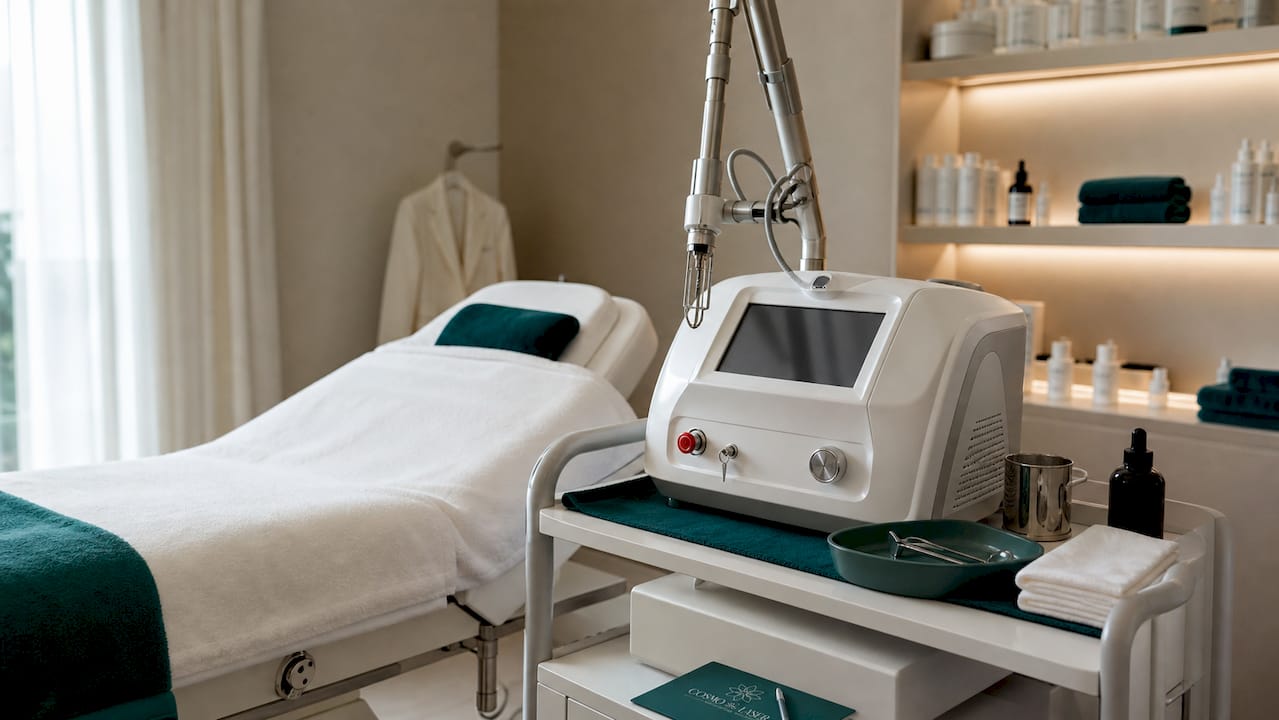
Fractional CO₂ laser therapy stimulates collagen production and is one of the most effective tools for deeper acne scars. The device creates microscopic columns of controlled thermal injury in the dermis, triggering the skin’s natural repair process. Surrounding untreated tissue accelerates healing, reducing downtime compared with fully ablative resurfacing.
Ablative fractional CO₂ laser suits:
- Deep boxcar scars with sharp, well-defined walls
- Rolling scars with significant dermal tethering
- Textural irregularities across larger surface areas
Non-ablative lasers, such as Nd:YAG or diode devices, heat the dermis without removing the epidermis. They produce more modest results but carry shorter recovery periods, making them suitable for patients who cannot take extended downtime. Typical ablative fractional sessions require seven to fourteen days of healing; non-ablative sessions require two to five days.
Pigmentation risk is a real consideration. Patients with Fitzpatrick skin types IV–VI face a higher chance of post-inflammatory hyperpigmentation after ablative laser. A skilled clinician adjusts fluence and density settings accordingly. CO₂ fractional laser treatment at Cosmolaser is delivered by qualified specialists who assess skin tone before every session.
Pro Tip: Combining fractional laser with radiofrequency microneedling in a staged plan produces superior collagen remodelling compared with either treatment alone.
4. Microneedling and radiofrequency: collagen induction therapies
Microneedling induces controlled micro-injury to activate fibroblasts and stimulate collagen synthesis, making it one of the most accessible effective scar removal methods for atrophic scars. The device creates fine channels in the dermis using needles ranging from 0.5 mm to 2.5 mm in depth. The body responds by producing new collagen and elastin, gradually raising depressed scar tissue.
Radiofrequency microneedling adds a second mechanism. The needles deliver radiofrequency energy directly into the dermis at a controlled depth, producing thermal coagulation zones that further stimulate remodelling. This dual action makes radiofrequency microneedling particularly effective for:
- Rolling scars with broad, gradual depressions
- Shallow boxcar scars where laser carries higher pigmentation risk
- Patients with darker skin tones who need a lower-risk energy-based option
- Skin laxity accompanying atrophic scarring
A standard course involves three to six sessions spaced four weeks apart. Redness and mild swelling resolve within 24–72 hours in most patients. The lower pigmentation risk compared with ablative laser makes radiofrequency microneedling a preferred first-line energy treatment for Fitzpatrick skin types IV–VI. Multiple sessions are required; single treatments produce limited improvement.
5. Subcision and punch excision: surgical approaches for deep scars
Subcision is a minor surgical technique that releases fibrous bands tethering rolling scars beneath the skin surface, improving smoothness. A fine needle or cannula is inserted parallel to the skin surface and moved in a fanning motion to sever the fibrous strands pulling the scar downward. Once released, the skin rises and the depression becomes less visible.
Punch excision targets isolated deep scars, particularly ice pick scars, which are too narrow and deep for resurfacing to reach effectively. A circular punch tool removes the scar column entirely. The small wound is closed with a suture or skin glue, leaving a fine linear scar that is far less noticeable than the original ice pick defect.
Key clinical points for both procedures:
- Bruising and swelling are expected for five to ten days post-procedure
- Subcision is often combined with fillers or laser resurfacing for better volume correction
- Punch excision suits isolated scars rather than widespread scarring
- Both procedures require a sterile clinical environment and trained hands
- Results improve further when followed by a resurfacing course four to six weeks later
Subcision combined with hyaluronic acid filler delivers faster visible improvement than subcision alone, as the filler maintains the space created by the release.
6. Fillers and injections: volume restoration and scar flattening
Dermal fillers provide volume restoration and can improve the appearance of depressed scars temporarily or semi-permanently. Hyaluronic acid fillers are injected beneath atrophic scars to physically lift the depression to the level of surrounding skin. Results are immediate and visible within the same appointment.
Corticosteroid injections serve the opposite purpose. They flatten hypertrophic and keloid scars by suppressing collagen overproduction and reducing fibrous tissue bulk. A series of intralesional injections spaced four to six weeks apart progressively softens and flattens raised scar tissue.
Filler use is best suited to:
- Isolated rolling or boxcar scars that remain after resurfacing
- Patients seeking rapid aesthetic improvement before a special event
- Scars that have not responded fully to laser or microneedling alone
- Raised scars (hypertrophic or keloid) requiring corticosteroid suppression
Hyaluronic acid fillers are temporary, lasting six to eighteen months depending on the product and metabolism. Poly-L-lactic acid and calcium hydroxylapatite fillers stimulate collagen and offer longer-lasting correction. Repeat treatments maintain results over time.
Pro Tip: Combine subcision with filler in the same session for rolling scars. Subcision releases the tether; filler holds the corrected position while collagen remodels beneath.
Key takeaways
The most effective acne scar treatment plan combines multiple modalities matched to scar type, skin tone, and depth rather than relying on a single procedure.
| Point | Details |
|---|---|
| Scar type determines treatment | Ice pick, boxcar, rolling, and raised scars each respond to different clinical methods. |
| Combination therapy outperforms single treatments | Multidisciplinary plans targeting collagen synthesis and fibrous band release yield superior outcomes. |
| Skin tone affects treatment choice | Darker Fitzpatrick skin types require lower-risk options such as radiofrequency microneedling to avoid PIH. |
| Sun protection is non-negotiable | Broad-spectrum SPF 50 applied daily preserves results and prevents new pigmentation after any procedure. |
| Multiple sessions are standard | Most effective scar removal methods require three to six sessions before significant improvement is visible. |
What I have learned from treating acne scars across diverse skin types
Patients often arrive expecting one treatment to resolve years of scarring in a single session. That expectation is the biggest obstacle to satisfaction. Acne scars are structural changes in the dermis. They take time to form, and they take time to correct.
What I find most telling in clinical practice is how often a single-modality approach is recommended when the scar presentation clearly calls for a combination. A patient with deep rolling scars and isolated ice pick scars needs subcision, punch excision, and a resurfacing course. Offering only laser is like repainting a wall without filling the cracks first.
The second lesson is about skin tone. Fitzpatrick types IV–VI are common in the UAE and across the Gulf region. These patients carry a genuine risk of post-inflammatory hyperpigmentation from aggressive ablative treatments. Radiofrequency microneedling and carefully calibrated TCA peels are far safer starting points. The multidisciplinary approach to acne scars is not a trend. It is the clinical standard, and the evidence supports it clearly.
Patience is the third factor. Collagen remodelling takes three to six months to show its full effect after a treatment course. Patients who commit to a structured plan and protect their skin with daily sunscreen consistently achieve better outcomes than those who seek rapid fixes.
— Dr Anoop Suresh Babu
Personalised acne scar care at Cosmolaser
Cosmolaser offers a full range of acne scar treatments in Sharjah, including fractional CO₂ laser, radiofrequency microneedling, chemical peels, subcision, and injectable therapies. Every patient receives a clinical assessment before any procedure begins, ensuring the treatment plan matches their scar type, skin tone, and treatment goals.
The team at Cosmolaser includes qualified doctors and licensed aestheticians with direct experience in managing acne scarring across all Fitzpatrick skin types. If you are ready to understand which treatments suit your skin, book a consultation with Cosmolaser and receive a personalised plan built around your specific needs.
FAQ
What are the main types of acne scars?
The four main types are ice pick, boxcar, rolling, and raised scars (hypertrophic or keloid). Each has a distinct structure and responds best to different treatment methods.
Which acne scar treatment works fastest?
Dermal fillers produce the most immediate visible improvement for depressed scars, lifting depressions within a single session. Laser and microneedling deliver deeper, longer-lasting results but require multiple sessions over several months.
Is laser treatment safe for darker skin tones?
Ablative fractional CO₂ laser carries a higher pigmentation risk for Fitzpatrick skin types IV–VI. Radiofrequency microneedling and carefully selected chemical peels are safer first-line options for patients with darker skin tones.
How many sessions does acne scar treatment require?
Most effective scar removal methods require three to six sessions, spaced four to six weeks apart. Multiple microneedling sessions are standard before significant improvement in atrophic scars becomes visible.
Can acne scars be fully removed?
Complete removal is rarely achievable, but significant improvement is realistic with the right combination of treatments. Combining multiple modalities targeting collagen synthesis, fibrous band release, and surface resurfacing produces the best clinical outcomes.