
TL;DR:
- Proper aftercare is essential for effective healing and long-lasting results after aesthetic procedures. Neglecting post-treatment care increases risks of infection, pigmentation issues, and product displacement. Personalized guidance helps patients protect their investment and optimize skin recovery.
Aesthetic aftercare is defined as the deliberate care and protection of treated skin following cosmetic procedures, designed to maximise healing, enhance results, and minimise risk. Understanding why aftercare matters for aesthetic procedures is not optional knowledge. It is the difference between a result that lasts and one that disappoints. The skin does not simply “settle” on its own after treatment. It undergoes a structured biological repair process that depends entirely on what you do in the hours, days, and weeks that follow. Cosmolaser builds personalised aftercare guidance into every treatment plan because recovery is an active process, not a passive one.
What happens to your skin after aesthetic procedures?
The skin healing process after aesthetic procedures comprises three overlapping phases that are critical to both recovery and final results. Each phase has distinct biological activity, and each responds directly to how well you care for your skin during that window.

The inflammatory phase (days 0–5)
The inflammatory phase begins immediately after treatment. Blood vessels dilate, immune cells flood the area, and redness, warmth, and swelling appear. This is not damage. It is the body’s first repair signal. Disrupting this phase through heat exposure, alcohol, or physical trauma slows the entire cascade that follows.
The proliferative phase (days 3–21)
During the proliferative phase, fibroblasts deposit new collagen and the skin begins to rebuild its structure. This is the phase where most visible improvement occurs, and it is also the phase most vulnerable to external interference. UV exposure during this window triggers post-inflammatory hyperpigmentation (PIH), a condition where melanocytes overproduce pigment in response to sun damage on already-sensitised skin. Patients with darker Fitzpatrick skin types face a significantly higher PIH risk, which is why Cosmolaser tailors aftercare protocols to individual skin type rather than applying a single standard.
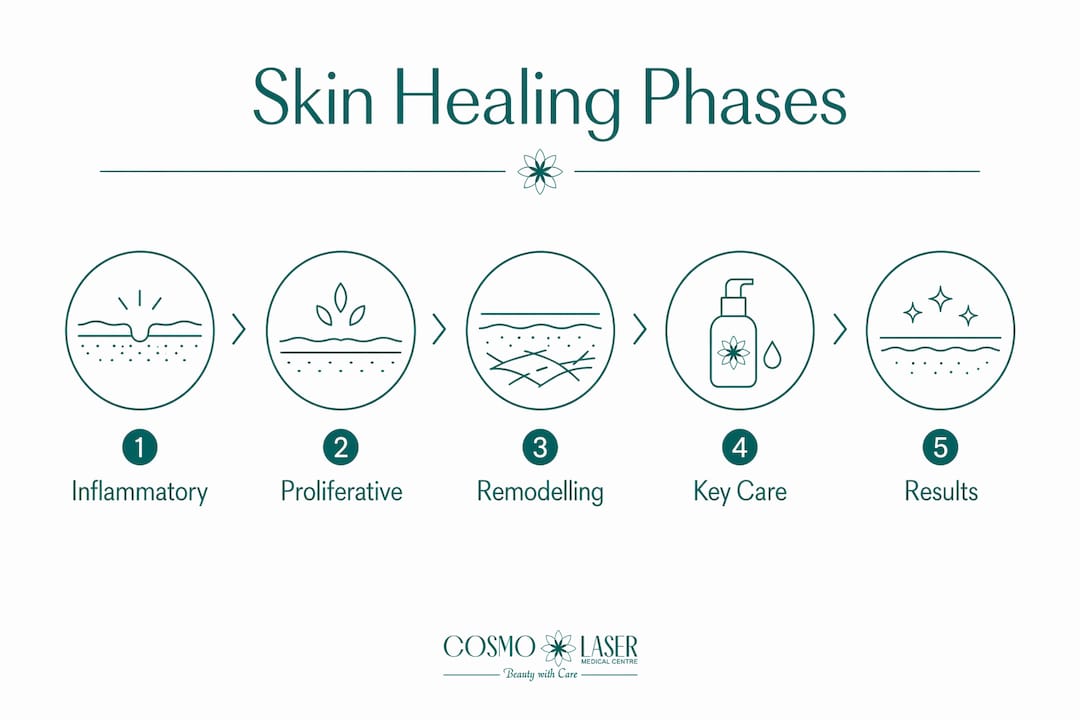
The remodelling phase (day 21 to one year or beyond)
The remodelling phase is the longest and most underappreciated stage. Collagen fibres reorganise, scar tissue matures, and the final cosmetic result becomes visible. Premature use of active skincare ingredients such as retinoids or alpha hydroxy acids during this phase can cause irritation and pigmentary changes. The skin needs time and the right environment to complete its work.
Pro Tip: Apply a broad-spectrum SPF 50 sunscreen every morning from day one of recovery, even if you plan to stay indoors. UV rays penetrate windows and can trigger PIH during the proliferative phase.
Key aftercare practices that protect your results
The importance of aftercare becomes concrete when you look at the specific habits that either support or undermine healing. These are not suggestions. They are clinical standards that directly affect your outcome.
Sun protection
Broad-spectrum SPF 50 applied daily, with reapplication every two hours when outdoors, is mandatory after chemical peels and laser resurfacing. Sun avoidance for at least two weeks post-treatment is the current industry standard. Skipping this step is the single most common cause of PIH in patients who otherwise follow their care plan correctly.
Hydration and gentle skincare
The skin barrier is compromised after most aesthetic treatments. Fragrance-free, non-comedogenic moisturisers support barrier repair without introducing irritants. Avoid active ingredients including retinol, vitamin C serums, and exfoliating acids until your practitioner confirms the skin has stabilised.
Substances that impair healing
- Alcohol: Thins the blood, worsens swelling, and dehydrates tissue. Avoid for the first 48 hours minimum.
- NSAIDs (such as ibuprofen): Increase bruising risk by inhibiting platelet aggregation. Use paracetamol instead for pain management.
- Blood-thinning supplements: Omega-3 oils, vitamin E, and garlic supplements all increase bruising. Pause these for 48 hours before and after treatment.
- Smoking: Restricts blood flow and significantly delays wound healing at the cellular level.
Exercise and heat exposure
Physical activity restrictions vary by treatment. Light walking is generally acceptable from day one. Vigorous exercise and heat exposure should be avoided for 24–48 hours after injectables, 48–72 hours after energy-based treatments such as radiofrequency microneedling or CO2 fractional laser, and one to two weeks after thread lifts. Elevated heart rate increases blood pressure in facial vessels, which worsens swelling and raises the risk of product displacement in filler patients.
Managing swelling and bruising
Cold compresses wrapped in a clean cloth, applied intermittently during the first 24 hours, are highly effective for reducing swelling after injection treatments. Never apply ice directly to skin. Sleeping with the head slightly elevated for the first two nights also reduces fluid pooling around treated areas.
Pro Tip: Avoid touching, rubbing, or picking at treated skin for at least 72 hours. Contamination from hands is one of the most preventable causes of post-treatment infection.
What happens when aftercare is neglected?
Neglecting aftercare increases the risk of infection, hyperpigmentation, excessive swelling, bruising, and psychological distress from prolonged visible downtime. These are not rare edge cases. They are predictable consequences of skipping steps that exist for clear clinical reasons.
The most common complications from poor post-procedure care include:
- Infection: Bacteria introduced through touching, contaminated products, or swimming in public pools can cause localised infections that require antibiotic treatment and may leave permanent scarring.
- Post-inflammatory hyperpigmentation: UV exposure on sensitised skin during the proliferative phase triggers melanocyte overactivity. Dark patches can persist for months without targeted treatment.
- Product displacement: In dermal filler patients, vigorous massage, pressure, or heat can shift filler material before it has integrated with surrounding tissue.
- Excessive bruising: Alcohol, NSAIDs, and strenuous exercise all increase vascular fragility in the days immediately after treatment.
- Prolonged downtime: Poor aftercare extends recovery unnecessarily. What should resolve in five days can stretch to two weeks, affecting work, social commitments, and patient confidence.
Aftercare is not a cosmetic formality. It is a clinical safety framework that protects both the physical result and the patient’s psychological wellbeing. Visible complications from preventable causes are among the most distressing outcomes a patient can experience, and they are almost entirely avoidable with the right guidance and consistent follow-through.
Contact your practitioner immediately if you notice increasing redness beyond day three, warmth, pus, fever, or asymmetry that worsens rather than improves. These are warning signs that require clinical assessment, not watchful waiting.
Tailoring aftercare: guidance by treatment type
Aftercare is not one-size-fits-all. Different procedures create different levels of tissue disruption, and recovery timelines reflect that. The table below outlines key aftercare differences across common aesthetic treatment categories.
| Treatment type | Key aftercare steps | Downtime and settling period |
|---|---|---|
| Botulinum toxin (anti-wrinkle injections) | Avoid lying down for 4 hours; no vigorous exercise for 24 hours; no facial massage | Full effect visible at 10–14 days |
| Dermal fillers | Avoid heat, alcohol, and strenuous activity for 48 hours; no pressure on treated area | Settling complete at 2–4 weeks |
| Chemical peels | SPF 50 daily; no active ingredients; gentle cleansing only; no picking at peeling skin | 5–14 days depending on peel depth |
| Laser resurfacing (CO2 fractional laser) | Strict sun avoidance for 2 weeks; barrier repair moisturiser; avoid retinoids for 4–6 weeks | Redness resolves in 5–10 days; full remodelling takes months |
| Microneedling | No makeup for 24 hours; avoid active serums for 48 hours; SPF 50 from day one | Visible improvement at 4–6 weeks |
| Thread lifts | No facial massage for 2 weeks; sleep on back; avoid extreme facial expressions | Threads integrate over 4–6 weeks |
Patients should prioritise understanding specific aftercare instructions over memorising generic downtime periods. A chemical peel performed at medium depth requires a fundamentally different recovery approach than a superficial peel, even though both fall under the same treatment category. Waiting four to six weeks between certain procedures, and avoiding active ingredients early in recovery, is standard clinical advice that applies across most resurfacing treatments.
Extended posture restrictions after botulinum toxin injections, such as the old guidance to remain upright for four hours, lack strong scientific evidence. Good hygiene and avoiding pressure on the treated area are the priorities. Knowing which rules are evidence-based and which are outdated myths helps patients follow their plan with confidence rather than anxiety.
Key takeaways
Proper aftercare is the single most controllable factor in determining whether an aesthetic procedure delivers its intended result.
| Point | Details |
|---|---|
| Healing has three phases | The inflammatory, proliferative, and remodelling phases each require specific care to progress without complication. |
| SPF 50 is non-negotiable | Daily broad-spectrum sun protection prevents post-inflammatory hyperpigmentation, the most common aftercare failure. |
| Substances matter in the first 48 hours | Alcohol and NSAIDs increase bruising and swelling; paracetamol and hydration support healing instead. |
| Aftercare varies by treatment | Thread lifts, laser resurfacing, and injectables each have distinct timelines and restrictions that must be followed precisely. |
| Neglect carries real clinical risk | Infection, pigmentation changes, and product displacement are predictable consequences of skipping aftercare steps. |
Why I believe aftercare is where treatment success is actually decided
Patients often arrive at a consultation focused entirely on the procedure itself: which treatment, how many sessions, what results to expect. That focus is understandable. But in my clinical experience, the outcome is decided in the days after the appointment, not during it.
The most common source of disappointment I see is not a poorly performed procedure. It is a well-performed procedure followed by inconsistent aftercare. A patient who skips SPF for three days during the proliferative phase can develop PIH that takes six months to resolve. A filler patient who attends a hot yoga class 12 hours after treatment may experience swelling that distorts the result for weeks. These are not failures of technique. They are failures of follow-through.
What I find most striking is how often patients underestimate the impact of lifestyle choices in that critical first 48-hour window. A single evening of alcohol consumption, or one dose of ibuprofen for a headache, can meaningfully increase bruising in a way that affects both the visible result and the patient’s confidence in the treatment. The biology is unambiguous on this point.
My advice is to treat your aftercare plan with the same seriousness you give to choosing your treatment. Ask your practitioner specific questions. Write down the instructions. Set reminders for SPF reapplication. The post-treatment recovery period is not an inconvenience to manage around your schedule. It is the period during which your investment either pays off or falls short.
Aftercare is also a psychological process. Patients who understand why each restriction exists follow their plan more consistently than those who receive a list of rules without explanation. Informed patients recover better. That is not an opinion. It is a pattern I observe consistently in practice.
— Dr Anoop Suresh Babu
Cosmolaser’s approach to supported recovery
At Cosmolaser, every treatment comes with a personalised aftercare plan written specifically for your skin type, the procedure performed, and your lifestyle. Patients are not handed a generic leaflet. They leave with clear, written instructions and direct access to the clinical team for questions during recovery.
The Cosmolaser team in Sharjah includes qualified dermatologists and aesthetic specialists who understand that safe, lasting results depend on what happens after you leave the clinic. Whether you are considering dermal fillers, a CO2 fractional laser treatment, or a chemical peel, the right aftercare guidance is built into your care from the first consultation. To understand what expert-led recovery looks like in practice, consult a dermatologist at Cosmolaser before your next procedure.
FAQ
What is aesthetic aftercare and why does it matter?
Aesthetic aftercare is the structured care of treated skin following cosmetic procedures to support healing, protect results, and prevent complications. Without it, even technically successful treatments can produce poor outcomes due to infection, pigmentation changes, or product displacement.
How long does aftercare last after aesthetic procedures?
Aftercare duration depends on the treatment. Injectables require 24–48 hours of key restrictions, while laser resurfacing and thread lifts require two weeks or more of active care. The remodelling phase of skin healing continues for up to one year.
Can I wear makeup after an aesthetic treatment?
Most treatments require a makeup-free period of at least 24 hours. After microneedling or laser resurfacing, the skin barrier is compromised and cosmetics introduce contamination risk. Your practitioner will confirm when mineral or non-comedogenic makeup is safe to resume.
What should I avoid in the first 48 hours after treatment?
Avoid alcohol, NSAIDs such as ibuprofen, vigorous exercise, heat exposure, and touching the treated area. These actions increase bruising, swelling, and infection risk during the most vulnerable window of the healing process.
Does aftercare differ for darker skin tones?
Patients with darker Fitzpatrick skin types face a higher risk of post-inflammatory hyperpigmentation, making strict SPF 50 use and avoidance of active ingredients even more critical. Cosmolaser tailors aftercare protocols to individual skin type to address this risk directly.