TL;DR:
- Laser therapy offers the highest success rates for sun spot removal, with picosecond lasers clearing up to 93%. Dermatologists tailor treatments based on skin type, spot characteristics, and safety considerations, emphasizing pre-treatment priming and sun protection. Topical treatments and non-laser procedures serve as alternatives for mild cases or patients unsuitable for laser therapy.
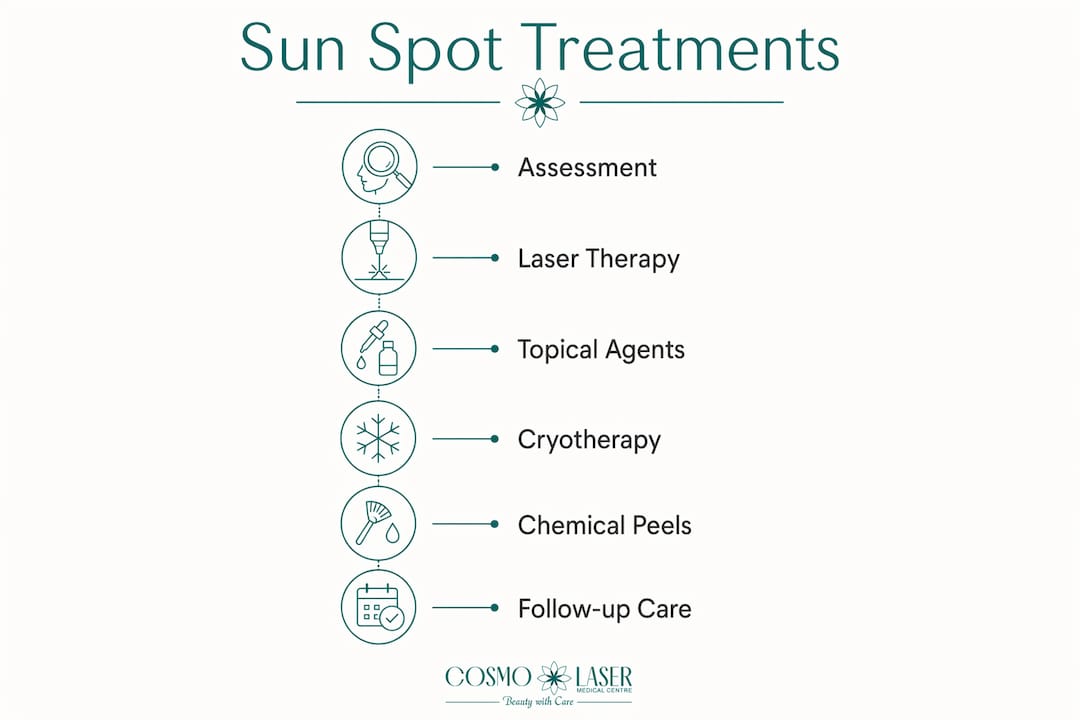
Solar lentigines, commonly called sun spots, are flat, brown patches caused by cumulative UV damage to the skin. How dermatologists treat sun spots depends on a precise clinical assessment of each patient’s skin type, spot characteristics, and medical history. Treatment options span laser therapy, topical agents, cryotherapy, and chemical peels, each with distinct efficacy profiles and safety considerations. A professional diagnosis always comes first, because some pigmented lesions require biopsy rather than cosmetic treatment.
How dermatologists treat sun spots with laser and light therapies
Laser therapy is the most effective approach for solar lentigines, with picosecond lasers clearing 67.9% to 93.0% of spots and IPL achieving 74.6% to 90.0% clearance across a systematic review of 41 clinical trials involving 3,234 patients. Those figures represent the strongest clearance rates of any single treatment category. That is why laser and light-based procedures sit at the top of most dermatologists’ treatment plans.
Both lasers and intense pulsed light (IPL) work by targeting melanin, the pigment responsible for the dark colour of sun spots. The laser energy is absorbed selectively by pigmented cells, which then fragment and are cleared by the body’s immune system. Picosecond lasers deliver energy in ultra-short pulses, which reduces heat build-up in surrounding tissue and lowers the risk of scarring compared with older nanosecond devices.
Key clinical considerations for laser and IPL treatment include:
- Treatment sessions: Most patients require 1–3 sessions, spaced 4–6 weeks apart, to achieve optimal clearance.
- Skin type suitability: IPL performs best on lighter Fitzpatrick skin types (I–III). Picosecond lasers offer a safer profile across a broader range of skin tones.
- Post-inflammatory hyperpigmentation (PIH): PIH commonly affects deeper skin tones after laser treatments, with rates ranging from 10% to 47% in Fitzpatrick IV–VI phototypes.
- Pre-treatment priming: Dermatologists prescribe skin-lightening agents before laser procedures to reduce PIH risk, particularly in patients with darker complexions.
- Sun avoidance: Patients must avoid direct sun exposure for at least four weeks before and after treatment.
Pro Tip: Ask your dermatologist specifically about picosecond technology if you have a medium or darker skin tone. Conservative laser parameters combined with pre-treatment priming significantly reduce the risk of PIH.
A full guide to laser skin treatments can help you understand which device is best suited to your skin before your consultation.
Do topical treatments work for sun spot reduction?
Topical agents are the first-line option for mild sun spots and serve as maintenance therapy after procedural treatments. The most clinically studied combination is mequinol 2% plus tretinoin 0.01%, which achieves efficacy rates of 52.6% to 80.0%, particularly on facial lesions. That range reflects meaningful fading rather than complete removal, which is why topical treatments are often combined with procedures for more pronounced spots.
Topical lighteners work by interrupting melanin synthesis at different points in the pigment production pathway. Mequinol competes with tyrosine, the amino acid that initiates melanin production. Tretinoin accelerates cell turnover, which helps disperse existing pigment and improves penetration of the lightening agent. Together, they address both the cause and the visible deposit of excess pigment.
Practical points for patients using topical regimens:
- Duration: Clinical improvement typically requires 12–24 weeks of consistent daily application.
- Facial versus body spots: Efficacy is highest on the face. Hand and forearm spots respond more slowly due to thicker skin.
- Side effects: Mild redness, dryness, and peeling are common in the first four weeks. These usually resolve without stopping treatment.
- Supervision: Dermatologist oversight is necessary to adjust concentration and manage side effects safely.
Pro Tip: Apply topical lighteners at night. Tretinoin increases photosensitivity, so morning application raises the risk of further UV damage and can worsen pigmentation.
Understanding how to combine cosmetic treatments safely is particularly relevant when topical agents are used alongside procedural therapies.
What procedural options do dermatologists use beyond lasers?
Cryotherapy, chemical peels, and microdermabrasion each offer effective sun spot removal for patients who are not suitable candidates for laser treatment or who prefer less technology-intensive options.
Cryotherapy with liquid nitrogen
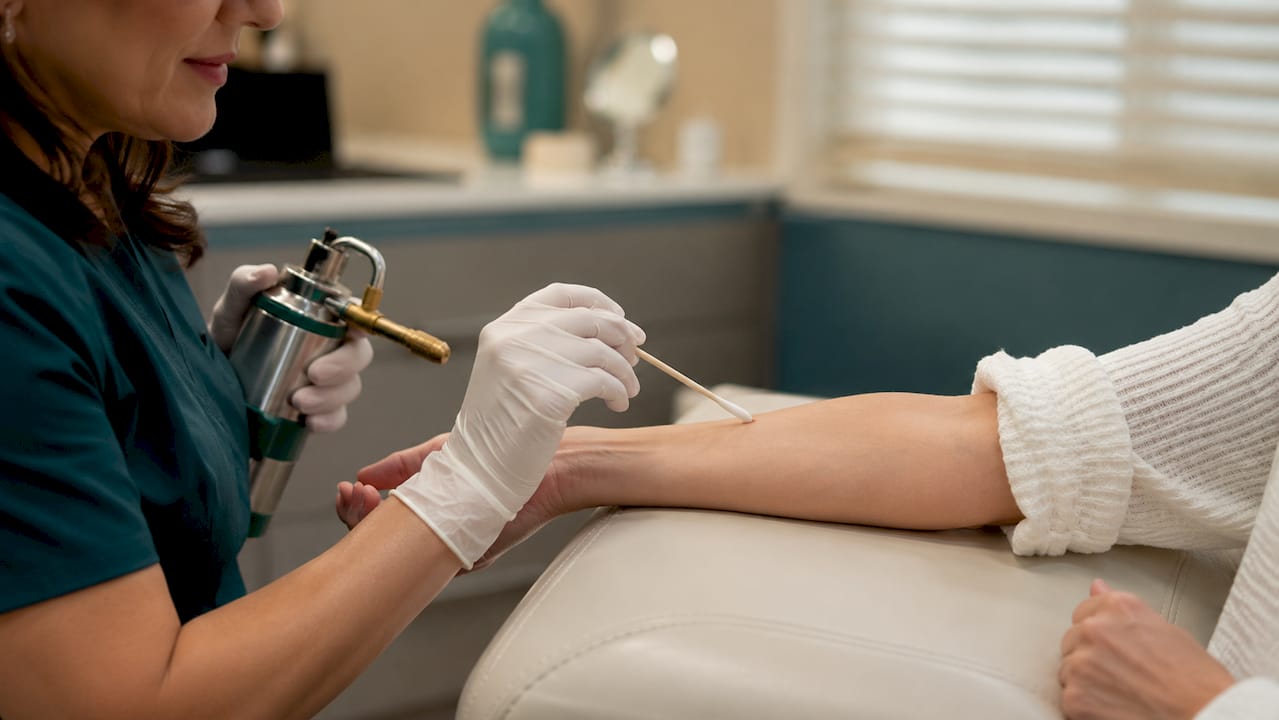
Cryotherapy applies liquid nitrogen directly to the sun spot, freezing and destroying the pigmented cells. Clearance rates range from 37% to 71%, making it a reliable but variable option. The wide range reflects differences in spot depth, skin location, and the number of freeze-thaw cycles applied. Cryotherapy is fast, requires no anaesthesia, and suits isolated spots on the hands or forearms. The main drawback is a risk of hypopigmentation, where the treated area becomes lighter than the surrounding skin.
Chemical peels and microdermabrasion
Chemical peels use acids such as glycolic acid or trichloroacetic acid (TCA) to remove the outer layers of skin, taking pigmented cells with them. Approximately 47% of patients experience at least 50% fading after chemical peels alone. That figure rises to 50% when peels are combined with microdermabrasion, which uses fine crystals or a diamond-tipped wand to physically exfoliate the skin surface. The combination works because microdermabrasion improves acid penetration into the epidermis.
| Procedure | Clearance rate | Best suited for | Key risk |
|---|---|---|---|
| Cryotherapy | 37%–71% | Isolated spots, hands, forearms | Hypopigmentation |
| Chemical peel alone | ~47% achieve 50%+ fading | Facial spots, lighter skin types | Redness, peeling |
| Peel + microdermabrasion | ~50% achieve 50%+ fading | Facial spots, combination skin | Sensitivity, sun exposure risk |
| Picosecond laser | 67.9%–93.0% clearance | All skin types with priming | PIH in darker tones |
Recovery after chemical peels involves 3–7 days of redness and peeling. Patients should avoid sun exposure entirely during this period. Chemical peel procedures at a qualified clinic include a pre-peel skin assessment to select the correct acid strength for each patient’s skin type.
How do dermatologists ensure safety and personalised treatment plans?
Safe sun spot treatment begins with a thorough clinical assessment, not a treatment booking. Dermatologists use the ABCDE rule to differentiate benign solar lentigines from potentially cancerous lesions before any procedure begins. ABCDE stands for Asymmetry, Border, Colour, Diameter, and Evolution. Any spot that fails this assessment requires a biopsy, not a cosmetic treatment.
The 2025 European Academy of Dermatology guidelines emphasise personalised treatment planning that prioritises skin type and medical history to prevent post-inflammatory hyperpigmentation. This is not a formality. PIH can leave darker marks than the original sun spot, particularly in patients with Fitzpatrick skin types IV–VI. Choosing the wrong treatment or the wrong parameters causes harm rather than improvement.
A dermatologist’s safety checklist before treatment includes:
- Full skin examination: Identify all pigmented lesions and flag any that require biopsy.
- Fitzpatrick skin typing: Determines which treatments and energy settings are appropriate.
- Medical history review: Certain medications, including some antibiotics and retinoids, increase photosensitivity and affect treatment timing.
- Pre-treatment skin priming: Skin lighteners before laser procedures reduce PIH risk, especially in darker phototypes.
- Post-treatment sun protection: Daily SPF 50+ broad-spectrum sunscreen is non-negotiable after any sun spot treatment to prevent recurrence.
Pro Tip: Sun spots represent a visible marker of cumulative UV damage. Without consistent daily sun protection, the results of any treatment will fade within months. SPF 50+ applied every morning is the single most important maintenance step.
Consulting a dermatologist aesthetician before committing to any procedure gives you a clear, personalised plan rather than a generic treatment menu.
Key takeaways
Laser therapy remains the most clinically effective sun spot treatment, but safety and long-term results depend equally on professional diagnosis, skin type assessment, and consistent daily sun protection.
| Point | Details |
|---|---|
| Laser leads on efficacy | Picosecond lasers clear 67.9%–93.0% of sun spots, the highest rate of any single treatment. |
| Topical agents suit mild cases | Mequinol 2% plus tretinoin 0.01% achieves 52.6%–80.0% efficacy, best used for maintenance or mild spots. |
| Procedural alternatives exist | Cryotherapy and chemical peels offer 37%–71% and ~47% clearance respectively, with lower technology requirements. |
| Skin type determines safety | Fitzpatrick IV–VI patients face PIH rates of 10%–47% after laser; pre-treatment priming reduces this risk. |
| Sun protection sustains results | Daily SPF 50+ is required post-treatment to prevent sun spots from returning. |
What I have learned treating sun spots over years of clinical practice
Patients often arrive expecting a single session to erase years of UV damage. That expectation is understandable, but it is rarely realistic. The most common mistake I see is patients choosing a treatment based on price or convenience rather than on what their skin type and spot depth actually require. A picosecond laser session on an unprepared Fitzpatrick V skin type can leave a patient with PIH that is darker and more distressing than the original sun spot.
The second misconception I encounter regularly is that natural remedies, such as lemon juice or vitamin C serums, will produce the same results as clinical treatments. Topical vitamin C has a role in maintenance and mild prevention, but it does not replicate the targeted melanin disruption of a Q-switched or picosecond laser. Setting that expectation clearly at the first consultation saves patients months of frustration.
What I find genuinely encouraging is how much the safety profile of laser treatments has improved. Conservative energy settings, proper pre-treatment priming, and picosecond technology have made effective sun spot removal accessible to a much wider range of skin tones than was possible a decade ago. Patients with darker complexions who were previously told lasers were too risky can now be treated safely with the right protocol.
My consistent advice to every patient is this: protect your results as seriously as you pursue them. Treatment removes existing pigment. Sun protection prevents new pigment from forming. Without SPF 50+ applied every single morning, any treatment is a temporary fix rather than a lasting result.
— Dr Anoop Suresh Babu
Sun spot treatment at Cosmolaser
Cosmolaser, based in Sharjah, offers a full range of clinically supervised sun spot treatments tailored to each patient’s skin type and medical history.
The clinical team at Cosmolaser conducts a thorough skin assessment before recommending any procedure, applying the same diagnostic rigour described throughout this article. Treatment options include picosecond laser therapy, chemical peels, and personalised topical regimens, all delivered under the supervision of qualified dermatologists. Safety protocols follow current international guidelines, including pre-treatment priming for patients with deeper skin tones. For a full overview of available procedures, the aesthetic treatments guide outlines every option with clear clinical context. Book a consultation to receive a personalised plan built around your skin, not a generic menu.
FAQ
Are sun spots treatable by a dermatologist?
Sun spots are fully treatable. Dermatologists use laser therapy, cryotherapy, chemical peels, and topical agents, with picosecond lasers achieving the highest clearance rates of 67.9%–93.0%.
How many laser sessions are needed to remove sun spots?
Most patients require 1–3 laser sessions spaced 4–6 weeks apart. The exact number depends on spot depth, skin type, and the laser technology used.
Can sun spots come back after treatment?
Yes. Sun spots represent cumulative UV damage, and new spots form with continued sun exposure. Daily SPF 50+ broad-spectrum sunscreen is required after treatment to prevent recurrence.
Is cryotherapy safe for all skin types?
Cryotherapy carries a risk of hypopigmentation, particularly in darker skin tones. Dermatologists assess Fitzpatrick skin type before recommending cryotherapy to minimise this risk.
What is the difference between a sun spot and a cancerous lesion?
Dermatologists use the ABCDE rule (Asymmetry, Border, Colour, Diameter, Evolution) to distinguish benign solar lentigines from potentially malignant lesions. Any suspicious spot requires biopsy before cosmetic treatment begins.