TL;DR:
- A licensed aesthetician is a skincare professional trained to perform non-medical skin treatments that improve skin health and appearance. They complete between 600 and 1,500 hours of education, focusing on surface-layer procedures like facials, chemical peels, and exfoliation, but cannot diagnose skin conditions or perform injections. Their treatments boost skin health and relaxation, emphasizing regular sessions and proper home care under strict regulatory scope.
A licensed aesthetician is a trained skincare professional authorised to perform non-medical skin treatments that improve skin health and appearance. In the industry, the standard term for this practitioner is “licensed esthetician,” and the role of licensed aesthetician treatment sits at the intersection of science, regulation, and personalised care. These professionals complete between 600 and 1,500 hours of formal education before sitting state board examinations. That level of training means every facial, chemical peel, and exfoliation session you receive is grounded in anatomy, skin physiology, and product chemistry. Understanding what these practitioners can and cannot do helps you make better decisions about your skin.
What does a licensed aesthetician do and what treatments do they provide?
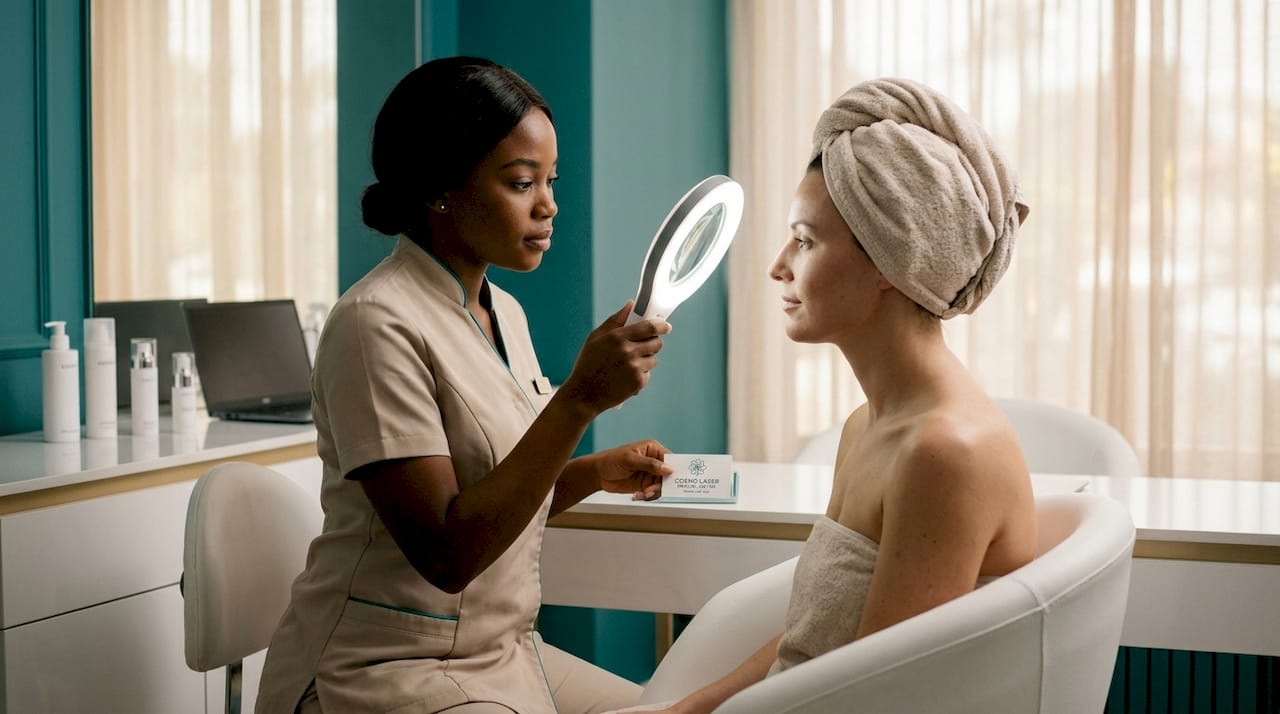
Licensed aestheticians perform a defined set of non-medical skincare procedures, all focused on the skin’s surface layers. Their scope covers assessment, cleansing, exfoliation, hydration, and targeted treatments for common concerns such as acne, uneven texture, and early signs of ageing. A professional facial session typically lasts 60–90 minutes and includes skin analysis, deep cleansing, extractions, and exfoliation. That duration allows the aesthetician to assess your skin thoroughly before applying any product or technique.
The core services offered by licensed aestheticians include:
- Skin analysis and consultation: Identifying skin type, concerns, and contraindications before treatment begins.
- Deep cleansing and extractions: Removing congestion, blackheads, and surface debris without damaging the skin barrier.
- Exfoliation: Using enzyme treatments, mechanical exfoliants, or superficial chemical peels to accelerate cell turnover.
- Hydration therapies: Applying serums, masks, and moisturisers suited to the patient’s skin condition.
- Microneedling (superficial): Creating controlled micro-channels in the skin to stimulate collagen production, where permitted by state law.
- LED light therapy: Using specific wavelengths to reduce inflammation and support skin repair.
- Waxing and hair removal: Removing unwanted facial and body hair using professional-grade wax.
Licensed aestheticians do not administer injectables such as Botox or dermal fillers. They cannot diagnose medical skin conditions or prescribe treatments. That boundary exists to protect patients and is enforced by law.
Personalised protocols based on individual skin analysis are what separate professional aesthetician care from generic over-the-counter routines. A skilled aesthetician considers your Fitzpatrick skin type, current product use, lifestyle factors, and treatment goals before designing a session plan.
Pro Tip: Ask your aesthetician to explain every product they apply and why. A qualified professional will always have a clinical reason for each choice, and that dialogue helps you build a better home-care routine.
What legal and regulatory scope governs licensed aesthetician treatments?
The legal framework governing esthetician skincare treatments is specific and non-negotiable. In 2026, education requirements range from 600 to 1,500 hours depending on the state or jurisdiction, followed by written and practical board examinations. That range reflects the variation in state-level regulation, not a difference in professional quality.
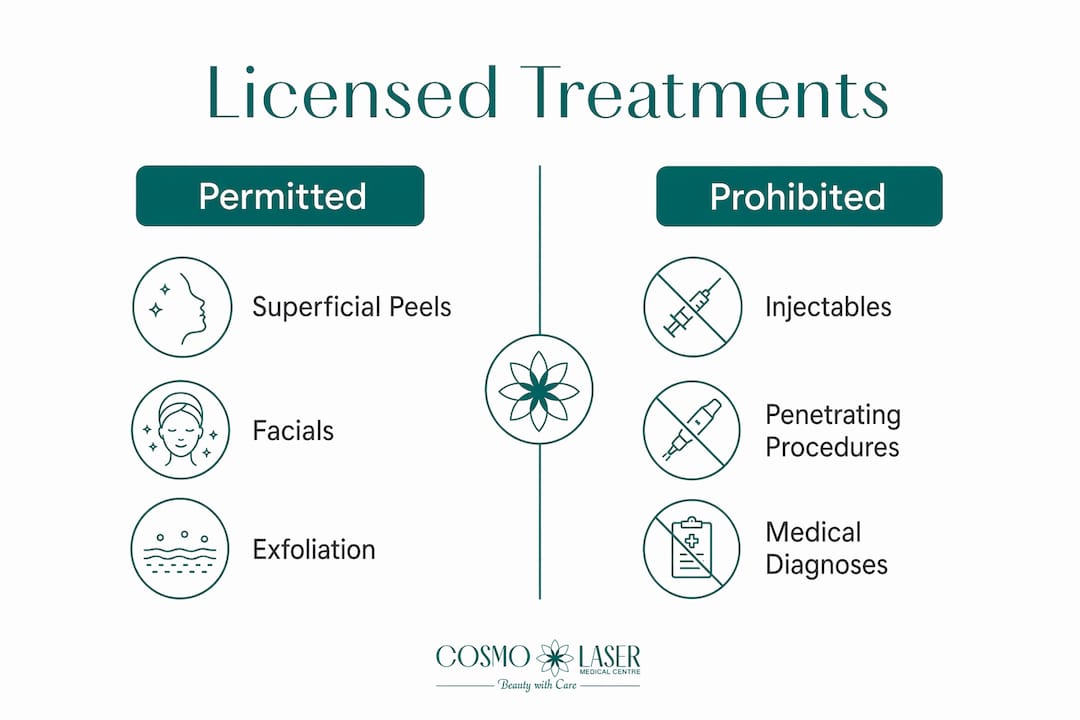
Licensed aestheticians are legally restricted to the skin’s surface layers. They cannot perform procedures that penetrate the dermis without medical oversight, and they cannot diagnose conditions such as rosacea, psoriasis, or skin cancer. Practising outside this scope carries serious consequences, including fines and criminal charges.
| Permitted treatments | Prohibited procedures |
|---|---|
| Superficial chemical peels (e.g., glycolic acid, lactic acid) | Deep chemical peels (e.g., phenol peels) |
| Microneedling (superficial, where state law permits) | Botox and dermal filler injections |
| LED light therapy | Laser resurfacing (without medical supervision) |
| Waxing and threading | Diagnosing skin conditions |
| Enzyme exfoliation | Prescribing topical medications |
| Hydrafacial-style treatments | Performing surgery or incisions |
Master aestheticians represent the advanced tier of this profession. Master estheticians complete approximately 1,200 hours of training and, in select states, gain legal authorisation to perform more advanced procedures such as microdermabrasion and certain laser treatments, provided they work under medical supervision. This credential bridges the gap between standard aesthetician care and clinical dermatology.
Pro Tip: Before booking any advanced treatment, ask to see your aesthetician’s licence number and verify it with your local regulatory board. This takes two minutes and confirms you are in safe, qualified hands.
How do licensed aesthetician treatments benefit skin health and rejuvenation?
The benefits of aesthetician services extend well beyond surface-level cosmetics. Professional treatments address skin health at a physiological level, producing both immediate and cumulative results. A single session delivers improved hydration and radiance that can last for weeks with proper home care. That immediate glow is the result of increased circulation, cleared congestion, and freshly exfoliated skin.
The physiological benefits go deeper than most patients expect:
- Collagen stimulation: Treatments such as microneedling and radiofrequency-assisted procedures trigger the skin’s natural repair response, increasing collagen density over time.
- Cortisol reduction: Relaxation during aesthetic treatments reduces cortisol, the primary stress hormone. Lower cortisol means less sebum overproduction and fewer stress-related breakouts.
- Post-inflammatory hyperpigmentation management: Regular exfoliation and targeted brightening treatments reduce the appearance of dark spots left by acne or sun damage.
- Barrier repair: Hydration-focused treatments restore the skin’s lipid barrier, reducing sensitivity and transepidermal water loss.
- Texture refinement: Consistent exfoliation smooths rough patches and minimises the appearance of enlarged pores.
The cortisol connection is particularly significant. Stress-induced acne and inflammation are driven by neuro-endocrine pathways, and a professional treatment environment that promotes relaxation actively supports skin health beyond what any topical product can achieve alone.
Consistent treatments combined with home-care routines produce longer-lasting improvements than single sessions. Most aestheticians recommend a treatment cycle of four to six sessions, spaced two to four weeks apart, to address concerns such as acne, uneven tone, or fine lines. Maintenance sessions every four to six weeks sustain those results. Patients who follow their aesthetician’s home-care guidance between appointments see measurably better outcomes than those who treat professional sessions as standalone events.
What distinguishes licensed aestheticians from other skincare professionals?
Understanding the difference between a licensed aesthetician, a medical aesthetician, a dermatologist, and a cosmetologist helps you choose the right professional for your specific concern. Each role carries a distinct scope of practice, training pathway, and treatment capability.
| Professional | Training hours | Scope of practice | Typical services |
|---|---|---|---|
| Licensed aesthetician | 600–1,500 hours | Non-medical surface treatments | Facials, peels, waxing, LED therapy |
| Master aesthetician | ~1,200 hours (advanced) | Advanced surface treatments under supervision | Microdermabrasion, some laser procedures |
| Medical aesthetician | Varies; works under physician | Medical-grade treatments with physician oversight | Higher-potency peels, laser resurfacing |
| Cosmetologist | 1,000–2,300 hours | Broad beauty scope (hair, nails, skin) | Hair colouring, nail care, basic facials |
| Dermatologist | Medical degree + residency | Diagnosis and medical treatment of skin conditions | Injectables, surgery, prescription therapy |
Clinical aestheticians supervised by dermatologists use higher-potency actives and technology, enabling them to address complex skin concerns that fall outside the standard aesthetician scope. Spa-based aestheticians, by contrast, focus on relaxation and cosmetic improvement. Neither role is inferior. They serve different patient needs.
Physician oversight in advanced aesthetic services ensures that treatments are safe, effective, and legally compliant. This is the model Cosmolaser follows: qualified specialists and licensed practitioners working within a medically supervised framework to deliver results that neither group could achieve independently.
How to choose and prepare for licensed aesthetician treatments
Selecting the right aesthetician requires more than checking a price list. The following steps protect your skin and your investment.
- Verify the licence. Confirm your aesthetician holds a current, valid licence issued by the relevant regulatory authority. In the UAE, aesthetic practitioners must meet standards set by the health authority of their emirate.
- Book a consultation first. A reputable aesthetician conducts a thorough skin analysis before recommending any treatment. If a clinic skips this step, that is a warning sign.
- Disclose your full skin history. Mention any medications, recent procedures, allergies, and active skin conditions. This information directly affects which treatments are safe for you.
- Set realistic expectations. Licensed aestheticians educate patients on realistic skincare outcomes, helping them understand that visible improvements result from cumulative treatments, not a single session.
- Follow the aftercare plan. Post-treatment skincare is not optional. Sun protection, gentle cleansing, and the products your aesthetician recommends are part of the treatment, not an add-on.
- Ask about treatment combinations. Some concerns respond better to a combination of professional treatments and medical procedures. Your aesthetician should be able to advise on combining cosmetic treatments safely or refer you to a dermatologist when appropriate.
Understanding cosmetic treatment safety standards before your first appointment gives you the confidence to ask the right questions and recognise a clinic that takes patient welfare seriously.
Pro Tip: At your first appointment, ask: “What is the contraindication for this treatment?” and “How will you adjust the protocol if my skin reacts?” A qualified aesthetician answers both questions without hesitation.
Key takeaways
Licensed aesthetician treatments deliver measurable skin health benefits when performed within a regulated scope, supported by consistent home care, and delivered by a properly credentialled professional.
| Point | Details |
|---|---|
| Regulated training is non-negotiable | Education requirements range from 600 to 1,500 hours, followed by board examinations. |
| Scope is strictly surface-level | Licensed aestheticians treat the skin’s surface only; injectables and diagnosis require medical credentials. |
| Benefits are physiological, not just cosmetic | Cortisol reduction during treatment actively reduces stress-related acne and inflammation. |
| Results require consistency | A course of four to six sessions, combined with home care, produces lasting skin improvement. |
| Professional tier matters | Medical aestheticians under physician supervision access higher-grade treatments than spa-based practitioners. |
The case for medically supervised aesthetician care
Patients often ask me whether a licensed aesthetician is “enough” or whether they need a dermatologist. The honest answer is that the question itself reflects a false choice. In my experience, the best outcomes come from integrating both.
What I observe most frequently is patients who have spent years cycling through aesthetician treatments without addressing an underlying medical condition. Persistent acne, for example, often has a hormonal or microbiome component that no facial will resolve. A licensed aesthetician can manage the surface presentation beautifully, but without a dermatologist identifying the root cause, the patient stays on a maintenance treadmill rather than achieving genuine resolution.
The reverse is also true. Dermatologists who dismiss aesthetician care as purely cosmetic miss the clinical value of consistent, professional skin maintenance. Regular exfoliation, barrier support, and cortisol-reducing treatment environments contribute to outcomes that prescription topicals alone cannot replicate.
What I find most encouraging in 2026 is the growing number of clinics where aestheticians and physicians work as a genuine team. The aesthetician handles the preparation, maintenance, and patient education. The physician handles diagnosis, advanced procedures, and medical oversight. That model produces results that neither professional achieves working in isolation.
The regulation of this profession is also tightening, which I regard as unambiguously positive. Stricter education requirements and clearer scope-of-practice laws protect patients from undertrained practitioners offering procedures they are not qualified to perform. If you are choosing a clinic, look for one where the aesthetician can clearly articulate what they will not do and why. That boundary awareness is the clearest sign of genuine professional competence.
— Dr Anoop Suresh Babu
Cosmolaser’s approach to professional aesthetician care
Cosmolaser operates from a medically supervised model in Sharjah, where licensed aestheticians and qualified dermatologists work within the same clinical framework. That structure means your skin analysis, treatment plan, and aftercare are all coordinated by professionals who communicate with each other.
Whether you are managing acne and post-inflammatory hyperpigmentation, addressing early signs of ageing, or seeking a skin rejuvenation programme that combines professional treatments with medical oversight, Cosmolaser’s team designs protocols around your specific skin condition and goals. The clinic’s chemical peel services are performed within strict safety guidelines, with each session preceded by a thorough consultation. Contact Cosmolaser to book your skin assessment and receive a treatment plan built around your skin, not a generic menu.
FAQ
What is the role of a licensed aesthetician?
A licensed aesthetician performs non-medical skin treatments including facials, exfoliation, superficial chemical peels, and hydration therapies to improve skin health and appearance. They work within a strictly regulated scope and cannot diagnose conditions or administer injectables.
How many hours of training does a licensed aesthetician need?
Education requirements range from 600 to 1,500 hours depending on the jurisdiction, followed by state board examinations. Master aestheticians complete approximately 1,200 hours and may access advanced procedures under medical supervision.
Can a licensed aesthetician treat acne?
A licensed aesthetician can manage acne at the surface level through deep cleansing, extractions, and targeted treatments that reduce sebum and inflammation. Underlying hormonal or medical causes of acne require assessment by a dermatologist.
How often should you see a licensed aesthetician?
Most aestheticians recommend an initial course of four to six sessions spaced two to four weeks apart, followed by monthly maintenance appointments. Consistent treatment combined with a home-care routine produces the most durable results.
What is the difference between a licensed aesthetician and a medical aesthetician?
A licensed aesthetician performs cosmetic surface treatments independently, while a medical aesthetician works under physician supervision and has access to higher-potency actives and clinical-grade technology for more complex skin concerns.