TL;DR:
- Laser skin treatments target damaged skin or stimulate collagen to combat aging, scars, and pigmentation. The main types include ablative, non-ablative, and fractional lasers, each with distinct mechanisms and recovery times. Choosing the appropriate laser depends on skin concerns, skin type, and downtime ability.
Laser skin treatments are defined as targeted energy-based procedures that either remove damaged skin layers or stimulate collagen production beneath the surface to address ageing, acne scars, and pigmentation. The three core categories are ablative, non-ablative, and fractional lasers, each with a distinct mechanism and recovery profile. Ablative lasers vaporise surface skin for dramatic anti-ageing results, while non-ablative lasers heat deeper layers to stimulate collagen with minimal downtime, typically requiring 3–5 sessions. Understanding which category suits your skin concern and lifestyle is the first step toward a result you can actually see.
1. What are ablative laser treatments?
Ablative laser resurfacing is the most powerful category of laser skin therapy. It works by vaporising the outer layers of skin, triggering the body to produce fresh collagen as it heals. The result is a significant improvement in deep wrinkles, acne scarring, and sun damage, often visible after a single session.
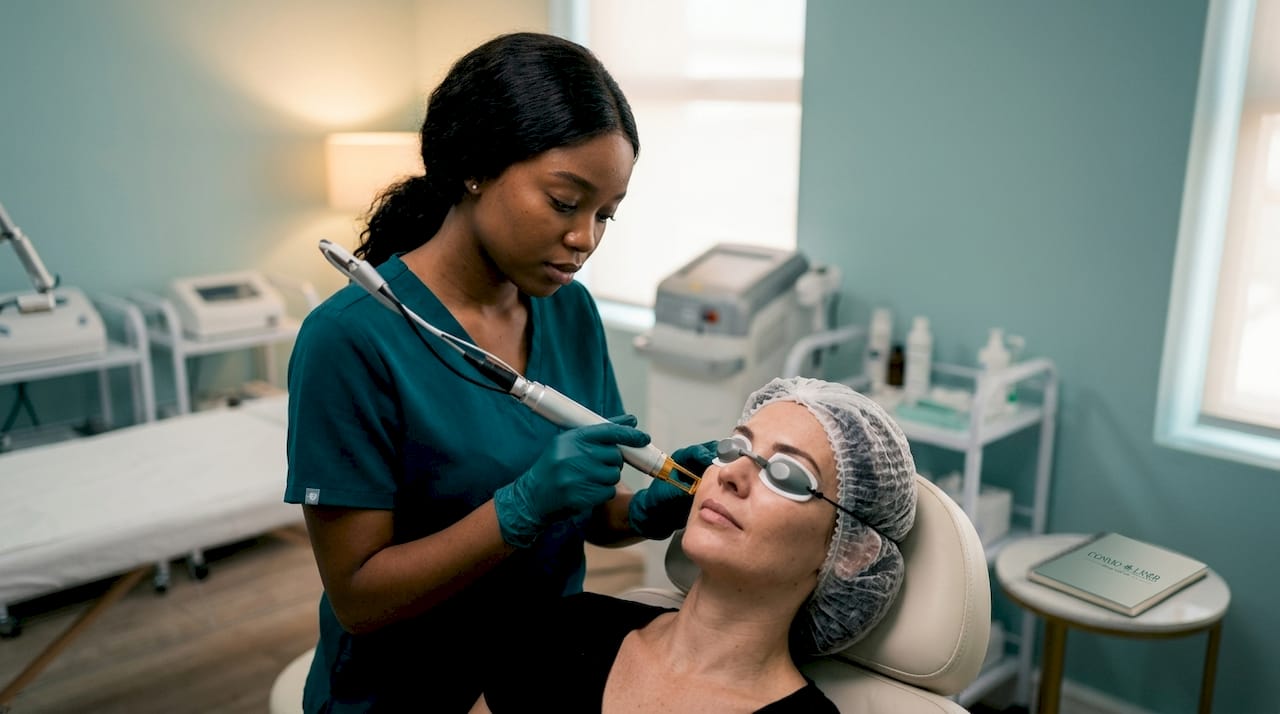
The two main ablative types are CO2 and erbium YAG. CO2 lasers penetrate deeper and deliver more dramatic results, making them the standard for severe skin laxity and deep scarring. Erbium YAG resurfaces with less heat damage and heals 40–60% faster than CO2, which makes it a preferred choice for patients with superficial to moderate concerns who want a shorter recovery.
Recovery after ablative treatment is real and requires planning. Patients typically experience redness, swelling, and skin peeling for 7–14 days. Strict aftercare, including sun avoidance and prescribed moisturisers, is non-negotiable. Ablative treatments show faster visible change but require stricter post-treatment care to prevent scarring.
- CO2 laser: Best for deep wrinkles, significant scarring, and skin laxity
- Erbium YAG: Better suited to superficial lines, mild scarring, and faster recovery needs
- Ideal candidates: Lighter Fitzpatrick skin types with significant sun damage or deep acne scars
- Downtime: 7–14 days of social downtime depending on depth of treatment
Pro Tip: If you have a darker skin tone or higher pigmentation risk, discuss erbium YAG over CO2 with your clinician. It carries a lower risk of post-inflammatory hyperpigmentation.
2. How do non-ablative laser treatments work?
Non-ablative lasers heat the dermis without removing the surface skin. The epidermis stays intact, which means recovery is far gentler. The heat triggers collagen remodelling over weeks, gradually improving skin texture, mild wrinkles, and pigmentation.
This category is well suited to patients who cannot afford significant downtime. Non-ablative protocols commonly require 3–5 sessions for maximum improvement. Each session builds on the last, so patience is part of the process. The cumulative effect is real, but it develops more slowly than ablative results.
Non-ablative options are also safer for higher Fitzpatrick skin types. Because the epidermis is not disrupted, the risk of post-inflammatory hyperpigmentation is considerably lower. This makes non-ablative laser therapy a practical choice for patients with olive or darker skin tones common across the UAE and wider Gulf region.
- Best for: Mild to moderate wrinkles, early acne scarring, uneven pigmentation, and general skin rejuvenation
- Popular wavelengths: 1,064 nm Nd:YAG and 1,540 nm erbium glass are widely used non-ablative options
- Session schedule: Typically 3–5 sessions spaced 4–6 weeks apart
- Recovery: Minimal. Mild redness for 24–48 hours is the most common side effect
- Skin type suitability: Broad, including higher pigment risk skin types
The science behind collagen stimulation without surface removal is well established. Non-ablative treatments are an excellent entry point for patients new to laser therapy who want gradual, low-risk improvement.
3. What is fractional laser resurfacing?
Fractional laser resurfacing treats skin in microscopic columns of controlled thermal injury, leaving surrounding tissue intact. This approach accelerates healing significantly compared to fully ablative treatments. Fractional laser resurfacing treats only 10–70% of skin per session, which is why recovery is faster while results remain clinically meaningful.
Fractional technology exists in both ablative and non-ablative forms. Fractional ablative lasers, such as the CO2 fractional laser, deliver the power of ablative resurfacing with a faster healing profile. Fractional non-ablative lasers stimulate collagen without removing any skin at all, making them the gentlest option in the fractional category.
| Feature | Fractional ablative | Fractional non-ablative |
|---|---|---|
| Skin removal | Partial (microscopic columns) | None |
| Collagen stimulation | High | Moderate |
| Recovery time | 3–7 days | 1–2 days |
| Sessions needed | 1–3 | 3–5 |
| Pigmentation risk | Moderate | Low |
| Best for | Acne scars, deep texture | Mild texture, maintenance |
Non-ablative fractional lasers target dermal collagen stimulation without epidermal removal, making them suitable for skin types prone to pigment risks. For patients seeking a middle ground, fractional ablative CO2 offers meaningful results with a recovery window that most working adults can manage.
Pro Tip: Ask your clinician about the percentage of skin coverage per session. A lower coverage setting means a gentler treatment and faster recovery, which is useful if you are new to fractional resurfacing.
4. What other light-based treatments complement laser therapy?
Several light-based therapies sit alongside true lasers and address concerns that single-wavelength devices cannot always reach. Understanding the difference helps you build a more complete treatment plan.
Intense Pulsed Light (IPL) is technically a broad-spectrum light device, highly effective for vascular and pigment issues but less effective for deep collagen remodelling compared to CO2 or fractional lasers. IPL is not a laser. It emits multiple wavelengths simultaneously, which makes it versatile for redness, sun spots, and broken capillaries, but less targeted than a single-wavelength laser device.
- IPL: Best for diffuse redness, sun-induced pigmentation, and rosacea. Requires 3–6 sessions. Not suitable for very dark skin tones.
- Pulsed dye laser (PDL): Targets haemoglobin in blood vessels. The standard treatment for port wine stains, facial telangiectasia, and hypertrophic scars.
- Nd:YAG (1,064 nm): Penetrates deeply and is safe for darker skin types. Used for vascular lesions, hair removal, and as a non-ablative collagen stimulator.
Deep collagen remodelling for advanced anti-ageing requires specialised fractional ablative lasers like CO2. IPL and pulsed dye lasers complement these treatments by addressing surface pigmentation and vascular concerns that fractional lasers do not specifically target. Combining modalities over time, with appropriate spacing for healing, produces the most complete results.
5. How to choose the right laser treatment for your skin
Choosing between laser skin therapy options starts with an honest assessment of your skin concern, skin type, and how much downtime you can realistically manage.
- Identify your primary concern. Deep acne scars and significant wrinkles respond best to fractional ablative CO2. Mild texture and early pigmentation respond well to non-ablative fractional or IPL. Vascular redness requires pulsed dye laser or Nd:YAG.
- Assess your Fitzpatrick skin type. Darker skin types carry a higher risk of post-inflammatory hyperpigmentation with ablative treatments. Non-ablative and fractional non-ablative options are safer starting points. Proper patient screening and treatment timing are critical to avoiding complications.
- Be realistic about downtime. Ablative treatments deliver faster results but require 7–14 days of recovery. Social downtime after laser treatments includes redness, flaking, and swelling lasting 3–7 days even with fractional options. Plan treatments around your schedule.
- Consider combination therapy. Patients benefit from combining different laser types over time to target multiple skin concerns effectively. A clinician might recommend a fractional ablative session for scarring followed by IPL for residual pigmentation several weeks later.
- Plan your aftercare before you book. Laser resurfacing results develop over weeks as collagen remodels. Committing to sun protection, gentle cleansing, and prescribed topicals is not optional. Good post-treatment skincare directly determines how well your results hold.
- Time your treatment carefully. Avoid laser procedures during periods of active inflammation, recent sun exposure, or hormonal fluctuation. Delaying treatment for these factors minimises pigmentary complications.
- Seek a personalised treatment plan. No two patients present the same combination of concerns, skin type, and lifestyle. A qualified dermatologist will map out a sequenced plan rather than a single session, which is the standard of care for optimal outcomes.
Key takeaways
The most effective approach to laser skin treatments is matching the laser category to your specific skin concern, skin type, and recovery capacity, guided by a qualified clinician.
| Point | Details |
|---|---|
| Three core categories | Ablative, non-ablative, and fractional lasers each suit different concerns and downtime tolerances. |
| Ablative for significant concerns | CO2 and erbium YAG deliver the strongest results but require 7–14 days of recovery. |
| Non-ablative for minimal downtime | Requires 3–5 sessions but carries low pigmentation risk, making it suitable for darker skin types. |
| Fractional as the middle ground | Treats 10–70% of skin per session, balancing efficacy with faster healing than fully ablative options. |
| Screening and timing matter | Avoiding treatment during inflammation or recent UV exposure is the single most effective way to prevent complications. |
What I have learned from years of laser treatment planning
A clinical perspective from Dr Anoop Suresh Babu
The most common mistake I see is patients choosing a laser based on what they have read online rather than what their skin actually needs. CO2 fractional laser is frequently requested because it is well known, but it is not always the right tool. A patient with Fitzpatrick type IV skin and mild acne scarring will get better, safer results from a non-ablative fractional protocol over four sessions than from a single aggressive CO2 treatment.
What I have also noticed is that patients consistently underestimate the role of timing. Downtime and risk management depend more on patient skin condition and treatment timing than on the laser device alone. I have seen excellent results delayed or complicated simply because a patient had been in the sun two weeks before their appointment, or because they had active inflammation that was not flagged at consultation.
My honest recommendation is this: treat laser therapy as a programme, not a single event. The patients who see the most meaningful, lasting improvement are those who commit to a sequenced plan, follow their aftercare diligently, and return for maintenance. A single dramatic session is rarely the answer. Cumulative, well-timed treatments almost always are.
— Dr Anoop Suresh Babu
Cosmolaser’s laser skin treatments: what to expect
Cosmolaser, based in Sharjah, offers a full range of laser skin therapy options delivered by qualified dermatologists and aesthetic specialists. Whether you are addressing deep acne scarring, uneven pigmentation, or early signs of ageing, the clinic builds a personalised treatment plan around your skin type, concerns, and lifestyle.
The team at Cosmolaser works with ablative, non-ablative, and fractional laser modalities, including CO2 fractional laser for significant resurfacing and non-ablative options for patients who need minimal downtime. Safety standards and patient screening are central to every consultation. If you are ready to understand which laser approach suits your skin, the 2026 dermatology procedures guide is a practical starting point before booking your assessment.
FAQ
What are the main types of laser skin treatments?
The three main categories are ablative, non-ablative, and fractional lasers. Ablative lasers remove skin layers, non-ablative lasers stimulate collagen without surface removal, and fractional lasers treat skin in microscopic columns for a balance of efficacy and faster recovery.
How many sessions does laser skin resurfacing require?
Ablative treatments often show results after one session, while non-ablative and fractional non-ablative protocols typically require 3–5 sessions spaced several weeks apart for maximum improvement.
Is laser treatment safe for darker skin tones?
Non-ablative and fractional non-ablative lasers are generally safer for darker Fitzpatrick skin types because they do not disrupt the epidermis, reducing the risk of post-inflammatory hyperpigmentation. A qualified clinician should assess your skin type before any laser procedure.
How long is recovery after laser skin resurfacing?
Recovery varies by laser type. Fully ablative treatments require 7–14 days, fractional ablative options typically need 3–7 days, and non-ablative treatments involve minimal downtime, usually mild redness for 24–48 hours.
Can laser treatments address acne scars effectively?
Yes. Fractional ablative CO2 laser is one of the most clinically effective options for how laser treats acne scars, particularly atrophic or ice-pick scarring. Non-ablative fractional lasers offer a gentler alternative for milder scarring with lower pigmentation risk.