TL;DR:
- Body aesthetic treatments include surgical, non-surgical, and tissue remodeling options to reshape contours and reduce fat. Non-invasive methods like cryolipolysis and radiofrequency target fat and skin laxity, while surgical procedures address significant excess. Customized staged treatment plans produce natural results aligned with individual goals and skin quality.
Body aesthetic treatments are defined as medical and cosmetic procedures designed to reshape body contours, reduce localised fat, tighten skin, and improve overall appearance. The field spans surgical options like abdominoplasty and liposuction, and non-surgical techniques including cryolipolysis, radiofrequency, ultrasound cavitation, and electrical muscle stimulation (EMS). Understanding the types of body aesthetic treatments available helps you make informed decisions rather than guessing which procedure fits your goals. Cosmolaser, based in Sharjah, works with patients across all these categories to deliver personalised, clinically grounded results.
What are the main types of body aesthetic treatments?
Body aesthetic procedures fall into three broad categories: surgical, non-surgical, and adjunct tissue remodelling. Each category targets a different clinical problem, and many patients benefit from combining approaches across categories.
Surgical treatments involve anaesthesia, incisions, and a recovery period. They address significant fat deposits and excess skin that non-invasive methods cannot correct.
Non-surgical treatments use energy-based technologies, including cold, heat, ultrasound, and electrical impulses, to target fat and muscle without breaking the skin. They suit patients with modest volume concerns and limited tolerance for downtime.
Adjunct tissue remodelling covers treatments like radiofrequency microneedling and collagen biostimulators. These do not remove fat directly. Instead, they improve skin quality and elasticity to complement contouring results.
| Category | Examples | Typical downtime |
|---|---|---|
| Surgical | Liposuction, abdominoplasty | 2–6 weeks |
| Non-surgical | Cryolipolysis, RF, EMS | Minimal to none |
| Tissue remodelling | Morpheus8, collagen biostimulators | 1–5 days |
1. Cryolipolysis (fat freezing)
Cryolipolysis is the most widely performed non-surgical fat reduction technique. It works by cooling targeted fat cells to a temperature that triggers their natural breakdown, without damaging surrounding tissue. The body then clears the dead cells over several weeks through its lymphatic system.
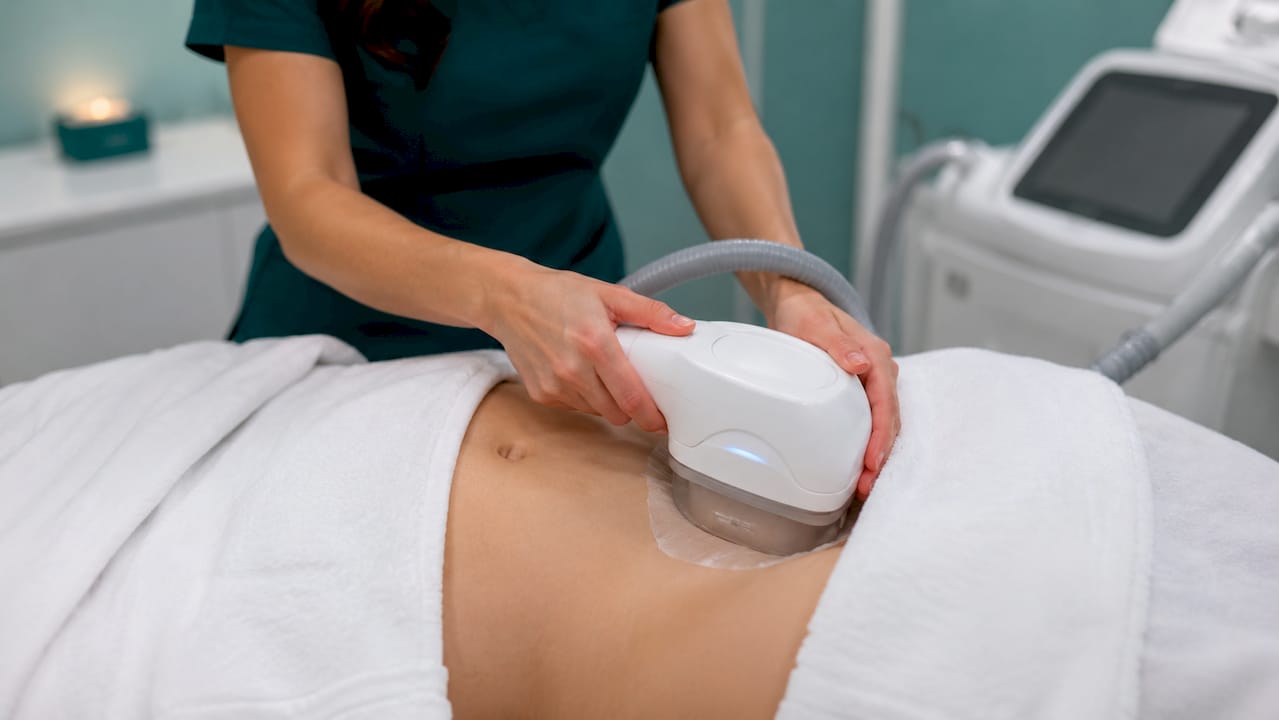
Cryolipolysis achieves a 20–25% reduction in the treated fat layer per session, with visible results appearing within 8–16 weeks. Sessions last 30–60 minutes, and most patients require 2–4 treatments spaced 4–8 weeks apart. This makes it a practical option for patients with localised fat on the abdomen, flanks, thighs, or upper arms who are close to their target weight.
Pro Tip: Cryolipolysis works best on pinchable fat, not diffuse or visceral fat. A clinical assessment before booking confirms whether you are a suitable candidate.
2. Radiofrequency body treatments
Radiofrequency (RF) delivers controlled thermal energy into the dermis and subcutaneous tissue. The heat stimulates collagen production and causes fat cell disruption simultaneously. This dual action makes RF one of the few non-surgical options that addresses both fat and skin laxity in a single treatment.
RF body treatments suit patients who notice mild skin looseness alongside unwanted fat. Common treatment areas include the abdomen, inner thighs, and upper arms. Results build gradually over 3–6 months as collagen remodels. Multiple sessions are standard, typically four to six, spaced two to four weeks apart.
3. Ultrasound cavitation
Ultrasound cavitation uses low-frequency sound waves to create microscopic bubbles within fat cells. When these bubbles collapse, they rupture the fat cell membrane. The released fatty acids are then processed by the liver and eliminated naturally.
Cavitation is painless and requires no recovery time. It works best on areas with a measurable fat layer, such as the abdomen, hips, and thighs. Patients typically see gradual improvement over four to eight sessions. Combining cavitation with RF in the same treatment plan accelerates both fat reduction and skin tightening.
4. Electrical muscle stimulation (EMS)
EMS devices deliver electrical impulses that cause involuntary muscle contractions. These contractions are far more intense than voluntary exercise, which is why EMS is used to build muscle definition and improve tone in areas like the abdomen and buttocks.
Non-surgical EMS treatments induce muscle fatigue comparable to intense physical exercise. This means they are not truly “no downtime” procedures. Patients often experience muscle soreness for 24–48 hours after each session. EMS is best positioned as a muscle-toning complement to fat reduction treatments, not a standalone fat loss solution.
5. Abdominoplasty (tummy tuck)
Abdominoplasty is the surgical standard for correcting excess abdominal skin and weakened or separated abdominal muscles (diastasis recti). It removes redundant skin, tightens the muscle wall, and repositions the navel for a flatter, firmer contour. No non-surgical treatment replicates these outcomes.
Demand for abdominoplasty has risen significantly, with over 170,000 procedures performed in the US in 2023 alone. Results are visible once post-operative swelling resolves, typically within 4–6 weeks, though full healing takes several months. Patients should expect a recovery period of 2–6 weeks with restricted activity. Abdominoplasty is most appropriate after significant weight loss or post-pregnancy, when skin elasticity is insufficient for non-surgical correction.
6. Liposuction
Liposuction removes localised fat deposits through a suction cannula inserted via small incisions. It is the most direct method of fat volume reduction and can treat multiple areas in a single surgical session, including the abdomen, flanks, thighs, back, and arms.
Modern liposuction techniques include tumescent liposuction, power-assisted liposuction (PAL), and laser-assisted liposuction (LAL). Each variation offers slightly different advantages in terms of precision and tissue trauma. Combining RF skin tightening with liposuction is common practice when skin laxity is a concern, though these are typically staged rather than performed simultaneously. Recovery ranges from one to three weeks depending on the volume treated.
7. Morpheus8 and radiofrequency microneedling
Morpheus8 combines microneedling with RF energy to remodel subcutaneous tissue and tighten skin across the neck, chest, abdomen, and arms. The microneedles create microscopic channels in the skin while delivering RF energy at a controlled depth. This triggers collagen and elastin production in the deeper dermal layers.
The treatment suits patients with mild to moderate skin laxity who want improvement without surgery. It is particularly effective after fat reduction procedures, where skin needs support to contract evenly. Downtime is typically 2–5 days of redness and mild swelling. Results continue to develop over 3–6 months as new collagen matures. Cosmolaser offers radiofrequency microneedling as part of its body rejuvenation programme.
Pro Tip: Morpheus8 on the abdomen after cryolipolysis is a well-established staged protocol. Allow 8–12 weeks between fat reduction and skin tightening treatments for the best combined outcome.
8. Collagen biostimulators
Collagen biostimulators are injectable treatments that stimulate the body’s own collagen production over time. Unlike dermal fillers, which add immediate volume, biostimulators work gradually by triggering a controlled tissue response. Common agents include poly-L-lactic acid (PLLA) and calcium hydroxylapatite (CaHA).
For body aesthetics, biostimulators address skin laxity on the arms, abdomen, and buttocks. They are particularly useful for patients who have lost skin elasticity through ageing or weight loss but do not require surgical correction. Results develop over 3–6 months and can last up to two years. Cosmolaser’s collagen biostimulator treatments are tailored to each patient’s skin quality and treatment goals.
9. Skin tightening treatments
Dedicated skin tightening treatments use focused ultrasound, monopolar RF, or infrared energy to heat the deeper skin layers without surface damage. The thermal effect causes immediate tissue contraction and stimulates long-term collagen remodelling.
Rapid weight loss often reduces skin elasticity significantly. Addressing skin laxity before or alongside fat reduction prevents the sagging appearance that can follow aggressive contouring. Skin tightening treatments are appropriate for the neck, jawline, abdomen, inner thighs, and upper arms. They are non-invasive, require no anaesthesia, and involve minimal recovery.
How to choose the right body aesthetic treatment
Treatment selection depends on three clinical variables: the amount of fat present, the degree of skin laxity, and the patient’s tolerance for downtime and recovery.
- Modest fat with good skin tone: non-surgical options like cryolipolysis or RF body treatments deliver adequate results with no surgical risk.
- Moderate fat with mild laxity: a staged plan combining cryolipolysis with Morpheus8 or RF skin tightening addresses both concerns progressively.
- Significant fat or excess skin: surgical liposuction or abdominoplasty produces results that non-invasive methods cannot match.
- Muscle definition goals: EMS complements fat reduction but does not replace it.
The current aesthetic approach prioritises subtle, natural refinement through staged treatments rather than single dramatic interventions. This philosophy produces more balanced, proportionate results and reduces the risk of overcorrection. Consulting a qualified clinician who assesses your skin type, fat distribution, and realistic goals is the most reliable first step. Cosmolaser’s team provides structured consultations to map out a body contouring plan suited to your specific anatomy.
Key takeaways
The most effective body aesthetic treatment is the one matched precisely to your fat volume, skin laxity, and recovery tolerance, not the most popular or most aggressive option available.
| Point | Details |
|---|---|
| Non-surgical fat reduction | Cryolipolysis reduces fat by 20–25% per session with results visible in 8–16 weeks. |
| Surgical options for significant change | Abdominoplasty and liposuction address excess skin and large fat volumes that energy devices cannot correct. |
| Skin tightening is not optional | Addressing skin laxity alongside fat reduction prevents sagging and improves overall contour. |
| Staged treatment planning | Combining fat reduction with RF or Morpheus8 in a staged protocol delivers more balanced results. |
| Professional assessment first | Treatment suitability depends on fat type, skin elasticity, and individual health factors. |
What I have learned from years of body aesthetic practice
A perspective from Dr Anoop Suresh Babu
The most common mistake I see patients make is choosing a treatment based on what worked for someone else. Body aesthetics is not one-size-fits-all. Two patients with identical weight and similar concerns can need completely different treatment plans based on their skin quality, fat distribution, and muscle tone.
Medical aesthetics is shifting decisively towards natural refinement rather than dramatic transformation. Patients who come in asking for subtle improvement and better proportion consistently report higher satisfaction than those chasing the most aggressive result. I have seen this pattern repeat itself across hundreds of consultations.
One trend worth noting is the steady rise in male patients seeking body aesthetic procedures. Male breast reduction alone has risen nearly 20% over two decades, and male liposuction enquiries continue to grow. Male patients often have different priorities, focusing on abdominal definition and chest contour rather than overall volume reduction.
My strongest clinical recommendation is this: never treat fat and skin laxity as separate problems to be solved separately. They are linked. A patient who loses significant fat without addressing skin elasticity often ends up with a result they did not expect. The best outcomes come from a staged plan that accounts for both, built around realistic expectations and a clinician who listens.
— Dr Anoop Suresh Babu
Cosmolaser’s approach to body aesthetic care
Cosmolaser offers a structured range of body aesthetic procedures at its Sharjah clinic, covering non-surgical fat reduction, skin tightening, radiofrequency microneedling, and collagen biostimulation. Every treatment plan begins with a thorough clinical assessment to match the right procedure to your anatomy and goals.
The clinic’s team of qualified doctors and dermatology specialists applies cosmetic treatment safety standards to every procedure, from initial consultation through to follow-up care. For patients exploring skin rejuvenation alongside body contouring, Cosmolaser’s skin rejuvenation guide outlines the clinical options available and what results to expect at each stage. Book a consultation to receive a personalised treatment plan built around your specific needs.
FAQ
What is the most effective non-surgical body treatment?
Cryolipolysis is the most clinically validated non-surgical fat reduction method, achieving a 20–25% fat layer reduction per session. For skin laxity, radiofrequency and Morpheus8 are the leading non-invasive options.
How many sessions does body contouring take?
Non-surgical treatments typically require 2–6 sessions depending on the technology and the area being treated. Surgical procedures like liposuction or abdominoplasty are usually single-session interventions.
Can non-surgical treatments replace surgery?
Non-surgical aesthetic body procedures address modest fat and mild skin laxity effectively. They cannot replicate the results of abdominoplasty or liposuction when excess skin or large fat volumes are present.
What is the downtime for body aesthetic procedures?
Non-surgical treatments involve minimal to no downtime, though EMS causes muscle soreness for 24–48 hours. Surgical procedures require 2–6 weeks of restricted activity depending on the extent of the operation.
Are body aesthetic treatments suitable for men?
Body aesthetic procedures are appropriate for men and women alike. Male-specific concerns such as gynecomastia correction and abdominal definition are among the fastest-growing treatment categories in aesthetic medicine.