Combining cosmetic treatments safely is defined as using planned sequencing, staged intervals, and patient-specific assessment to achieve better results without compounding risks. The industry standard minimum between most aesthetic procedures is 2–4 weeks, with ablative laser resurfacing requiring 4–6 weeks before dermal fillers can be placed. Ignoring these intervals causes prolonged inflammation, filler degradation, and in the worst cases, scarring. The good news is that a structured approach, grounded in skin biology and guided by qualified practitioners, makes multi-treatment plans both safe and highly effective.
How to combine cosmetic treatments safely: the key factors
The skin heals in distinct biological phases, and those phases dictate when the next treatment can begin. Introducing a second procedure before the first phase completes does not simply slow recovery. It actively disrupts the cellular signals that drive collagen production and tissue repair, producing results that are worse than either treatment alone would have delivered.
Several factors determine whether two procedures can be combined at all:
- Invasiveness level. More invasive procedures, such as CO2 fractional laser resurfacing, demand longer recovery windows than non-ablative or energy-based treatments.
- Skin condition at the time of treatment. Active skin inflammation or infection is a firm contraindication for combination treatments. Rosacea flares, open wounds, and recent sunburn all disqualify a session.
- Patient health status. Individuals must be physically fit with a healthy skin barrier to tolerate multiple procedures safely.
- Treatment modality type. Heat-based, injectable, and mechanical treatments each affect the skin differently and interact in distinct ways.
- Number of procedures in one session. Combining three or more invasive procedures exponentially increases complication risk and recovery time. The clinical consensus limits same-day treatment to two complementary modalities.
Pro Tip: Ask your practitioner to assess your skin barrier health before any combination plan is agreed. A compromised barrier is the most commonly overlooked contraindication, and treating through it produces unpredictable results.
The principle behind all of this is straightforward. Skin that looks normal after a procedure may not yet be biologically ready for the next one. Treating before biological readiness leads to suboptimal outcomes even when the skin appears healed on the surface.

How should you sequence popular cosmetic treatments?
Sequencing is the single most important variable in a multi-treatment plan. The order of procedures determines whether they amplify or undermine each other.
The standard clinical approach follows this logic: begin with treatments that require the most recovery time, then layer in less invasive procedures as the skin heals. Botulinum toxin is typically administered first, with a two-week waiting period before any laser treatment begins. This allows the toxin to fully take effect and reduces the risk of heat-induced migration. Ablative laser followed by filler requires a 4–6 week healing window. The heat generated by ablative lasers can degrade hyaluronic acid filler if the two are performed too close together.
Non-ablative laser treatments and skin boosters or fillers can be combined with a shorter 2–4 week interval, provided the skin has fully settled. Radiofrequency microneedling requires careful spacing relative to injectables, as the mechanical and thermal injury it creates needs time to resolve before the skin can respond well to additional stimulation.
| Treatment pair | Recommended interval | Notes |
|---|---|---|
| Botulinum toxin then laser | 2 weeks | Allow toxin to settle before heat exposure |
| Ablative laser then filler | 4–6 weeks | Heat degrades filler; full healing required |
| Non-ablative laser then filler | 2–4 weeks | Shorter window acceptable with healthy skin |
| Microneedling then injectables | 2–4 weeks | Skin barrier must fully recover first |
| Chemical peel then laser | 4–6 weeks | Avoid stacking ablative modalities |
Pro Tip: Plan your most aggressive treatment first, then build the rest of the programme around its recovery timeline. Working backwards from your target date prevents the common mistake of compressing intervals under time pressure.
Dr Lara Devgan, a board-certified plastic surgeon, advocates grouping treatments by facial subunit to avoid over-treating any single area. Treating the upper face with botulinum toxin while addressing mid-face volume with fillers in a staged plan is a practical example of this principle in action.
What common mistakes should you avoid when mixing cosmetic procedures?
The most frequent errors in combination treatment are not dramatic. They are quiet decisions made under time pressure or without full information.
- Overloading the skin in one session. Fractional CO2 laser combined with a deep chemical peel on the same day can cause excessive tissue destruction, increasing the risk of scarring and hyperpigmentation significantly.
- Ignoring active skin conditions. Proceeding with elective procedures on inflamed or infected skin is the most avoidable cause of complications. Inflammation amplifies the trauma of any additional treatment.
- Using anti-inflammatory products after collagen-stimulating procedures. Anti-inflammatory drugs or topical care applied after microneedling or collagen biostimulators suppress the very biological cascade the treatment was designed to trigger. The result is a blunted response and reduced efficacy.
- Skipping professional assessment. Personalised planning is not optional. Skin type, Fitzpatrick scale classification, medical history, and current medications all affect which combinations are appropriate.
- Masking early complication signs. When multiple treatments are performed simultaneously, identifying the source of a complication becomes significantly harder. A reaction that would be straightforward to diagnose after a single procedure becomes ambiguous when three modalities were used on the same day.
The pattern behind these mistakes is consistent. Rushing the process, whether due to a special occasion, impatience, or cost-saving, is the primary driver of preventable complications in aesthetic medicine.
How to plan a safe multi-treatment cosmetic programme
A well-structured multi-treatment plan follows a clear sequence of decisions, not a list of desired outcomes. Starting with what you want to achieve is natural, but the planning process must begin with what your skin can currently tolerate.
Step 1: Comprehensive skin and health assessment
A qualified practitioner assesses skin type, barrier integrity, active conditions, and medical history before recommending any combination. This assessment determines which treatments are appropriate and which must be excluded or delayed.
Step 2: Prioritise by goal and invasiveness
Rank your treatment goals. Address the most invasive procedure first. If acne scarring is the primary concern, CO2 fractional laser takes precedence and sets the recovery timeline for everything that follows.
Step 3: Stage intervals around the skin’s regenerative phases
The skin’s inflammatory phase typically lasts 3–5 days. The proliferative phase, during which collagen is actively produced, runs for several weeks. Scheduling the next treatment before the proliferative phase completes disrupts collagen synthesis. Staged protocols consistently outperform aggressive same-day stacking for both safety and long-term results.
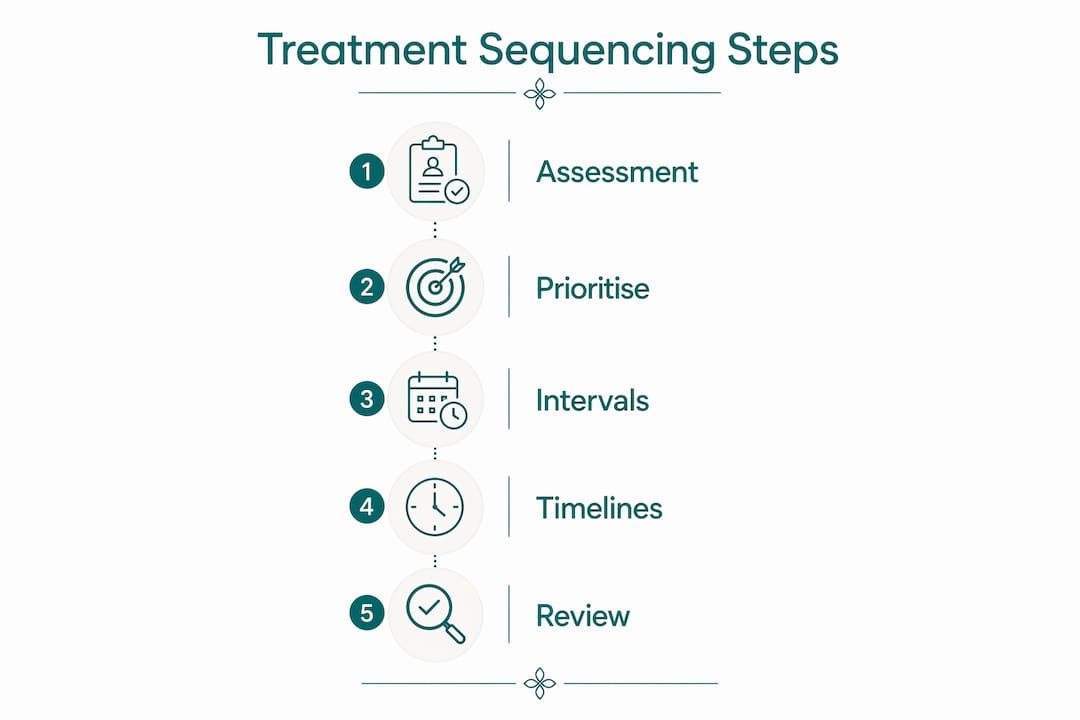
Step 4: Communicate realistic timelines
A full multi-treatment programme for anti-ageing or significant skin rejuvenation typically spans several months. Patients who understand this from the outset are more likely to follow through with the plan and less likely to compress intervals.
Step 5: Review and adjust
Skin responds differently at each stage. A practitioner should review progress after each treatment and adjust the plan if the skin shows unexpected sensitivity or slower recovery.
Pro Tip: Keep a simple photo diary between treatments. Practitioners can use these images to track your skin’s response and make better-informed decisions about timing your next session.
| Scheduling strategy | Best suited for | Key consideration |
|---|---|---|
| Sequential single treatments | First-time patients | Lowest risk; longest overall timeline |
| Staged two-modality sessions | Experienced patients with healthy skin | Requires 2–4 week gaps between sessions |
| Intensive multi-session programme | Specific event preparation | Must begin 3–6 months in advance |
Key takeaways
Safe combination treatment requires staged sequencing, biology-respecting intervals, and a personalised assessment before any procedure begins.
| Point | Details |
|---|---|
| Respect minimum intervals | Most combinations require 2–4 weeks; ablative laser before filler needs 4–6 weeks. |
| Limit same-day procedures | Restrict same-day treatment to two complementary modalities to control complication risk. |
| Assess skin condition first | Active inflammation or infection is a contraindication for any combination treatment. |
| Avoid anti-inflammatory products post-procedure | They suppress collagen stimulation and reduce the effectiveness of regenerative treatments. |
| Use staged protocols | Sequential planning consistently delivers better safety and results than same-day stacking. |
What I have learned about combining treatments over time
The most persistent misconception I encounter is that more treatments done faster equals better results. Patients arrive having researched every procedure available and want to address everything in two or three sessions. The biology simply does not support that approach.
What I have found is that the practitioners who produce the most consistent outcomes are the ones who are willing to slow patients down. Explaining why a four-week gap matters, what is actually happening in the skin during that period, and what is at risk if the interval is shortened takes time. But patients who understand the reasoning follow the plan. Those who do not tend to compress timelines and then attribute suboptimal results to the treatments rather than the sequencing.
The other thing worth saying plainly: skin that looks fine is not always skin that is ready. The surface appearance of healed skin and the biological readiness of the tissue beneath it are two different things. Experienced practitioners know this distinction and build their protocols around it, not around how the skin looks on the day.
My advice is to find a practitioner who asks more questions than they answer in the first consultation. A thorough assessment, a clear written plan, and honest timelines are the markers of a clinic that prioritises your outcome over your booking.
— Anoop
Cosmolaser’s approach to safe combination treatments
Cosmolaser, based in Sharjah, works with patients to design multi-treatment plans that respect both clinical safety standards and individual skin needs. The team of qualified doctors and aesthetic specialists assesses each patient’s skin condition, health history, and treatment goals before recommending any combination protocol.
Whether you are considering dermal fillers alongside laser resurfacing, or planning a longer anti-ageing programme, Cosmolaser’s practitioners build staged schedules that follow the intervals and sequencing guidelines that the evidence supports. The clinic’s CO2 fractional laser service includes full pre-treatment assessment and post-treatment planning to ensure that any subsequent procedures are timed correctly. Book a consultation at Cosmolaser to receive a personalised treatment plan built around your skin’s actual readiness, not a generic template.
FAQ
What is the minimum gap between most cosmetic treatments?
Most aesthetic treatment combinations require a minimum of 2–4 weeks between sessions. Ablative laser procedures require 4–6 weeks before fillers can be safely administered.
Can you have botulinum toxin and laser on the same day?
Botulinum toxin and laser treatments should be spaced at least two weeks apart. The toxin needs time to fully take effect, and heat from laser devices can affect its distribution if applied too soon.
Why should you avoid anti-inflammatory products after microneedling?
Anti-inflammatory products suppress the collagen-stimulating response that microneedling is designed to trigger. Using them post-procedure reduces the treatment’s effectiveness by disrupting the biological repair cascade.
How many treatments can be safely combined in one session?
The clinical consensus limits same-day treatment to two complementary modalities. Combining three or more invasive procedures in a single session exponentially increases complication risk and recovery time.
How do I know if my skin is ready for the next treatment?
A qualified practitioner assesses barrier integrity and tissue recovery, not just surface appearance. Skin that looks healed may not yet be biologically ready, which is why professional review between sessions is necessary.