CO2 fractional laser is the most clinically validated technology for deep skin resurfacing — reducing acne scars, smoothing wrinkles, tightening lax skin, and reversing years of UAE sun damage in a single treatment course. At Cosmolaser Medical Centre in Sharjah, our physician-supervised CO2 protocols are calibrated for the skin types and UV conditions of the Gulf.
The UAE’s position at latitude 24 degrees North, combined with near-zero cloud cover for eight months of the year, creates one of the highest cumulative UV exposure environments on earth. UV radiation is the primary driver of photoageing — the breakdown of dermal collagen and elastin that produces fine lines, skin laxity, uneven pigmentation, and a dull, crepey texture. In Sharjah and across the UAE, patients accumulate this UV damage significantly faster than residents of Northern Europe or North America — and it begins earlier.
A 35-year-old patient in the UAE commonly presents with skin that shows the photoageing characteristics typically seen at 45–50 in lower UV environments. Decades of daily UV exposure, often without adequate SPF protection, leave the dermis depleted of the collagen scaffold that supports youthful skin architecture. No topical skincare product can rebuild this — structural collagen loss requires structural intervention.
CO2 fractional laser directly addresses this UV-driven collagen deficit. By creating controlled microscopic thermal injury columns throughout the dermis, the laser triggers a deep wound-healing cascade — the only physiological mechanism that generates new, structurally competent collagen. The result is genuine dermal remodelling: thicker skin, fewer lines, tighter contours, and a noticeably improved surface quality that topicals cannot replicate.
At Cosmolaser in Sharjah, we account for UAE-specific factors in every CO2 protocol: the higher baseline risk of post-inflammatory hyperpigmentation in the Fitzpatrick IV–V skin types prevalent in the region, the mandatory SPF 50+ requirement in the post-treatment window, and the practical advantage of scheduling treatments in the October–March cooler season when sun avoidance is easier.
A CO2 (carbon dioxide) laser emits light at 10,600 nanometres — a wavelength that is precisely absorbed by water in skin tissue, creating highly controlled thermal injury. In fractional mode, the laser beam is divided into thousands of microscopic columns (called microthermal zones or MTZs), each of which ablates a tiny vertical channel through the epidermis and into the dermis, while leaving the surrounding tissue intact.
This fractional approach is what distinguishes modern CO2 resurfacing from the older fully ablative CO2 treatments of the 1990s. By treating only a fraction of the skin surface at a time, fractional CO2 achieves deep structural remodelling with significantly shorter healing times and lower complication rates — while the intact surrounding tissue accelerates repopulation of the treated zones.
The treatment works through two simultaneous mechanisms: ablation (direct removal of damaged surface skin within each column, eliminating superficial scars, pigmentation, and wrinkles at the treated depth) and coagulation (thermal energy spreading laterally from each column into the surrounding dermis, denaturing existing collagen fibres and triggering a prolonged wound-healing response that generates new collagen and elastin over 3–6 months).
Feature | Fractional CO2 | Fully Ablative CO2 |
|---|---|---|
Coverage per session | 15–30% of the surface treated | 100% of the surface treated |
Downtime | 5–7 days | 10–14 days |
Rolling | Undulating, wave-like depressions; less defined edges | Tethered by fibrous tissue bands pulling dermis downward |
Hypertrophic / Keloid | Raised, firm scar tissue above skin surface | Excess collagen deposition; common in Fitzpatrick IV–VI |
PIH (Post-Inflammatory Hyperpigmentation) | Flat dark marks (brown, red, purple); no texture | Melanin overproduction in response to inflammation |
Erythema (Post-Acne Redness) | Flat pink/red marks; temporary in most cases | Residual vasodilation post-inflammation |
CO2 fractional laser is the gold-standard procedural treatment for moderate-to-severe atrophic acne scars. The ablative columns directly resurface the elevated scar edges of boxcar scars, while the thermal coagulation zone stimulates new collagen to fill the depressed scar base. Rolling scars, caused by fibrous tethering bands beneath the skin surface, are progressively elevated as the surrounding dermis thickens with new collagen over 3–6 months post-treatment.
For patients with acne scarring, CO2 is most effective when the skin is entirely free of active acne — it is a resurfacing and remodelling treatment, not an acne management tool. We cross-reference every scar patient with our acne treatment programme to confirm stability before proceeding.
Scar Types Addressed | Boxcar scars, rolling scars, textural irregularity, shallow ice pick (partial improvement) |
Sessions Required | 3–5 sessions, 6–8 weeks apart |
Results Timeline | Visible surface smoothing post-healing session 1; progressive scar filling 3–6 months per session |
Combination | Often combined with RFMN (alternate sessions) and Pico laser (for PIH component) |
Chronic UAE sun exposure leaves a characteristic pattern of photoageing: fine lines and coarse wrinkles, dull and uneven skin tone, enlarged pores, rough texture, and diffuse skin laxity. CO2 fractional laser addresses all of these simultaneously — ablating the damaged superficial layers and replacing them with newly generated, structurally sound skin during the healing phase.
This is the most impactful single intervention available for sun-damaged skin in the UAE population. Patients who have spent years working or living outdoors without adequate SPF typically see the most dramatic improvements from a CO2 course — the combination of surface renewal and deep collagen generation can visibly reverse 5–10 years of UV-accumulated ageing.
Concerns Addressed | Fine lines, coarse wrinkles, uneven tone, rough texture, dull complexion, enlarged pores, mild pigmentation |
Sessions Required | 2–4 sessions for photoageing; 1 session for mild-to-moderate improvement |
Results Timeline | New skin quality visible from day 10; texture and tone improvement progressive over 3 months |
Best For | Patients 35+ with significant UAE UV history; visible skin ageing disproportionate to chronological age |
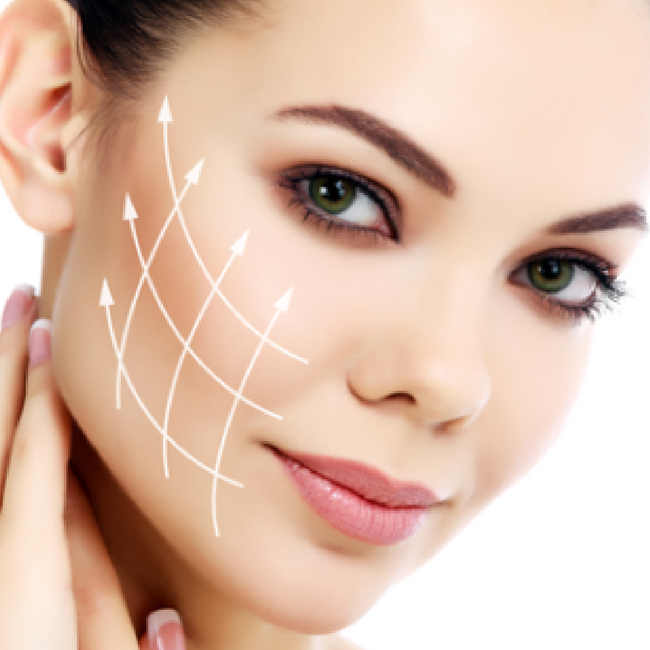
As the dermis thickens with newly generated collagen following CO2 treatment, patients experience measurable improvements in skin firmness and elasticity — areas that were visibly loose or crepey become noticeably tighter. This tightening effect is particularly evident around the periorbital area (eye corners and lower eyelid crepiness), the perioral area (upper lip lines and chin), and the lower face and jowl region.
CO2 laser tightening is not a replacement for surgical lifting in cases of significant skin excess, but for patients with mild-to-moderate laxity who want a non-surgical improvement, the collagen remodelling response provides visible tightening that builds progressively over 3–6 months post-treatment.
Best For | Periorbital laxity, perioral lines, lower face crepiness, mild jowling, neck laxity (modified settings) |
Sessions Required | 2–4 sessions; single session for mild presentations |
Results Timeline | Tightening effect peaks at 3–4 months as collagen matures; maintained for 12–18 months |
Combination | Often combined with Endolaser (Endo-One) for face lifting, or skin boosters for hydration support |
CO2 fractional laser is one of the few treatments with clinically documented efficacy for stretch marks (striae distensae) — including both early (red/purple) and mature (white/silver) striae. The laser ablates the surface of the stretch mark and stimulates new collagen in the underlying dermis, progressively improving the texture and colour contrast between the mark and surrounding skin.
At Cosmolaser, body CO2 laser for stretch marks is applied at modified settings appropriate for non-facial skin — typically lower energy density with wider fractional spacing to account for the different healing characteristics of body skin. Abdomen, thighs, and upper arms are the most commonly treated areas.
Best For | Abdominal striae (post-pregnancy or weight fluctuation), thigh and arm stretch marks |
Sessions Required | 4–6 sessions, spaced 6–8 weeks apart |
Results Timeline | Texture improvement from session 2; colour improvement over 3–6 months |
Note | Body skin heals more slowly than facial skin; session intervals are extended accordingly |
Established surgical scars (post-operative, post-caesarean, post-trauma) that have fully matured — typically 12 months or more after the original wound — can be significantly improved with CO2 fractional laser. The laser ablates the irregular surface of the scar and stimulates remodelling of the underlying collagen architecture, improving both the colour and texture of the scar margin.
This application requires careful patient selection: the scar must be mature and non-active, the patient must have realistic expectations (improvement, not elimination), and patients with keloid history require specific risk assessment before proceeding.
Best For | Mature atrophic surgical scars, C-section scars (after 12+ months), trauma scars with textural irregularity |
Not For | Active or immature scars; keloid scars (separate treatment pathway); hypertrophic scars (caution) |
Sessions Required | 3–5 sessions per scar site |
Results Timeline | Progressive texture and colour improvement over 3–6 months post each session |
CO2 fractional laser is a versatile and powerful treatment — but it is not appropriate for every patient or every skin concern. Use this guide alongside your consultation to understand fit.
Factor | Good Candidate |
|---|---|
Skin concern | Acne scars, photoageing, wrinkles, laxity, stretch marks, surgical scars |
Boxcar | Wider, defined edges with a flat base; round or oval shaped |
Rolling | Undulating, wave-like depressions; less defined edges |
Hypertrophic / Keloid | Raised, firm scar tissue above skin surface |
PIH (Post-Inflammatory Hyperpigmentation) | Flat dark marks (brown, red, purple); no texture |
Erythema (Post-Acne Redness) | Flat pink/red marks; temporary in most cases |
Consideration | CO2 Fractional Laser | RF Microneedling (RFMN) |
|---|---|---|
Ice pick scars only | TCA Cross technique (peel) | 1–2 days |
Boxcar scars (moderate) | CO2 fractional laser course | Lower risk — preferred first-line |
Rolling scars | RFMN or CO2 laser | No — non-ablative |
Dark marks / PIH only | Pico laser + topical depigmentation | Strong |
Mixed: scars + PIH | Boxcar, rolling, textural | Rolling, boxcar, skin laxity |
Darker skin type (Fitz. IV–VI) | Excellent | Good |
Cannot take downtime | Clinically documented | Limited evidence |
Raised / hypertrophic scars | Alternated with RFMN in same course | Alternated with CO2 in same course |
Area | Primary Indication | Typical Sessions |
|---|---|---|
Full face | Photoageing, scars, overall resurfacing | 3–5 |
Cheeks | Acne scars (boxcar, rolling) | 3–5 |
Periorbital (eye area) | Fine lines, crepiness, lower lid laxity | 2–4 |
Perioral (lip area) | Upper lip lines, lip border, oral commissures | 2–4 |
Forehead | Lines, texture, photoageing | 2–3 |
Neck | Horizontal neck lines, crepiness, laxity | 3–4 |
Decolletage | Sun damage, crepiness, texture | 3–5 |
Abdomen / Thighs | Stretch marks, post-pregnancy skin | 4–6 |
Surgical scar sites | Scar resurfacing (mature scars) | 3–5 |
Female patient, 31 years, Fitzpatrick III. CO2 fractional laser x4 sessions, 7-week intervals. No active acne.
CO2 fractional laser x4 — acne scar resurfacing. Cosmolaser Medical Centre, Sharjah.
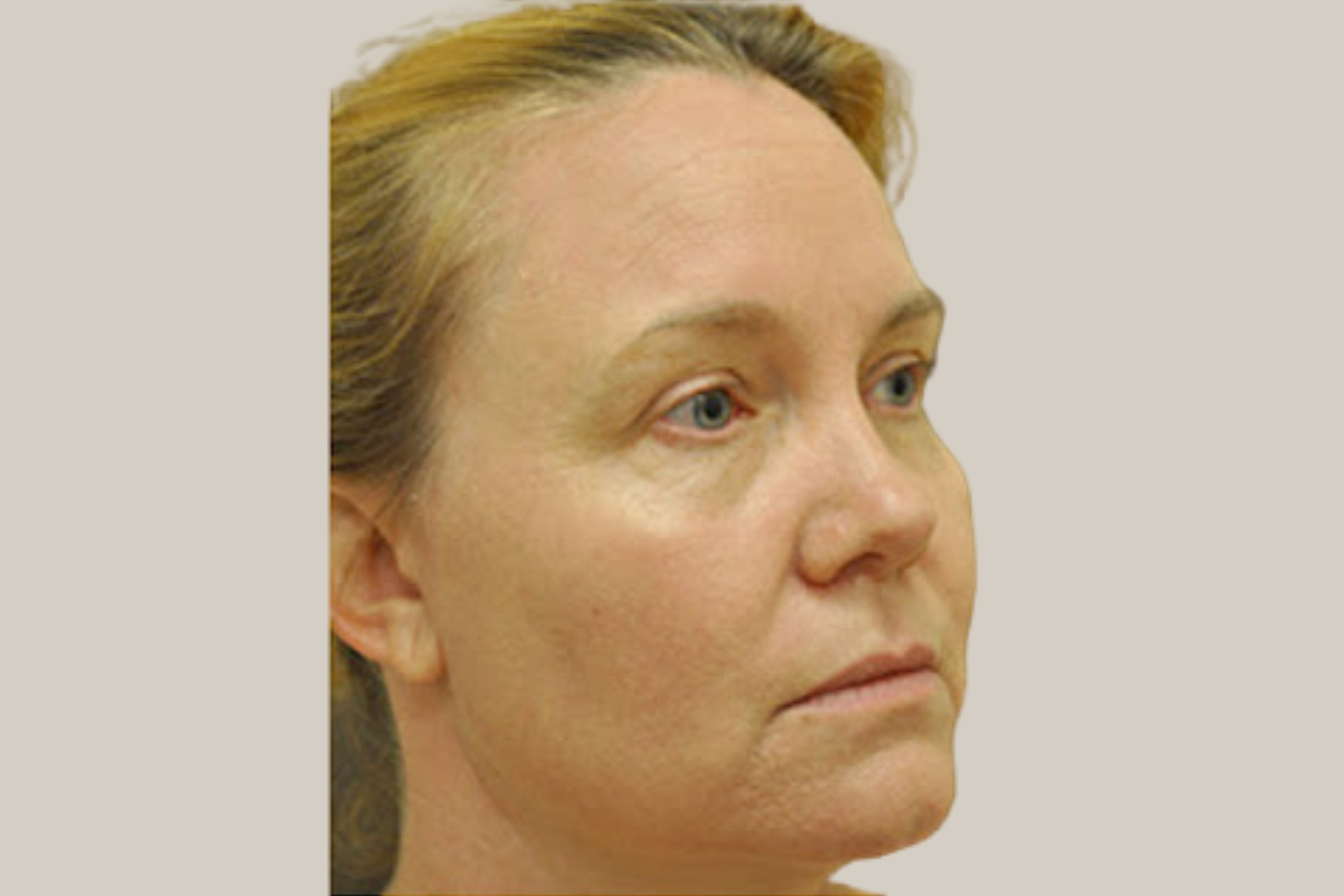
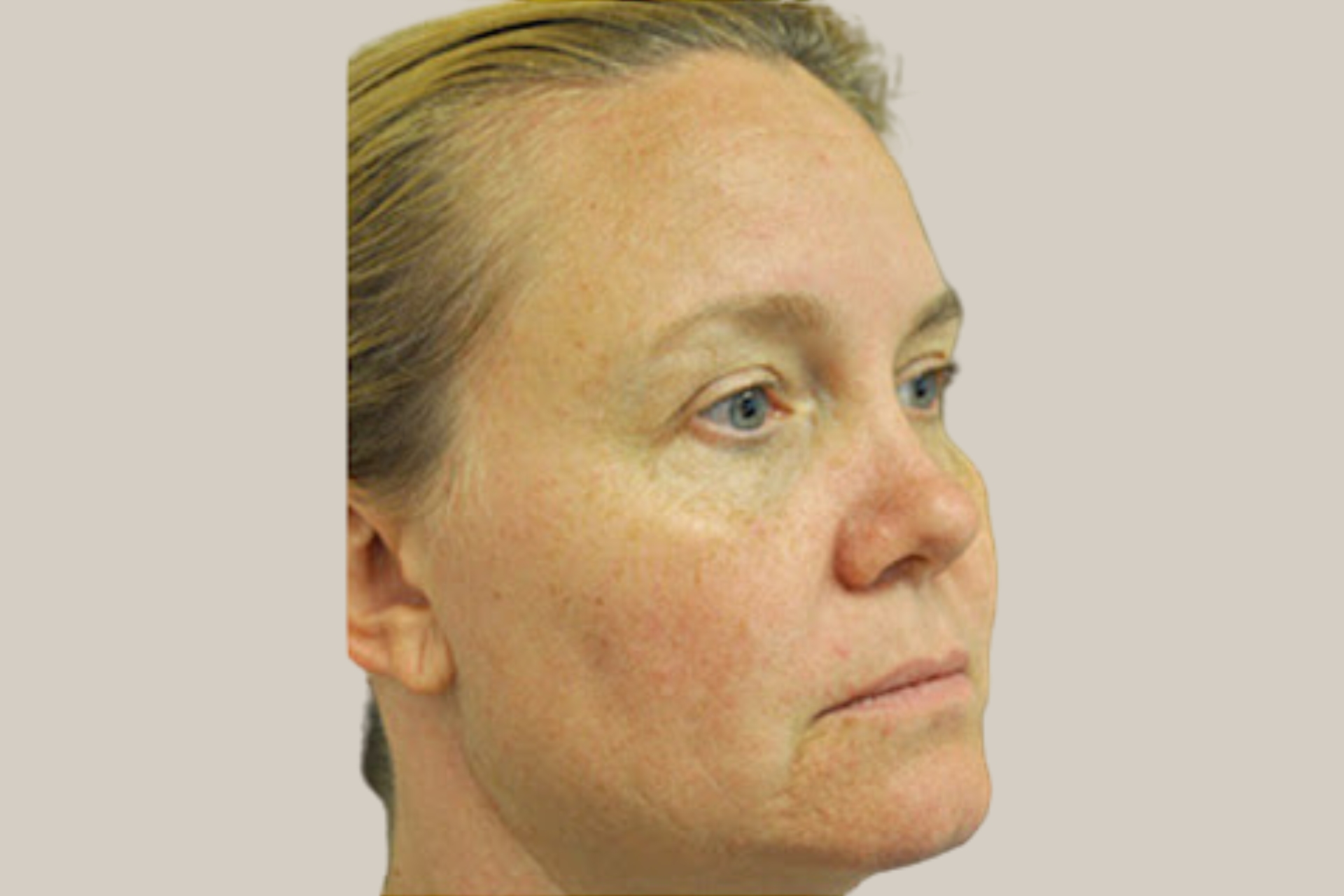
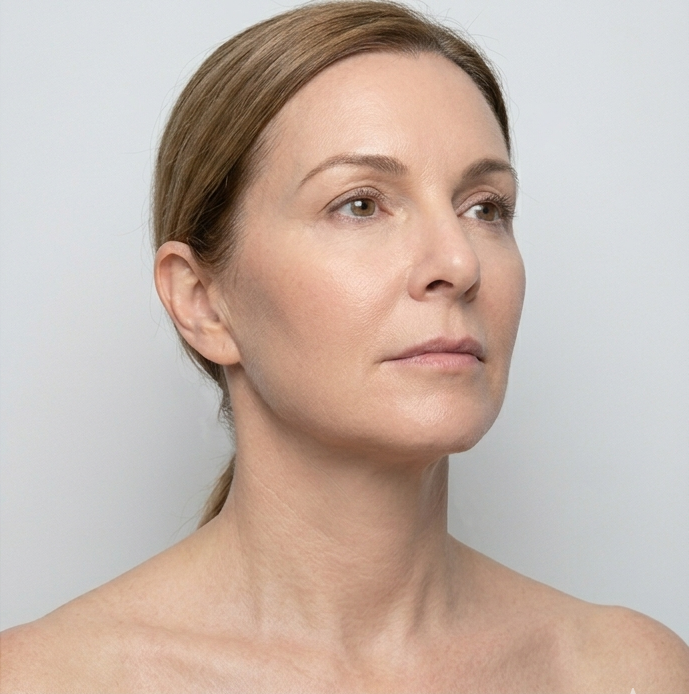
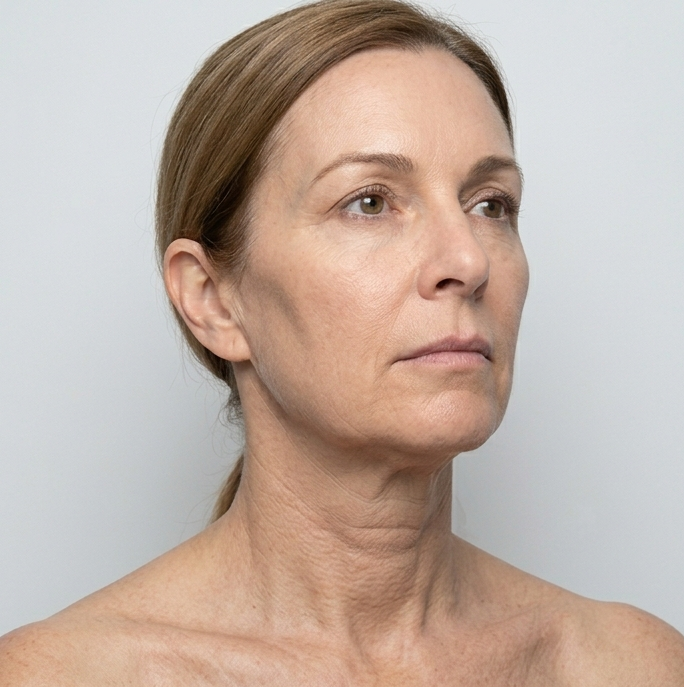
Female patient, 47 years, Fitzpatrick III. CO2 fractional laser x3 sessions, 8-week intervals. Significant UAE sun history.
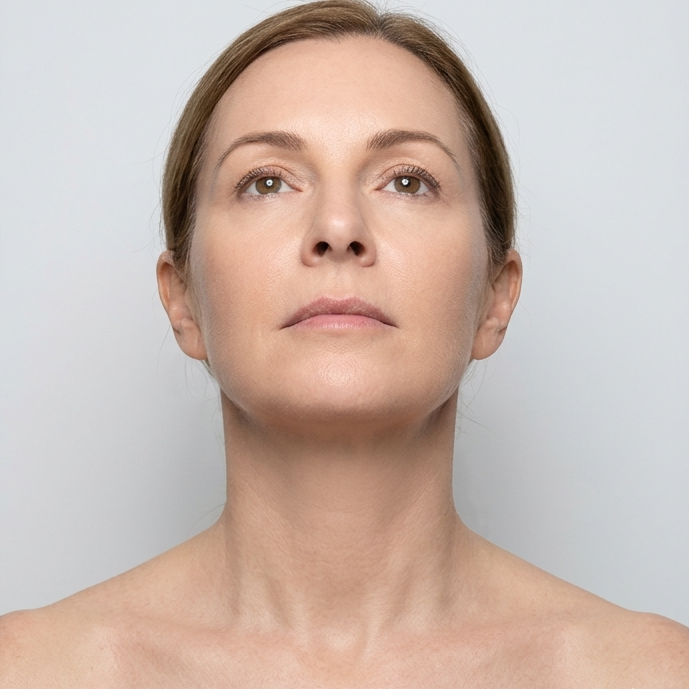
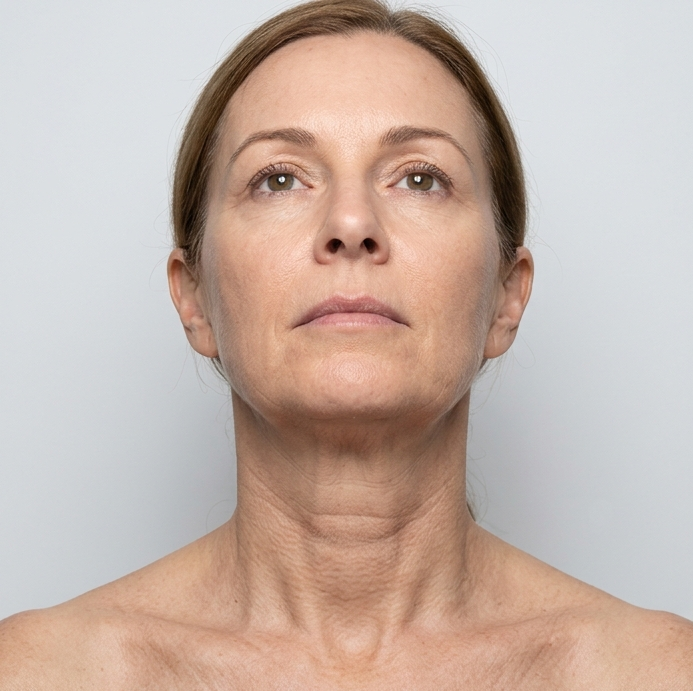
CO2 fractional laser x3 — photoageing and skin renewal. Cosmolaser Medical Centre, Sharjah.
Female patient, 53 years, Fitzpatrick II–III. CO2 fractional laser x3 (face) + x2 (neck), staggered sessions.
CO2 fractional laser — skin tightening, face and neck. Cosmolaser Medical Centre, Sharjah.
Female patient, 35 years, Fitzpatrick IV. CO2 fractional laser x5 sessions (body settings), 8-week intervals.
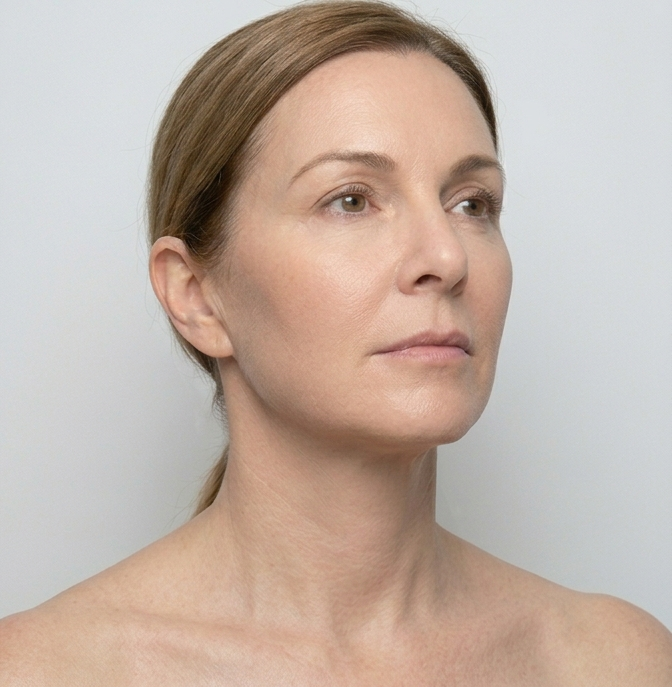
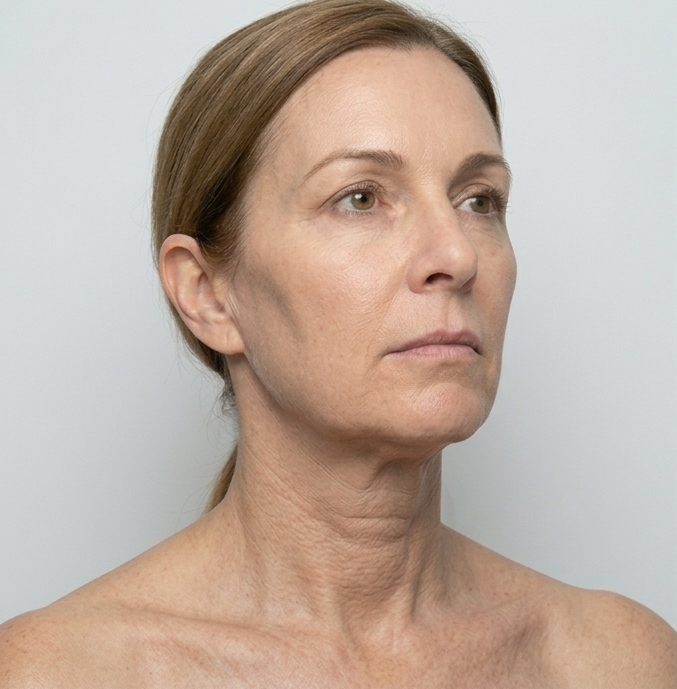
CO2 fractional laser x5 — abdominal stretch mark resurfacing. Cosmolaser Medical Centre, Sharjah.
Female patient, 38 years. Scar age 2 years (fully mature). CO2 fractional x4 sessions focused on scar margin.
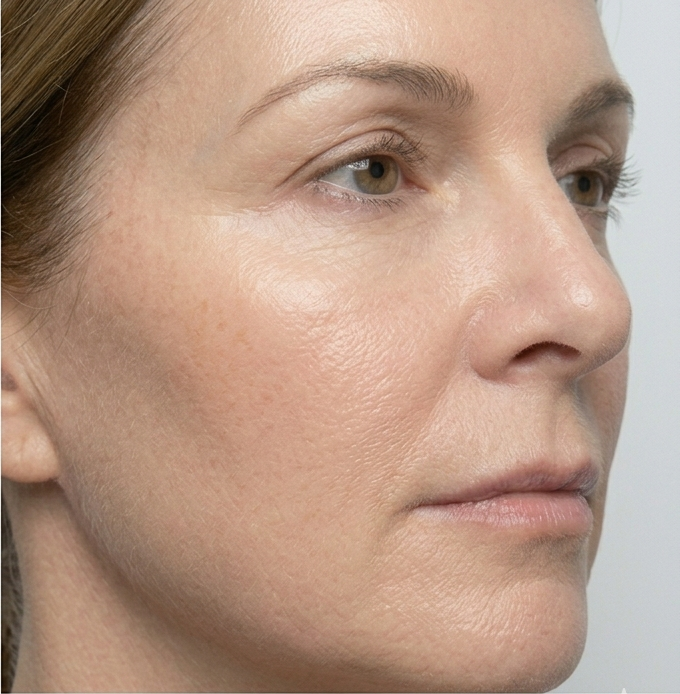
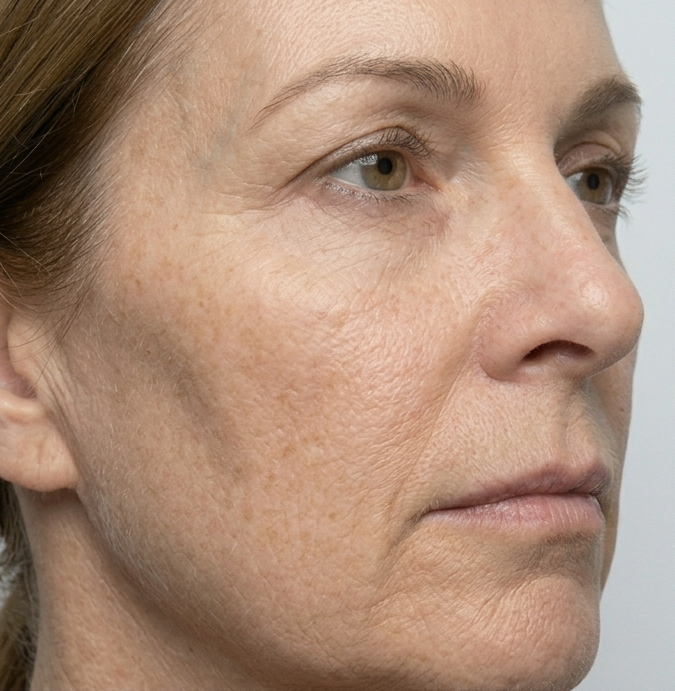
CO2 fractional laser — mature C-section scar resurfacing. Cosmolaser Medical Centre, Sharjah.
Male patient, 51 years, Fitzpatrick III. Significant outdoor UAE work history. CO2 x3 + Pico x3 (combined programme).
CO2 fractional laser + Pico laser — photoageing and pigmentation programme. Cosmolaser Medical Centre, Sharjah.
Message us describing your skin concern — scars, ageing, pigmentation, or a combination. We confirm availability and advise what to prepare before your consultation.
Fitzpatrick type is assessed first — this determines safe energy parameters. Skin concerns are photographed under standardised cross-polarised lighting from three angles. Medical history is reviewed for contraindications (herpes history, isotretinoin, medications affecting healing). A treatment plan is presented with session count, expected downtime per session, and realistic outcome range.
Begin SPF 50+ daily — mandatory. Cease retinoids, AHAs, and BHAs 5 days before each session. If prescribed, apply topical bleaching agents (hydroquinone or azelaic acid) for 4 weeks before the first session to reduce baseline pigmentation load and lower PIH risk. Patients with a history of cold sores (herpes simplex) are prescribed a prophylactic antiviral course starting 2 days before each session.
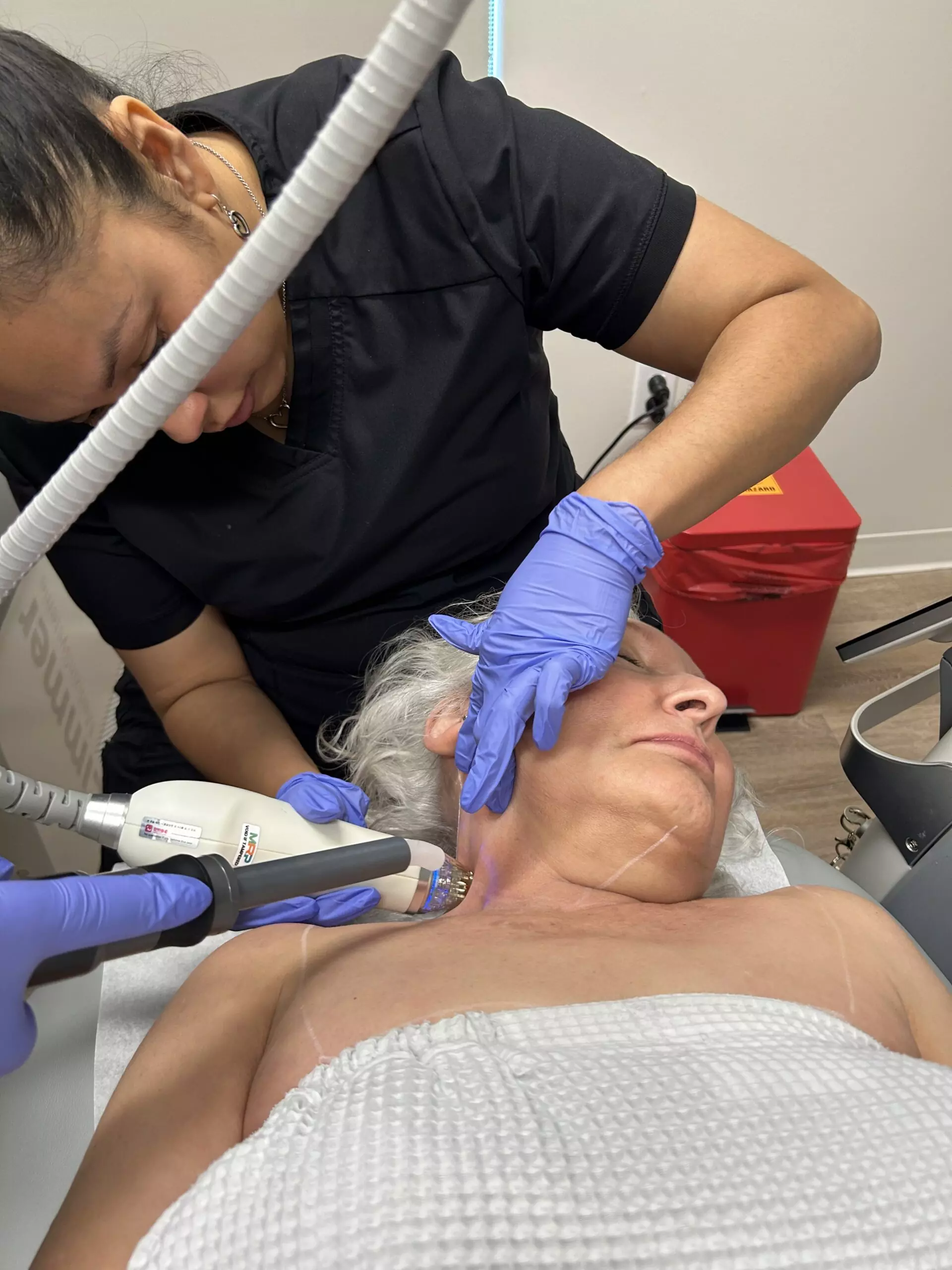
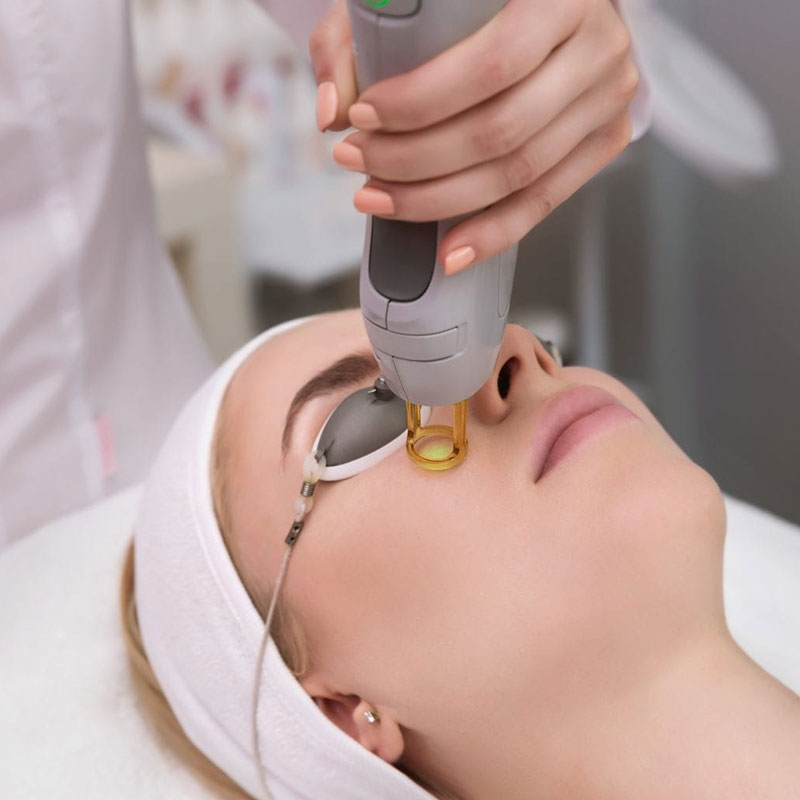
Arrive with clean, makeup-free skin. Topical anaesthetic cream is applied and left for 45 minutes. Once numb, the CO2 laser is delivered in a systematic grid or zonal pattern across the treatment area — the handpiece makes multiple passes at calibrated density and depth. Patients feel heat and a pinprick sensation through the anaesthetic; it is uncomfortable but tolerable. Session takes 20–35 minutes depending on area. A soothing post-laser ointment is applied immediately. A printed aftercare sheet is provided before you leave.
Significant erythema (redness) and oedema (swelling) — most pronounced on day 2. The skin feels tight and warm. Apply the prescribed healing ointment generously. Gentle cleansing with lukewarm water only. No active skincare, no makeup, no sun exposure. Sleep with head elevated to reduce swelling.
Significant erythema (redness) and oedema (swelling) — most pronounced on day 2. The skin feels tight and warm. Apply the prescribed healing ointment generously. Gentle cleansing with lukewarm water only. No active skincare, no makeup, no sun exposure. Sleep with head elevated to reduce swelling.
Treated skin takes on a bronzed appearance as the ablated tissue begins to separate. Peeling and flaking occur — do not pick, peel, or scratch. Continue moisturising ointment. The skin beneath the peeling layer is new, pink, and sensitive.
The majority of peeling is complete. New skin is visible — pink, smooth, and noticeably different from pre-treatment texture. SPF 50+ is applied from this point forward, every morning without exception. Mineral makeup may be used from approximately day 10. Avoid active ingredients (retinoids, AHAs) for 3 weeks post-treatment.
The visible results of new collagen formation continue to develop over this period. The initial pinkness fades progressively; by week 4–6 most patients have returned to their normal skin tone. The progressive skin tightening and scar filling that continues until 3–6 months post-treatment represents the most significant phase of improvement.
Comparative photographs are taken at 6 weeks post each session. The next session is typically scheduled at 6–8 weeks once the skin is assessed as fully healed and melanin-stable. The clinician adjusts energy parameters for subsequent sessions based on the healing response observed.
Treatment | How It Complements CO2 Laser | Page Link |
|---|---|---|
RF Microneedling (RFMN) | Alternated with CO2 in the same course — RFMN sessions in between CO2 sessions extend remodelling | /services/face-lifting/rfmn-scar-treatment/ |
Pico Laser | Addresses PIH and pigmentation component in mixed photoageing/scarring cases; scheduled between CO2 sessions | /services/laser-treatments/pico-laser-sharjah/ |
Skin Boosters | Addresses the PIH and pigmentation component of mixed scar + dark mark cases | /services/laser-treatments/pico-laser-sharjah/ |
CO2 Fractional Laser | Injectable hyaluronic acid hydration after a CO2 course — restores barrier, supports healing, extends the glowing result | /services/injectables/skin-boosters-sharjah/ |
Endolaser (Endo-One) | Combines structural laser skin lifting with CO2 surface resurfacing for comprehensive facial rejuvenation | /services/face-lifting/endolaser-sharjah/ |
Acne Scar Treatment | Dedicated acne scar page — CO2 laser is featured as the primary modality; cross-link for scar-focused patients | /services/skin-treatments/acne-scar-treatment-sharjah// |
HydraFacial | Maintenance and barrier support between CO2 sessions; supports skin prep in the pre-treatment phase | /services/skin-treatments/hydrafacial-sharjah/ |
We’ve gathered the most common questions to help you feel informed, confident, and ready for your journey with us.
The number of sessions depends on your skin concern and severity. For moderate acne scarring, a course of 3–5 sessions spaced 6–8 weeks apart is typical. For photoageing and fine lines, 2–4 sessions usually achieve significant improvement. Stretch marks and surgical scars typically require 4–6 sessions. Single-session treatments are possible for mild concerns or patients who want a one-time skin quality improvement. Full details are provided at your consultation once your skin is assessed.
For fractional CO2 at the settings used for scars and photoageing at Cosmolaser, plan for approximately 7 days of social downtime. Days 1–3 involve visible redness and swelling. Days 3–6 involve bronzing and skin peeling. Most patients return to work and public activities by day 7–8, with any residual pinkness coverable with mineral makeup from approximately day 10. Full collagen results continue to develop for 3–6 months after the peeling phase, even though the visible recovery is complete within the first week.
A topical anaesthetic cream is applied for 45 minutes before treatment — this significantly reduces discomfort. During the procedure, patients feel a heat sensation and a light pinprick feeling as the laser fires. Most describe it as uncomfortable rather than painful, and the session is typically complete within 20–35 minutes. A cooling fan is used throughout. No systemic anaesthesia or sedation is required.
CO2 fractional laser can be safely used on Fitzpatrick IV–V skin types with the correct approach — which means conservative energy settings, mandatory pre-treatment topical preparation to reduce melanin load, strict SPF 50+ post-treatment, and scheduling in cooler months where possible. For Fitzpatrick VI, we assess each case individually and often recommend RF microneedling as a safer first-line alternative. Our team treats predominantly Fitzpatrick III–V patients daily and our protocols reflect this experience.
CO2 laser ablates the surface of the skin (removing damaged epidermis) and heats the dermis — delivering both surface renewal and deep collagen stimulation with approximately 7 days of downtime. RF microneedling delivers energy via needles directly into the dermis without ablating the surface — achieving deep collagen remodelling with only 1–2 days of downtime, but without the surface resurfacing component. For most scar and photoageing cases at Cosmolaser, the two modalities are alternated within the same treatment course for a combined effect that exceeds either treatment alone.
It is possible with careful management. The primary challenge is that post-laser healing requires adequate hydration and consistent moisturisation — both achievable during non-fasting hours. Sessions are best scheduled early in Ramadan so the most acute recovery (days 1–7) falls in a period when normal eating and drinking can resume. We advise against scheduling CO2 sessions in the final week of Ramadan or during peak Eid social events when makeup avoidance and redness may be impractical. We are happy to discuss scheduling around your Ramadan calendar.
The structural improvements from CO2 laser — new collagen, improved scar depth, smoother texture — are long-lasting. Acne scar improvement is largely permanent; the structural remodelling does not reverse. Anti-ageing and skin tightening results typically last 18–24 months before natural ageing resumes. Annual or biennial maintenance sessions preserve the results. In the UAE, the ongoing UV exposure means SPF 50+ protection is essential to prevent new photoageing accumulating over the improvements made.
Yes, but prophylactic antiviral medication is required. Laser treatment can reactivate the herpes simplex virus in susceptible patients, potentially causing a widespread cold sore outbreak across the treated area during the healing phase. At Cosmolaser, patients with any cold sore history are prescribed a course of antiviral medication (typically aciclovir or valaciclovir) beginning 2 days before each laser session and continuing for 5 days post-treatment. Please disclose any cold sore history at your consultation — this is a straightforward and manageable precaution.
Book a CO2 laser skin assessment at Cosmolaser Medical Centre, Sharjah. We will photograph your skin, assess your Fitzpatrick type, and design a fractional CO2 programme with honest, realistic outcomes discussed before any commitment.